
Confusion between \"cayenne pepper\" and \"red cayenne\" is common in spice aisles and recipe calls. Many assume they are distinct spices—perhaps differing in heat, color, or origin. In reality, the distinction is largely semantic, not botanical or culinary. Both terms typically refer to the same dried, ground chili made from ripe cayenne peppers. Yet subtle differences in labeling, processing, and regional usage can influence how these names appear in kitchens. Understanding the nuances ensures accurate seasoning, avoids over-spicing, and enhances flavor control. This guide clarifies the terminology, explores the characteristics of cayenne as a spice, and explains when—and why—these labels might matter.
Definition & Overview
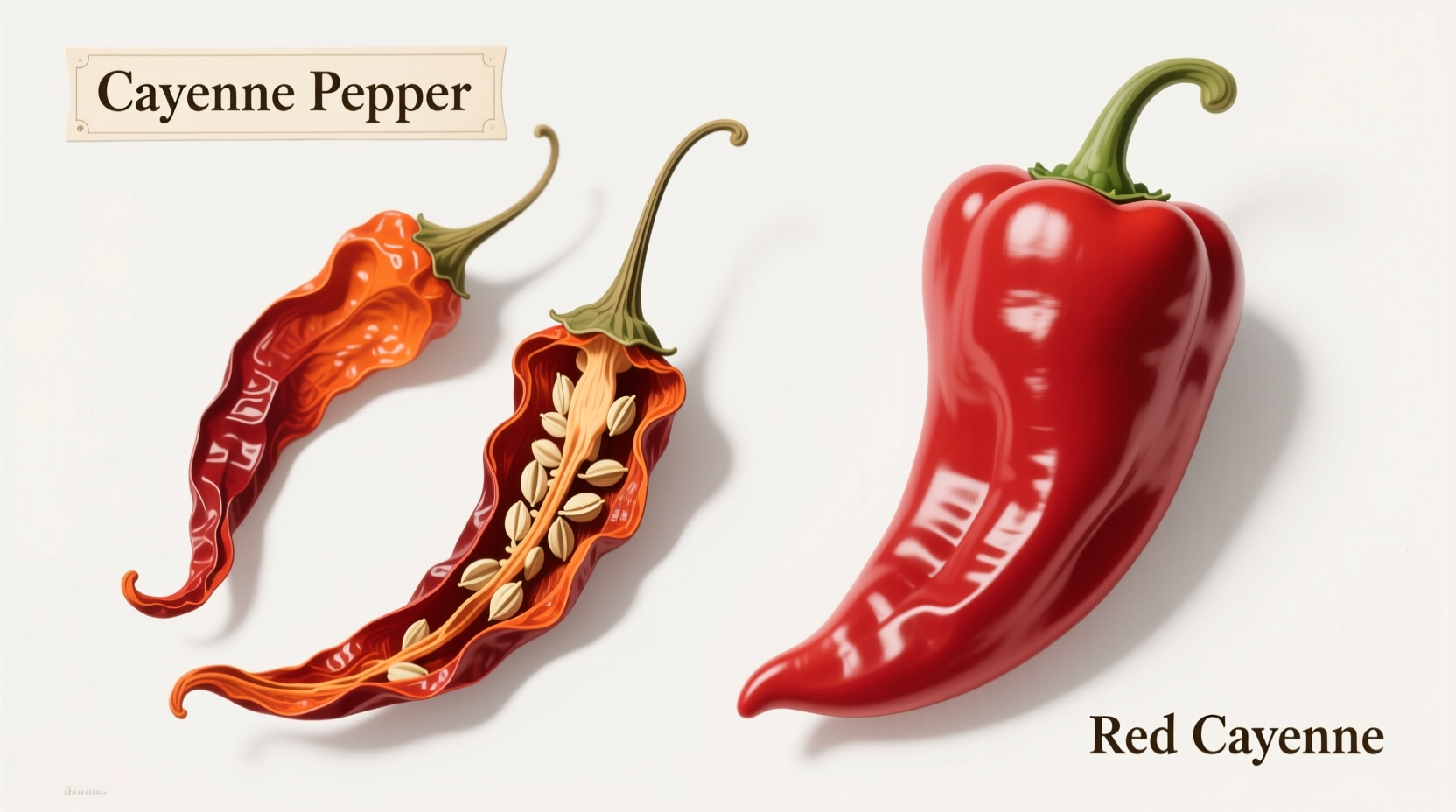
Cayenne pepper is a hot chili powder derived from the ripe fruit of *Capsicum annuum* var. *annuum*, commonly known as the cayenne pepper plant. Native to French Guiana but now cultivated globally—especially in India, China, Africa, and the southern United States—the cayenne chili ranges from 30,000 to 50,000 Scoville Heat Units (SHU), placing it firmly in the medium-to-hot category on the chili scale.
The term “cayenne pepper” most often refers to the **ground form** of the dried red cayenne chili. It is a fine, bright red powder used primarily as a seasoning and heat enhancer in cuisines ranging from Creole and Cajun to Indian and East Asian. The word “pepper” here is a historical misnomer; unlike black pepper (*Piper nigrum*), cayenne is a member of the nightshade family and unrelated botanically.
“Red cayenne” is not a separate species or cultivar. Instead, it is a descriptive label emphasizing the maturity and color of the chili at harvest. All true cayenne peppers turn deep red when fully ripe—the stage at which they are harvested for drying and grinding. Thus, “red cayenne” simply underscores that the product comes from mature, red-hued chilies rather than green or partially ripe ones.
Key Characteristics
Cayenne pepper, whether labeled simply as “cayenne” or “red cayenne,” shares consistent sensory and functional traits. These define its role in cooking:
| Characteristic | Description |
|---|---|
| Flavor Profile | Sharp, pungent, with a clean heat and faint fruity undertone. Less smoky than paprika, less earthy than chipotle. |
| Aroma | Pungent, slightly floral with a peppery bite when inhaled. Fresh batches have a vibrant, almost citrus-like top note. |
| Color | Bright to deep red. Consistent across both “cayenne” and “red cayenne” labels. |
| Heat Level | 30,000–50,000 SHU. Delivers immediate, stinging heat that builds quickly on the tongue and throat. |
| Form | Fine powder. Occasionally includes small seed fragments or fibrous bits if coarsely ground. |
| Culinary Function | Heat amplifier, flavor enhancer, colorant. Used in rubs, sauces, soups, marinades, and spice blends. |
| Shelf Life | 2–3 years when stored in a cool, dark, airtight container. Loses potency over time; color may fade. |
Practical Usage: How to Use Cayenne Pepper in Cooking
Cayenne’s primary strength lies in its ability to add clean, assertive heat without overwhelming other flavors. Unlike smoked chilies, it doesn’t dominate with charred notes, making it ideal for dishes where heat must be present but not central.
In home cooking, cayenne is frequently used in small quantities—a pinch or 1/8 to 1/4 teaspoon—to boost depth in savory dishes. It integrates seamlessly into:
- Spice rubs for chicken, pork, or fish
- Chili con carne and tomato-based stews
- Deviled eggs and pimento cheese
- Southern-style cornbread and hushpuppies
- Curry powders and garam masala blends
- Hot sauces and infused oils
Professional kitchens use cayenne strategically to balance flavor profiles. A chef might add a dash to a reduction sauce to cut through richness or incorporate it into a dry brine for fried chicken to create a tingling finish. Because cayenne’s heat activates quickly, it’s best added early in the cooking process to allow integration, or at the end for a sharper, more pronounced kick.
TIP: When substituting fresh cayenne chilies for ground, use a 1:3 ratio—1 fresh chili equals approximately 1/2 teaspoon of ground cayenne. Always taste as you go; fresh chilies vary in heat, and ground spice concentrates capsaicin more efficiently.
For pairing, cayenne complements garlic, onion, black pepper, thyme, oregano, and smoked paprika. It also works well with sweet ingredients like honey or maple syrup, creating a balanced sweet-heat dynamic in glazes and barbecue sauces.
Variants & Types of Cayenne Products
While “cayenne pepper” and “red cayenne” refer to the same core ingredient, several variants exist based on form, blend, and processing. Recognizing these helps avoid confusion and misuse:
1. Pure Ground Cayenne Pepper
The standard form. Made solely from dried, milled cayenne chilies. Look for labels stating “100% cayenne pepper” to ensure no fillers or anti-caking agents.
2. Coarse Cayenne Flakes
Larger granules or crushed pieces. Offers a more textured mouthfeel and slower heat release. Common in Italian-inspired spice mixes or atop flatbreads.
3. Cayenne Pepper Extract or Capsaicin Tincture
Highly concentrated liquid form used in commercial food production or dietary supplements. Not intended for direct culinary use without precise dilution.
4. Blended Cayenne Seasonings
Often marketed as “cayenne pepper” but contain additives like salt, turmeric, or silicon dioxide. Check the ingredient list—true cayenne should have one component.
5. Fresh Red Cayenne Chilies
The whole, unprocessed pepper. Long, slender, and tapering, turning from green to bright red at maturity. Used fresh in salsas, pickled, or dried at home for long-term storage.
6. Smoked Red Cayenne
Less common but available in specialty markets. Dried over wood smoke, adding a subtle smokiness akin to chipotle but lighter. Not standard; always verify processing method.
When choosing between forms, consider the dish’s texture and cooking time. Powder dissolves quickly; flakes provide visual speckling; fresh chilies offer crunch and variable heat distribution.
Comparison with Similar Ingredients
Cayenne is often confused with other red chili powders. While interchangeable in some contexts, key differences affect flavor, heat, and application.
| Spice | Heat Level (SHU) | Flavor Profile | Best Used In | Different From Cayenne? |
|---|---|---|---|---|
| Ground Cayenne | 30,000–50,000 | Sharp, clean heat, mild fruitiness | General seasoning, rubs, sauces | Baseline |
| Crushed Red Pepper Flakes | 15,000–25,000 | Earthy, seedy, variable heat (often mix of chilies) | Pizza, pasta, sautés | Yes—less heat, more texture, often blended |
| Hot Paprika | 10,000–20,000 | Sweet, smoky, or pungent depending on type | Goulash, stews, deviled eggs | Yes—milder, broader flavor range |
| Chipotle Powder | 2,500–8,000 | Smoky, earthy, tobacco-like | BBQ, chili, mole sauces | Yes—lower heat, dominant smokiness |
| Aleppo Pepper | 10,000–15,000 | Salty, tangy, moderate heat | Mediterranean salads, roasted vegetables | Yes—fruitier, lower heat, oil-cured |
| Sriracha Powder | Varies (usually 5,000–15,000) | Garlicky, tangy, vinegary | Snack seasonings, dipping blends | Yes—flavor-blend, not pure chili |
The critical takeaway: cayenne delivers higher, more consistent heat than most alternatives. Substituting crushed red pepper flakes for cayenne may under-season a dish, while using cayenne in place of smoked paprika can overwhelm delicate flavors.
“In professional kitchens, precision with chili powders is non-negotiable. Cayenne isn’t just ‘spicy’—it’s a calibrated tool. Using the wrong type shifts the entire balance of a dish.” — Chef Lena Torres, Culinary Director, SpiceCraft Institute
Practical Tips & FAQs
Is red cayenne hotter than regular cayenne pepper?
No. The term “red” indicates ripeness, not increased heat. Fully ripe cayenne chilies may be slightly hotter than immature green ones, but once ground, the difference is negligible. Any variation in heat between products stems from growing conditions, not labeling.
Can I substitute cayenne for red pepper flakes?
Yes, but adjust quantity. Use half the amount of ground cayenne in place of crushed flakes, as it is more concentrated. For texture, consider leaving in a few seeds or adding a pinch of coarse salt.
Does cayenne pepper go bad?
It doesn’t spoil but loses potency. Ground cayenne retains optimal flavor and heat for 2–3 years. Store in an airtight container away from light and moisture. If the color has dulled or the aroma is faint, it’s time to replace it.
Is cayenne pepper the same as chili powder?
No. In the U.S., “chili powder” usually refers to a blend containing cayenne, cumin, garlic powder, and oregano. Pure cayenne is much hotter and lacks the herbal complexity of chili powder. Always check labels—substitution requires recalculating ratios.
How much cayenne should I use in a dish?
Start with 1/8 to 1/4 teaspoon per serving. Taste after incorporation and add incrementally. In large batches (e.g., soups or stews), use 1/2 teaspoon per quart as a baseline. Remember: heat builds over time and intensifies upon standing.
Are there health benefits to cayenne?
Capsaicin, the active compound in cayenne, has been studied for metabolic stimulation, pain relief, and circulation support. However, culinary doses are too low for therapeutic effects. Excessive intake may irritate the digestive tract. Moderation is key.
CHEF’S CHECKLIST: Buying & Using Cayenne Pepper
- ✔ Choose brands listing only “cayenne pepper” in ingredients
- ✔ Opt for deep red color—avoid dull or brownish powder
- ✔ Store in a dark glass jar or opaque container
- ✔ Label the purchase date; replace every 24 months
- ✔ Use sparingly in delicate dishes like custards or seafood sauces
- ✔ Pair with fats (oil, butter) to help distribute heat evenly
Summary & Key Takeaways
The distinction between “cayenne pepper” and “red cayenne” is largely cosmetic. Both terms describe the same ground spice made from fully ripe cayenne chilies. No botanical, thermal, or culinary difference exists between them—only marketing nuance.
True cayenne pepper is a potent, bright red powder delivering 30,000–50,000 SHU of clean, sharp heat. It functions as a flavor accelerator, not a background note. Its versatility spans global cuisines, but its intensity demands respect. Overuse can ruin a dish; underuse misses an opportunity for depth.
Understanding cayenne’s profile enables better substitutions, smarter pairings, and more confident seasoning. It is not interchangeable with milder chili powders or blended seasonings without adjustment. When in doubt, start small and build.
For home cooks and professionals alike, clarity on spice labels prevents kitchen mishaps. Knowing that “red cayenne” is not a hotter or rarer variant—but simply cayenne at peak ripeness—empowers informed choices. Stock one reliable brand of pure ground cayenne, store it properly, and use it deliberately to elevate your cooking with precision and flair.




 浙公网安备
33010002000092号
浙公网安备
33010002000092号 浙B2-20120091-4
Comments
No comments yet. Why don't you start the discussion?