
Often affectionately known as “ants on a log,” celery stuffed with peanut butter and topped with raisins is more than just a nostalgic childhood snack—it’s a nutritionally balanced, easy-to-make treat that continues to hold value in modern kitchens. While it may appear simplistic, this combination of crisp vegetable, creamy spread, and chewy fruit delivers a harmonious blend of texture, flavor, and macronutrients. Its enduring popularity stems not only from its minimal preparation but also from its adaptability across dietary needs, educational settings, and even gourmet reinterpretations. In an era where whole foods, plant-based ingredients, and mindful snacking are gaining prominence, revisiting this humble recipe reveals surprising depth in culinary function, nutritional science, and cultural resonance.
Definition & Overview
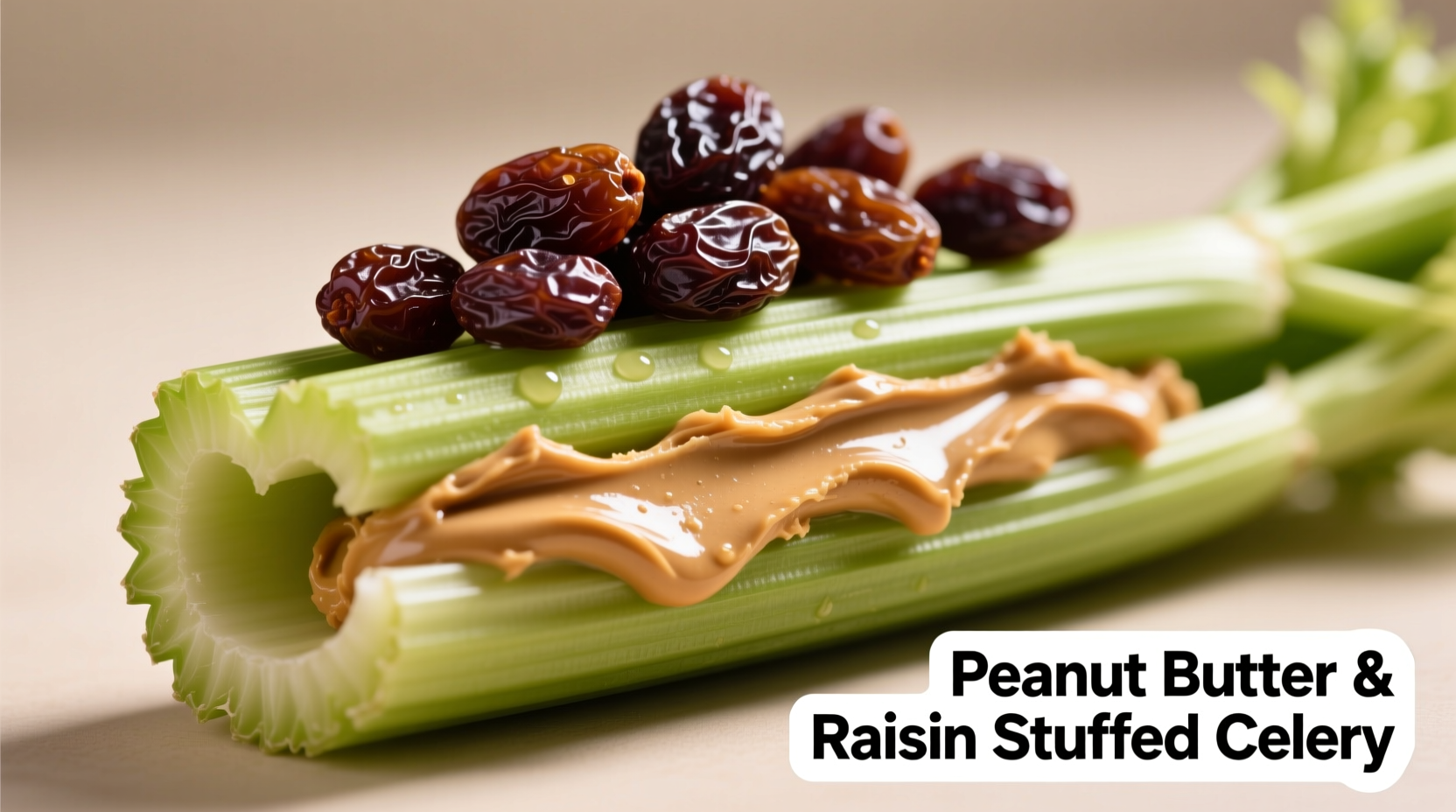
Celery stuffed with peanut butter and topped with raisins is a cold assembly dish composed of three core ingredients: raw celery stalks, peanut butter (typically natural or smooth), and raisins. The celery is cut into short segments, usually 3–4 inches long, with the central groove cleaned and hollowed slightly to accommodate the filling. Peanut butter is then piped or spread into the indentation, forming a creamy base. Raisins are arranged lengthwise on top, resembling ants marching along a log—hence the playful name.
The dish originated in mid-20th century American home economics and scouting culture, frequently appearing in Girl Scout and 4-H cookbooks as an accessible introduction to food preparation for children. It gained traction due to its no-cook method, affordability, and ability to teach basic concepts like food group balance and knife safety (when preparing celery). Over time, it has evolved beyond its utilitarian roots into a symbol of wholesome snacking, often cited in discussions about intuitive eating, pediatric nutrition, and sustainable food practices.
Culinarily, it belongs to the category of “raw canapés” or “vegetable appetizers,” sharing conceptual space with cucumber rounds topped with cream cheese or carrot sticks served with hummus. However, unlike many similar snacks, it uniquely combines all three macronutrients—carbohydrates (raisins, trace sugars in PB), protein and fat (peanut butter), and fiber-rich complex carbohydrates (celery)—making it unusually well-rounded for such a simple preparation.
Key Characteristics
| Attribute | Description |
|---|---|
| Flavor Profile | Savory, nutty, mildly sweet, with subtle herbal bitterness from celery |
| Aroma | Earthy peanut fragrance with fresh green notes from celery |
| Texture | Crisp (celery), creamy (peanut butter), chewy (raisins) |
| Color/Form | Light green logs with beige filling and dark brown speckles |
| Heat Level | Non-spicy; entirely mild |
| Culinary Function | Snack, appetizer, educational food activity, lunchbox addition |
| Shelf Life (assembled) | Up to 24 hours refrigerated; best consumed within 6–8 hours |
| Allergen Notes | Contains peanuts; celery is low-risk but botanically related to carrots and parsley |
Practical Usage
This snack requires no cooking and minimal tools. To prepare at home:
- Select firm, straight celery stalks with minimal stringiness—preferably organic to reduce pesticide exposure when consuming raw.
- Wash thoroughly under cold running water. Use a soft brush if needed.
- Cut into 3- to 4-inch lengths. Trim any leafy ends flush for aesthetics.
- Using a small spoon or butter knife, gently scrape out the inner fibrous strands to create a wider cavity.
- Fill each groove evenly with peanut butter—about 1 tablespoon per 4-inch piece.
- Press 5–7 raisins into the top in a single file line.
- Serve immediately or chill for 20–30 minutes for firmer texture.
For improved structural integrity, especially in warm environments or packed lunches, lightly toast the peanut butter by spreading it on a plate and warming it in a microwave for 10 seconds. This allows it to adhere better to the celery walls. Alternatively, chilling the celery sticks for one hour before stuffing prevents sogginess and enhances crunch.
In professional or catering contexts, chefs have reimagined this concept using precision techniques:
- Piping peanut butter through a pastry bag for uniform swirls.
- Substituting golden raisins or dried cranberries for visual contrast.
- Adding microgreens or edible flowers for upscale presentations.
- Serving on slate boards with labeled ingredient cards for interactive tastings.
Expert Tip: For picky eaters or sensory-sensitive individuals, vary the placement of raisins—cluster them at one end to resemble a single ant colony rather than a full trail. This reduces visual overwhelm while maintaining engagement.
Variants & Types
While the traditional version remains iconic, numerous adaptations reflect evolving dietary preferences, allergen concerns, and global flavor influences. These variants maintain the foundational structure—crunchy base + creamy spread + topping—but introduce meaningful changes in nutrition and taste.
By Nut/Seed Butter
- Almond Butter Version: Sweeter and richer than peanut butter, with higher monounsaturated fats. Ideal for paleo or lower-allergen diets.
- Sunflower Seed Butter: A common substitute in peanut-free schools. Offers a similar texture with earthy, slightly bitter notes.
- Tahini (Sesame Paste): Adds a savory Middle Eastern twist. Best paired with dates instead of raisins and a sprinkle of sumac.
- Coconut Butter: Provides tropical sweetness and solidifies when chilled. Pairs well with banana slices instead of raisins.
By Vegetable Base
- Jicama Sticks: More neutral flavor and sweeter crunch. Holds fillings exceptionally well.
- Bell Pepper Strips: Red or yellow peppers add vibrant color and vitamin C. Less structurally rigid but visually striking.
- Cucumber Rounds: Softer texture; best served immediately to avoid leakage.
- Endive Leaves: Naturally cup-shaped, eliminating need for hollowing. Elegant for cocktail parties.
By Dried Fruit or Topping
- Dried Cherries or Blueberries: Tartness balances rich nut butter; excellent with almond or cashew spreads.
- Chopped Dates: Larger pieces work better as “ants”; pair with tahini or date-sweetened nut butter.
- Granola Clusters: Create a “trail mix log” effect—adds crunch and complexity.
- Chocolate Chips: Appeals to younger audiences; consider mini chips for proportion.
| Variant Type | Best For | Preparation Note |
|---|---|---|
| Sunflower Butter + Celery + Raisins | Peanut-free classrooms | Check label for added sugar; some brands contain honey |
| Almond Butter + Jicama + Dried Cranberries | Low-glycemic diets | Soak jicama briefly in lemon water to prevent browning |
| Tahini + Endive + Chopped Dates | Mediterranean-themed menus | Mix tahini with a touch of maple syrup for palatability |
| Peanut Butter + Bell Pepper + Banana Slices | Kid-friendly lunchboxes | Add lime zest to PB to inhibit banana oxidation |
Comparison with Similar Ingredients
Though superficially similar to other filled vegetable snacks, celery with peanut butter and raisins differs significantly in composition, intent, and nutritional outcome.
| Snack Comparison | Difference from “Ants on a Log” |
|---|---|
| Carrot Sticks with Hummus | Hummus is legume-based (chickpea) and savory-umami; lacks sweet element. Typically served without additional toppings. |
| Cucumber Rounds with Cream Cheese | Dairy-based, cooler profile; often garnished with dill or smoked salmon—savory applications dominate. |
| Apple Slices with Peanut Butter Dip | Fruit-based, higher sugar content. Usually not pre-assembled; intended as dipper. |
| Vegetable Platter with Ranch | Uses processed dressing; multiple vegetables; communal serving style rather than individual portioning. |
| Stuffed Mushrooms (baked) | Hot preparation, cooked, often includes breadcrumbs, cheese, meat. Entirely different thermal and textural experience. |
Unlike these counterparts, “ants on a log” is intentionally self-contained, balanced across macronutrients, and designed for portability and visual storytelling—particularly effective in engaging children with whole foods.
Practical Tips & FAQs
How do I prevent the peanut butter from separating or leaking?
Chill both the celery and peanut butter prior to assembly. Cold ingredients bond better. If using natural peanut butter (which separates), stir thoroughly and consider adding a teaspoon of chia seeds per quarter-cup to stabilize the oil content without altering flavor.
Can I make this ahead of time?
Yes, but limit advance preparation to 6 hours. Wrap each piece individually in parchment paper and store flat in an airtight container in the refrigerator. Avoid plastic wrap directly on raisins, which can cause moisture transfer.
Are there seed-free alternatives for schools with strict nut and seed policies?
Some institutions allow roasted soy butter or pumpkin seed butter depending on policy. Always verify with school guidelines. In highly restrictive cases, consider mashed avocado seasoned with garlic powder as a temporary alternative—though it browns faster.
Is this suitable for weight management diets?
Yes, when portion-controlled. One standard “log” (one 4-inch celery piece, 1 tbsp peanut butter, 7 raisins) contains approximately:
- Calories: 90–100
- Fat: 6–7g (mostly unsaturated)
- Protein: 3–4g
- Fiber: 2g
- Sugars: 5g (naturally occurring)
This makes it more satiating than most processed snacks of comparable size.
What age is appropriate to introduce this to children?
Pediatric nutritionists recommend introducing around age 2–3, provided the child has experience with textured foods and no known allergies. Cut raisins in half initially to reduce choking risk. Supervise first encounters closely.
Can I use chunky peanut butter?
Yes, but it may increase difficulty for young eaters to bite cleanly. Smooth varieties offer more predictable texture and easier spreading. If using chunky, ensure peanut pieces are finely ground or pulse in a food processor first.
Storage Guide: Unfilled celery lasts up to two weeks in crisper drawer. Filled versions should be consumed within 8 hours for optimal texture. Do not freeze assembled logs—celery becomes limp upon thawing.
“The brilliance of ‘ants on a log’ isn’t in complexity—it’s in calibration. You’re teaching flavor pairing, mouthfeel contrast, and nutrient synergy through play. That’s foundational nutrition education.” — Dr. Lena Cho, Pediatric Dietitian and Author of *First Bites*
Summary & Key Takeaways
Celery stuffed with peanut butter and topped with raisins transcends its reputation as a mere kids’ snack. It exemplifies intelligent food design: combining accessibility, nutrition, and sensory appeal in a single, no-cook format. Its structure supports cognitive development in children, offers sustained energy for adults, and adapts seamlessly to diverse dietary frameworks—from allergen-safe school lunches to gourmet reinterpretations in farm-to-table dining.
Key points to remember:
- The snack provides a rare balance of fiber, healthy fats, protein, and natural sugars in minimal ingredients.
- Structural integrity depends on proper chilling and ingredient selection—opt for crisp celery and stabilized nut butters.
- Variants using sunflower seed butter, jicama, or alternative dried fruits expand its usability across allergy restrictions and flavor profiles.
- It serves dual roles: practical nourishment and educational tool in early food literacy.
- Compared to similar vegetable appetizers, it stands out for its intentional macronutrient distribution and cultural recognition.
Try This: Host a “Build Your Own Log” station at your next gathering. Offer three bases (celery, jicama, bell pepper), four spreads (peanut, sunflower, almond, coconut butter), and five toppings (raisins, chocolate chips, granola, dried cherries, banana slices). Include small spoons, napkins, and a signage explaining nutritional components. Observing guest combinations often reveals personal taste preferences and subconscious dietary priorities.
This simple yet sophisticated snack continues to earn its place in modern culinary practice—not because it’s trendy, but because it works. Whether you’re packing a lunchbox, teaching a cooking class, or seeking a satisfying afternoon bite, celery stuffed with peanut butter and topped with raisins remains a quietly powerful choice rooted in both tradition and science.




 浙公网安备
33010002000092号
浙公网安备
33010002000092号 浙B2-20120091-4
Comments
No comments yet. Why don't you start the discussion?