
When it comes to carrying keys, the small details matter—especially the component that holds everything together: the keychain. While often overlooked, the choice between a chain keychain and a ring keychain can significantly impact durability, convenience, and long-term reliability. One key question stands out: which type is less likely to break? The answer depends on material quality, design, usage habits, and environmental exposure. Understanding these factors helps avoid the frustration of losing keys due to a failed connection.
Durability Factors in Keychains
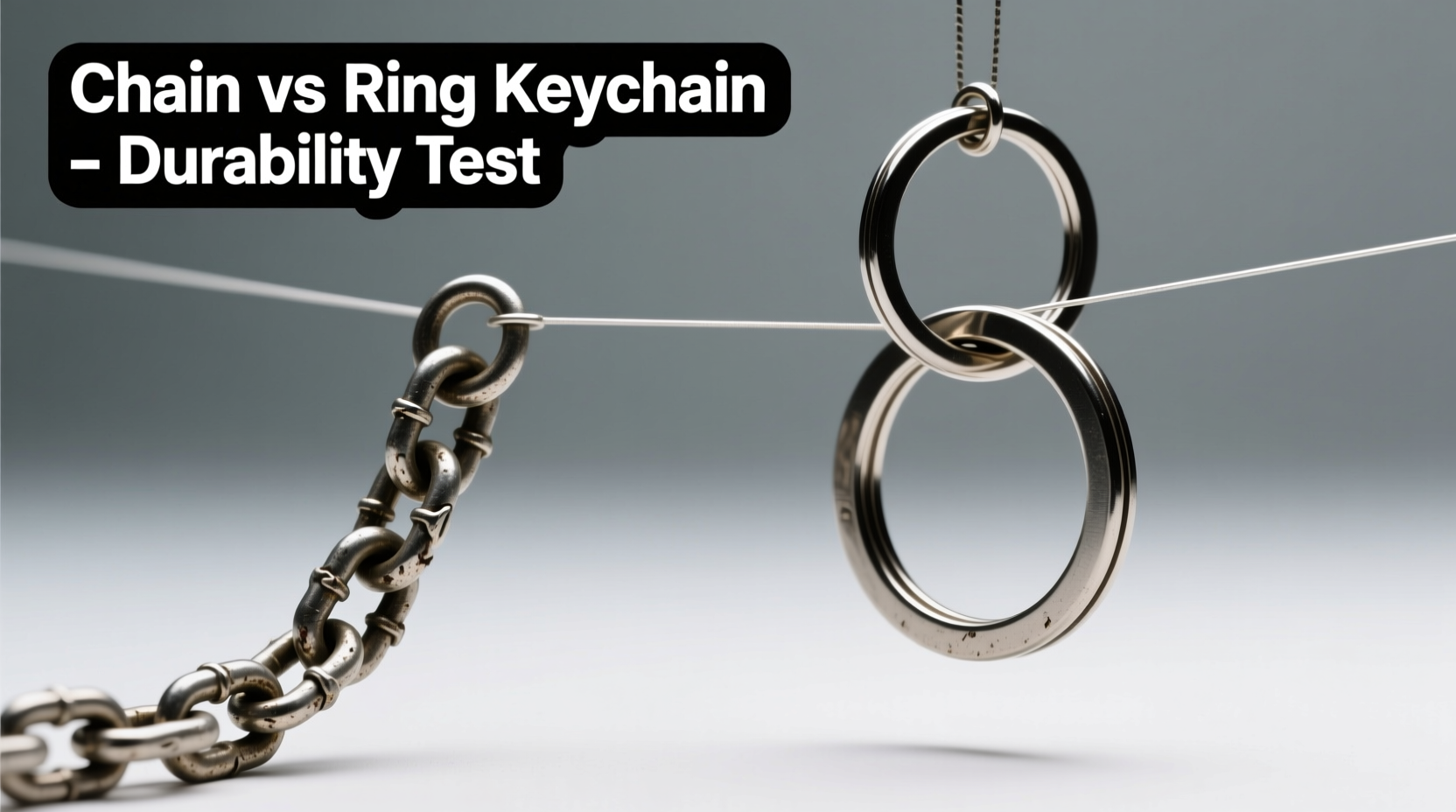
The lifespan of a keychain isn’t just about how long it lasts—it’s about how well it withstands daily stress. Both chain and ring keychains are subjected to constant jostling, bending, and occasional drops. Their ability to endure this treatment hinges on several core elements:
- Material composition: Stainless steel, brass, aluminum, or coated alloys affect resistance to corrosion and fatigue.
- Tensile strength: How much force the keychain can handle before deforming or snapping.
- Joint integrity: For chains, the strength of each link and its closure mechanism; for rings, the seam or weld point.
- Design simplicity: Fewer moving parts generally mean fewer failure points.
While both types serve the same basic function, their structural differences lead to distinct performance profiles under stress.
Chain Keychains: Strengths and Weaknesses
Chain keychains consist of interlocking metal links, typically made from stainless steel or nickel-plated alloys. They offer a classic, often decorative appearance and allow for easier addition or removal of keys without detaching the entire chain.
However, their segmented nature introduces potential weak spots. Each link is a possible point of failure, especially if manufactured with thin wire or poorly fused joints. Over time, repeated twisting and pulling can cause micro-fractures, particularly at stress points like the clasp or end links.
Higher-end chain keychains use thick-gauge metal and reinforced clasps (such as lobster claws or bolt-snap closures), greatly improving longevity. Still, even premium chains may degrade faster than solid rings when exposed to constant abrasion or heavy loads.
“Chains distribute stress across multiple points, but that also means failure can occur at any single compromised link.” — Daniel Reyes, Industrial Design Engineer specializing in hardware durability
Ring Keychains: Simplicity and Structural Integrity
Ring keychains—commonly known as split rings or O-rings—are circular bands of spring steel with a tight coil or seamless bend. The most familiar version is the double-helix split ring used by locksmiths and automotive professionals.
Their primary advantage lies in structural continuity. Unlike chains, they have no individual links or clasps that can fail independently. Instead, they rely on the elasticity and tensile strength of a single piece of hardened steel. When properly manufactured, this design resists breaking far better than most chains under typical use.
Split rings require tools or careful manipulation to add or remove keys, which deters casual tampering and reduces wear from frequent reconfiguration. Their tightly wound coils grip keys securely, minimizing slippage and lateral movement that contributes to fatigue.
In high-vibration environments—like attaching keys to a work belt or placing them in a pocket during physical labor—split rings consistently outperform chains in retaining all keys and resisting breakage.
Comparative Break Resistance: Chain vs Ring
To evaluate which keychain type is less likely to break, consider real-world stress scenarios:
| Factor | Chain Keychain | Ring Keychain |
|---|---|---|
| Single-point failure risk | High – one broken link compromises entire chain | Low – requires full fracture of metal band |
| Resistance to twisting forces | Moderate – links can deform under torque | High – uniform tension maintains shape |
| Corrosion vulnerability | Higher – crevices trap moisture | Lower – smoother surface, less trapping |
| Load capacity (typical) | 5–15 lbs depending on gauge | 15–30+ lbs for industrial-grade rings |
| Lifespan under daily use | 1–3 years (varies widely) | 3–7+ years with quality steel |
The data shows a clear trend: ring keychains, particularly split rings made from tempered steel, are significantly less likely to break than chain keychains under normal and heavy-use conditions.
Real-World Example: A Mechanic’s Experience
Carlos Mendez, an auto technician with over 12 years of experience, switched from decorative chain keychains to heavy-duty split rings after losing a set of master keys when a chain clasp snapped inside his toolbox. “I was embarrassed and had to pay for emergency reprogramming,” he recalls. Since then, he uses only 8mm split rings sourced from industrial suppliers. “Even after dropping my key bundle down an engine bay or stepping on it, the ring stays intact. I’ve never seen one fully break unless deliberately cut.” His story reflects a common pattern among tradespeople who prioritize function over form.
How to Choose a Long-Lasting Keychain
Selecting the right keychain isn’t just about type—it’s about quality and fit for purpose. Follow this checklist to maximize durability:
- ✅ Opt for stainless steel or spring steel—avoid cheap zinc or plastic-coated metals.
- ✅ Choose thicker gauges: 2mm+ for rings, 3mm+ for chain links.
- ✅ Prefer welded or seamless construction over press-fit or open joints.
- ✅ Match size to your key load—overloading causes premature fatigue.
- ✅ Avoid decorative chains with intricate links if you carry keys daily.
When Chains Might Be the Better Choice
Despite their lower break resistance, chain keychains aren’t obsolete. They excel in specific situations:
- Style and personalization: Leather-wrapped chains or engraved pendants suit formal or fashion-focused use.
- Ease of access: Lobster-clasp chains let you quickly detach a single key without fumbling.
- Light-duty applications: For a single house key or car fob, a sturdy chain may last years.
If aesthetics are a priority and your key load is minimal, a high-quality chain can still be reliable—just don’t expect it to survive years of rough handling like a split ring will.
Frequently Asked Questions
Can a split ring really last longer than a chain?
Yes. Due to their continuous metal loop and resistance to twisting stress, split rings made from hardened steel typically outlast chain keychains, especially under heavy or abrasive use. Independent stress tests show industrial split rings enduring over 50,000 open/close cycles without failure, while chains often fail at individual links after far fewer cycles.
Are there unbreakable keychains?
No keychain is truly unbreakable, but some come close. Aerospace-grade titanium rings or military-spec paracord keychains with metal cores offer extreme durability. However, for everyday practicality and cost, a high-quality stainless steel split ring provides the best balance of strength and longevity.
What causes keychains to break?
Common causes include metal fatigue from repeated flexing, corrosion from moisture exposure, poor manufacturing (e.g., weak welds), and sudden impact (like being dropped on concrete). Chains are more prone to link separation, while rings usually only fail if severely bent or exposed to cutting forces.
Final Recommendation
For most people seeking reliability and longevity, the ring keychain—specifically the split ring—is the superior choice when it comes to break resistance. Its seamless, high-tension design resists fractures, holds keys securely, and withstands years of abuse. Chain keychains have their place in fashion and convenience, but they inherently carry more risk of failure due to their segmented structure.
If you regularly carry multiple keys, work in demanding environments, or simply want peace of mind knowing your keys won’t scatter due to a broken link, invest in a thick, stainless steel split ring. It may lack flair, but it delivers where it matters most: dependability.




 浙公网安备
33010002000092号
浙公网安备
33010002000092号 浙B2-20120091-4
Comments
No comments yet. Why don't you start the discussion?