
When it comes to choosing the right handbag, most people focus on size, color, or brand. But one of the most overlooked—and arguably most important—features is the strap. Specifically, whether it’s made of chain, fabric, or a hybrid material. The strap directly affects how comfortable your bag feels after just 20 minutes of wear. And while aesthetics matter, nothing ruins a stylish look faster than a digging chain link or a slipping nylon strap. So which truly feels better on your shoulder: chain or fabric?
The answer isn’t as simple as “soft wins.” Each material has strengths and trade-offs that depend on body type, daily use, outfit pairing, and even climate. To make an informed decision, we need to examine not just feel, but also function, fashion, and long-term usability.
Comfort: The First Factor That Matters
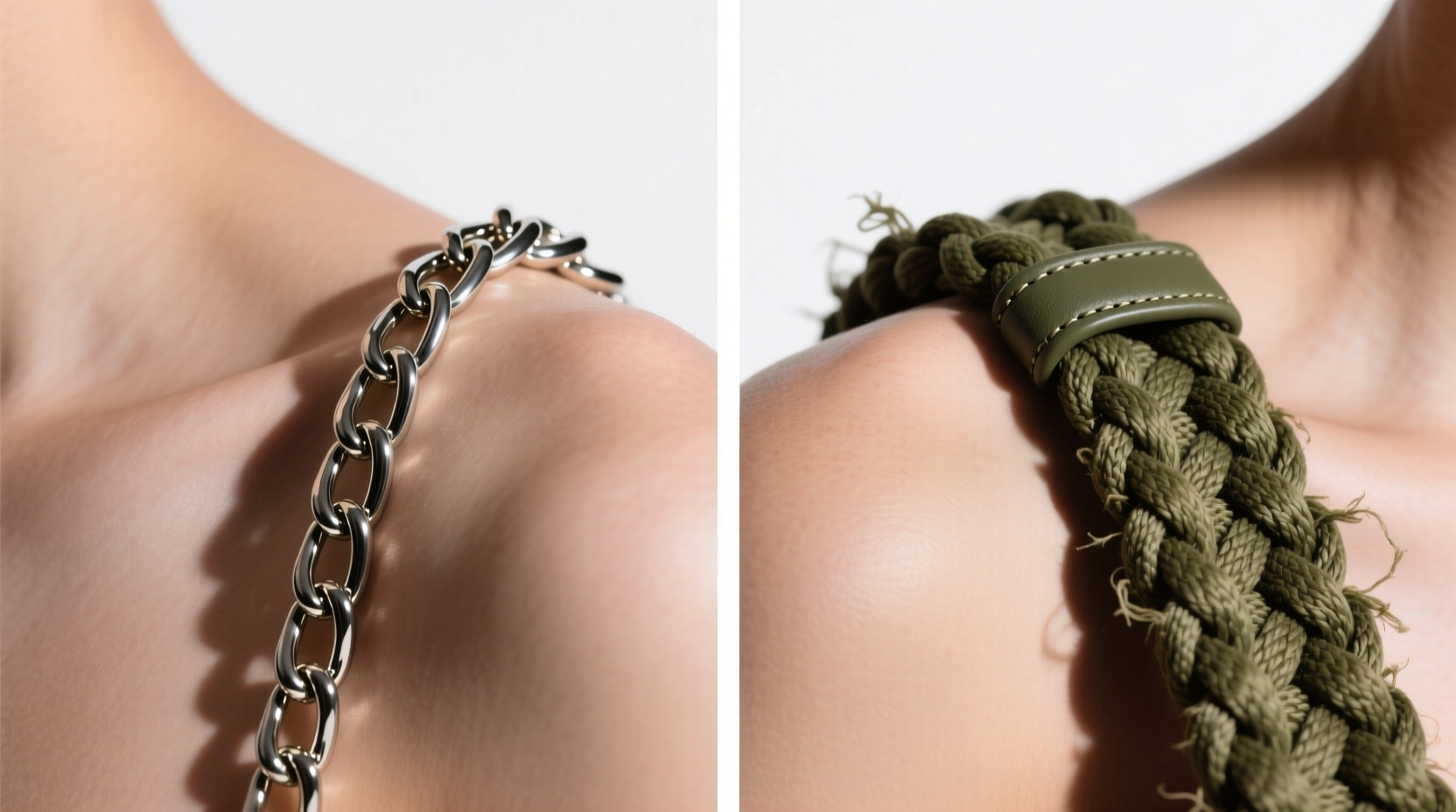
Comfort is subjective, but physics doesn’t lie. Weight distribution, pressure points, and friction all play roles in how a strap feels over time.
Fabric straps, typically made from cotton webbing, nylon, polyester, or woven canvas, are generally softer against the skin. They have slight elasticity and tend to lie flat on the shoulder, spreading weight more evenly. This makes them ideal for heavier loads—like work bags with laptops or grocery runs.
In contrast, metal chain straps are rigid and concentrated. Even when plated or linked with leather padding, they create narrow pressure zones. Over time, especially with heavier bags, this can lead to indentations, soreness, or even nerve compression. However, many luxury brands integrate chain-and-leather combos to soften the impact—offering shine without sacrificing all comfort.
Durability and Longevity Compared
Fabric may feel better initially, but how does it hold up over months or years of use?
Fabric straps are surprisingly resilient. High-quality nylon or reinforced webbing can withstand daily wear, resist fraying, and tolerate moisture better than expected. However, they’re prone to staining, fading in sunlight, and absorbing odors if not cleaned regularly. Sweat, makeup, and rain can degrade fibers over time, especially in humid climates.
Chains, on the other hand, are built to last. Stainless steel or brass-based chains don’t degrade with exposure to elements and rarely show wear unless scratched or poorly plated. But their strength comes at a cost: joints can loosen, links may snag delicate fabrics, and constant flexing can cause fatigue at stress points (especially where chains connect to the bag).
“Metal hardware fails not from breaking, but from repeated micro-movements at anchor points. It’s why reinforced stitching matters as much as the chain itself.” — Daniel Park, Handbag Design Engineer
Style vs. Substance: When Fashion Drives Function
Let’s be honest—many people choose chain straps because they look expensive. There’s an undeniable elegance in the glint of gold-toned links paired with a sleek crossbody. Chains elevate minimalist silhouettes and add structure to slouchy designs.
Fabric straps, meanwhile, lean toward casual, utilitarian, or sporty aesthetics. Think tote bags, backpacks, or canvas shoppers. While modern designers are reimagining fabric with textured weaves and bold patterns, they still lack the instant luxury signal of metallic shine.
Yet, style shouldn’t override practicality. A stunning chain-handled clutch might dominate your Instagram feed, but if you’re shifting it from shoulder to hand every five minutes due to discomfort, it’s failing its primary purpose: carrying your essentials comfortably.
Hybrid Designs: The Best of Both Worlds?
An increasing number of brands are blending materials to balance form and function. Common hybrids include:
- Chain-over-leather: A thin chain draped over a wide leather shoulder pad
- Fabric-core chains: Metal links strung onto a soft textile base for flexibility
- Detachable fabric inserts: Cushioned pads that clip into chain loops
These solutions aim to preserve visual appeal while improving ergonomics. In practice, they work well for occasional wear—but often add complexity (e.g., extra parts to lose) and aren’t always adjustable.
Real-World Test: Commuter vs. Evening Out
Consider two scenarios:
Scenario 1: The Daily Commute
You’re walking 30 minutes each way, carrying a medium tote with wallet, phone, water bottle, and work notebook (~5 lbs). You’ll be standing on a train, possibly in summer heat.
In this case, a wide fabric strap distributes weight efficiently, breathes better, and won’t bounce or swing unpredictably. A chain would dig into your shoulder, trap heat, and likely slip off during movement.
Scenario 2: Dinner Out With Friends
You’re wearing a sleeveless dress, want something chic, and only need keys, lipstick, and phone (~1 lb). Style is prioritized; comfort is secondary.
A delicate chain strap complements the outfit, stays visible without bulk, and adds polish. Since the load is light, discomfort is minimal—even after hours of wear.
This contrast shows that “better” depends entirely on context. There’s no universal winner—only what suits your lifestyle.
Comparison Table: Chain vs Fabric Straps
| Feature | Chain Straps | Fabric Straps |
|---|---|---|
| Shoulder Comfort | Poor to moderate (pressure concentration) | Good to excellent (even weight distribution) |
| Durability | High (if well-made) | Moderate (prone to stains/fading) |
| Style Flexibility | Best for formal/evening looks | Better for casual/daytime wear |
| Maintenance | Wipe clean; avoid moisture to prevent tarnish | Spot clean; may require washing |
| Weight Impact | Adds significant heft to bag | Lightweight; adds negligible weight |
| Slip Resistance | Low (especially on silk/sleeveless) | High (textured surface grips clothing) |
Actionable Checklist: Choosing the Right Strap for You
Before buying your next bag, ask yourself these questions:
- Will I carry this daily or occasionally?
- How heavy will the contents usually be?
- Do I wear sleeveless tops often?
- Is ease of cleaning important?
- Am I willing to sacrifice some comfort for style?
- Does the strap adjust or allow crossbody wear?
- Are replacement parts or repairs available?
If most answers lean toward practicality, go fabric. If you prioritize evening elegance and light loads, chains can work—with caveats.
FAQ: Common Questions About Bag Straps
Can I replace a chain strap with a fabric one?
Yes, many designer bags offer interchangeable straps, or you can purchase third-party alternatives with compatible clasps. Just ensure the new strap’s weight capacity matches your usage.
Why do luxury brands use chain straps if they’re uncomfortable?
Chains signal craftsmanship and opulence. Historically, they were associated with heirloom pieces and high-end fashion houses like Chanel. Today, they remain a stylistic signature—even if ergonomics lag behind.
Are padded chain straps worth it?
They help, but only marginally. Padding reduces direct pressure but doesn’t eliminate the rigidity of the chain. For frequent use, a fully fabric or leather strap remains superior.
Final Thoughts: Prioritize Your Shoulder, Not Just the Aesthetic
At the end of the day, a bag should serve you—not punish you. While chain straps undeniably turn heads, they often do so at the expense of sustained comfort. Fabric straps may lack the glamour factor, but they deliver where it counts: long-term wearability, adaptability, and user-friendly design.
The smartest approach? Own both. Keep a structured chain bag for nights out or meetings where presentation matters. Invest in a durable fabric-strap tote or satchel for daily errands, travel, or active days. And if you must have a chain, look for models with detachable shoulder guards or dual-strap options.




 浙公网安备
33010002000092号
浙公网安备
33010002000092号 浙B2-20120091-4
Comments
No comments yet. Why don't you start the discussion?