
Keychains are more than just tools to keep your keys together—they’re personal accessories. From minimalist metal rings to whimsical charm-laden collections with tiny pandas, hearts, and even miniature books, the choices reflect individuality. But as charm keychains grow in popularity, a practical question emerges: do these decorative additions enhance daily life, or do they simply create clutter, noise, and frustration?
This isn’t just about aesthetics. It’s about function, longevity, safety, and the subtle ways small design choices impact everyday routines. Whether you're someone who collects charms from every trip or prefers the clean efficiency of a single loop, understanding the trade-offs between charm and plain keychains can help you make smarter decisions—ones that balance personality with practicality.
The Allure of Charm Keychains: Why People Love Them
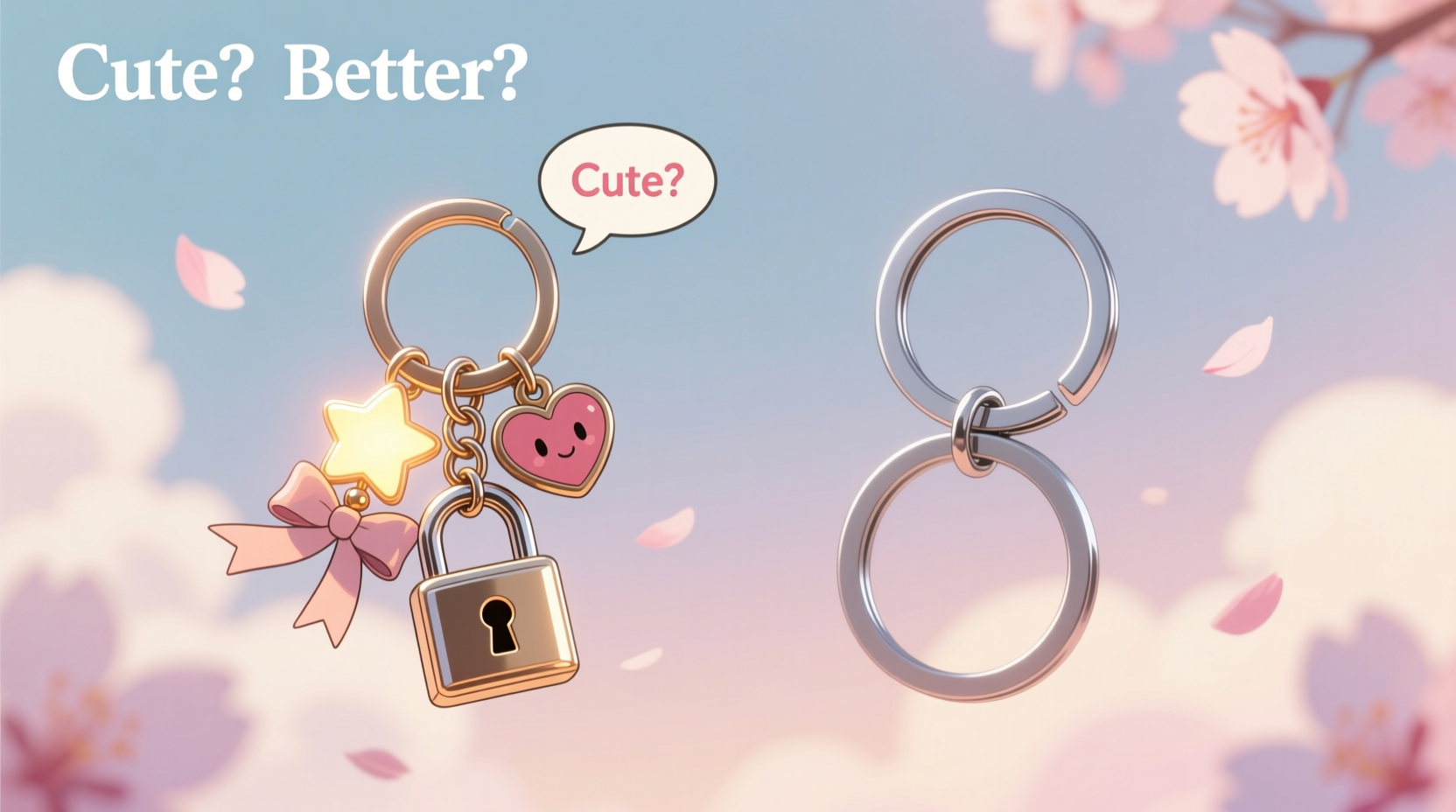
Charm keychains have surged in popularity thanks to social media trends, gift culture, and the rise of kawaii (cute) aesthetics. They offer emotional value beyond utility. A tiny enamel cat might remind someone of a lost pet. A souvenir charm from Paris could evoke cherished memories. For many, attaching meaning to everyday objects transforms mundane items into keepsakes.
Retailers capitalize on this by offering customizable options, seasonal releases, and limited-edition collaborations. According to retail analyst Miriam Tran, “The charm accessory market has grown 14% annually over the past five years, driven largely by Gen Z and millennial consumers seeking self-expression through functional items.”
“People don’t just buy charm keychains for looks—they buy them for stories. Each one becomes a tactile memory.” — Miriam Tran, Consumer Trends Analyst
Beyond sentimentality, some users appreciate how charms make their keys easier to identify in a crowded bag or among similar-looking sets. Bright colors, unique shapes, or dangling elements stand out quickly, reducing fumbling time at doors or in dim lighting.
The Downside: When Cute Becomes Cumbersome
Despite their appeal, charm keychains come with tangible drawbacks. The most common complaint? Noise. Metal-on-metal jingling during commutes, walks, or meetings can be distracting—even embarrassing. In quiet environments like libraries, offices, or public transit, excessive rattling draws unwanted attention.
Another issue is bulk. Large or numerous charms increase the size and weight of a keyring, making it harder to fit into pockets or small bags. This added mass also increases wear on keyring components, leading to faster loosening or breakage. Over time, stress fractures in cheaper alloys can cause parts to snap unexpectedly.
Worse still, protruding charms pose entanglement risks. They can catch on fabric, seatbelts, or even fingers—especially problematic for children or those with mobility challenges. Emergency situations where quick access to keys is essential become more complicated when tangled chains delay retrieval.
A Practical Comparison: Charm vs Plain Keychains
To evaluate which type serves users best, consider four core factors: durability, convenience, security, and maintenance. Below is a comparison table summarizing key differences.
| Feature | Charm Keychains | Plain Keychains |
|---|---|---|
| Durability | Lower – extra weight and movement stress joints and connectors | Higher – fewer moving parts, less strain |
| Convenience | Moderate – easy to spot but bulky and noisy | High – compact, silent, pocket-friendly |
| Security | Riskier – charms can jam locks or get caught in mechanisms | Safer – smooth operation, no obstructions |
| Maintenance | Higher – requires regular cleaning and inspection for loose parts | Minimal – occasional wipe-down sufficient |
| Personalization | High – endless design and emotional customization options | Low – limited to color or engraving |
The data suggests a clear divide: charm keychains win in expression and visibility; plain ones dominate in reliability and ease of use. Neither is universally superior—the best choice depends on lifestyle and priorities.
Real-Life Example: Office Worker vs Travel Enthusiast
Consider two individuals: Sarah, a corporate project manager, and Leo, a freelance travel photographer.
Sarah carries her keys clipped to a slim leather pouch inside her work tote. She values silence during meetings and dislikes anything that adds bulk. After repeatedly catching her old charm keychain on her blazer sleeve, she switched to a sleek titanium loop engraved with her initials. Her mornings are smoother, and she reports feeling less frustrated by “small annoyances.”
Leo, on the other hand, collects a charm from every country he visits. His keyring includes a miniature Eiffel Tower, a Japanese daruma doll, and a Peruvian alpaca. While he acknowledges the jingle and size, he says, “It’s not just keys—it’s a conversation starter. People ask about the charms, and suddenly we’re talking about Machu Picchu instead of spreadsheets.” For him, the emotional payoff outweighs the inconvenience.
This contrast illustrates that context matters. Functional needs vary by environment, routine, and personal goals.
How to Choose Wisely: A Balanced Approach
You don’t have to choose sides. Many people successfully blend charm and function by adopting smart strategies. Here’s a step-by-step guide to building a thoughtful keychain setup:
- Assess your daily routine: Do you commute via bike, drive, or walk? Is noise a concern in your workspace?
- Select one meaningful charm: Instead of stacking multiple trinkets, pick one that holds significance.
- Use durable materials: Opt for charms made of stainless steel or silicone rather than brittle resin or thin metal.
- Secure connections tightly: Use split rings or locking lobster clasps to prevent accidental loss.
- Test before committing: Carry the full set for a week. Note any irritation, noise, or difficulty accessing keys.
- Replace flimsy jump rings with reinforced hardware.
- Keep spare keys on a separate, plain ring for emergencies.
- Rotate charms seasonally or by occasion to refresh style without overload.
Checklist: Building a Functional Yet Expressive Keychain
- ✅ One primary charm (maximum)
- ✅ High-quality keyring (e.g., brass or titanium)
- ✅ Secure attachment method (no loose links)
- ✅ Lightweight design (under 50g total)
- ✅ Smooth edges (no sharp points)
- ✅ Tested for noise and snagging
Frequently Asked Questions
Do charm keychains damage car ignitions or smart locks?
Possibly. Heavy or bulky charms can interfere with ignition cylinders, especially in older vehicles. With smart fobs, excess weight may strain the internal battery connection or prevent proper signal transmission if wrapped in metal. Experts recommend removing charms when using electronic key systems.
Can I personalize a plain keychain without adding charms?
Yes. Engraving, colored silicone sleeves, or custom laser etching on metal tags allow personalization without physical attachments. These options maintain sleekness while offering identity and style.
Are there safety concerns with charm keychains?
In rare cases, yes. Loose parts can become choking hazards for children. Additionally, long dangling elements may get caught in machinery or escalator gaps. Always inspect regularly for wear and avoid overly elaborate designs in high-risk settings.
Final Thoughts: Style Should Serve, Not Sabotage
Charm keychains aren’t inherently better or worse than plain ones—they’re tools shaped by intent. When chosen mindfully, a charm can bring joy, spark memories, and even improve functionality. But when accumulated thoughtlessly, they transform a simple tool into a source of friction.
The goal isn’t to eliminate personality from practical objects, but to align form with function. Whether you lean toward minimalism or maximalist flair, prioritize quality, safety, and real-world usability. A well-designed keychain—charmed or not—should make your life easier, not louder.




 浙公网安备
33010002000092号
浙公网安备
33010002000092号 浙B2-20120091-4
Comments
No comments yet. Why don't you start the discussion?