
Keys are essential. Keychains are optional. But in the last decade, charm keychains have surged in popularity—adorned with everything from enamel animals to miniature luxury logos. Meanwhile, the plain keychain remains a minimalist staple. So, what’s driving the shift? Are charm keychains truly functional, expressive, and worth the extra bulk, or is their appeal purely aesthetic—a fleeting trend fueled by social media?
The answer isn’t binary. While some view charms as frivolous clutter, others swear by their emotional, organizational, and even safety benefits. This article breaks down the real differences between charm and plain keychains, evaluates their pros and cons, and helps you decide whether the charm upgrade is meaningful—or merely marketed.
Functionality: Do Charms Add Practical Value?
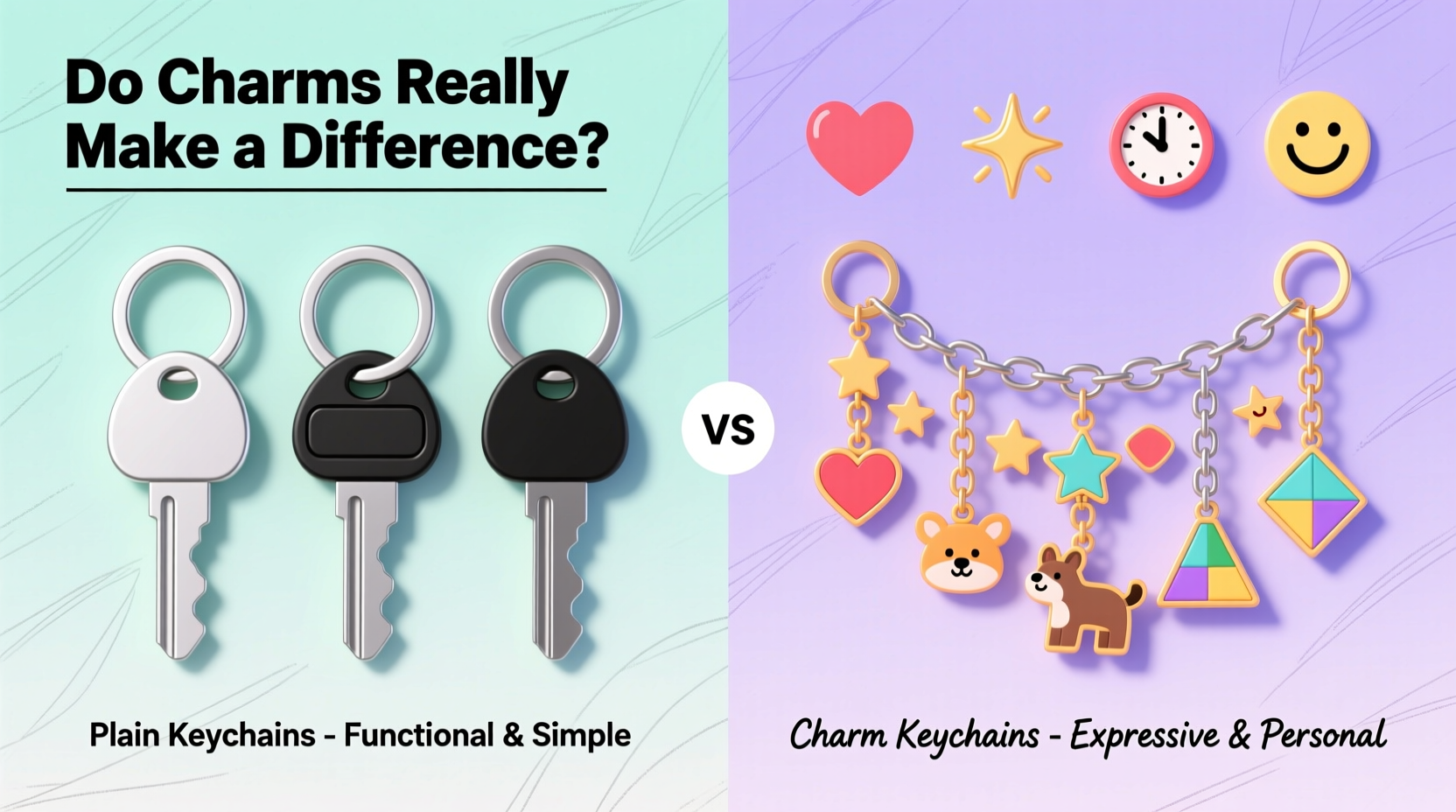
At first glance, a keychain’s job is simple: keep your keys together and easy to access. In that regard, both plain and charm versions perform equally well. However, charm keychains can introduce additional utility when thoughtfully designed.
Some modern charm keychains include built-in tools like bottle openers, mini flashlights, or USB drives. Others serve as fobs for smart keys or car alarms. These integrations go beyond decoration—they enhance daily function. Yet, many decorative charms offer no added utility and may even hinder efficiency by increasing bulk or tangling with other items in a bag.
When Charm Adds Real Utility
- Identification: Unique charms help distinguish your keys quickly in a crowded pile or among family members.
- Safety: Loud jingle charms can deter potential threats when walking at night—the sound signals awareness.
- Mental cues: A specific charm (e.g., a heart) might remind someone with memory challenges which key belongs to which lock.
- Emotional support: For some, carrying a charm representing a loved one or personal goal provides psychological comfort.
In contrast, plain keychains excel in simplicity. They’re less likely to snag, weigh down pockets, or break off unexpectedly. Their low-profile design suits professional settings where minimalism is preferred.
Style and Self-Expression: The Emotional Factor
Fashion is no longer limited to clothing. Accessories like keychains have become extensions of identity. Charm keychains allow users to express personality, interests, or affiliations—be it fandoms, travel memories, or cultural symbols.
“People use small accessories to assert control over their everyday experience,” says Dr. Lena Torres, consumer behavior researcher at the Institute of Material Culture.
“A charm on a keychain is a tiny declaration of self—low-stakes but deeply personal.”
This emotional resonance explains why charm keychains dominate gifting markets. They’re often sold in boutiques, souvenir shops, and online stores with themes ranging from astrology to pet portraits. For many, these trinkets aren’t about utility; they’re keepsakes.
Plain keychains, while less expressive, project sophistication through restraint. Leather loops, brushed metal rings, or engraved tags convey elegance without excess. They appeal to those who prioritize durability and discretion over flair.
Comparison Table: Charm vs. Plain Keychains
| Feature | Charm Keychains | Plain Keychains |
|---|---|---|
| Style Variety | High – wide range of colors, shapes, materials | Low to moderate – mostly neutral tones and simple designs |
| Durability | Variable – delicate charms may break or tarnish | High – fewer parts to fail |
| Portability | Lower – bulkier, may catch on fabric | High – compact and smooth |
| Personalization | High – easily customized with meaningful symbols | Moderate – usually via engraving only |
| Cost | $5–$50+ (depending on brand/design) | $3–$20 (generally affordable) |
Real-World Example: Two Commuters, Two Choices
Consider Sarah and James, both urban professionals who commute daily.
Sarah uses a charm keychain with a small brass compass pendant—a gift from her grandmother. It doesn’t help her unlock doors faster, but spotting it in her tote gives her a moment of calm during stressful mornings. She also finds her keys instantly in her bag because the compass jingles slightly when she moves.
James opts for a sleek titanium loop with no attachments. He values pocket space and dislikes anything that dangles. His keys slide smoothly into his jacket without catching. When he misplaced them once at the gym, a staff member recognized the unique metal finish and returned them promptly—proving even plain designs can be identifiable.
Their experiences show that neither choice is objectively better. The right keychain depends on lifestyle, priorities, and emotional connection.
Step-by-Step Guide: Choosing the Right Keychain for You
- Assess Your Daily Routine: Do you carry your keys in a bag, pocket, or hand? If you frequently dig through a crowded purse, a charm with visual or auditory distinction may help.
- Evaluate Your Environment: Working in an office? A loud or flashy charm might seem unprofessional. Outdoor work or travel? Consider ruggedness and visibility.
- Determine Your Priorities: Rank what matters most—style, silence, durability, identification, or multifunctionality.
- Test Before Committing: Try a removable charm on a clip. Use it for a week. Notice if it annoys you or adds value.
- Think Long-Term: Will this charm still resonate in six months? Avoid trendy items unless you enjoy rotating accessories seasonally.
Common Myths About Charm Keychains
Despite their popularity, several misconceptions persist:
- Myth: “Charms make keys easier to find.”
Reality: Only if the charm is visually distinct or makes noise. A small, muted charm adds no locating benefit. - Myth: “All charm keychains are fragile.”
Reality: High-quality enamel, stainless steel, or silicone charms can be extremely durable. - Myth: “Plain keychains are boring.”
Reality: Minimalist design often reflects intentionality, not lack of taste.
FAQ
Are charm keychains bad for car key fobs?
Not inherently, but heavy or dangling charms can stress the fob’s internal components over time, especially when jostled in motion. Lightweight, securely attached charms pose little risk.
Can I mix charm and plain styles?
Absolutely. Many people use a minimalist base keyring and attach one meaningful charm via a secondary loop. This balances expression with practicality.
Do charm keychains affect key longevity?
No direct impact. Keys wear due to mechanical use, not attached accessories. However, excessive weight may accelerate wear on split rings if they bend and weaken.
Final Verdict: Hype or Helpful?
Charm keychains are not just hype—but they’re not universally necessary either. Their value lies in context. For someone seeking individuality, emotional connection, or subtle functional enhancements, a well-chosen charm can enrich a mundane object. For others, particularly those valuing minimalism or high mobility, a plain keychain remains the smarter, cleaner option.
The rise of charm keychains reflects broader cultural shifts toward personalization and mindful consumption. We’re no longer satisfied with purely utilitarian objects—we want them to mean something. That doesn’t diminish the role of simplicity; it simply expands the spectrum of choice.




 浙公网安备
33010002000092号
浙公网安备
33010002000092号 浙B2-20120091-4
Comments
No comments yet. Why don't you start the discussion?