
The check engine light is one of the most misunderstood indicators on a car’s dashboard. When it illuminates, panic often follows—especially if you're miles from home or in the middle of rush hour. But while the light signals that something is wrong, it doesn’t always mean your vehicle is about to break down. Understanding what triggers the light, how serious the issue might be, and what steps to take next can save time, money, and stress.
Modern vehicles are equipped with onboard diagnostics (OBD-II), a system that monitors engine performance and emissions. When a sensor detects an anomaly, it sends a signal to the engine control unit (ECU), which then activates the check engine light. The key is determining whether the light is a warning or an emergency.
What the Check Engine Light Really Means
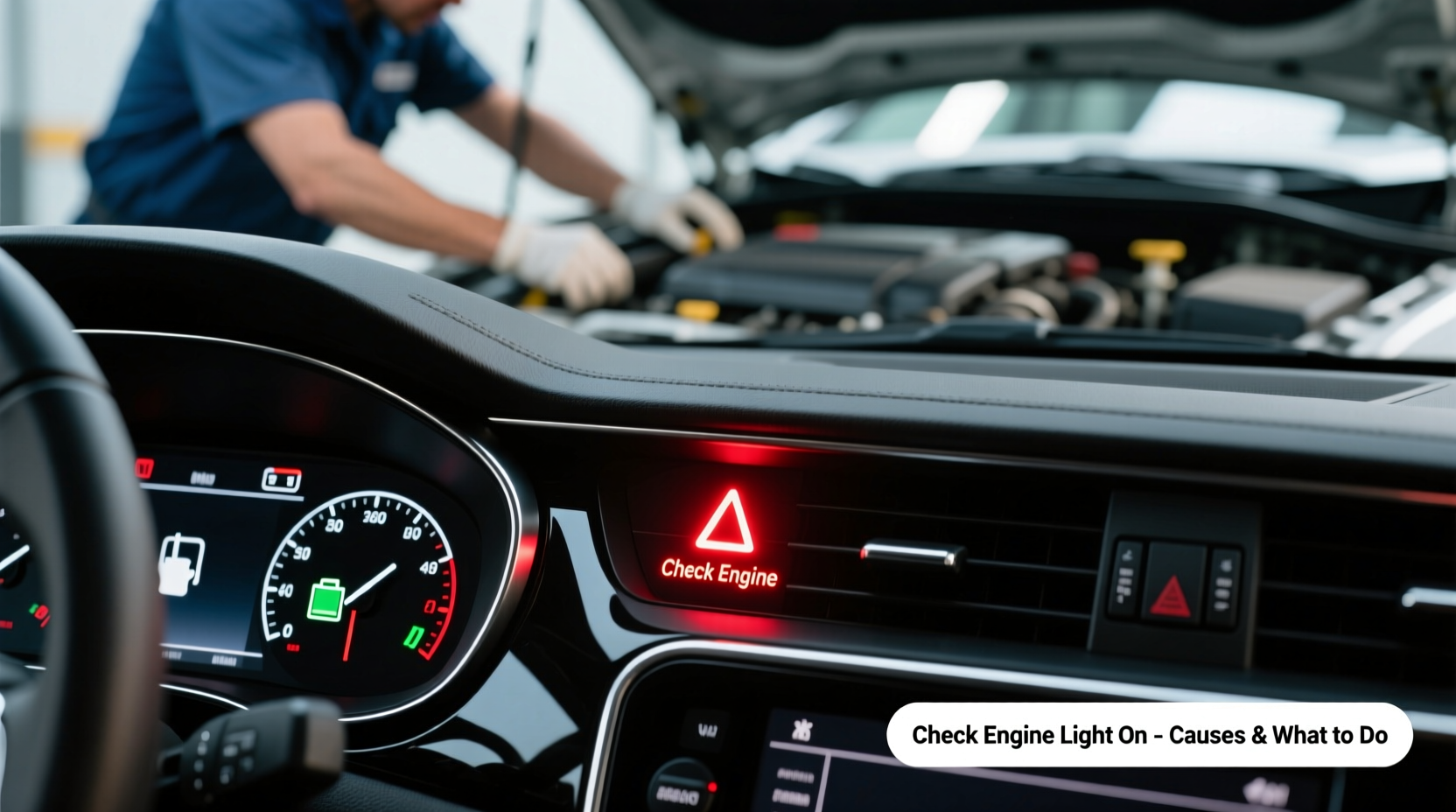
The check engine light (CEL) is not a single-purpose alert. It can indicate anything from a loose gas cap to a failing catalytic converter. The light may appear as “Check Engine,” an engine-shaped icon, or both. Its behavior matters: a steady glow typically suggests a non-critical issue, while a flashing light indicates a severe problem requiring immediate attention.
When the ECU logs a fault, it stores a diagnostic trouble code (DTC). These codes—like P0300 (random misfire) or P0420 (catalyst efficiency below threshold)—help mechanics pinpoint the root cause. Without reading these codes, guessing the problem is unreliable.
“Over 70% of check engine lights are triggered by issues related to the fuel system or oxygen sensors. Many are simple fixes if addressed early.” — David Lin, ASE-Certified Master Technician
Common Causes of the Check Engine Light
The range of possible causes is broad, but some are far more frequent than others. Here’s a breakdown of the most typical triggers:
- Loose or faulty gas cap: A poorly sealed fuel system can trigger emissions-related codes. This is one of the easiest and cheapest fixes.
- Oxygen sensor failure: Monitors exhaust gases and helps regulate fuel mixture. A failing sensor reduces fuel efficiency and increases emissions.
- Spark plug or ignition coil issues: Misfires due to worn plugs or failed coils can damage the catalytic converter over time.
- Mass airflow sensor problems: Measures incoming air to optimize fuel delivery. Dirt or wear affects engine performance.
- Catalytic converter inefficiency: Often a result of long-term neglect. Replacement is expensive, so early detection is crucial.
- Faulty thermostat or coolant sensor: Can lead to overheating or incorrect temperature readings, affecting engine operation.
Immediate Steps to Take When the Light Comes On
Your response should depend on how the light behaves and how the car feels.
- Assess driving conditions: If the engine runs smoothly and there are no unusual sounds, smells, or loss of power, the issue may not be urgent.
- Check for obvious issues: Inspect the gas cap, look under the hood for disconnected hoses, and verify fluid levels.
- Use an OBD-II scanner: Inexpensive code readers are available at auto parts stores or online. Plug it into the port under the dashboard (usually near the steering column) to retrieve the DTC.
- Interpret the code: Some scanners provide basic descriptions. For example, P0171 means “System Too Lean (Bank 1),” indicating a fuel-air imbalance.
- Determine urgency: Flashing lights or rough engine performance require immediate service. Steady lights allow limited delay, but shouldn’t be ignored.
Real Example: A Preventable Repair
Jamal noticed his check engine light come on during a highway commute. His car ran fine, so he delayed visiting a mechanic for three weeks. When he finally did, the diagnostic revealed a misfire code (P0303). Further inspection showed a cracked ignition coil. Because the misfire had persisted, the catalytic converter was already damaged—a $1,200 repair instead of the $150 coil replacement needed earlier.
This scenario underscores a critical point: delaying action on a known issue can escalate minor problems into major expenses.
Do’s and Don’ts When Dealing With the Check Engine Light
| Action | Do | Don't |
|---|---|---|
| Light Behavior | Pull over safely if the light flashes or the engine stalls. | Ignore a flashing light or continue driving aggressively. |
| Diagnosis | Use an OBD-II scanner to read the code. | Rely solely on symptoms to guess the problem. |
| Repairs | Address issues promptly, especially misfires or sensor faults. | Clear codes without fixing the underlying cause. |
| Maintenance | Keep up with scheduled tune-ups and inspections. | Assume the light will go away on its own. |
When to Seek Professional Help
While DIY tools help identify issues, professional expertise is essential for accurate diagnosis and repair. Mechanics use advanced scan tools that access live data streams, perform component tests, and verify repairs. They also understand code patterns—some codes cascade from a single root cause.
If you lack mechanical experience or proper equipment, attempting complex repairs can lead to further damage. For instance, replacing an oxygen sensor without checking fuel trims could miss a deeper issue like a vacuum leak.
Preventive Maintenance Checklist
Regular care reduces the likelihood of surprise check engine lights. Follow this checklist to maintain engine health:
- Inspect and replace spark plugs per manufacturer schedule (typically every 30,000–100,000 miles).
- Replace air filters annually or every 12,000–15,000 miles.
- Use fuel injector cleaner every 6 months or 6,000 miles if using lower-tier gasoline.
- Check hoses and belts for cracks or wear during oil changes.
- Tighten the gas cap securely after each refuel.
- Schedule annual emissions system checks, especially in regions with smog inspections.
Frequently Asked Questions
Can I drive with the check engine light on?
Yes, if the light is steady and the car drives normally. However, prolonged driving without diagnosis risks further damage. If the light is flashing or performance is affected, stop driving and have the vehicle towed.
Will the light reset itself if the problem is fixed?
Sometimes. If the issue is resolved and doesn’t recur over several driving cycles, the ECU may turn off the light automatically. However, using a scanner to manually clear the code ensures accuracy and confirms the fix worked.
How much does it cost to diagnose a check engine light?
Many auto parts stores offer free code reading. Professional shops may charge $50–$100, though this is often waived if you proceed with repairs. Always ask about diagnostic fees upfront.
Conclusion: Act Early, Save Later
The check engine light isn’t something to fear—but it’s also not something to ignore. By understanding its meaning, responding appropriately, and maintaining your vehicle proactively, you can avoid unnecessary breakdowns and expensive repairs. Whether it’s a loose gas cap or a failing sensor, timely action preserves engine longevity and keeps your car running efficiently.




 浙公网安备
33010002000092号
浙公网安备
33010002000092号 浙B2-20120091-4
Comments
No comments yet. Why don't you start the discussion?