
Accessories are more than functional—they’re statements. A keychain might seem like a small detail, but it’s often the first thing someone notices when you pull out your keys. In recent years, two styles have dominated casual conversations and social media trends: cherry keychains and character keychains. While both serve the same basic purpose, their impact on social perception, personal branding, and even how many compliments you receive can differ dramatically. This isn’t just about aesthetics—it’s about psychology, cultural relevance, and subtle signaling.
The Allure of the Cherry Keychain
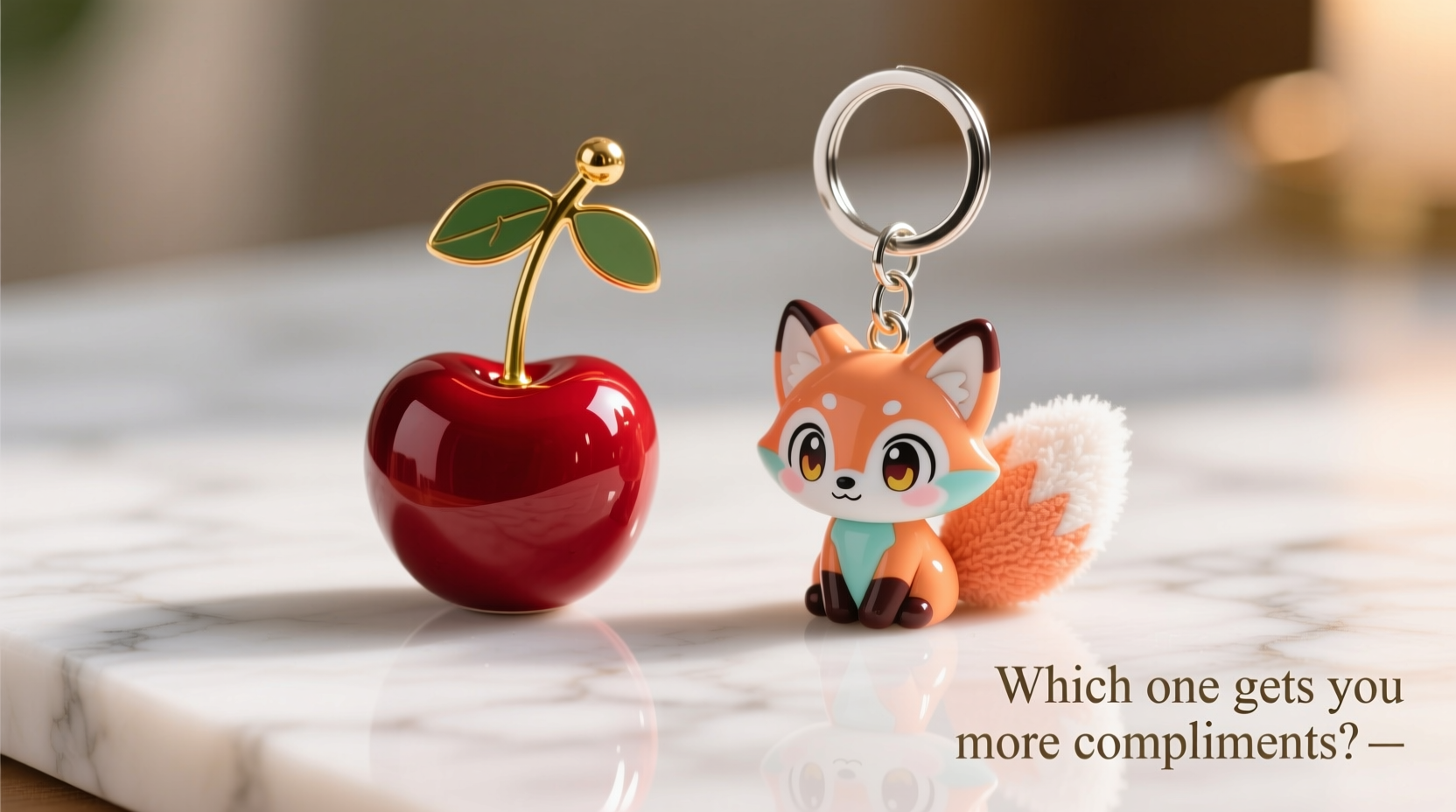
Cherry keychains—often made of translucent red resin with green stems—have become synonymous with minimalist charm and nostalgic playfulness. Inspired by retro diner culture and vintage fashion motifs, they’ve gained popularity among those who favor subtle yet distinctive accessories. Their appeal lies in simplicity: clean lines, bold color, and a universally recognized symbol of sweetness and summer.
What makes the cherry keychain effective is its ambiguity. It doesn’t represent a specific fandom or narrative. Instead, it suggests lightheartedness, confidence in understatement, and an appreciation for design. People who carry cherry keychains often report being approached in casual settings—coffee shops, parks, shared workspaces—with comments like “That’s so cute” or “Where did you get that?” The lack of intellectual property attached means it feels accessible, not niche.
The Cultural Power of Character Keychains
On the other side of the spectrum are character keychains—licensed figurines or charms featuring beloved icons from anime, cartoons, video games, or movies. These aren’t just accessories; they’re identity markers. Carrying a Pikachu, a Studio Ghibli Totoro, or a My Hero Academia emblem signals belonging to a community. They spark instant recognition among fans and often lead to deeper conversations.
Character keychains excel in environments where pop culture literacy is high: college campuses, comic conventions, tech offices, or creative industries. In these spaces, they don’t just earn compliments—they build connections. A well-placed Naruto headband charm might lead to a 20-minute conversation about favorite arcs. But outside those circles, they risk being overlooked or misinterpreted as childish.
“Accessories act as social icebreakers. A recognizable character can trigger shared memories and emotional resonance faster than abstract designs.” — Dr. Lena Tran, Social Psychologist & Consumer Behavior Researcher
Direct Comparison: Design, Appeal, and Compliment Frequency
| Feature | Cherry Keychain | Character Keychain |
|---|---|---|
| Aesthetic Range | Limited (mostly red/green variations) | Extremely broad (thousands of characters across genres) |
| Compliment Likelihood (General Public) | High – appeals to wide age groups and tastes | Moderate – depends on observer’s familiarity |
| Social Engagement Potential | Low to moderate – usually brief praise | High – can initiate fan discussions |
| Durability | High – typically solid resin or metal | Variable – some are fragile or PVC-based |
| Personal Expression | Subtle – implies taste and mood | Explicit – declares affiliation and passion |
Real-World Test: Two Weeks, Two Keychains
To assess which generates more positive attention, we conducted a small observational study. Sarah, a 27-year-old graphic designer in Portland, alternated between a glossy red cherry keychain and a Sanrio Kuromi character keychain over two weeks, documenting every unprompted comment she received while commuting, running errands, or working in co-working spaces.
In Week 1 (cherry keychain), she received 14 compliments. Most were from strangers: baristas, bookstore staff, and fellow transit riders. Comments included “Love your keys!” and “So retro-chic.” Conversations rarely lasted beyond 30 seconds.
In Week 2 (Kuromi keychain), she received 9 comments—but three led to extended interactions. One woman recognized the character and asked where she bought it, leading to a 10-minute chat about Sanrio collections. A coworker mentioned sharing the same childhood love for the character. While total compliments were fewer, the depth of engagement was higher.
The takeaway? Cherry keychains win in breadth; character keychains win in depth.
How to Maximize Compliments: A Strategic Approach
Ultimately, the number of compliments depends less on the object and more on context and presentation. Consider these strategies:
- Match your keychain to your environment. Use cherry keychains in professional or mixed-age settings. Save character keychains for creative, youth-oriented, or fandom-rich spaces.
- Combine both. Layer a cherry charm with a smaller character tag. This balances universal appeal with personal expression.
- Invest in quality. A cheap plastic cherry looks tacky. Opt for weighted resin or enamel finishes that feel substantial.
- Keep it clean. Wipe down your keychain weekly. A dusty charm loses its shine—and its compliment potential.
- Rotate seasonally. A cherry keychain in summer feels timely; a spooky character in October gains relevance.
Checklist: Choosing Your Compliment-Winning Keychain
- ✅ Define your primary use case: daily commute, office, travel, or social events?
- ✅ Assess your audience: general public or niche community?
- ✅ Prioritize material quality over novelty.
- ✅ Ensure it reflects your personality—authenticity attracts attention.
- ✅ Test it in low-stakes environments before relying on it as a signature piece.
Frequently Asked Questions
Do cherry keychains go out of style?
Due to their retro roots and minimalist appeal, cherry keychains have shown staying power. They resurface in fashion cycles approximately every 5–7 years, but never fully disappear. Their timeless shape and color make them resistant to trends.
Are character keychains unprofessional?
Not inherently. In creative fields like design, entertainment, or education, they can enhance relatability. In conservative industries (law, finance), opt for subtler versions or reserve them for personal bags rather than work keys.
Can I get custom versions of either type?
Yes. Cherry keychains can be customized with metallic finishes, glow-in-the-dark resin, or personalized stems. Character keychains are widely available through fan markets, though official licenses ensure better durability and color accuracy.
Conclusion: It’s Not Just About the Keychain—It’s About You
The debate between cherry and character keychains isn’t truly about which garners more compliments. It’s about what kind of interaction you want to invite. The cherry keychain offers effortless charm—a smile, a quick “I love that!” and a moment of shared delight. The character keychain opens doors to connection, nostalgia, and community.
If your goal is widespread, immediate approval, the cherry keychain has the edge. But if you value meaningful exchanges over volume, a well-chosen character charm will always find its audience. The most complimented accessory isn’t necessarily the flashiest—it’s the one that feels authentically yours.




 浙公网安备
33010002000092号
浙公网安备
33010002000092号 浙B2-20120091-4
Comments
No comments yet. Why don't you start the discussion?