
In the ever-evolving world of fashion accessories, trends rise and fall with surprising speed. Recently, a quiet but unmistakable shift has taken place on social media feeds, celebrity wrists, and even Gen Z backpacks: the humble cherry keychain. While charm bracelets have long held their place as sentimental favorites—stacked with meaningful trinkets from travels, milestones, and memories—a new contender is stealing the spotlight. The cherry keychain, often made of enamel or resin with a playful red-and-green design, has emerged as more than just a quirky add-on. It’s a cultural signal, a minimalist statement, and for many, a must-have. But which accessory is truly having its moment—and why?
The Resurgence of Charm Bracelets: A Legacy Reimagined
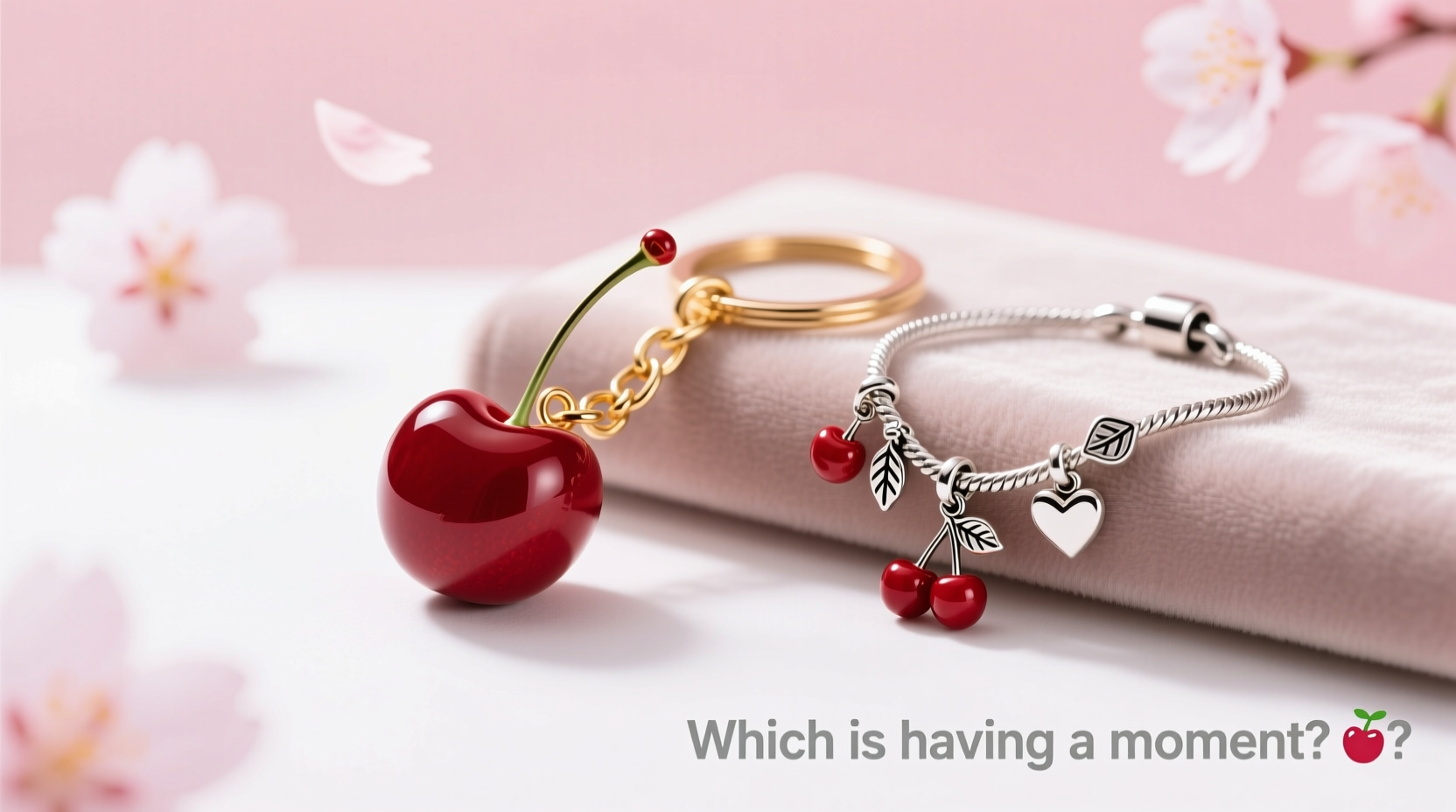
Charm bracelets are not new. Their origins trace back to Victorian-era lockets and Edwardian pocket watches, evolving into personalized keepsakes by the mid-20th century. In recent years, luxury brands like Tiffany & Co., Pandora, and Nomination have reinvigorated the trend, offering customizable options that blend craftsmanship with emotional storytelling.
Modern charm bracelets serve multiple roles: they commemorate relationships, symbolize personal growth, or simply reflect individual tastes. A tiny globe might represent a love for travel; a musical note could nod to a passion for jazz. These pieces are deeply intimate, often passed down through generations.
“Charm bracelets are wearable autobiographies. Each charm tells a chapter.” — Lila Montgomery, Jewelry Historian at the Fashion Institute of Technology
Despite their enduring appeal, charm bracelets face challenges in today’s fast-paced fashion cycle. They’re often seen as time-intensive to curate, expensive to build, and less practical for casual or athleisure wear. As lifestyles become more streamlined, so too do preferences in accessories.
The Rise of the Cherry Keychain: Simplicity Meets Symbolism
Enter the cherry keychain: small, bold, and instantly recognizable. What began as a niche item among Japanese streetwear enthusiasts and K-pop fans has exploded globally, thanks in large part to TikTok and Instagram aesthetics. Unlike charm bracelets, cherry keychains require no curation—they are singular, self-contained statements.
Why cherries? The fruit carries layered meanings across cultures: sensuality in Western art, transience in Japanese hanami (cherry blossom) traditions, and youthfulness in pop culture. When rendered in glossy red enamel with a stark green stem, it becomes a graphic icon—bold enough to stand out on a tote bag or jeans loop, yet subtle enough to avoid being kitschy.
Brands like Marine Serre, Jacquemus, and even fast-fashion retailers such as & Other Stories and Urban Outfitters now feature cherry-themed accessories. Independent artisans on Etsy have capitalized on the trend, offering hand-painted variations in pastel tones, glitter finishes, or even gothic black cherries.
Comparing the Two: Style, Function, and Cultural Relevance
To understand which accessory is truly “having a moment,” it helps to compare them across key dimensions. Below is a detailed breakdown of how cherry keychains and charm bracelets stack up in today’s fashion landscape.
| Feature | Cherry Keychain | Charm Bracelet |
|---|---|---|
| Style | Minimalist, playful, trendy | Classic, sentimental, customizable |
| Average Cost | $8–$50 | $50–$500+ |
| Lifespan | Seasonal (1–2 years) | Long-term (years to decades) |
| Cultural Reach | Global youth culture, social media-driven | Western-centric, gift-oriented |
| Wearability | High (can be attached anywhere) | Moderate (limited to wrist, can snag) |
| Sustainability | Low (often plastic-based, disposable) | High (metal, repairable, heirloom potential) |
The data suggests a clear divide: charm bracelets win in longevity and emotional depth, while cherry keychains dominate in accessibility, versatility, and viral appeal. For consumers seeking instant gratification and aesthetic cohesion with current trends, the cherry keychain is unmatched.
A Real-World Example: How One Influencer Shifted the Trend
In early 2023, Seoul-based stylist Mina Park posted a carousel on Instagram showing her cherry keychain collection clipped to everything from laptop bags to bike helmets. The post garnered over 270,000 likes and was shared widely in fashion subreddits and Pinterest boards. Within three months, searches for “cherry keychain” on Etsy rose by 180%, according to platform analytics.
What made Mina’s approach influential wasn’t just the product—it was the styling. She paired the keychains with neutral-toned outfits, allowing the red pop to shine. She also emphasized functionality: “It holds my keys, yes—but it also holds my mood,” she wrote in the caption. This blend of utility and emotional resonance struck a chord.
Her strategy exemplifies a broader shift: accessories are no longer just functional or decorative. They are extensions of identity, especially for younger audiences who value authenticity and visual storytelling.
How to Choose: A Practical Checklist
Deciding between a cherry keychain and a charm bracelet depends on your lifestyle, values, and aesthetic goals. Use this checklist to guide your choice:
- Do you prioritize trend alignment? → Cherry keychain
- Are you building a legacy piece? → Charm bracelet
- Do you want low-cost customization? → Cherry keychain (mix and match styles)
- Do you value sustainability? → Charm bracelet (especially if made of recycled metal)
- Is ease of wear important? → Cherry keychain (no risk of snagging)
- Are you gifting to someone sentimental? → Charm bracelet
- Do you love bold, graphic accents? → Cherry keychain
Expert Insight: Why Trends Favor the Fleeting
Fashion psychologists point to the accelerated pace of digital culture as a key driver behind the cherry keychain’s success. Dr. Naomi Reed, a researcher at Central Saint Martins, explains:
“The modern consumer isn’t just buying an object—they’re buying a micro-moment of belonging. The cherry keychain isn’t about permanence; it’s about participation in a shared visual language. It says, ‘I’m here, I see what’s cool, and I’m part of it.’ That’s powerful in an age of algorithmic visibility.” — Dr. Naomi Reed, Fashion Psychologist
This perspective underscores a fundamental truth: while charm bracelets speak to memory, cherry keychains speak to presence. They are designed for the now—perfectly suited to the ephemeral nature of social media trends.
FAQ
Can I wear a cherry keychain and a charm bracelet together?
Absolutely. Many fashion-forward individuals mix both: a delicate charm bracelet on the wrist and a cherry keychain clipped to a bag or belt. The contrast between timeless and trendy creates visual interest.
Are cherry keychains only for women?
No. While initially marketed toward feminine aesthetics, cherry keychains are increasingly embraced by all genders, especially in unisex streetwear and queer fashion circles where playful symbolism is celebrated.
How do I care for a cherry keychain?
Most are made of coated metal or resin. Wipe clean with a damp cloth and avoid prolonged exposure to water or direct sunlight to prevent fading.
Conclusion: The Moment Belongs to the Cherry Keychain—For Now
While charm bracelets remain beloved for their emotional depth and craftsmanship, the cherry keychain is undeniably having its cultural moment. It captures the spirit of 2024: bold, accessible, and visually driven. Its strength lies not in longevity, but in immediacy—a flash of color, a spark of joy, a signifier of being in the know.
That said, fashion is cyclical. Today’s fleeting trend may inspire tomorrow’s heirloom. Perhaps one day, a vintage cherry keychain will dangle from a grandmother’s charm bracelet, telling a story of a summer when red fruit ruled the streets.




 浙公网安备
33010002000092号
浙公网安备
33010002000092号 浙B2-20120091-4
Comments
No comments yet. Why don't you start the discussion?