
For urban commuters, choosing the right bag isn’t just about style—it’s about function, comfort, and daily reliability. The debate between chest bags and messenger bags has intensified in recent years as minimalist design and ergonomic innovation reshape how we carry our essentials. While messengers have long dominated the commuter scene with their ample space and professional look, chest bags are gaining ground for their agility, security, and streamlined profile. But is it actually worth abandoning your trusted messenger? The answer depends on your routine, load, and priorities.
The Evolution of Commuter Bags
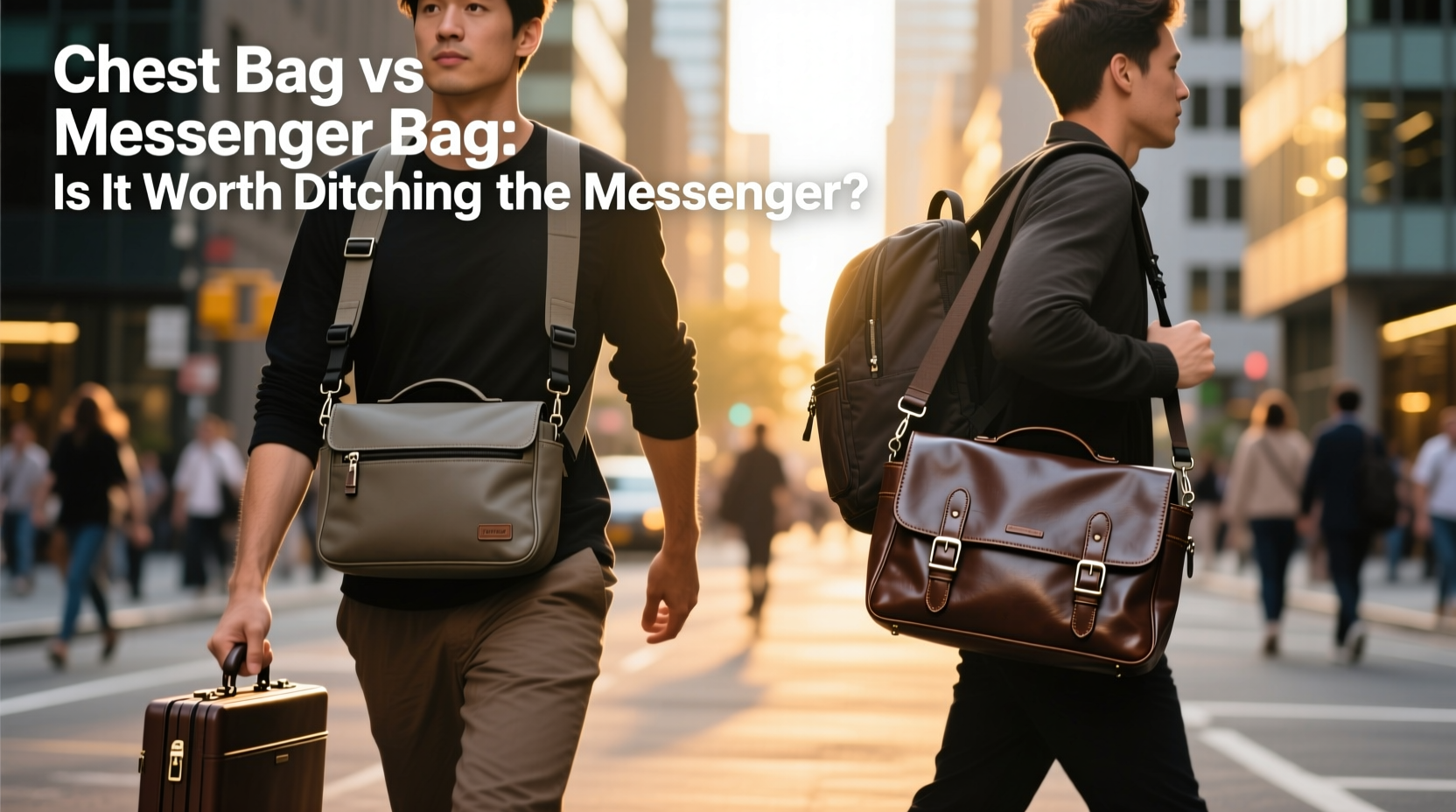
Messenger bags rose to prominence in the 1990s, favored by bike couriers who needed durable, spacious carriers that could be slung over one shoulder for quick access. Over time, they were adopted by office workers, students, and creatives alike—praised for their ability to hold laptops, notebooks, and multiple compartments. However, their single-strap design often led to shoulder strain during long commutes.
Chest bags, originally designed for outdoor enthusiasts and photographers, have evolved into sleek, urban-friendly accessories. Positioned across the torso, they distribute weight evenly and stay secure during movement. With improved materials and thoughtful layouts, modern chest bags now accommodate tech gear and daily essentials without sacrificing mobility.
Comfort and Ergonomics Compared
One of the most significant factors in any commute is physical comfort. Carrying a poorly balanced load can lead to back pain, posture issues, or fatigue—especially when walking or cycling.
- Messenger bags rest on one shoulder and hip, creating uneven weight distribution. Even with padded straps, prolonged use often leads to muscle imbalance or discomfort.
- Chest bags sit snugly across the upper torso, spreading weight between both shoulders and reducing spinal pressure. This makes them ideal for walking, biking, or navigating crowded transit.
A study conducted by the Human Factors and Ergonomics Society found that cross-body load distribution reduced perceived exertion by up to 30% compared to single-shoulder carrying methods. For those logging miles between home, office, and transit hubs, this difference adds up over time.
Capacity and Organization: What Can Each Carry?
While comfort matters, so does utility. Let’s compare typical storage capabilities:
| Feature | Messenger Bag | Chest Bag |
|---|---|---|
| Average Capacity | 15–25L | 5–12L |
| Laptop Compartment (up to) | 17 inches | 15 inches (some models) |
| Main Compartments | 2–4 (main + front + side) | 1–2 (main + quick-access) |
| External Pockets | Multiple (pen slots, phone, keys) | Limited (often 1–2) |
| Best For | Full workloads, documents, chargers, books | Essentials only: wallet, phone, keys, small laptop/tablet |
If your day requires hauling a full-sized laptop, external hard drives, notebooks, and lunch, a messenger remains superior in capacity. But if you travel light—perhaps relying on cloud storage, digital notes, and minimal accessories—a well-designed chest bag may be more than sufficient.
Security and Theft Resistance
In crowded cities, bag security is non-negotiable. Pickpocketing is common on public transport, and open flaps or loose straps make some bags easy targets.
- Messenger bags typically feature flap closures, but these often remain unsecured unless clipped or buckled. When worn on the back or side, they’re vulnerable to tampering.
- Chest bags stay in front of the body, within direct line of sight. Most modern versions include hidden zippers, RFID-blocking pockets, and lockable clasps—making unauthorized access far more difficult.
“Front-facing bags like chest packs dramatically reduce theft risk in high-density environments.” — Lena Torres, Urban Safety Consultant at CitySecure
This visibility also deters opportunistic theft. You’re less likely to leave a chest bag unattended because it’s physically attached to you—and harder to forget.
Real-World Scenario: A Week in Two Bags
Consider Mark, a UX designer living in downtown Chicago. He previously used a 20L canvas messenger to carry his 15” MacBook, sketchbook, headphones, power bank, and water bottle. His commute involved a 20-minute walk, 30 minutes on the El train, and another 10-minute walk to his office.
After developing mild shoulder tendinitis, he switched to a premium chest bag with a padded laptop sleeve and magnetic front closure. He downsized to a tablet for note-taking, stored files in the cloud, and carried only essentials. Within two weeks, his shoulder pain diminished, and he reported feeling “more agile” during rush hour.
Was there a trade-off? Yes—he could no longer carry a water bottle or extra jacket. But by adjusting his habits (using a backpack for gym days, leaving non-essentials at the office), the chest bag became his go-to for five-day workweeks.
When to Stick With a Messenger
Ditching your messenger isn’t always the right move. Consider keeping it if:
- You regularly carry more than 10 lbs of gear.
- Your job requires frequent printing, document exchange, or hardware transport.
- You commute in variable weather and need waterproof compartments.
- You value discretion and don’t want a bag prominently displayed on your chest.
Some professionals opt for a hybrid approach: using a messenger for heavy-load days and a chest bag for lighter, faster commutes.
Action Plan: How to Decide Which Bag Suits You
Follow this step-by-step guide to evaluate your needs:
- Inventory your daily carry: List every item you bring to work. Weigh the total load.
- Map your commute: Note distances walked, modes of transport, and congestion levels.
- Assess pain points: Are you experiencing strain, forgetting items, or worried about theft?
- Test a chest bag: Borrow or rent one for three days. Use only essentials.
- Evaluate after one week: Did you feel more comfortable? Were you missing anything?
- Decide: Either commit to a minimalist switch, adopt a dual-bag strategy, or optimize your current messenger with better padding and organization.
Frequently Asked Questions
Can a chest bag fit a laptop?
Yes, many modern chest bags include padded sleeves for laptops up to 15 inches. However, larger models may not fit comfortably, and protection is generally less robust than in dedicated laptop messengers.
Are chest bags professional enough for the office?
It depends on the environment. In creative industries or startups, chest bags are widely accepted. In conservative corporate settings, they may appear too casual. Opt for neutral colors (black, navy, charcoal) and minimalist designs to increase workplace appropriateness.
Isn’t a chest bag just a fad?
While trends come and go, the functional advantages of chest bags—weight distribution, security, and accessibility—are grounded in ergonomics and urban mobility research. Their rise reflects real shifts in how people work and move, not just fashion cycles.
Final Verdict: Is It Worth Ditching the Messenger?
For many commuters, yes—switching from a messenger to a chest bag is not only worth it but transformative. The shift supports better posture, enhances personal security, and encourages intentional packing. However, it requires a mindset change: embracing minimalism and reevaluating what you truly need each day.
If your lifestyle aligns with light carrying, active movement, and digital-first workflows, a chest bag can simplify your routine and improve comfort. But if your role demands heavy gear or formal presentation, the messenger still holds strong advantages.
Rather than viewing this as an all-or-nothing decision, consider it an evolution. Your bag should serve your life—not dictate it. Choose based on function, not habit.




 浙公网安备
33010002000092号
浙公网安备
33010002000092号 浙B2-20120091-4
Comments
No comments yet. Why don't you start the discussion?