
The Clásico Tapatío between Chivas and Atlas is one of the most emotionally charged rivalries in Mexican football. When these two Guadalajara-based teams meet, expectations run high—especially for Chivas, given their larger fanbase and historical success. However, during the Clausura 2010 tournament, Chivas delivered a performance that shocked fans and analysts alike: a humiliating 4–0 defeat to their city rivals. This wasn’t just a loss; it was a collapse on multiple levels. To understand what went wrong, we must examine the tactical, psychological, and organizational factors that contributed to one of Chivas’ worst performances in recent memory.
Tactical Mismanagement and Formation Flaws
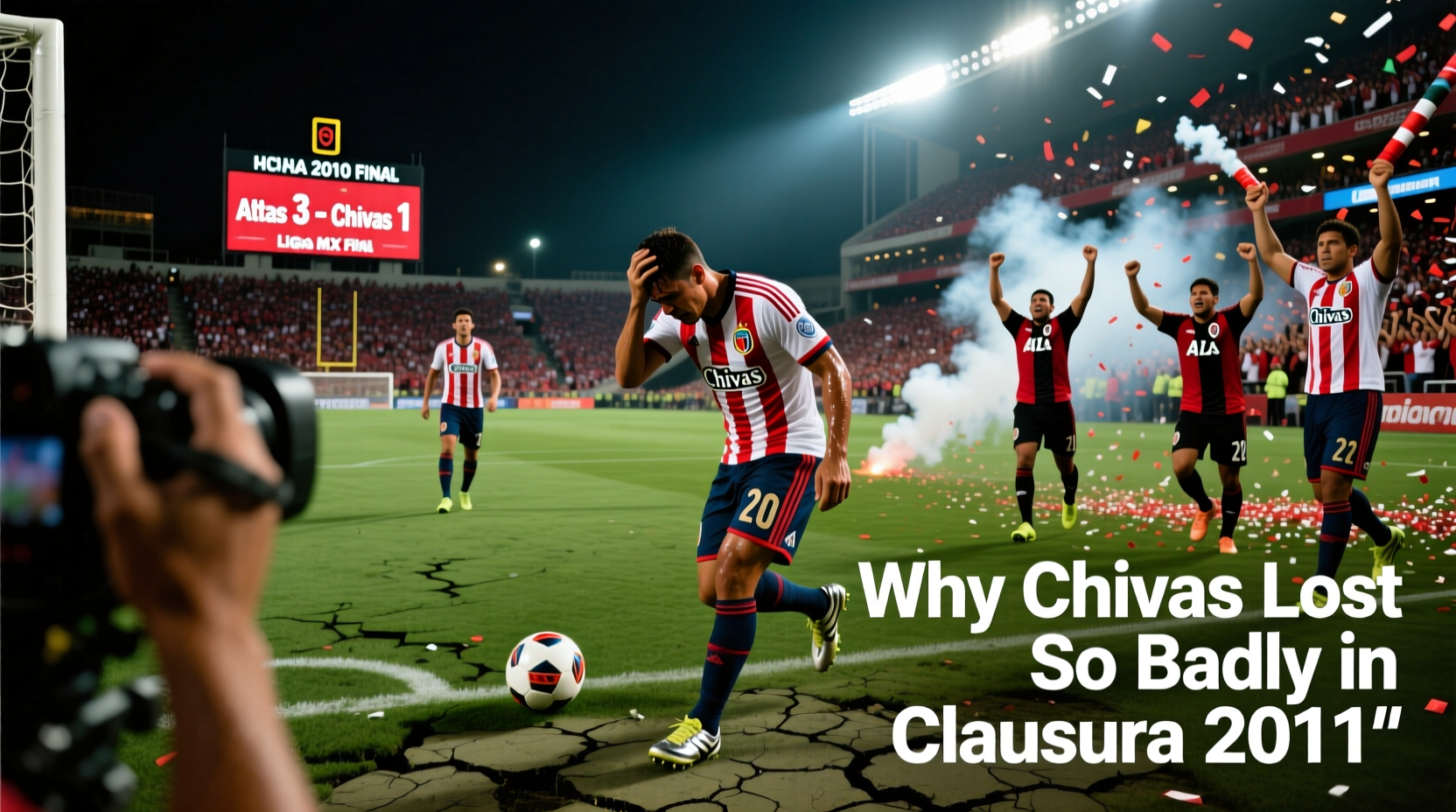
At the heart of Chivas’ downfall in the Clausura 2010 clash with Atlas was a fundamental failure in tactical execution. Under then-coach José Manuel de la Torre, Chivas lined up in a 4–4–2 formation that left them vulnerable on both flanks. The midfield lacked cohesion, with players failing to press effectively or transition quickly after losing possession. Atlas, under the guidance of Diego Cocca, exploited this with precision.
Atlas used a compact 4–2–3–1 shape that overwhelmed Chivas in central areas. Their double pivot shielded the backline while allowing creative freedom to their attacking midfielder, who repeatedly found pockets of space between Chivas’ defensive and central midfield lines. The absence of disciplined positional play from Chivas meant their fullbacks were constantly exposed when pushing forward, leaving gaps that Atlas wingers capitalized on.
Psychological Pressure and Club Environment
Chivas entered the match under immense pressure. As the more successful and popular side, expectations were sky-high. Any slip-up against Atlas is considered unacceptable by the fanbase. In the weeks leading up to the match, internal tensions within the squad had begun to surface. Reports indicated friction between senior players and coaching staff over rotation policies and playing time.
This unrest manifested on the pitch. From the first whistle, Chivas appeared anxious and reactive. Instead of asserting dominance early, they allowed Atlas to set the tempo. Once Atlas scored their opening goal in the 23rd minute, Chivas visibly unraveled. The second goal before halftime shattered their confidence, and by the time the third and fourth goals came in the second half, the team had effectively surrendered.
“Derbies are won in the mind before they’re won on the field. When a team carries fear instead of fire, even the smallest mistakes become catastrophic.” — Raúl García, Sports Psychologist & Former Liga MX Analyst
Squad Depth and Player Performance Breakdown
A closer look at individual performances reveals a lack of leadership and accountability across key positions. The starting center-back pairing failed to communicate, leading to multiple misjudged clearances and poor marking on set pieces. The goalkeeper, despite being experienced, made uncharacteristic errors—including a fumble that led directly to the third goal.
Midfielders showed little urgency in regaining possession, and the forwards were isolated throughout the game. Chivas completed only 72% of their passes, well below their seasonal average, indicating a breakdown in rhythm and decision-making.
| Position | Player (Example) | Performance Rating | Key Issue |
|---|---|---|---|
| Goalkeeper | Luis Michel | 4/10 | Failed to command box, hesitant on crosses |
| Center Back | Carlos Salcido | 5/10 | Pulled out of position, slow recovery |
| Defensive Mid | Jesús Arellano | 4/10 | Lacked intensity, poor tackling |
| Attacking Mid | Fernando Cárdenas | 5/10 | Ineffective distribution, minimal impact |
| Striker | Marco Fabián (substitute) | 6/10 | Entered too late, limited service |
Organizational Instability Behind the Scenes
Beyond the pitch, Chivas was navigating a period of administrative turmoil. Ownership changes and shifting priorities in player recruitment weakened long-term planning. Unlike Atlas, which had invested in youth development and tactical consistency under Cocca, Chivas relied heavily on legacy and reputation rather than strategic evolution.
The club’s transfer policy during the preceding offseason had focused on aging domestic stars rather than integrating younger, dynamic talent. This resulted in a squad lacking pace and adaptability—qualities essential for countering a motivated, tactically flexible opponent like Atlas. Additionally, training routines were reported to be inconsistent, with players expressing dissatisfaction over preparation methods.
Timeline of Key Events Leading to the Defeat
- January 2010: Chivas fails to sign targeted midfielder due to budget constraints.
- February 2010: Public criticism from fans after narrow win over low-table team.
- March 2010: Internal meeting reveals disagreements between coaching staff and captaincy group.
- April 3, 2010: Atlas defeats Chivas 4–0 at Estadio Jalisco, marking worst Clásico loss in a decade.
- April 5, 2010: Coach de la Torre defends tactics but acknowledges “collective responsibility.”
Mini Case Study: The 73rd Minute Turning Point
With the score at 2–0, Chivas attempted to mount a comeback in the second half. In the 73rd minute, they earned a corner kick—their best chance to reignite hope. Instead of capitalizing, the delivery was poorly executed, cleared easily by Atlas. Within 40 seconds, Atlas launched a counterattack that ended in a clinical finish, making it 3–0.
This moment encapsulated the entire match: Chivas’ inability to execute under pressure, contrasted with Atlas’ composure and efficiency. Morale plummeted instantly. Players dropped their heads, and substitutions had no impact. The final goal followed soon after, sealing not just a loss, but a symbolic defeat in the balance of power within the city.
What Chivas Could Have Done Differently: A Checklist
- Implement a more compact midfield setup to prevent central overloads
- Rotate key players earlier in the season to avoid fatigue and frustration
- Conduct closed-door team meetings to address internal conflicts
- Scout Atlas’s recent matches to anticipate their high-press strategy
- Designate an emotional leader on the pitch to maintain focus during adversity
- Improve set-piece coordination on both offense and defense
- Strengthen communication between goalkeeper and defenders
Expert Insight on Derivative Failures
“When a giant falls, it’s rarely due to a single mistake. It’s the accumulation of ignored warnings—poor form, weak morale, tactical rigidity. Chivas didn’t lose because Atlas was flawless; they lost because they stopped being Chivas.” — Andrés Yáñez, Longtime Liga MX Columnist
Frequently Asked Questions
Was this the worst loss in Chivas vs Atlas history?
No, though the 4–0 defeat in Clausura 2010 was among the most damaging psychologically. Historically, Atlas has never won by a larger margin in official league play. However, the context—a crucial stage of the season and growing pressure on the coaching staff—made this result particularly significant.
Did the coach get fired after this match?
No, José Manuel de la Torre remained in charge for several more months. While calls for his dismissal grew louder, the club opted for continuity. He was eventually replaced after the following season due to continued inconsistent results.
How did fans react to the loss?
Reaction was swift and severe. Social media platforms erupted with criticism, and thousands gathered outside the stadium chanting for resignations. The phrase “¡No somos Atlas!” (“We are not Atlas!”) became a rallying cry against complacency, ironically referencing the very team that had just humiliated them.
Conclusion: Lessons Beyond the Scoreline
The Chivas vs Atlas match in Clausura 2010 was more than a football game—it was a mirror held up to an institution struggling with identity and execution. The 4–0 scoreline wasn’t just a reflection of Atlas’ superiority that day, but of Chivas’ deeper issues: tactical disarray, emotional fragility, and organizational drift.
Every team faces setbacks, but elite clubs distinguish themselves by how they respond. For Chivas, the path back required not just new tactics or signings, but a cultural reset. Accountability, cohesion, and humility had to replace entitlement and expectation.




 浙公网安备
33010002000092号
浙公网安备
33010002000092号 浙B2-20120091-4
Comments
No comments yet. Why don't you start the discussion?