
In today’s digital economy, accepting payments online isn’t just a convenience—it’s a necessity. Whether you run an e-commerce store, offer subscription services, or process donations, your choice of payment gateway directly impacts customer experience, transaction success rates, and long-term profitability. A poorly chosen gateway can lead to abandoned carts, fraud risks, and integration headaches. On the other hand, the right solution streamlines checkout, enhances security, and supports scalable growth.
Selecting a payment gateway involves more than comparing fees. It requires understanding your business model, technical needs, customer demographics, and compliance obligations. This guide breaks down the key considerations, compares top options, and provides actionable strategies to help you make a smart, future-proof decision.
Understanding Payment Gateways: How They Work
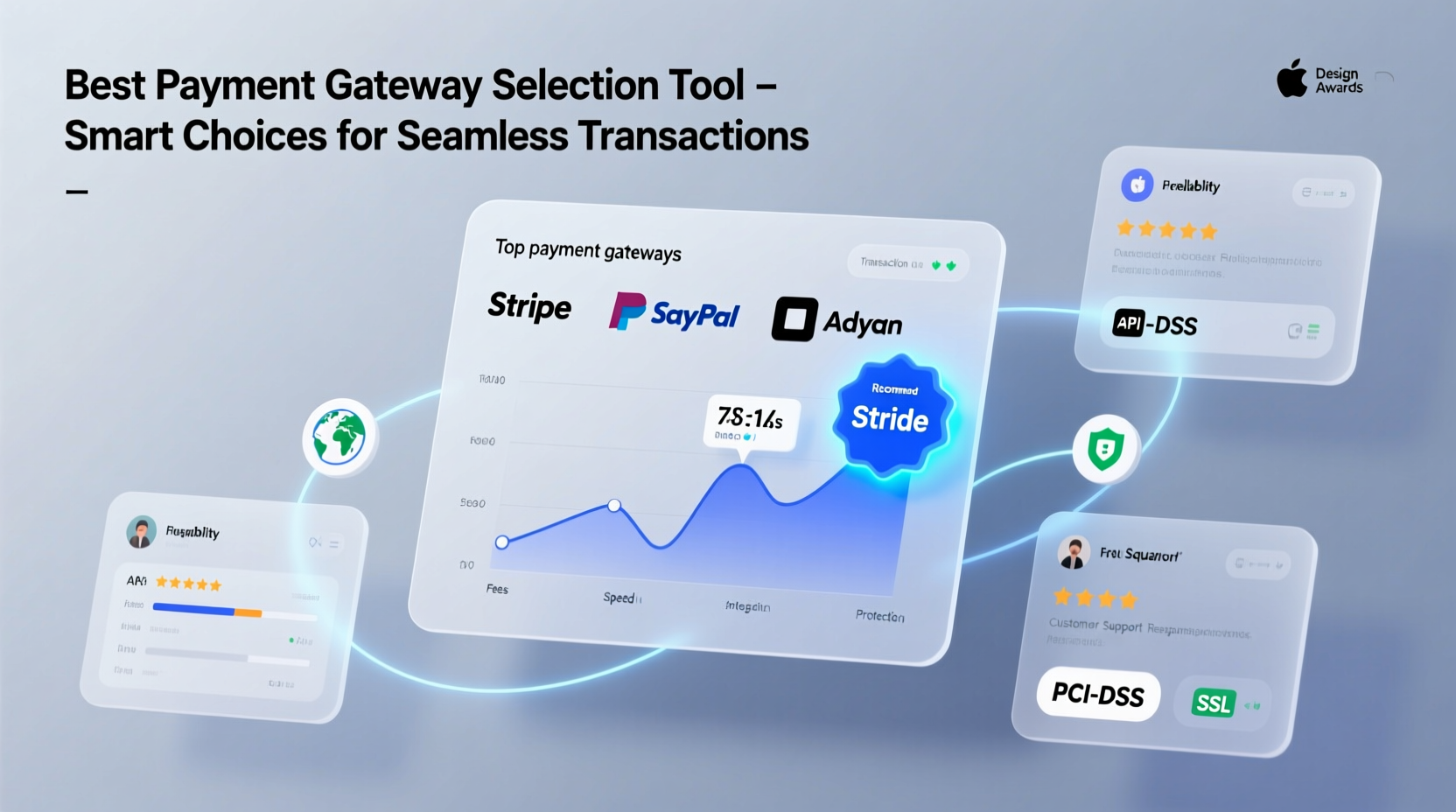
A payment gateway acts as a secure bridge between your website or app and the financial networks that process payments. When a customer submits their card details during checkout, the gateway encrypts that data and sends it to the acquiring bank or processor for authorization. If approved, funds are later settled into your merchant account—typically within 1–3 business days.
Unlike a merchant account (which holds your funds), the gateway is the technology layer enabling real-time communication with banks and card networks. Many providers bundle both services, while others integrate seamlessly with third-party processors.
Key functions include:
- Tokenization and encryption of sensitive data
- Fraud detection and prevention tools
- Support for multiple payment methods (credit/debit cards, digital wallets)
- Real-time transaction reporting and reconciliation
- Compliance with PCI DSS (Payment Card Industry Data Security Standard)
Factors to Consider When Choosing a Gateway
No single payment gateway fits every business. The ideal choice depends on several interrelated factors:
Transaction Volume and Business Size
High-volume businesses benefit from interchange-plus pricing models, which offer transparency and lower per-transaction costs. Startups may prefer flat-rate gateways like Stripe or PayPal, even if margins are slightly higher, due to easier onboarding.
Geographic Reach and Currency Support
If you serve international customers, ensure the gateway supports local payment methods (e.g., iDEAL in the Netherlands, SEPA in Europe) and multi-currency processing without excessive conversion fees.
Integration Capabilities
Check compatibility with your platform—whether Shopify, WooCommerce, Magento, or a custom-built system. APIs should be well-documented and developer-friendly. Look for pre-built plugins or SDKs that reduce implementation time.
Security and Compliance
The gateway must be PCI Level 1 compliant—the highest standard. Additional features like 3D Secure 2.0, machine learning-based fraud scoring, and customizable rules enhance protection against chargebacks.
Customer Experience
Speed matters. A slow or clunky checkout increases cart abandonment. Opt for gateways offering hosted payment pages, one-click checkout, and support for Apple Pay, Google Pay, and Buy Now, Pay Later (BNPL) options.
“Businesses that optimize their payment stack see up to 35% fewer failed transactions and a measurable lift in conversion.” — Rajiv Mehta, Fintech Infrastructure Advisor
Comparison of Top Payment Gateways
| Gateway | Pricing Model | Best For | Key Features | Global Reach |
|---|---|---|---|---|
| Stripe | 2.9% + $0.30 per transaction | Online-first businesses, developers | Advanced API, Radar fraud tools, global payouts | 47+ countries |
| PayPal | 2.9% + $0.49 (domestic) | SMBs, low-tech setups | Buyer trust, One Touch checkout, BNPL | 200+ markets |
| Square | 2.9% + $0.30 (online) | Retail + online hybrid models | Unified POS & online, instant deposits | US, UK, Australia, Japan |
| Adyen | Custom enterprise pricing | Large enterprises, multinationals | Single platform for all channels, advanced routing | 150+ countries |
| Authorize.Net | $25/month + 2.9% + $0.30 | Established businesses with legacy systems | Reliable uptime, SIM integration, fraud detection | Primarily US-focused |
Step-by-Step Guide to Selecting Your Gateway
Making an informed decision requires a structured approach. Follow this five-step process:
- Assess Your Needs: Document your average monthly volume, preferred currencies, sales channels (web, mobile, in-person), and required integrations.
- Shortlist Candidates: Based on your criteria, narrow down to 3–5 providers. Prioritize those supporting your tech stack and region.
- Test in Sandbox Mode: Most gateways offer test environments. Simulate transactions, review error handling, and evaluate dashboard usability.
- Negotiate Terms: For high-volume operations, request custom pricing. Ask about setup fees, early termination penalties, and fund settlement speed.
- Launch and Monitor: Go live with a phased rollout. Track key metrics: authorization rate, decline reasons, fraud incidents, and customer feedback.
Mini Case Study: Scaling with the Right Gateway
A mid-sized fashion brand based in Canada initially used PayPal for its simplicity. As international sales grew—especially in Germany and France—they noticed a 22% drop in conversion due to lack of local payment options. After evaluating alternatives, they migrated to Stripe with localized payment methods enabled.
Within three months, checkout completion improved by 18%, and EUR/GBP transaction success rates increased by 31%. By leveraging Stripe’s Radar for fraud detection, chargebacks dropped by 40% without increasing manual reviews. The switch paid for itself within six weeks.
Essential Checklist Before Committing
Use this checklist to avoid costly oversights:
- ✅ Supports your primary sales platforms (e.g., WordPress, BigCommerce)
- ✅ Offers SSL encryption and automatic PCI compliance
- ✅ Provides real-time analytics and reporting dashboards
- ✅ Includes built-in fraud prevention tools
- ✅ Allows easy refunds and recurring billing management
- ✅ Has 24/7 customer support with fast response times
- ✅ Enables quick fund settlement (preferably under 48 hours)
- ✅ Scales with your projected growth (no hidden caps)
Frequently Asked Questions
Can I use multiple payment gateways?
Yes—and many businesses do. Running parallel gateways improves redundancy and allows you to route traffic based on performance or region. For example, use Stripe for North America and Adyen for EMEA markets.
What’s the difference between a payment gateway and a payment processor?
The gateway is the front-end technology that captures and encrypts payment data during checkout. The processor is the back-end service that communicates with banks to approve or decline transactions. Some companies act as both (e.g., Square), while others specialize in one function.
Are there hidden fees I should watch out for?
Common hidden costs include monthly gateway fees, chargeback fees ($15–$25), foreign transaction surcharges (1–3%), and early termination penalties. Always read the full contract and ask for a complete fee schedule upfront.
Make Smarter Choices Today
Your payment gateway is more than a technical tool—it's a strategic asset. The right one reduces friction, builds trust, and unlocks new markets. The wrong one creates bottlenecks, increases risk, and erodes margins. Take the time to evaluate your options not just on price, but on reliability, scalability, and user experience.
Start by auditing your current payment flow. Identify pain points: Are customers abandoning carts at checkout? Are you losing transactions to declines? Use that insight to guide your selection. Then, test thoroughly before committing.




 浙公网安备
33010002000092号
浙公网安备
33010002000092号 浙B2-20120091-4
Comments
No comments yet. Why don't you start the discussion?