
For advanced sewers, a standard sewing machine no longer suffices. The demands of intricate patterns, heavy fabrics, and consistent stitch quality require equipment that matches skill level with performance. Whether creating couture garments, quilting complex designs, or working with technical textiles, the right machine becomes an extension of your craftsmanship. This guide explores what defines a high-performance sewing machine, identifies key features that matter most to experienced users, and helps you make an informed decision based on real-world needs.
Understanding the Needs of Advanced Sewers
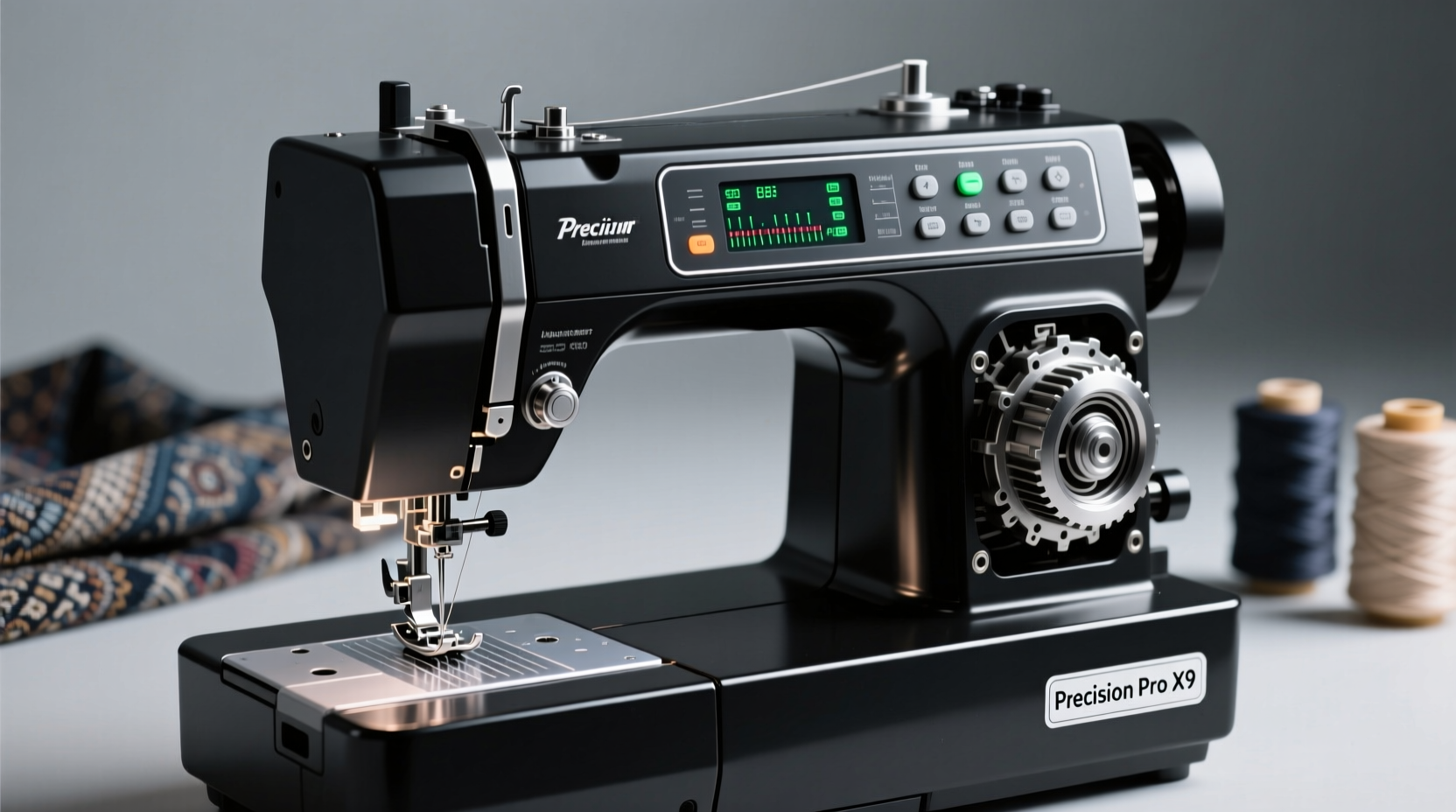
Advanced sewers operate beyond basic stitching. They work with diverse materials—from delicate silks to thick leather—and often require flawless tension control, programmable functions, and industrial-grade durability. At this level, consistency, speed, and precision are non-negotiable. A machine must respond intuitively to nuanced adjustments, maintain stability at high speeds, and support specialized techniques like free-motion quilting, blind hems, or micro-stitching.
Unlike beginners who benefit from guided tutorials and automatic settings, advanced users prioritize manual control, robust construction, and expandability through accessories. They also value long-term reliability over flashy gimmicks. The ideal machine isn’t just powerful—it’s predictable, responsive, and built to last through thousands of stitches without compromising quality.
Key Features That Define High-Performance Machines
When evaluating sewing machines for advanced use, focus on engineering excellence rather than feature count. Here are the core attributes that separate professional-tier machines from consumer models:
- Metal internal frame: Ensures stability during prolonged use and prevents wobbling at high speeds.
- High stitch-per-minute (SPM) capability: Look for machines rated above 1,000 SPM with smooth acceleration and deceleration.
- Adjustable presser foot pressure: Critical when sewing layered or uneven fabrics; allows fine-tuning for optimal feed.
- Programmable needle up/down function: Essential for pivoting corners and maintaining alignment in detailed work.
- Advanced feed dog system: Even-feed mechanisms (like walking feet or dual transport) prevent shifting in slippery or bulky fabrics.
- Direct drive motor: More efficient and quieter than belt-driven systems, offering immediate response and less maintenance.
- Automatic thread tension calibration: While manual override is preferred, smart sensors can reduce setup time across fabric changes.
“Power without precision is noise. For serious sewers, the machine must deliver both—consistently.” — Lena Torres, Master Tailor & Textile Educator
Top Models Compared: Performance at a Glance
| Model | Stitches | Max Speed (SPM) | Presser Foot Pressure Adjustment | Special Features |
|---|---|---|---|---|
| Janome 7700DX | 300+ | 1,100 | Yes, 9 levels | Auto-threader, programmable needle stop, full metal chassis |
| Brother PQ1500SL | 138 | 1,500 | Yes, dial-controlled | Straight-stitch only, designed for quilting/sewing bags, ultra-fast |
| Singer Quantum Stylist 9985 | 600+ | 850 | Limited (auto-sensing) | Touchscreen interface, USB updates, wide range of decorative stitches |
| Juki TL-2010Q | 1 (straight) | 1,800 | Yes, adjustable knob | Industrial build, perfect for seams, minimal maintenance, excellent bobbin visibility |
| Pfaff Performance 7.0 | 900+ | 1,000 | Yes, via touchscreen | IDT system (dual feed), GPS-guided stitch tracking, quiet operation |
This comparison highlights a critical distinction: some machines excel in speed and simplicity (like the Juki TL-2010Q), while others offer versatility through extensive stitch libraries. Advanced sewers should align their choice with primary use cases—quilters may prefer dedicated straight-stitch speed, whereas garment makers benefit from multi-function flexibility.
Real-World Decision Making: A Case Study
Consider Maria, a fashion designer specializing in structured jackets and tailored coats. She previously used a mid-range home machine but struggled with skipped stitches when sewing wool melton and canvas interlinings. After upgrading to the Janome 7700DX, she noticed immediate improvements: the metal chassis eliminated vibration, the adjustable presser foot allowed smoother feeding of layered fronts, and the programmable needle stop made collar attachment significantly more precise.
What mattered most wasn’t the number of stitches available—but the machine’s ability to handle density changes without recalibration. Within two months, her production time dropped by 20%, and client satisfaction rose due to cleaner finishes. Her experience underscores a vital truth: for advanced sewers, performance under pressure outweighs cosmetic features.
Step-by-Step Guide to Choosing Your Machine
Selecting the right sewing machine involves more than reading specs. Follow this practical sequence to ensure your investment delivers long-term value:
- Define your primary projects: Are you focused on quilting, tailoring, upholstery, or mixed media? This determines whether speed, stitch variety, or feed mechanism matters most.
- Assess workspace and portability needs: Industrial-style machines are heavier and louder—ensure your space accommodates them.
- Determine budget with service in mind: Include costs for servicing, accessories (feet, bobbins), and potential upgrades.
- Test stitch quality in person: Visit a dealer and bring sample fabrics. Run seams on bias, curves, and layered swatches.
- Evaluate ergonomics: Check needle visibility, handwheel resistance, pedal responsiveness, and screen readability.
- Review warranty and support: Brands like Juki and Pfaff offer extended warranties and strong technician networks—critical for minimizing downtime.
- Check compatibility with specialty feet: Ensure the machine accepts open-toe, edge-stitching, or even embroidery attachments if needed.
Frequently Asked Questions
Can a computerized machine be as durable as a mechanical one?
Yes—modern computerized machines from reputable brands use sealed circuitry and reinforced housings. As long as they’re properly maintained, their lifespan rivals traditional models. However, simpler mechanical machines often have fewer points of failure and are easier to repair.
Is a higher stitch-per-minute rating always better?
Not necessarily. Extremely high speeds (over 1,500 SPM) demand greater control and can lead to errors if not paired with excellent feed systems. For most advanced sewers, a balanced range of 800–1,200 SPM offers optimal control and efficiency.
Do I need a machine with automatic threading?
While not essential, automatic threading saves time and reduces eye strain, especially during frequent bobbin changes. On high-end models, it’s typically reliable and well-integrated. If you experience vision fatigue or do large-volume sewing, it’s a worthwhile convenience.
Final Checklist Before Purchase
- ✅ Confirmed metal internal frame (not plastic housing)
- ✅ Tested stitch consistency on your typical fabrics
- ✅ Verified access to authorized service centers
- ✅ Included or available specialty feet for your work
- ✅ Comfortable pedal sensitivity and start-up behavior
- ✅ Adequate lighting around the needle area
- ✅ Bobbin winding while sewing (on select models)
Conclusion: Power Meets Precision—Make It Count
The best sewing machine for advanced sewers doesn’t just promise power—it delivers precision under real conditions. It responds to subtle foot pressure, maintains tension across fabric transitions, and supports your creativity without becoming a bottleneck. Whether you choose a streamlined powerhouse like the Juki TL-2010Q or a versatile computerized model like the Pfaff Performance 7.0, let your actual workflow guide the decision.
Investing in a high-performance machine is investing in your craft. Take the time to test, compare, and prioritize function over flash. When precision and power are truly combined, your sewing experience transforms—not just in speed, but in confidence and joy.




 浙公网安备
33010002000092号
浙公网安备
33010002000092号 浙B2-20120091-4
Comments
No comments yet. Why don't you start the discussion?