
A windbreaker is more than just a lightweight outer layer—it’s a functional staple for anyone navigating unpredictable weather. Whether you're hiking, commuting, or traveling, the right windbreaker can make all the difference in comfort and performance. But with so many options on the market, selecting the best one requires understanding not only fabric, features, and fit but also the subtle yet important distinctions between men’s and women’s styles. These differences go beyond color and cut; they influence mobility, warmth, and long-term wearability.
Understanding Windbreaker Basics
At its core, a windbreaker is designed to shield the wearer from wind and light rain while remaining breathable and packable. Most are made from tightly woven synthetic fabrics like nylon or polyester, often treated with a durable water repellent (DWR) finish. They typically feature elastic cuffs, a stand-up collar, and a zippered front. Some include hoods, ventilation zips, or interior pockets for added utility.
The ideal windbreaker balances protection with portability. It should be lightweight enough to stuff into a backpack or pocket but robust enough to handle sudden gusts or drizzle. While unisex models exist, most brands offer gender-specific designs tailored to anatomical and stylistic preferences.
Key Differences Between Men’s and Women’s Windbreakers
Manufacturers design men’s and women’s windbreakers with distinct body shapes, proportions, and intended uses in mind. Recognizing these differences helps ensure a better fit, improved performance, and greater satisfaction with your purchase.
1. Cut and Fit
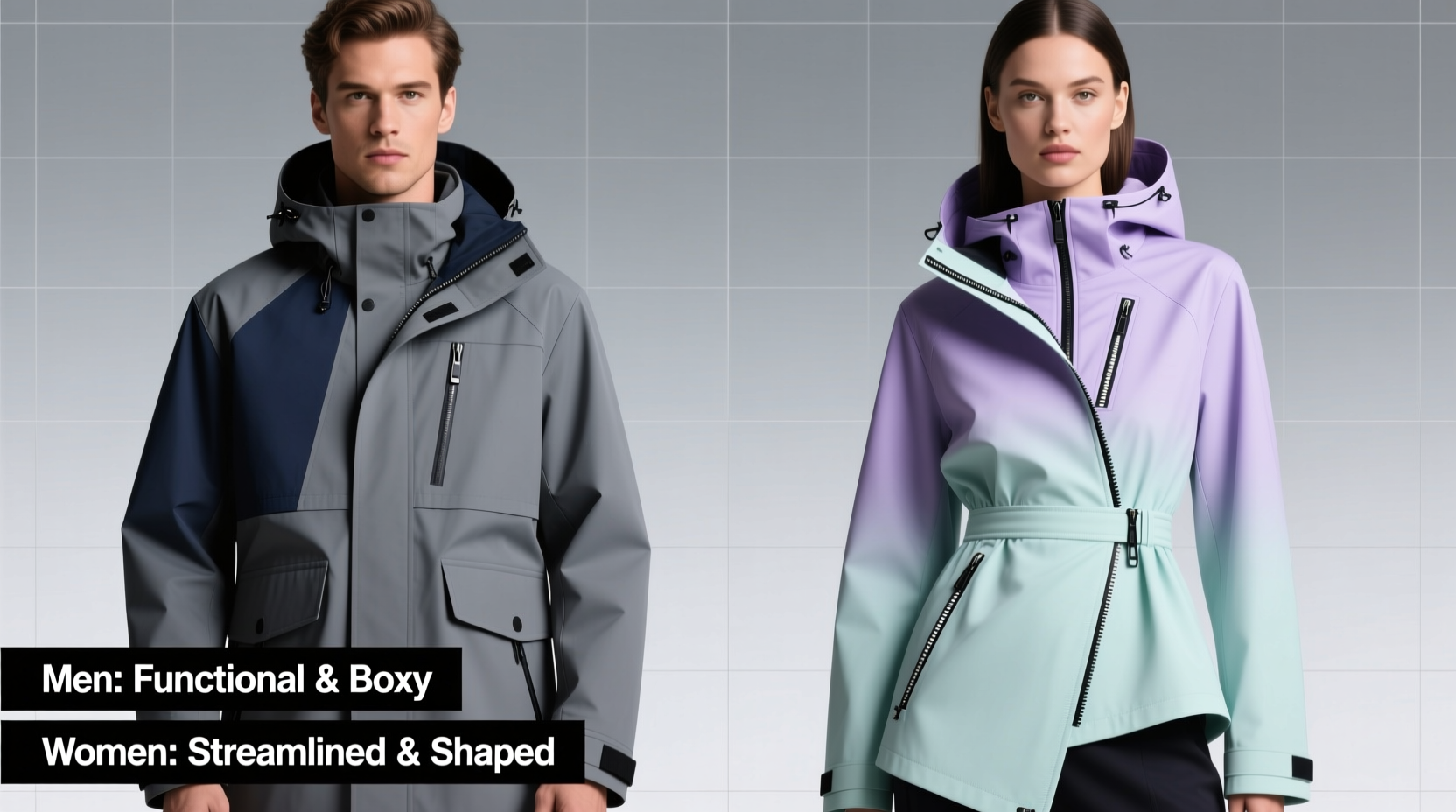
Men’s windbreakers generally follow a straighter, boxier silhouette with broader shoulders and a consistent taper from chest to waist. Women’s versions are tailored to accommodate narrower shoulders, a defined waist, and wider hips. This shaping enhances both comfort and aesthetics, preventing excess fabric around the arms or torso while allowing freedom of movement.
A poorly fitted windbreaker—too loose or too tight—can restrict motion or trap moisture. For example, a men’s jacket on a woman may hang awkwardly at the hips and ride up during activity, while a women’s cut on a man might feel constricting across the chest.
2. Sleeve and Torso Length
Women’s windbreakers often have slightly shorter sleeves and torso lengths to match average proportions. This prevents the jacket from appearing oversized or dragging below the hip. Men’s models typically feature longer sleeves and a hem that extends further down the back, offering more coverage for taller frames or layered outfits.
3. Color and Design Aesthetics
While personal preference plays a major role, manufacturers often use different color palettes and design details for men’s and women’s lines. Men’s windbreakers lean toward neutral tones—black, navy, gray, olive—while women’s styles frequently include brighter hues, pastels, or floral and geometric patterns. Zippers, lining colors, and branding placement may also vary to reflect perceived market tastes.
That said, many modern brands now offer minimalist, gender-neutral designs that prioritize function over fashion, appealing to consumers who value versatility and understated style.
4. Hood and Collar Design
Hood shape and adjustability differ subtly between genders. Women’s hoods are often shaped to fit over longer hair or ponytails, with softer brims and internal drawcords for a snug fit. Men’s hoods tend to be larger in circumference and may sit higher on the head, accommodating shorter hairstyles and helmets for cycling or climbing.
Similarly, collar height and stiffness can vary. Women’s collars may be slightly shorter and more flexible for comfort under backpack straps, while men’s versions sometimes emphasize structure for added wind resistance.
Performance Features That Matter
Beyond fit and appearance, functionality determines how well a windbreaker performs in real-world conditions. Both men’s and women’s models now incorporate advanced materials and engineering, but attention to detail remains critical.
- Breathability: Look for mesh-lined vents or underarm zips to reduce overheating during activity.
- Packability: Many windbreakers include an internal pouch or attached loop for compact storage.
- Water Resistance: While not fully waterproof, a DWR-treated shell should shed light rain for 20–30 minutes.
- Weight: Ideal range is 6–12 oz (170–340 g), balancing durability and portability.
“Fit is the foundation of function. A windbreaker that fits well moves with the body, not against it.” — Lena Torres, Outdoor Apparel Designer at Alpine Gear Co.
Choosing the Right Windbreaker: A Step-by-Step Guide
Selecting the best windbreaker involves more than browsing online images. Follow this practical process to find a jacket that meets your needs.
- Define Your Use Case: Will you wear it for running, urban commuting, hiking, or casual wear? High-activity use demands greater breathability and stretch.
- Determine Preferred Fit: Try both gender-specific and unisex cuts. Focus on shoulder seam alignment, sleeve mobility, and torso length.
- Check Fabric Specifications: Prioritize ripstop nylon or high-denier polyester with a DWR finish. Avoid thin, flimsy materials that tear easily.
- Test Range of Motion: Raise your arms, twist your torso, and simulate movement. The jacket should not pull or bind.
- Evaluate Closure Systems: Zippers should glide smoothly; storm flaps should cover the entire front zip to block wind.
- Assess Storage Needs: If you plan to carry it frequently, confirm it packs into its own pocket or comes with a stuff sack.
Comparison Table: Men’s vs Women’s Windbreaker Features
| Feature | Men’s Windbreakers | Women’s Windbreakers |
|---|---|---|
| Fit Profile | Straight cut, broader shoulders | Tapered waist, narrower shoulders |
| Sleeve Length | Longer (avg. 34–36”) | Shorter (avg. 32–34”) |
| Torso Length | Longer back hem | Shorter, hip-focused |
| Hood Design | Larger diameter, structured | Contoured, flexible, hair-friendly |
| Color Options | Neutrals, earth tones | Bright colors, patterns |
| Common Use Cases | Cycling, hiking, daily commute | Running, travel, urban wear |
Real-World Example: Choosing Across Genders
Sophia, a trail runner in Colorado, initially bought a men’s windbreaker because it had superior ventilation zips and a higher denier fabric. However, she found the sleeves too long and the waist too loose, causing the jacket to flap in the wind and chafe her arms. After switching to a women’s-specific model with similar technical specs but a tailored cut, she noticed immediate improvements in comfort and aerodynamics during long runs. The takeaway? Performance features matter, but fit amplifies their effectiveness.
Frequently Asked Questions
Can men wear women’s windbreakers and vice versa?
Yes—many people successfully wear windbreakers outside their designated gender category. The key is focusing on measurements rather than labels. Check size charts carefully, especially for chest, sleeve, and center-back length. Some brands offer unisex sizing, which can be a great middle ground.
Are women’s windbreakers less durable than men’s?
Not inherently. Durability depends on fabric denier, construction quality, and coating—not gender. Some women’s models use lighter fabrics for aesthetic reasons, but high-performance women’s jackets often match or exceed men’s in technical resilience.
Do windbreakers come with warranties?
Many reputable brands offer limited warranties covering defects in materials or workmanship for 1–2 years. Outdoor-focused companies like Patagonia or The North Face may offer lifetime repairs or replacements under certain conditions.
Final Checklist Before You Buy
- ✅ Try the jacket on with clothing you’d typically wear underneath
- ✅ Move your arms and torso to test flexibility
- ✅ Confirm the hood fits securely without obstructing vision
- ✅ Check that pockets are accessible when wearing a backpack or belt
- ✅ Verify care instructions—machine washable is ideal for regular use
- ✅ Ensure the brand offers a return policy if fit isn’t perfect
Conclusion: Make the Choice That Works for You
The best windbreaker isn’t defined by whether it’s labeled “men’s” or “women’s”—it’s defined by how well it fits your body, supports your activities, and withstands the elements. Understanding the design nuances between gender-specific styles empowers you to make informed decisions, whether you stick with traditional cuts or explore unisex alternatives. Don’t let marketing categories limit your options. Measure, try, test, and prioritize function alongside fit. When you find the right balance, your windbreaker becomes more than outerwear—it becomes a reliable companion for every journey ahead.




 浙公网安备
33010002000092号
浙公网安备
33010002000092号 浙B2-20120091-4
Comments
No comments yet. Why don't you start the discussion?