
Selecting the right hair dryer isn’t just about brand names or sleek design—it’s about performance that aligns with your hair type, styling habits, and long-term hair health. At the heart of this performance lies one critical factor: wattage. While often overlooked, the power output of a hair dryer directly influences drying speed, heat consistency, and overall styling efficiency. Too little power, and you’ll spend unnecessary time battling damp hair; too much, and you risk overheating delicate strands. This guide breaks down what wattage really means, how it affects your routine, and how to match it to your unique needs for truly effortless styling.
Understanding Wattage in Hair Dryers
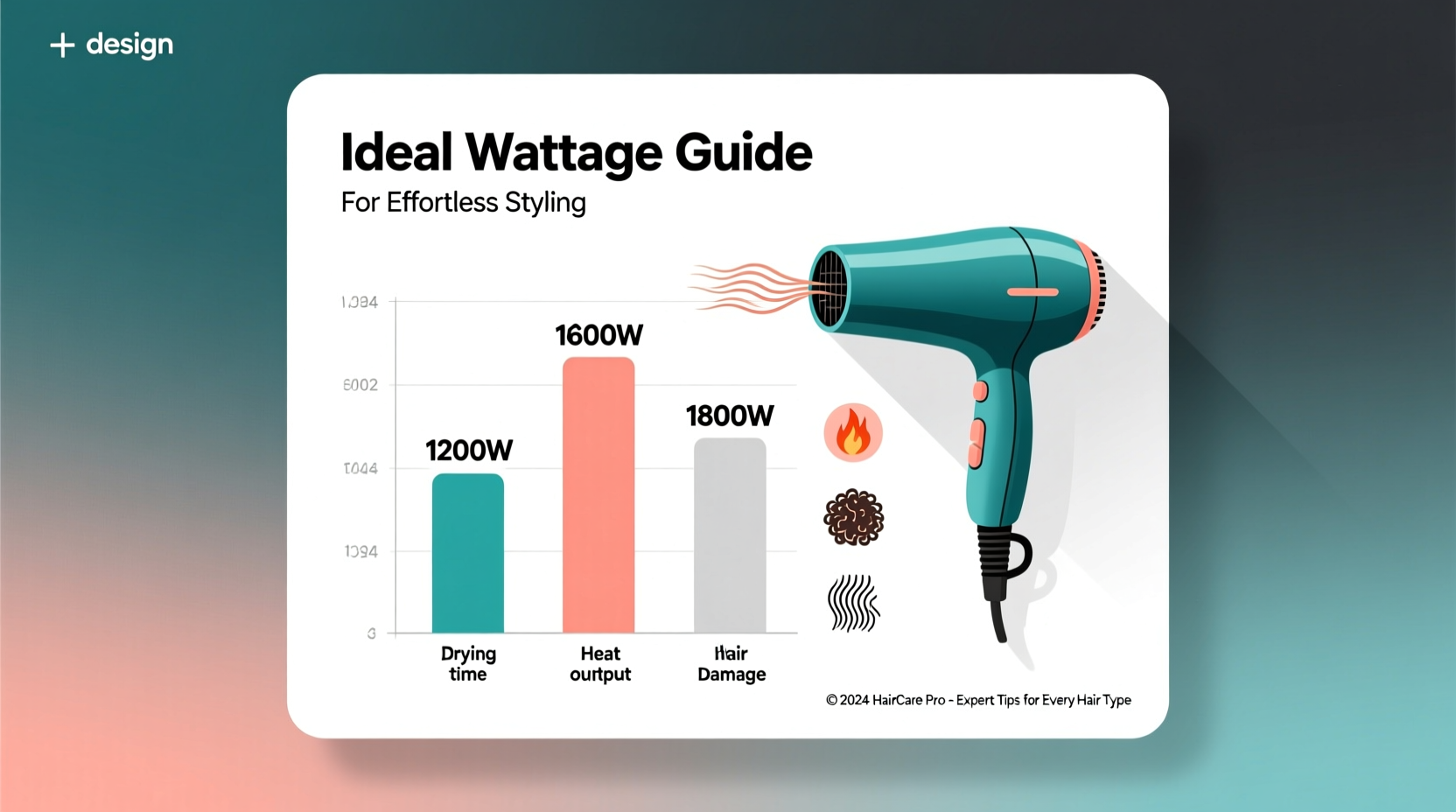
Wattage measures the electrical power a hair dryer consumes, which correlates directly with its motor strength and airflow capacity. In simple terms, higher wattage means stronger airflow and faster drying. Most standard dryers range from 1200 to 1800 watts, while professional and high-speed models often exceed 1800 watts—some even reaching 2200 watts or more. However, more watts don’t automatically mean a better dryer. The key is balance: sufficient power to dry efficiently without compromising control or safety.
It's important to distinguish between consumer-grade and professional-grade devices. A typical drugstore dryer might offer 1400 watts but lacks advanced heat regulation and motor efficiency. In contrast, a high-speed dryer with 1800+ watts and a brushless motor can deliver concentrated airflow at lower heat settings, reducing thermal stress on hair. This is where technology enhances raw power—making wattage only one piece of the puzzle.
How Hair Type Influences Ideal Wattage
Your hair’s density, texture, and length determine how much power you actually need. Using a 2200-watt dryer on fine, thin hair may lead to over-drying and breakage, while someone with thick, curly hair might find a 1200-watt model insufficient for timely drying.
Here’s a breakdown of recommended wattage by hair type:
| Hair Type | Recommended Wattage | Rationale |
|---|---|---|
| Fine or Thin Hair | 1200–1600 watts | Moderate power prevents overheating and frizz while still offering quick drying. |
| Medium or Normal Hair | 1600–1800 watts | Balances speed and control; ideal for daily styling with minimal damage. |
| Thick, Coarse, or Curly Hair | 1800–2200+ watts | High airflow penetrates dense strands quickly, reducing exposure to heat. |
| Long Hair (regardless of thickness) | 1800+ watts | Reduces drying time significantly, especially from roots to ends. |
“Matching wattage to hair density is crucial. High-powered dryers aren’t just for pros—they’re essential tools for anyone with thick or resistant hair who wants to minimize heat exposure.” — Dr. Lena Patel, Trichologist & Hair Care Scientist
Real-World Example: From Frizz to Flow
Sophia, a freelance photographer with waist-length, tightly coiled curls, used a 1400-watt dryer for years. Her drying routine took nearly an hour, often leaving her hair puffy and dehydrated. After switching to a 2100-watt high-speed dryer with ionic technology, she cut drying time to 30 minutes. More importantly, the concentrated airflow allowed her to use lower heat settings, preserving moisture and definition. “I didn’t realize how much damage I was doing by prolonging exposure,” she said. “The right wattage made my routine not just faster, but healthier.”
Key Features That Complement Wattage
While wattage sets the foundation, other features determine how effectively that power is used. Consider these when evaluating a high-speed dryer:
- Ionic Technology: Reduces static and frizz by breaking water molecules into smaller particles, speeding up evaporation.
- Ceramic or Tourmaline Components: Distribute heat evenly, preventing hot spots that cause split ends.
- Magnetic or Brushless Motors: Deliver consistent, high-speed airflow with less noise and longer lifespan.
- Multiple Heat and Speed Settings: Allow customization based on styling phase (e.g., high heat for initial drying, cool shot for setting).
- Ergonomic Design: Lightweight bodies and balanced weight distribution reduce hand fatigue during extended use.
A 2000-watt dryer with poor heat regulation can be less effective—and more damaging—than a well-engineered 1800-watt model. Always assess the full feature set, not just the number on the box.
Step-by-Step Guide to Choosing Your Ideal Dryer
Follow this process to ensure you select a high-speed dryer that matches your wattage needs and styling goals:
- Assess Your Hair Profile: Determine if your hair is fine, medium, or thick, and whether it’s straight, wavy, curly, or coily.
- Track Your Current Drying Time: Note how long it takes to dry your hair now. If it exceeds 45 minutes, you likely need more power.
- Identify Styling Goals: Do you air-dry often? Style daily? Use heat protectants? These habits influence your ideal tool.
- Set a Realistic Budget: High-speed dryers range from $80 to $400+. Invest in quality, especially if you style frequently.
- Research Motor Type: Look for AC or brushless motors—they offer higher RPM and durability than standard DC motors.
- Check for Safety Certifications: Ensure the dryer has overheat protection and meets electrical safety standards (UL, ETL, etc.).
- Read Verified User Reviews: Focus on feedback from people with similar hair types and concerns.
Common Misconceptions About Wattage
Several myths persist around hair dryer power. Debunking them helps make smarter choices:
- Myth: Higher wattage always damages hair. Reality: When paired with smart heat control, high wattage reduces overall heat exposure by drying faster.
- Myth: All 1800-watt dryers perform the same. Reality: Motor efficiency, nozzle design, and internal components create significant performance differences.
- Myth: Home users don’t need professional-level dryers. Reality: Anyone with thick, long, or hard-to-dry hair benefits from pro-grade tools, regardless of location.
FAQ
Is a 2200-watt hair dryer safe for home use?
Yes, as long as your home circuit can handle the load. Most standard bathroom outlets support up to 1875 watts continuously. A 2200-watt dryer may trip breakers if other high-power devices are running simultaneously. Use it on a dedicated circuit when possible.
Can low-wattage dryers work for thick hair?
Possibly, but with trade-offs. A 1400-watt dryer will take much longer to dry thick hair, increasing heat exposure and risk of damage. For frequent use, a higher-wattage model is a safer, more efficient choice.
Do ionic dryers require less wattage?
Not necessarily. Ionic technology improves drying efficiency, but doesn’t reduce the need for adequate airflow. Many top-performing ionic dryers are also high-wattage (1800W+) to maximize results.
Final Checklist Before You Buy
Before making your purchase, confirm the following:
- ✅ Wattage matches your hair type (see table above)
- ✅ Includes multiple heat/speed settings
- ✅ Has ionic or tourmaline technology
- ✅ Uses a brushless or AC motor
- ✅ Comes with concentrator and diffuser attachments
- ✅ Weight is comfortable for prolonged use (<1.5 lbs ideal)
- ✅ Backed by warranty (minimum 1 year)
Conclusion
The ideal wattage for your high-speed hair dryer isn’t a one-size-fits-all number—it’s a thoughtful match between your hair’s needs and the tool’s capabilities. Whether you have fine strands or voluminous curls, the right balance of power and precision can transform your routine from a chore into a seamless part of your day. Faster drying, reduced heat damage, and better styling control are within reach when you choose wisely. Stop guessing and start optimizing: invest in a dryer that works as hard as you do.




 浙公网安备
33010002000092号
浙公网安备
33010002000092号 浙B2-20120091-4
Comments
No comments yet. Why don't you start the discussion?