
Selecting the right daypack isn’t just about style or brand preference—it’s about matching the bag to how you move through your day. Whether you're hiking rugged trails, commuting across the city, or traveling light for weekend getaways, your activity level dictates what features matter most. A poorly chosen pack can lead to discomfort, inefficiency, or even injury over time. The key is understanding your needs before making a decision.
Understanding Your Activity Level
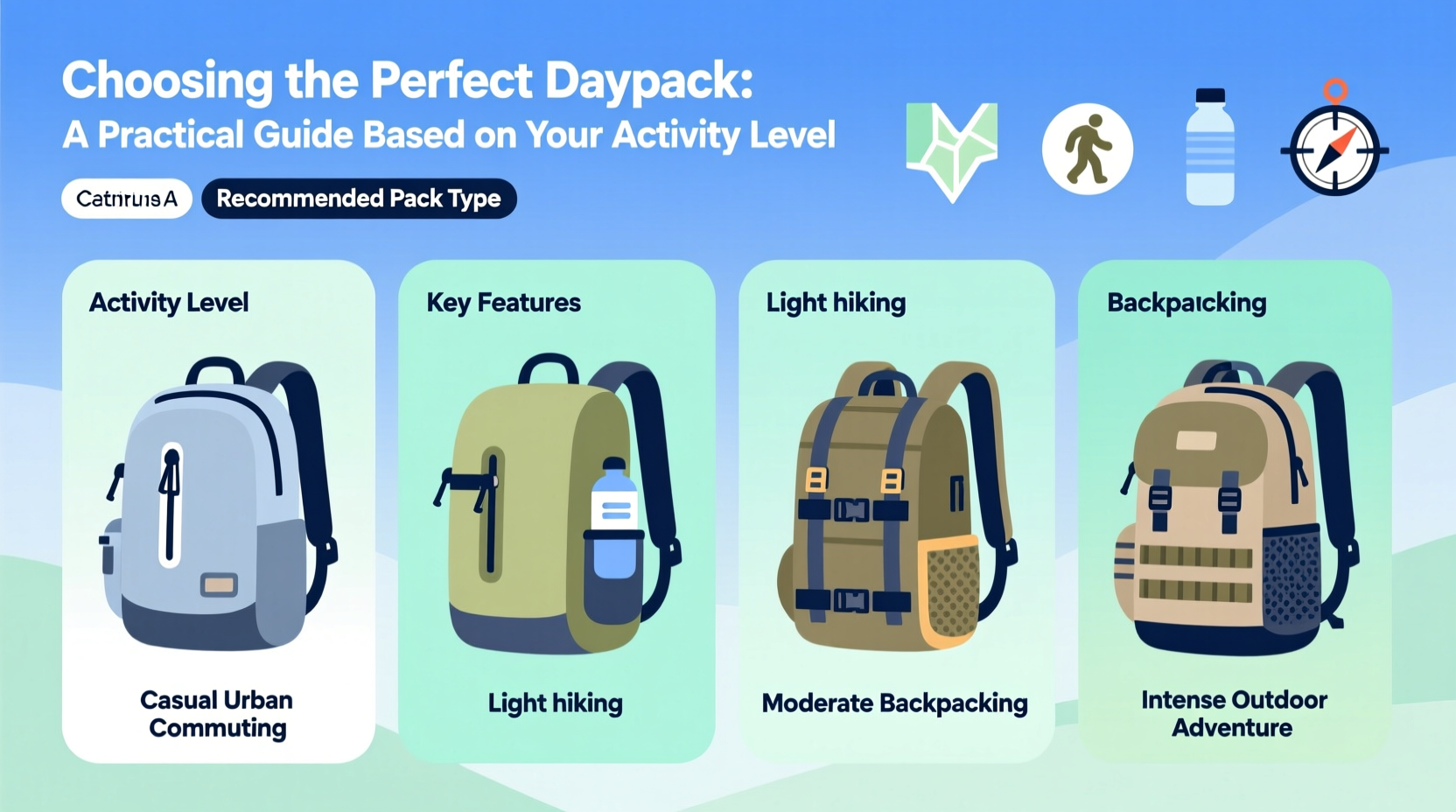
Daypacks are designed with specific use cases in mind. Grouping activities into three main categories—light, moderate, and high intensity—helps narrow down suitable options.
- Light activity: Urban commuting, casual walks, short errands, or campus use. Typically involves minimal elevation change and low load weight (under 10 lbs).
- Moderate activity: Day hikes, bike rides, or extended outdoor excursions. May require carrying water, snacks, layers, and basic gear (10–20 lbs).
- High-intensity activity: Backpacking approaches, trail running, or alpine climbing. Demands durability, load support, and weather resistance (20+ lbs).
The difference between these levels isn’t just about distance or duration—it’s about physical demand, terrain, and required equipment. A commuter doesn’t need hydration sleeves or reinforced hip belts, while a hiker would find those essential.
Key Features by Use Case
No single daypack excels in every scenario. Prioritizing features based on your routine ensures long-term satisfaction.
For Light Activity: Comfort and Convenience
Commuting or daily errands calls for sleek, accessible designs. Look for:
- Padded laptop compartment (fits 13–15” devices)
- Front organizational pockets for keys, wallet, phone
- Water-resistant fabric or included rain cover
- Minimalist silhouette that fits under office chairs or subway seats
Aim for 15–20 liters of volume. Overpacking leads to shoulder strain, so avoid oversized bags unless you regularly carry gym clothes or groceries.
For Moderate Activity: Support and Durability
Hikers and cyclists benefit from structured support systems. Essential traits include:
- Adjustable sternum and hip straps to transfer weight off shoulders
- Ventilated back panel to reduce sweating
- Durable materials like 400D nylon or ripstop polyester
- Hydration reservoir compatibility (even if not used immediately)
- Lash points for trekking poles or extra gear
Capacity should range from 20–30 liters. This allows room for layers, food, first aid, and emergency items without compromising mobility.
For High-Intensity Activity: Performance and Load Management
When every ounce counts, technical packs deliver precision engineering. Key elements:
- Floating lid or expandable top for variable loads
- Frame sheet or internal stays for stability on uneven terrain
- Compression straps to minimize sway
- Weatherproof zippers and fully taped seams
- Ultralight materials (e.g., Dyneema or high-tenacity nylon)
Volume varies widely (25–40L), but fit is more critical than size. A well-fitted high-performance pack distributes weight evenly, reducing fatigue during prolonged exertion.
“Fit trumps capacity. A 25-liter pack that fits perfectly will feel lighter than a poorly adjusted 30-liter one.” — Lena Torres, Outdoor Gear Specialist at Alpine Field Institute
Comparing Top Design Elements
| Feature | Best For Light Use | Best For Moderate Use | Best For High-Intensity Use |
|---|---|---|---|
| Volume | 15–20L | 20–30L | 25–40L |
| Back Support | Light padding | Ventilated mesh + frame | Rigid frame sheet or stays |
| Straps | Shoulder only | Hip + sternum strap optional | Adjustable hip + sternum standard |
| Material | Polyester or canvas | 400D+ nylon | Dyneema, Cordura, or ripstop blends |
| Extras | Laptop sleeve, USB port | Hydration sleeve, side pockets | Ice axe loops, helmet carry |
Real-World Scenario: From Office to Trail
Consider Mark, a software developer who bikes to work five days a week and hikes on weekends. His weekday needs include a secure laptop pocket, reflective accents, and quick-access storage for his lunch and lock. He initially bought a 30L hiking-style pack for “versatility,” but found it bulky, sweaty, and overbuilt for commuting.
After switching to a dual-purpose 22L hybrid pack with a ventilated back panel, dedicated tech compartment, and fold-out rain cover, he gained efficiency. On weekends, he uses the same pack for moderate hikes—its compression straps and hydration sleeve make it adaptable without sacrificing daily comfort.
Mark’s experience underscores a growing trend: multi-use packs that bridge urban and outdoor demands. Brands like Deuter, Osprey, and Fjällräven now offer crossover models engineered for both environments.
Step-by-Step: Choosing Your Ideal Daypack
- Define your primary activity: Track your movements over a week. Are you mostly walking, biking, or hiking?
- List your regular carry items: Include electronics, water, food, tools, or safety gear.
- Weigh your typical load: Use a kitchen scale to measure total weight. This informs support needs.
- Determine capacity: Allow 1 liter per pound of gear, plus 5L buffer for flexibility.
- Test fit in person: Adjust all straps, load with 10–15 lbs, and walk for 10 minutes.
- Evaluate access and organization: Can you reach essentials without removing the pack?
- Check return policy: Some brands offer 30–60 day trial periods for field testing.
Frequently Asked Questions
Can I use a hiking daypack for daily commuting?
Yes, but consider trade-offs. Hiking packs often lack padded laptop sleeves and may be too ventilated for indoor use. If you carry fragile electronics, prioritize added protection and streamlined design.
How do I know if a daypack fits properly?
The shoulder straps should lie flat across your shoulders without pinching. The hip belt, if present, must rest on your iliac crest (top of hips), not your stomach. The sternum strap should sit just below collarbones and allow full breath expansion.
Are expensive daypacks worth it?
For frequent or demanding use, yes. Premium packs use better materials, ergonomics, and construction. They often last twice as long and prevent long-term posture issues. For occasional use, mid-range options ($70–$120) offer excellent value.
Final Checklist Before Buying
- ✅ Volume matches typical load (not maximum possible)
- ✅ Back ventilation suits climate and activity sweat level
- ✅ Critical items (laptop, water, phone) have secure, accessible pockets
- ✅ Straps are adjustable and don’t slip during movement
- ✅ Fabric is abrasion-resistant and water-repellent
- ✅ Weight of the empty pack is under 3 lbs (lighter for high-intensity)
- ✅ Manufacturer offers warranty or repair program
Make the Right Choice Today
Your daypack should enhance your lifestyle, not hinder it. Whether you're navigating rush hour or ascending mountain ridges, the right choice improves comfort, efficiency, and endurance. Take the time to assess your real-world needs—not just idealized scenarios. Measure your load, test fit carefully, and invest where it matters. A well-chosen daypack becomes an invisible extension of your body, letting you focus on where you’re going, not what you’re carrying.




 浙公网安备
33010002000092号
浙公网安备
33010002000092号 浙B2-20120091-4
Comments
No comments yet. Why don't you start the discussion?