
Every day, millions of people step outside without realizing the invisible threat posed by ultraviolet (UV) radiation. While sunlight boosts mood and supports vitamin D synthesis, prolonged exposure—especially without proper eye protection—can lead to serious vision problems. The right pair of sunglasses isn’t just a fashion statement; it’s a critical component of lifelong eye health. Among the most effective defenses is UV400 protection, which blocks nearly all harmful UVA and UVB rays. Yet, not all sunglasses labeled “UV protection” deliver the same level of safety. Understanding what UV400 means, how to verify it, and how to select the best lenses and frames can make the difference between safeguarding your eyes and unknowingly exposing them to damage.
What Is UV400 Protection—and Why It Matters
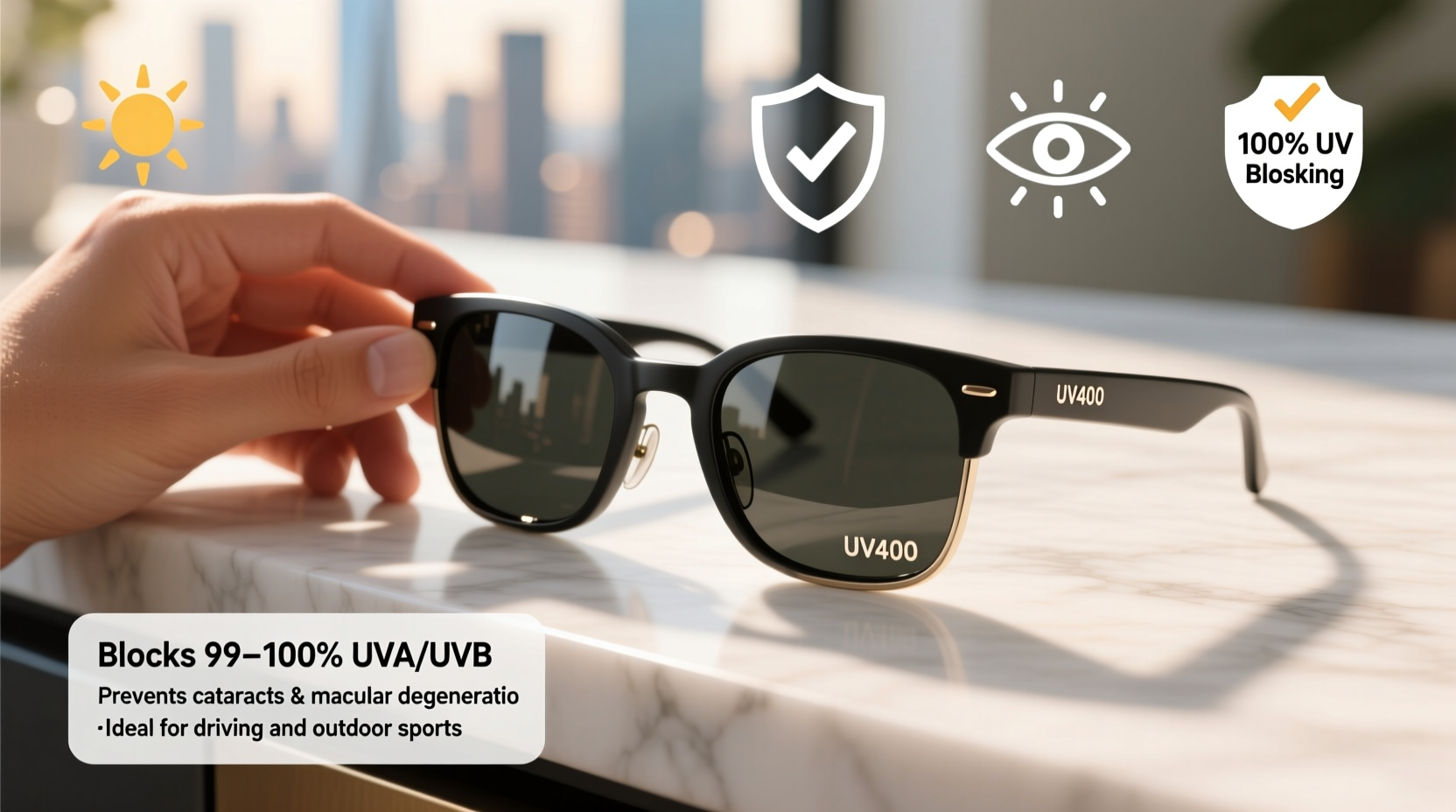
UV400 refers to sunglasses that block 99–100% of ultraviolet light with wavelengths up to 400 nanometers. This range covers both UVA (315–400 nm) and UVB (280–315 nm) rays, the two primary types of UV radiation that reach the Earth’s surface. Since human eyes cannot detect UV light, damage often occurs silently over time. Chronic exposure increases the risk of cataracts, macular degeneration, pterygium (a growth on the eye’s surface), and even cancers of the eyelid.
The American Academy of Ophthalmology emphasizes that UV damage is cumulative. Even short daily exposures add up, particularly during peak daylight hours between 10 a.m. and 4 p.m. Children are especially vulnerable because their ocular lenses are clearer than adults’, allowing more UV to penetrate.
“Wearing UV400 sunglasses is one of the simplest yet most effective ways to prevent long-term ocular damage. It's preventive medicine you wear on your face.” — Dr. Lena Torres, Board-Certified Ophthalmologist
How to Identify Genuine UV400 Sunglasses
Not all dark lenses offer real UV protection. Some cheaply made sunglasses darken the view but fail to filter harmful rays, which can actually be more dangerous: pupils dilate behind dark lenses, allowing more unfiltered UV into the eye. To ensure authenticity, look for specific labeling and certifications.
Certifications to Look For
- ANSI Z80.3 – A U.S. standard for non-prescription sunglasses indicating adequate UV filtering.
- CE Mark (Europe) – Ensures compliance with European health and safety standards, including UV protection.
- Australian Standard AS/NZS 1067 – One of the strictest global benchmarks for sunglass performance.
If in doubt, many optometry offices offer free UV testing using a photometer to measure how much radiation passes through the lens. This quick test can confirm whether your sunglasses meet UV400 standards.
Lens Types, Colors, and Frame Fit: What Really Protects Your Eyes
While UV400 is the baseline requirement, other features enhance both comfort and protection. Lens material, tint, and frame design all play roles in minimizing UV exposure and glare.
Lens Materials Compared
| Material | UV Protection | Durability | Best For |
|---|---|---|---|
| Polarized Polycarbonate | Excellent (with UV400 coating) | High impact resistance | Outdoor sports, driving |
| CR-39 Plastic | Good (if treated) | Moderate scratch resistance | Everyday wear |
| Trivex | Excellent | Lightweight & shatter-resistant | Active lifestyles |
| Glass | Excellent (naturally blocks UV) | Scratch-resistant but heavy | Fashion-focused use |
Tint vs. Protection: Clearing the Myth
Lens color affects visual comfort but does not determine UV protection. Gray tints preserve natural color perception and reduce brightness evenly. Brown or amber tints enhance contrast, ideal for variable light conditions like dawn or dusk. Yellow or rose lenses are useful in low-light environments but should not be used in direct sunlight.
Crucially, polarized lenses reduce glare from reflective surfaces such as water, snow, or pavement—but polarization is separate from UV protection. Always ensure polarization is paired with UV400 labeling.
Frame Design That Blocks Peripheral Light
Wraparound styles or large-framed sunglasses limit UV entry from the sides and top. Close-fitting temples and high nose bridges further reduce stray light. For those who spend extended time outdoors—hikers, cyclists, boaters—wrap-style frames with side shields offer superior coverage.
Step-by-Step Guide to Choosing Your Next Pair of UV400 Sunglasses
Selecting the right sunglasses involves more than aesthetics. Follow this sequence to ensure optimal eye protection:
- Determine your primary use: Driving, beach outings, mountain hikes, or casual wear each demand different lens features.
- Verify UV400 labeling: Check packaging or ask for certification details when shopping online or in-store.
- Assess lens quality: Hold the glasses at arm’s length and move them across a straight line. Distortion indicates poor optical clarity.
- Test fit and coverage: Frames should sit snugly without pressing on the ears or nose. Ensure minimal gaps around the eyes.
- Consider added features: Polarization for glare reduction, anti-reflective coatings for night driving, or photochromic lenses that adjust to light.
- Consult an eye care professional: If you wear prescription lenses, invest in custom UV400 prescription sunglasses rather than clip-ons or non-prescription fits.
Real-World Example: How One Hiker Prevented Eye Damage
Mark, an avid trail runner in Colorado, began experiencing persistent eye irritation after weekend treks above 10,000 feet. Despite wearing dark-tinted sunglasses, he developed early signs of photokeratitis—a sunburn of the cornea. An optometrist discovered his sunglasses lacked proper UV400 certification. After switching to ANSI-compliant, wrap-style UV400 sunglasses with polarized polycarbonate lenses, his symptoms resolved within weeks. More importantly, follow-up exams showed no progression of UV-related changes. His experience underscores that altitude increases UV intensity by about 10–12% per 3,000 feet, making certified protection essential even on cloudy days.
Common Mistakes When Buying UV-Protective Sunglasses
- Assuming price equals protection: Expensive brands may prioritize style over function. Always verify UV specs regardless of cost.
- Ignoring fit for fashion: Oversized, flat-fronted sunglasses may look trendy but allow significant peripheral UV exposure.
- Using expired or scratched lenses: Over time, UV coatings degrade. Deep scratches compromise structural integrity and clarity.
- Wearing sunglasses only on sunny days: Up to 80% of UV rays penetrate cloud cover, so protection is needed year-round.
Checklist: Before You Buy UV400 Sunglasses
- ☑ Labeled “UV400” or “100% UV protection”
- ☑ Meets ANSI, CE, or AS/NZS standards
- ☑ Minimal optical distortion when tested
- ☑ Fits closely to the face with good side coverage
- ☑ Appropriate lens tint for intended use
- ☑ Polarized (if reducing glare is a priority)
- ☑ Reputable seller or optician source
Frequently Asked Questions
Do children need UV400 sunglasses?
Yes. Children’s eyes are more transparent to UV light, increasing their risk of long-term damage. Ensure kids wear properly fitting, durable UV400 sunglasses whenever outdoors.
Can regular eyeglasses provide UV protection?
Some do, but not all. Most clear polycarbonate lenses block nearly 100% UV, but glass and plastic lenses may require a special coating. Ask your optician to confirm UV absorption levels.
How often should I replace my sunglasses?
Every two years under normal use, or sooner if lenses are heavily scratched, frames are warped, or coatings appear degraded. UV protection diminishes over time, especially with frequent exposure to heat and sunlight.
Conclusion: Protect Your Vision Like You Mean It
Your eyes are irreplaceable, and UV damage is preventable. Choosing UV400 sunglasses isn’t a luxury—it’s a necessity for anyone who spends time outdoors. From verifying labels to selecting the right fit and lens type, every decision contributes to long-term ocular health. Whether you're driving, walking your dog, or hiking alpine trails, make sure your sunglasses meet the gold standard: blocking 100% of harmful rays up to 400 nm. Don’t let style overshadow safety. Invest in quality, test for authenticity, and replace worn pairs promptly. Your future self will see the world more clearly because of it.




 浙公网安备
33010002000092号
浙公网安备
33010002000092号 浙B2-20120091-4
Comments
No comments yet. Why don't you start the discussion?