
As holiday seasons approach, homeowners across temperate and wet climates face a common dilemma: how to maintain festive outdoor lighting when rain is frequent. The choice between Christmas lanterns and string lights isn’t just about aesthetics—it’s a practical decision influenced by weather resistance, electrical safety, longevity, and ease of maintenance. While both options bring charm to porches, gardens, and rooftops, their performance under persistent moisture varies significantly. Understanding these differences helps ensure your display remains bright, safe, and functional throughout the season—even during downpours.
Durability and Weather Resistance: Core Differences
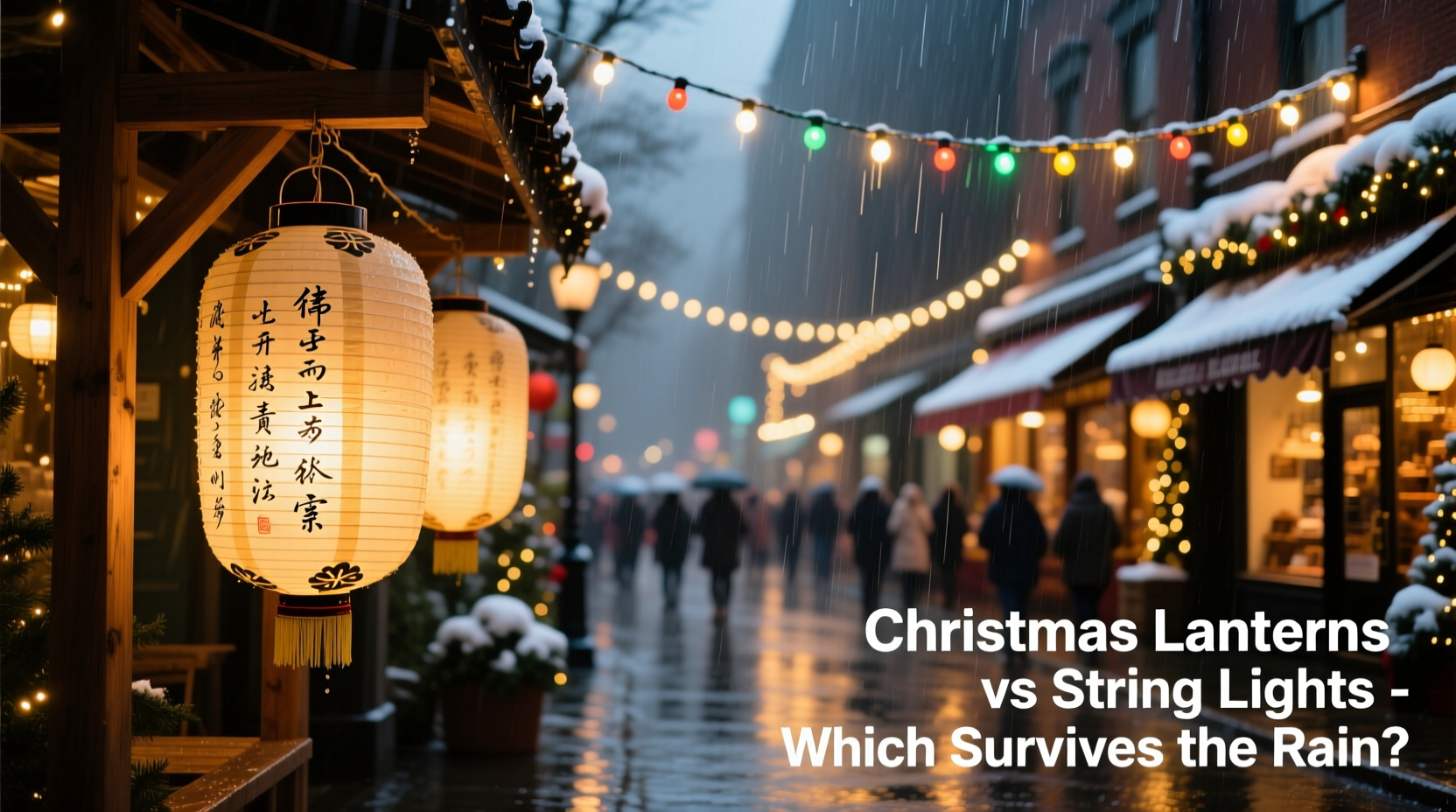
The fundamental distinction between Christmas lanterns and string lights lies in their construction and exposure to the elements. String lights typically consist of individual bulbs connected by a thin wire, often with minimal housing around each bulb. In contrast, lanterns are enclosed fixtures—usually made from metal, plastic, or treated fabric—with built-in light sources protected behind glass or polycarbonate panels.
This structural difference gives lanterns a natural advantage in wet conditions. Because the light source is shielded on multiple sides, water has limited pathways to reach electrical components. String lights, especially older incandescent models or budget LED sets, often feature open sockets or poorly sealed connections that allow moisture ingress. Over time, this leads to short circuits, flickering, or complete failure.
Modern string lights labeled “weather-resistant” or “outdoor-rated” include features like sealed bulb bases, thicker insulation, and drip loops in wiring. However, even these are more vulnerable than lanterns due to the sheer number of potential entry points along the strand. A single compromised bulb can render an entire string unusable after heavy rain.
Safety Considerations in Wet Conditions
Safety is paramount when using electrical decorations outdoors, particularly in rainy environments. Both lanterns and string lights must meet safety standards, but their risk profiles differ under prolonged moisture exposure.
Lanterns, especially those designed specifically for outdoor use, often incorporate grounded plugs, low-voltage operation (such as 12V systems), and internal gaskets that prevent water from contacting live parts. Many also use battery-powered or solar-powered options, eliminating exposed electrical cords entirely. This makes them inherently safer in wet settings where standing water or damp surfaces increase electrocution risks.
String lights, particularly plug-in varieties, rely on continuous wiring that runs across gutters, railings, and lawns—areas prone to pooling water. If not installed correctly, frayed wires or submerged outlets can create dangerous situations. Even GFCI-protected circuits can trip repeatedly if moisture infiltrates the system, leading to unreliable operation.
“Outdoor lighting should never compromise safety for ambiance. Enclosed fixtures like lanterns offer superior protection against environmental hazards.” — Daniel Reeves, Electrical Safety Inspector, NFPA-Certified
In regions with high rainfall, such as the Pacific Northwest or coastal UK, local fire departments routinely advise against long runs of string lights near ground level during winter months. Instead, they recommend elevated, enclosed lighting solutions—like lanterns—to reduce accident risks.
Performance Comparison: Real-World Scenarios
To illustrate how these two lighting types fare in actual use, consider the experience of Sarah Mendoza, a homeowner in Seattle who decorates her front yard annually.
For three years, Sarah used traditional C7 string lights along her roofline and walkway. Despite purchasing “outdoor-rated” sets, she reported consistent failures during November and December rains. “One storm would hit, and half the strands wouldn’t turn on the next day,” she said. “I’d spend hours troubleshooting, replacing bulbs, and re-hanging sections.” After switching to a combination of solar-powered lanterns and commercial-grade LED strings with IP65 ratings, her setup lasted the entire season without issue—even through a record-wet December.
Her case reflects a broader trend: while high-end string lights can perform well, they require meticulous installation and ongoing monitoring. Lanterns, by contrast, demand less maintenance once placed. Their sealed design resists corrosion, fungal growth inside sockets, and condensation buildup—all common problems with exposed string lights in humid climates.
Installation and Maintenance Requirements
Proper setup plays a crucial role in determining how well either option withstands rain. Here’s a step-by-step guide to maximizing performance for both types:
Step-by-Step Guide: Installing Outdoor Lights in Rain-Prone Areas
- Inspect all units before installation: Check for cracks, loose fittings, or damaged cords. Discard any defective pieces.
- Use drip loops: For string lights, form a U-shaped loop below each connection point so water runs down the cord instead of into sockets.
- Elevate connections: Keep plug ends and power adapters off the ground and sheltered under eaves or waterproof covers.
- Secure fixtures tightly: Lanterns should be mounted firmly to avoid swaying, which can loosen seals over time.
- Test after rain: After storms, inspect functionality and look for signs of water intrusion, such as fogging inside lantern lenses.
- Store properly post-season: Dry all components completely before storing to prevent mold and corrosion.
Lanterns generally require fewer steps in this process. Since many operate independently (via batteries or solar), there's no need to manage long cable runs or worry about synchronized failure across multiple strands. They’re also easier to remove and clean—simply wipe down the exterior and replace batteries as needed.
Comparative Analysis: Key Features at a Glance
| Feature | Christmas Lanterns | String Lights |
|---|---|---|
| Weather Resistance | High – sealed enclosures protect internals | Variable – depends on quality and IP rating |
| Maintenance Needs | Low – easy to clean and inspect | High – frequent checks for damage and moisture |
| Safety in Rain | Higher – especially with battery/solar models | Moderate – requires GFCI and proper grounding |
| Installation Complexity | Simple – individual placement | Complex – alignment, spacing, and cabling |
| Lifespan in Wet Climates | Longer – reduced exposure to elements | Shorter – higher failure rate over time |
| Flexibility in Design | Moderate – fixed shapes and sizes | High – customizable lengths and patterns |
This comparison highlights why lanterns often outperform string lights in rainy environments—not because they're inherently brighter or more decorative, but because they're engineered to endure harsher conditions with less oversight.
Cost and Long-Term Value
Upfront cost can influence decisions, but long-term value matters more in wet climates. Entry-level string light sets may seem economical—some available for under $10—but frequent replacements due to water damage add hidden expenses. Premium outdoor-rated strings with robust sealing can exceed $50 per strand and still degrade faster than lanterns under constant exposure.
Conversely, quality lanterns range from $20 to $80 each but typically last five to ten holiday seasons with minimal upkeep. Solar-powered models eliminate electricity costs altogether, and their independent operation means one failed unit doesn’t affect others.
From a lifecycle perspective, lanterns deliver better return on investment in rainy regions. Homeowners report spending less time repairing, replacing, and troubleshooting displays when using lantern-based systems—even if initial setup costs are higher.
Environmental Impact and Sustainability
Moisture-related failures contribute to electronic waste. Discarded string lights often end up in landfills due to non-recyclable composite materials and tiny soldered components. Lanterns, being sturdier and repairable in some cases (e.g., replacing a single bulb or battery), generate less waste over time.
Additionally, many modern lanterns support sustainable practices:
- Solar charging reduces grid energy consumption.
- Replaceable LEDs extend usable life beyond typical seasonal décor.
- Durable housings resist UV degradation and physical wear.
Choosing longer-lasting, weather-resistant lighting aligns with eco-conscious decorating trends gaining traction in Europe and North America.
Frequently Asked Questions
Can I leave string lights outside all year?
Only if they are explicitly rated for permanent outdoor use (look for UL Wet Location certification). Most seasonal string lights are not designed for continuous exposure and will deteriorate quickly, especially in rainy climates. Regular inspection and seasonal removal are recommended.
Are battery-operated Christmas lanterns bright enough?
Modern LED lanterns provide ample illumination for pathways, patios, and entryways. While not as intense as commercial floodlights, their warm glow creates inviting ambiance. Some models offer adjustable brightness or motion-sensing modes for added utility.
What should I do if my lights get wet?
Turn off and unplug immediately. Allow all components to dry completely—preferably indoors for 24–48 hours—before testing again. Never attempt to operate damp electrical devices. Inspect for corrosion or clouding inside housings, which may indicate internal damage.
Checklist: Choosing the Right Option for Rainy Conditions
- ✅ Determine your local average rainfall during the holiday season.
- ✅ Prioritize products with clear IP or UL outdoor/wet location ratings.
- ✅ Consider battery-powered or solar lanterns to minimize wiring hazards.
- ✅ Avoid daisy-chaining more than three string light sets unless specified safe.
- ✅ Install drip loops and elevate all electrical connections above ground level.
- ✅ Plan for easy access during maintenance or emergency shutdowns.
- ✅ Budget for long-term durability, not just initial price.
Final Recommendation
When it comes to performance in rain, Christmas lanterns generally work better than string lights. Their enclosed design, lower maintenance needs, and enhanced safety make them the superior choice for areas with frequent precipitation. That said, high-quality, professionally installed string lights can still succeed—if you're willing to invest in top-tier materials and commit to vigilant upkeep.
For most homeowners seeking reliability, peace of mind, and lasting beauty, lanterns offer a smarter, safer solution. Whether lining a garden path with rustic metal lanterns or illuminating a porch with elegant frosted globes, this approach combines tradition with resilience.




 浙公网安备
33010002000092号
浙公网安备
33010002000092号 浙B2-20120091-4
Comments
No comments yet. Why don't you start the discussion?