
The flicker of lights dancing across a rooftop or winding up a tree can instantly evoke the magic of the holiday season. A well-executed chase effect—where lights appear to move in sequence, mimicking motion—can elevate your Christmas display from static to dynamic. But when done poorly, it risks crossing into garish territory: too fast, too chaotic, or clashing with your home’s aesthetic. The key isn’t avoiding animation altogether, but mastering restraint and intentionality. With thoughtful planning, you can create a chase effect that feels elegant, festive, and harmonious with your surroundings.
Understanding the Chase Effect: More Than Just Blinking Lights
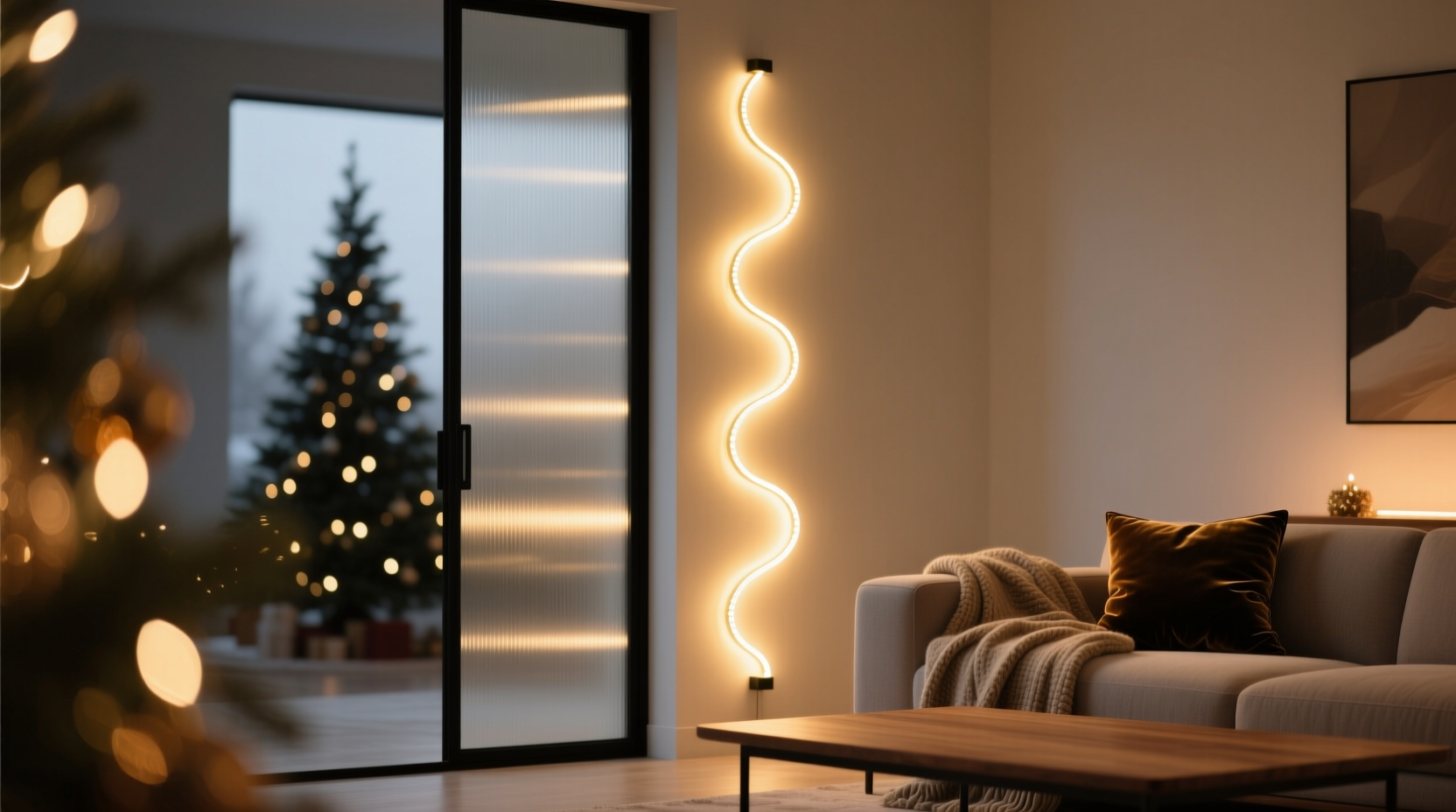
A chase effect simulates movement by illuminating bulbs in a timed sequence—like a wave traveling along a string of lights. Unlike random blinking or strobing, a proper chase has rhythm and direction. It's commonly achieved using programmable LED strings or controllers that support sequencing modes.
The effect originated in commercial signage and theater backdrops, where moving lights drew attention. In residential settings, however, subtlety becomes essential. Your goal isn’t to replicate a Vegas strip but to add gentle animation that enhances architectural lines or natural forms like trees and railings.
“Lighting should complement the structure, not compete with it. A good chase effect feels like an accent, not the entire sentence.” — Daniel Reyes, Residential Lighting Designer
Design Principles for a Sophisticated Light Display
To avoid a cluttered or overwhelming appearance, treat your lighting as part of your home’s seasonal design language. Consider these foundational principles:
- Cohesion: Match the color temperature (warm white vs. cool white) across all fixtures. Mixing tones creates visual noise.
- Rhythm over randomness: Use consistent spacing between bulbs and repeat patterns deliberately.
- Architectural alignment: Follow rooflines, columns, windows, or fences. Let the house guide the flow.
- Minimalism: One strong animated feature often outshines multiple competing effects.
Step-by-Step Guide to Setting a Tasteful Chase Effect
Creating an elegant chase effect involves more than plugging in a controller. It requires deliberate placement, testing, and refinement.
- Assess your space and define focal points. Identify areas where movement will enhance the view—such as eaves, porch columns, or along a walkway. Avoid wrapping every surface.
- Choose high-quality, addressable LED strings. Look for options labeled “RGB” or “individually controllable,” such as those compatible with platforms like WLED or Light-O-Rama. These allow precise control over speed, pattern, and color.
- Map your layout on paper or digitally. Sketch your home’s outline and mark where lights will go. Note power outlet locations and cable paths.
- Install lights with uniform spacing. Whether clipping to gutters or draping along branches, maintain even intervals (typically 3–6 inches apart). Uneven gaps disrupt the illusion of smooth motion.
- Connect to a programmable controller. Use a Wi-Fi-enabled node (e.g., ESP8266-based) or a dedicated lighting system that supports chase sequences. Test connectivity before final installation.
- Program the chase effect with moderation. Start with a slow speed (0.5–1 second per step), single-direction travel, and warm white or soft multicolor palettes. Avoid rapid reversals or rainbow cycles unless used sparingly.
- Test at night under real conditions. Observe from the street and adjacent rooms. Adjust brightness, timing, and direction based on visibility and ambiance.
- Set a schedule. Use timers or smart home integration to limit operation to evening hours (e.g., 5 PM to 11 PM), reducing light pollution and energy use.
Recommended Settings for Elegance
| Parameter | Recommended Value | Why It Matters |
|---|---|---|
| Speed | 0.75–1.2 seconds per step | Too fast appears frantic; too slow loses momentum. |
| Direction | Single forward or alternating wave | Back-and-forth chases can feel jarring if overused. |
| Brightness | 50–70% | Full brightness overwhelms; dimming adds warmth. |
| Color | Warm white or pastel hues | Vibrant RGB is festive but best reserved for accents. |
| Pattern Duration | Run for 1–2 minutes, then pause or switch to static | Prevents sensory fatigue and maintains surprise. |
Avoiding Common Pitfalls: Do’s and Don’ts
Even experienced decorators fall into traps that undermine their efforts. Below is a clear comparison of choices that make or break tasteful animation.
| Do | Don’t |
|---|---|
| Use chase effects on one primary feature (e.g., roofline) | Apply animation to every string of lights |
| Sync multiple strips to the same controller for seamless motion | Run mismatched timers causing unsynchronized flickering |
| Hide wires and controllers neatly behind fascia or in conduit | Leave extension cords visible or dangling |
| Combine with static warm-white outlines for balance | Mix chase, twinkle, fade, and strobe effects simultaneously |
| Use ground stakes or clips designed for outdoor lighting | Nail or staple wires, which damages insulation and looks messy |
Real Example: Transforming a Suburban Porch
Consider Sarah, a homeowner in Portland who wanted to add holiday cheer without alienating her neighbors. Her craftsman-style bungalow had deep eaves and stone columns—ideal for highlighting architectural details.
Instead of wrapping every surface, she installed warm-white LED strings along the roofline and down each column. She used a single programmable strip on the front gutter to create a slow, left-to-right chase effect. The rest remained static. She programmed the animation to run only during the first hour after dusk and the last hour before midnight, cycling through 90 seconds of motion followed by five minutes of steady glow.
The result? Neighbors commented on the “cinematic” quality of the lights. No one mentioned gaudiness. By focusing on flow and timing, Sarah created delight without distraction.
Checklist: Setting a Classy Chase Effect
Before turning on your display, verify the following:
- ✅ All lights are securely fastened and weatherproofed
- ✅ Wiring is concealed or routed safely away from foot traffic
- ✅ Controller is protected from moisture (use an enclosure if needed)
- ✅ Chase speed is slow and fluid—not jumpy or erratic
- ✅ Animation complements, rather than dominates, the overall look
- ✅ Timer or automation ensures lights turn off during late-night hours
- ✅ Neighbors won’t be disturbed by excessive brightness or flicker
- ✅ You’ve tested the sequence from multiple viewing angles
Frequently Asked Questions
Can I create a chase effect with non-programmable lights?
No—standard incandescent or basic LED strings cannot produce true chase effects. You need individually addressable LEDs (like WS2812B) paired with a microcontroller or a pre-programmed chase controller. Some plug-and-play kits offer built-in chase modes, but customization is limited.
Is a chase effect appropriate for traditional neighborhoods?
Yes, if applied thoughtfully. In conservative or historic districts, opt for warm-white lights only, use subtle motion speeds, and restrict animation to secondary features like railings or trees. Avoid full-house coverage. When in doubt, prioritize elegance over spectacle.
How do I prevent my lights from looking cheap or mass-produced?
Invest in commercial-grade materials: thicker insulated wire, durable connectors, and professional clips. Avoid dollar-store strands with wide bulb spacing and flimsy coatings. Higher density (e.g., 100 bulbs per 25 feet) creates a smoother visual flow, especially for chasing sequences.
Final Thoughts: Lighting with Intention
A Christmas light chase effect doesn’t have to mean flashing chaos. When guided by design awareness and technical care, it becomes a tool for storytelling—guiding the eye, creating rhythm, and adding gentle wonder to the winter nights. The most memorable displays aren’t the brightest or busiest, but the ones that feel intentional, welcoming, and in harmony with their environment.
Think of your home as a canvas and the lights as brushstrokes. A single, well-placed stroke can say more than a dozen haphazard splashes. Choose your moment of motion wisely. Let it breathe. Let it shine—just enough.




 浙公网安备
33010002000092号
浙公网安备
33010002000092号 浙B2-20120091-4
Comments
No comments yet. Why don't you start the discussion?