
As the holiday season approaches, many homeowners turn to festive decorations to brighten their porches and welcome guests. But beyond aesthetics, outdoor lighting plays a critical role in home security. A well-lit exterior can discourage potential intruders by reducing hiding spots and increasing the likelihood of detection. Two popular options—motion sensor lights and timer-controlled Christmas lights—are often used for this purpose. But when it comes to deterring burglars, which system is truly more effective?
This article dives deep into the strengths and limitations of both technologies, examines how they influence criminal behavior, and provides actionable guidance on maximizing their security benefits.
Motion Sensor Lights: How They Work and Why They Deter Intruders
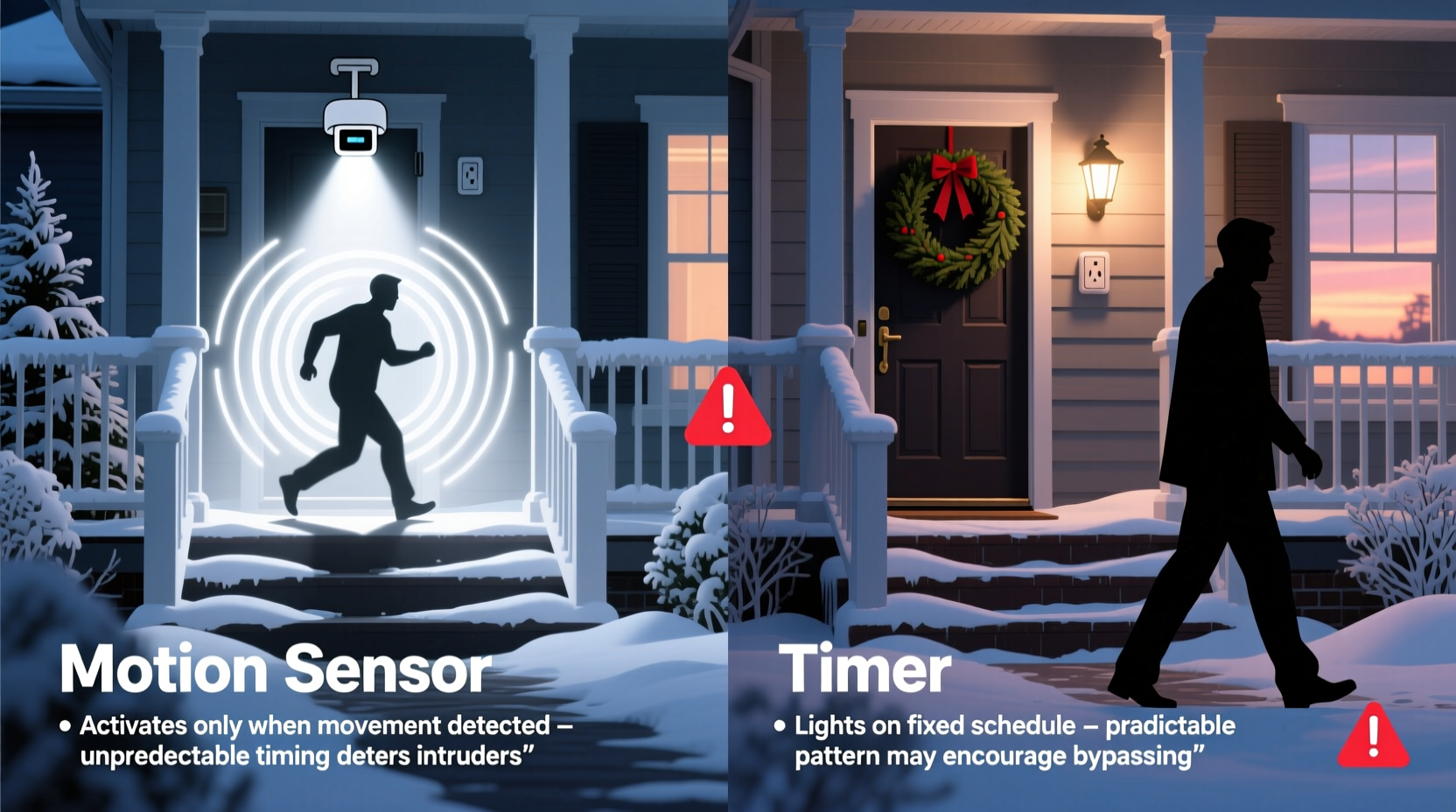
Motion sensor lights activate automatically when they detect movement within a set range, typically using passive infrared (PIR) technology. These sensors pick up changes in heat patterns caused by people or animals moving through the detection zone. Once triggered, the lights illuminate for a preset duration—usually 30 seconds to 5 minutes—before turning off again.
The sudden burst of light serves as both a deterrent and an alert. From a psychological standpoint, unexpected illumination startles intruders, signaling that their presence has been noticed. It also increases the risk of being seen by neighbors or surveillance systems, making the target property less appealing.
Additionally, motion-activated lighting conserves energy and reduces light pollution compared to lights left on all night. However, sensitivity settings matter—too high, and passing cars or animals trigger false alarms; too low, and real threats may go undetected.
Timer-Controlled Christmas Lights: Predictability vs Perception of Activity
Timer-based Christmas lights follow a fixed schedule, turning on and off at predetermined times each day. This creates the illusion that someone is home, especially if lights are programmed to come on at dusk and stay lit until late evening. For vacationing households, this simulated occupancy can be a powerful psychological tool against opportunistic criminals.
However, timers lack responsiveness. Unlike motion sensors, they don’t react to actual activity. A burglar observing a house over several nights can quickly learn the pattern and exploit gaps—such as when the lights shut off at 11 PM and the home falls into darkness.
Still, decorative lighting with timers offers consistent visibility around key areas like front steps and driveways, improving safety for residents while adding a welcoming glow. When combined with smart plugs or Wi-Fi-enabled controllers, timers can be randomized slightly to mimic human behavior more convincingly.
“Lighting that appears unpredictable—like random on/off cycles or sudden activation—is far more effective than static schedules. Burglars look for signs of vacancy, and predictable lighting screams ‘empty house.’” — Lt. Daniel Reeves, Retired Police Officer & Home Security Consultant
Comparative Analysis: Motion Sensors vs Timers for Intrusion Deterrence
To understand which method better prevents break-ins, consider three key factors: unpredictability, reaction capability, and perceived occupancy.
| Feature | Motion Sensor Lights | Timer-Controlled Lights |
|---|---|---|
| Unpredictability | High – Activates only when needed, making timing impossible to anticipate | Low – Follows a fixed routine that can be observed and exploited |
| Response to Threats | Immediate – Reacts to real-time movement near the property | None – No ability to respond to suspicious activity |
| Energy Efficiency | High – Only operates when motion is detected | Medium – Runs on schedule regardless of need |
| Deterrence Strength | Strong – Sudden light startles and exposes intruders | Moderate – Gives impression of occupancy but no surprise element |
| Best Use Case | Sidewalks, backyards, garages, dark corners | Front porches, rooflines, visible decorative zones |
While neither option alone guarantees complete protection, motion sensors have a clear edge in active deterrence. Their ability to react dynamically makes them significantly more disruptive to would-be intruders.
Real-World Example: The Neighborhood Break-In Pattern
In a suburban neighborhood outside Denver, a string of porch package thefts and attempted break-ins occurred over three weeks during December 2022. Local authorities reviewed surveillance footage and interviewed affected residents to identify patterns.
One finding stood out: homes equipped with motion-sensor floodlights experienced zero successful breaches, even when packages were left unattended. In contrast, houses relying solely on timed Christmas lights—including those with elaborate displays—were targeted repeatedly, particularly after lights turned off at midnight.
One resident, Maria Thompson, installed a dual-system setup after her first package was stolen. She kept her traditional LED icicle lights on a timer (dusk to 11 PM), but added solar-powered motion sensor spotlights along her side fence. “The second I got the motion lights, the attempts stopped,” she said. “I actually saw one guy jump and run when the backyard lit up at 2 AM.”
This case illustrates a crucial point: while timers help maintain the appearance of occupancy, only motion sensors provide real-time intervention.
Maximizing Security: A Hybrid Approach for Optimal Protection
Relying exclusively on either system limits your defensive capabilities. A layered strategy combining both technologies delivers superior results.
Here’s how to implement a hybrid lighting plan effectively:
- Use timers for decorative appeal – Program Christmas lights to turn on at dusk and off between 10 PM and midnight to suggest regular household activity.
- Install motion sensors in vulnerable zones – Focus on dark entry points: side gates, basement windows, detached garages, and rear patios.
- Vary brightness and color – Pair warm-white decorative strings with bright white (5000K+) motion floodlights. The contrast enhances visibility and surprise effect.
- Add smart controls – Use Wi-Fi-enabled timers that allow remote adjustments and randomization via smartphone apps, making routines less predictable.
- Integrate with other security elements – Connect motion lights to doorbell cameras or audible alarms for compounded deterrence.
Action Checklist: Secure Your Porch This Holiday Season
- ✅ Audit your property’s dark zones—identify blind spots where intruders could hide
- ✅ Install motion sensor lights at all ground-level entry points (doors, windows, garage)
- ✅ Set decorative lights on programmable timers with variable end times
- ✅ Test sensor range and angle to ensure full coverage of walkways and fences
- ✅ Combine lighting with signage (e.g., “Video Surveillance in Use”) for added psychological impact
- ✅ Inform neighbors about suspicious activity to strengthen community awareness
Frequently Asked Questions
Can motion sensor lights be fooled by weather or animals?
Modern PIR sensors are designed to filter out small animals and minor environmental fluctuations. However, heavy snowfall or dense fog can occasionally affect performance. Choose models labeled “pet-immune” or “weather-resistant” for reliable operation in diverse conditions.
Do timers make my home safer if I’m away on vacation?
Yes, but only to a degree. Timers create the illusion of occupancy, which discourages casual thieves. However, sophisticated intruders may observe patterns over time. For maximum effectiveness, pair timers with random lamp timers inside the house and ask a neighbor to park in your driveway occasionally.
Are smart lights worth the investment for security?
Absolutely. Smart lighting systems allow you to control brightness, color, and scheduling remotely. Some even simulate natural living patterns—turning rooms on and off randomly—to mimic real human behavior. While more expensive upfront, they offer long-term flexibility and peace of mind.
Conclusion: Prioritize Responsiveness Over Routine
When comparing Christmas light motion sensors versus timers for porch lighting, the evidence favors motion detection as the more effective deterrent. Its reactive nature introduces uncertainty and exposure—two elements that burglars actively avoid. Timers, while useful for maintaining curb appeal and suggesting occupancy, lack the dynamic response needed to thwart determined intruders.
The smart solution isn’t choosing one over the other—it’s integrating both. Use timers to enhance holiday ambiance and suggest normalcy, while deploying motion sensors strategically to protect vulnerable access points. Together, they form a comprehensive defense that blends tradition with modern security intelligence.




 浙公网安备
33010002000092号
浙公网安备
33010002000092号 浙B2-20120091-4
Comments
No comments yet. Why don't you start the discussion?