
The glow of Christmas lights has long defined the holiday season—twinkling from rooftops, wrapping trees, and lining windowsills. For generations, stringing lights was a ritual as sacred as hanging stockings or baking cookies. But in recent years, a new contender has emerged: the Christmas light projector. Compact, easy to use, and capable of transforming entire facades with a single beam, these devices promise festive magic without the tangle of cords. As their popularity grows, a pressing question arises—are traditional light strings becoming obsolete?
This shift isn’t just about convenience. It reflects broader changes in how people celebrate, what they value in holiday traditions, and how technology is reshaping even the most sentimental customs. To understand whether strings are fading into nostalgia, we need to examine not only performance and cost but also emotional resonance, environmental impact, and long-term trends.
How Christmas Light Projectors Work—and Why They’re Gaining Popularity
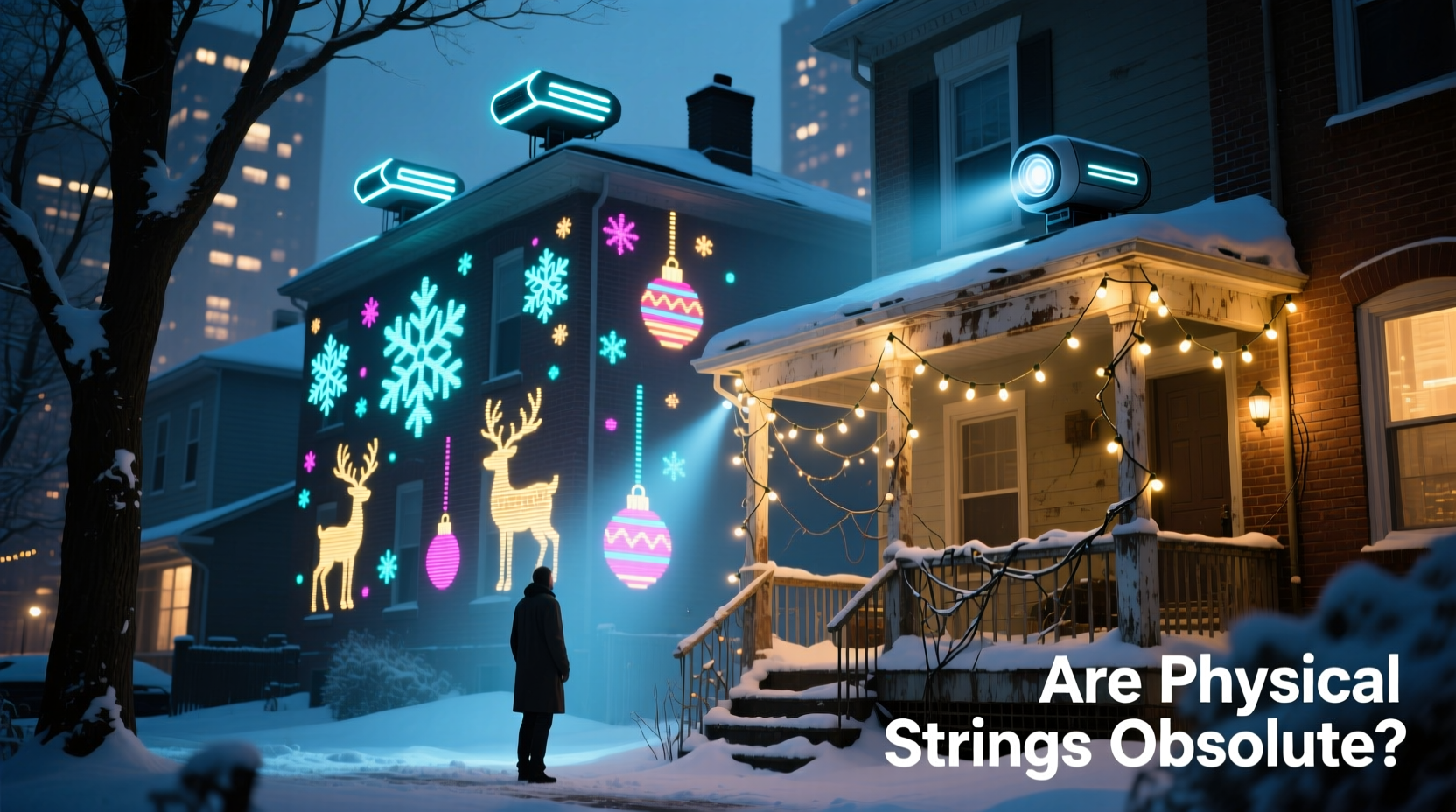
Christmas light projectors operate like specialized slide projectors for the holidays. Plug them in, aim at a wall or lawn, and they cast animated patterns—snowflakes, reindeer, twinkling stars, or cascading colored lights—across large surfaces. Most use LED light sources and rotating lenses to create dynamic effects. Some models offer multiple discs or digital displays, allowing users to switch themes with the press of a button.
Their appeal lies in simplicity. Installation takes minutes: position the unit on a flat surface, plug it in, adjust the angle, and you're done. No climbing ladders, no untangling knots, no hunting for missing bulbs. A single projector can cover up to 1,000 square feet, making it ideal for renters, elderly homeowners, or those short on time.
Energy efficiency is another advantage. Most projectors consume between 7–15 watts, significantly less than a full string setup. And because they have no exposed wiring or fragile bulbs, they’re less prone to weather damage or accidental disconnection.
The Enduring Charm of Physical Christmas Lights
Despite the rise of projectors, millions still choose traditional light strings every year. For many, the act of decorating is inseparable from the experience of Christmas itself. There’s a tactile satisfaction in draping garlands across mantels, weaving lights through tree branches, and stepping back to admire a home transformed by hand.
Physical lights offer unmatched depth and dimension. Unlike projected flat images, real bulbs emit light in all directions, creating sparkle, shadow, and warmth that feels organic. When strung properly, they add texture to architecture—highlighting eaves, columns, and door frames in ways a two-dimensional projection cannot replicate.
Moreover, traditional setups allow for customization. Homeowners mix colors, bulb sizes, and sequences (steady vs. twinkle) to craft unique displays. Some go further, programming synchronized light shows to music using smart controllers—a level of artistry currently beyond most consumer-grade projectors.
“Light strings aren’t just decoration—they’re memory makers. The smell of the extension cord warming up, the sound of laughter while untangling a knot, the pride in a perfectly lit roofline—that’s part of the holiday fabric.” — Daniel Reeves, Holiday Lighting Designer & Founder of Festive Illuminations Co.
Comparison: Projectors vs. Strings – Key Factors Side-by-Side
| Factor | Christmas Light Projectors | Traditional Light Strings |
|---|---|---|
| Installation Time | 3–10 minutes | 1–6+ hours |
| Coverage Area | Up to 1,000 sq ft per unit | Depends on number of strings; typically 50–200 sq ft per set |
| Energy Use | 7–15 watts | Each 50-bulb string: ~4–7 watts; larger setups can exceed 100W |
| Durability | High (no exposed wires; weather-resistant casing) | Moderate (vulnerable to breakage, moisture, pests) |
| Customization | Limited to preset animations | High (color mixing, sequencing, smart control integration) |
| Long-Term Cost | $30–$80 per projector; lasts 3–5 years | $10–$25 per string; replacement parts and storage needed annually |
| Emotional Value | Functional and festive, but impersonal | High—often tied to family rituals and heirloom pieces |
A Real-World Example: Two Neighbors, Two Approaches
In suburban Denver, neighbors Sarah Lin and Mark Thompson took different paths this holiday season. Sarah, a working mother of two, invested in four Christmas light projectors—one for each side of her house. She had them installed before Thanksgiving, and within 15 minutes, her home was glowing with animated snowmen and shimmering icicles. Her kids loved the “magic” effect, and she appreciated not having to spend weekends on a ladder.
Across the street, Mark spent three Saturdays meticulously installing over 3,000 LED bulbs. He wrapped trees, outlined windows, and built a synchronized light show synced to holiday music broadcast via FM transmitter. His display drew crowds, local media attention, and became a neighborhood tradition.
Both homes were festive. Both families enjoyed the season. But their experiences diverged sharply. Sarah valued time and simplicity. Mark cherished creativity and connection. Neither approach was objectively better—but each reflected their priorities.
This contrast illustrates a key truth: the choice between projectors and strings isn’t just technical. It’s personal.
Are Strings Becoming Obsolete? The Reality Check
While Christmas light projectors are growing in popularity—especially among urban dwellers, renters, and time-constrained households—there’s little evidence that physical light strings are disappearing. In fact, sales of traditional holiday lighting remain strong. According to the National Retail Federation, U.S. consumers spent over $1.2 billion on outdoor decorations in 2023, with strings and bulbs comprising the largest segment.
What’s changing is market segmentation. Projectors now occupy a niche: quick, temporary, low-effort decoration. They’re ideal for apartments, short-term rentals, or supplemental effects. But they haven’t replaced high-end installations or deeply rooted traditions.
Limitations also curb their dominance. Projected lights lack brightness in well-lit areas and struggle on uneven or dark-colored surfaces. They can’t be seen from the side or behind, reducing their three-dimensional presence. And unlike real lights, they don’t illuminate interiors or create ambiance from within trees or shrubs.
Step-by-Step Guide: Choosing the Right Option for Your Home
- Assess your time and physical ability. If climbing ladders or handling heavy cords is difficult, a projector may be the safer, more practical choice.
- Evaluate your space. Large, flat walls work best for projectors. Homes with architectural detail, landscaping, or multi-level facades benefit more from strings.
- Consider visibility and viewing angles. Will people see your display from the street? Projectors require direct line-of-sight. Strings are visible from multiple angles.
- Determine your aesthetic goals. Want subtle charm? Warm white strings. Going for spectacle? Consider a projector or elaborate string setup.
- Budget for long-term use. Factor in storage, replacement parts, and electricity. Projectors have lower maintenance but limited versatility.
- Test before committing. Rent or borrow both types to see which fits your home and lifestyle.
Hybrid Solutions: The Best of Both Worlds
An emerging trend is the hybrid approach—using projectors and strings together. This allows homeowners to reduce labor while enhancing visual impact. For example, a projector might cover a large wall with animated snow, while strings highlight railings, trees, and entryways with warm white or multicolored lights.
Smart lighting systems now integrate with projectors, enabling unified control via apps. Some enthusiasts use projectors for background effects and reserve strings for focal points—like a glowing wreath or illuminated nativity scene.
This synergy acknowledges that neither option is universally superior. Instead, they serve different roles in the decorator’s toolkit.
Environmental and Practical Considerations
From an ecological standpoint, both options have trade-offs. Projectors use less energy and generate less physical waste, but they often contain non-replaceable components and are harder to repair. If a lens cracks or the motor fails, the entire unit may be discarded.
Strings, especially modern LED versions, last for years if stored properly. However, improper storage leads to tangling and breakage, increasing replacement frequency. PVC-coated wires can degrade over time, leaching microplastics.
For sustainability, prioritize durability and repairability. Choose strings with replaceable bulbs and sturdy connectors. For projectors, select brands offering warranties and modular designs.
FAQ: Common Questions About Projectors and Strings
Can I leave a Christmas light projector outside all winter?
Most outdoor-rated projectors are designed for seasonal use and can withstand rain, snow, and temperatures down to 14°F (-10°C). However, covering them during storms or bringing them in during extreme weather extends lifespan.
Do light strings really use more electricity than projectors?
Yes, but the difference depends on scale. A single string uses about the same power as a projector. However, large displays with dozens of strings can consume significantly more. Using LED strings and timers minimizes this gap.
Are projectors safe around children and pets?
Generally yes. Projectors have no exposed electrical parts or hot bulbs. However, keep cords out of reach to prevent tripping or chewing. Never let children look directly into the lens—it can cause eye discomfort.
Conclusion: Tradition Meets Innovation—The Future of Holiday Lighting
Christmas light projectors are not making physical strings obsolete—not yet, and perhaps not ever. Instead, they’re expanding the way people celebrate. They offer accessibility, speed, and novelty, appealing to a generation redefining holiday traditions in the face of busy lives and changing living situations.
But the emotional weight of stringing lights—the shared effort, the imperfections, the glow that feels real—remains irreplaceable for many. These moments aren’t just decoration; they’re rituals that bind families and mark the passage of time.
The future likely isn’t a winner-take-all scenario. It’s coexistence. Projectors will thrive in contexts where convenience matters most. Strings will endure where meaning, craftsmanship, and sensory richness take precedence. And increasingly, homeowners will blend both, crafting celebrations that honor tradition while embracing innovation.




 浙公网安备
33010002000092号
浙公网安备
33010002000092号 浙B2-20120091-4
Comments
No comments yet. Why don't you start the discussion?