
The holiday season has always been a time for spectacle—homes aglow with twinkling lights, lawns transformed into winter wonderlands, and neighborhoods competing in festive brilliance. But as technology advances, the traditional image of stringing hundreds of bulbs across rooftops is being challenged. Enter the Christmas light projector: a compact device that casts animated light patterns across entire facades with minimal effort. Even more futuristic, laser-based systems are emerging, promising precision, brightness, and dynamic displays once reserved for commercial shows. So, what’s really changing? Are we witnessing the decline of physical light strings—or just an evolution in how we celebrate?
The Rise of Holiday Light Projectors
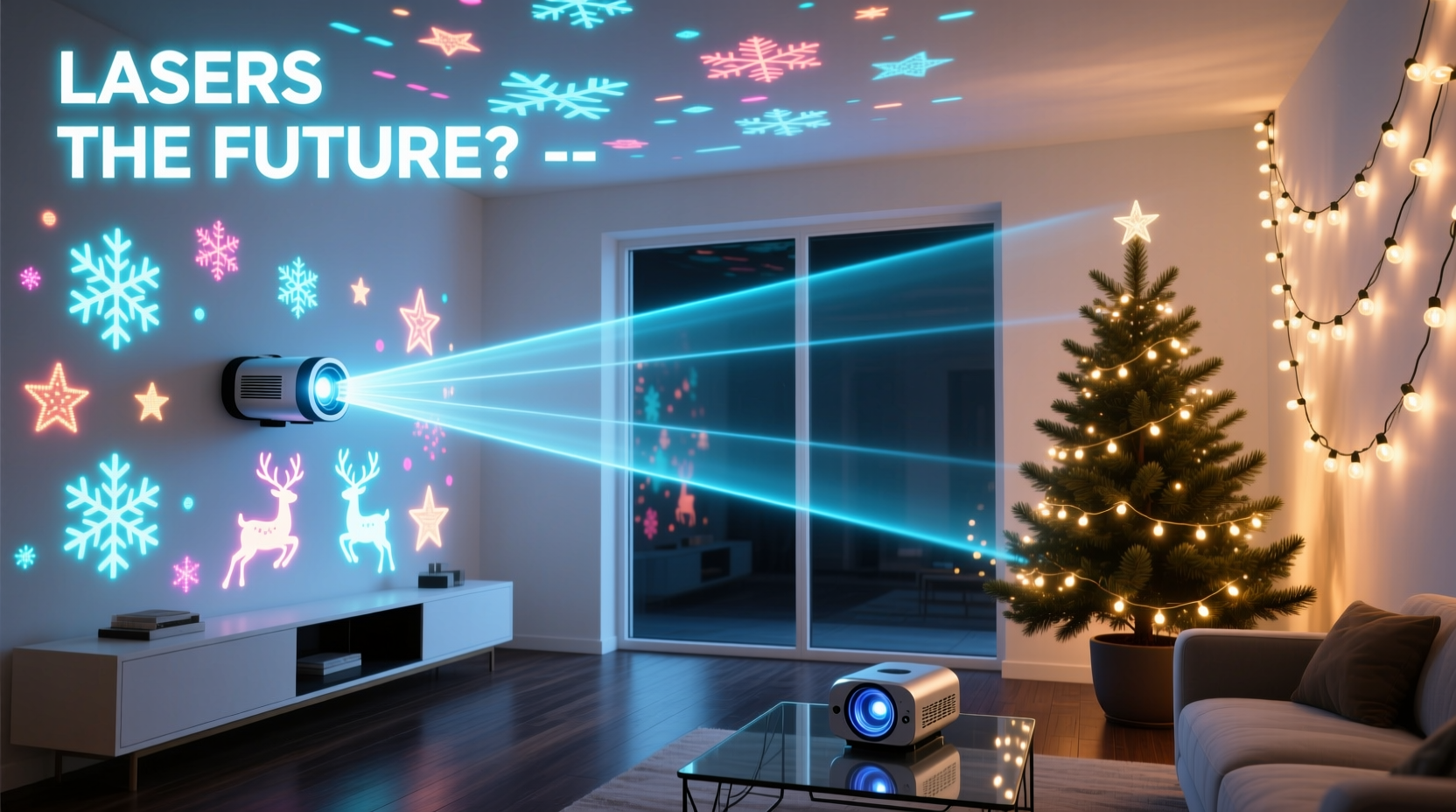
Light projectors first gained popularity in the early 2010s as a convenient alternative to traditional decorating. Instead of untangling wires, climbing ladders, and securing clips, homeowners could simply plug in a device and achieve full-wall illumination. These units use high-lumen LEDs and rotating lenses to project snowflakes, reindeer, falling stars, and other seasonal motifs onto homes, driveways, or trees.
Modern models offer remote controls, timer functions, and multiple display modes. Some sync with music or change colors based on schedules. Their appeal lies in speed, safety, and storage efficiency. A single projector can replace hundreds of feet of wiring and dozens of bulbs.
However, projectors aren’t without limitations. They rely heavily on ambient darkness and flat surfaces. On cloudy nights or in areas with streetlight pollution, their impact diminishes. Textured walls or dense foliage can distort images. And while they create broad visual effects, they lack the three-dimensional depth and tactile charm of real bulbs glowing in space.
Physical Light Strings: Tradition With Tangible Appeal
For over a century, string lights have defined holiday aesthetics. From Edison-era incandescents to today’s energy-efficient LEDs, these strands remain a staple of seasonal decor. Their enduring popularity stems from versatility—they drape, wrap, outline, and contour with precision. Whether outlining windows, weaving through tree branches, or framing porches, physical strings offer control and customization that projectors can’t match.
Beyond practicality, there's emotional resonance. The act of hanging lights—often a family ritual—builds anticipation and connection. The soft flicker of individual bulbs creates warmth and intimacy. Unlike projected imagery, which appears flat and distant, physical lights occupy real space, casting subtle shadows and reflections that enhance realism.
“People don’t just want to see the holidays—they want to feel them. Physical lights engage more senses.” — Daniel Reeves, Lighting Designer & Seasonal Display Consultant
Maintenance and installation remain hurdles. Setup can take hours or even days. Weather exposure risks short circuits or broken connections. Storage requires careful coiling and climate-controlled conditions to prevent damage. Still, for many, the effort is part of the tradition—and the result is unmatched in presence and authenticity.
Laser Systems: The Next Frontier in Holiday Lighting
If projectors represent convenience and physical strings embody tradition, lasers may signal the future. Laser-based holiday displays use focused beams to draw crisp lines, animate figures, and create immersive environments. Unlike broad-spectrum projectors, lasers maintain intensity over distance and perform well even in partial ambient light.
Recent innovations include programmable RGB laser arrays that generate moving patterns—dancing elves, swirling snowstorms, orbiting planets—all mapped precisely to architectural features. These systems integrate with smart home platforms, allowing synchronization with music, weather data, or social media triggers (e.g., turning on when neighbors walk by).
Professional-grade laser shows have long been fixtures at malls and public events. Now, consumer versions are entering the market. Units like the “LumiFlood Pro” or “StarBeam X1” offer app-controlled configurations, automatic calibration, and modular expansion. One homeowner in Colorado recently replaced 1,200 feet of traditional lights with a network of four synchronized lasers, reducing power consumption by 78% while increasing visual complexity.
How Lasers Work in Practice
Laser holiday systems typically consist of:
- A base unit housing multiple diodes (red, green, blue)
- Micro-mirrors or galvanometers that steer beams
- Software for designing animations and timing sequences
- Wi-Fi or Bluetooth connectivity for remote management
They require less physical mounting than strings but need clear line-of-sight and secure placement to avoid beam misalignment. Safety is paramount—consumer models adhere to Class II or IIIa standards, limiting output to eye-safe levels under normal use.
Comparative Analysis: Features, Costs, and Longevity
| Feature | Physical Light Strings | Projectors | Laser Systems |
|---|---|---|---|
| Setup Time | High (2–8+ hours) | Low (5–15 minutes) | Medium (30–60 minutes) |
| Power Consumption | Medium–High (varies by length) | Low (15–30W per unit) | Low–Medium (20–50W) |
| Visual Depth | High (3D effect) | Low (flat projection) | High (sharp, layered beams) |
| Durability | Medium (weather-sensitive) | High (sealed units) | High (with proper housing) |
| Initial Cost | $30–$200+ | $25–$80 | $150–$600+ |
| Customization | Very High | Medium | Very High (software-driven) |
| Lifespan | 3–7 years | 5–8 years | 7–10+ years |
This comparison reveals a shift in value propositions. Projectors win on ease and affordability. Strings retain superiority in ambiance and personal touch. Lasers lead in performance, longevity, and technological potential—but come at a premium.
Real-World Example: A Suburban Transformation
In Portland, Oregon, the Thompson family spent over a decade installing elaborate light displays using traditional strings. Each November, they’d spend weekends mapping layouts, testing circuits, and repairing frayed wires. In 2022, after a particularly harsh storm damaged half their setup, they decided to experiment.
They invested in two wide-angle projectors for their front façade and a compact RGB laser array for their driveway entrance. The projectors handled background themes—falling snow and starfields—while the laser drew animated deer crossing and a rotating North Star. Using a mobile app, they programmed daily changes and synced the display to a holiday playlist.
The result? Setup time dropped from 40 hours to under 3. Energy bills decreased by $42 monthly. Neighbors reported greater visibility from the street, and local news covered their “high-tech holiday home.” Yet, some longtime visitors missed the intricate glow of individual bulbs along the eaves. The Thompsons now blend both: keeping a few classic strings around the porch railing for nostalgic warmth, while letting tech handle the spectacle.
Step-by-Step: Choosing Your Holiday Lighting Strategy
Deciding between projectors, strings, and lasers depends on goals, budget, and context. Follow this guide to make an informed choice:
- Assess your space: Measure wall area, rooflines, and yard access. Note obstructions like trees or uneven surfaces.
- Define your goal: Are you aiming for visibility, charm, simplicity, or innovation?
- Set a budget: Include not just purchase price but installation tools, electricity, and potential repairs.
- Evaluate safety: Consider ladder use, electrical outlets near water, and neighborhood regulations (some cities restrict laser use).
- Test one option first: Rent or buy a single projector or small laser unit before committing.
- Plan for integration: Mix technologies if desired—e.g., projectors for background, strings for detail, lasers for motion.
- Schedule maintenance: Even low-effort systems need cleaning, recalibration, and software updates.
Expert Insight: Where Is Holiday Lighting Headed?
Industry leaders suggest we’re entering a hybrid era. “The future isn’t about replacing one method with another,” says Dr. Lena Choi, researcher at the Institute for Urban Aesthetics. “It’s about convergence. We’ll see projectors with embedded lasers, strings with addressable micro-LEDs, and AI-driven designs that adapt to weather, traffic, or viewer reactions.”
“The most compelling displays will combine digital reach with human warmth. Technology should enhance tradition—not erase it.” — Dr. Lena Choi, Urban Lighting Futurist
She points to emerging trends: solar-powered laser nodes, biodegradable wire coatings, and community networks where neighbors coordinate synchronized light shows via shared apps. Municipalities are also exploring temporary laser projections on public buildings to reduce waste from seasonal installations.
Frequently Asked Questions
Can I use lasers safely around children and pets?
Yes, if you use consumer-grade, certified systems (Class II or IIIa). These emit low-power beams that are safe under normal viewing conditions. Avoid direct eye exposure and mount units out of reach. Always follow manufacturer guidelines.
Do projectors work in rainy or snowy conditions?
Most outdoor-rated projectors are weather-resistant and can operate in light rain or snow. However, heavy precipitation may blur or scatter the image. Ensure the unit is placed under an overhang or protective cover, and never submerge it.
Are physical light strings becoming obsolete?
No. While adoption of projectors and lasers is growing, physical strings remain popular due to their tactile quality, flexibility, and cultural significance. Many consumers prefer a mixed approach, using new tech for large areas and strings for detailed accents.
Final Checklist Before You Decorate
- ✅ Check local ordinances on light brightness, duration, and laser usage
- ✅ Confirm all devices are UL-listed or CE-certified for outdoor use
- ✅ Test all systems during daylight and at night
- ✅ Label cords and connections for easy disassembly
- ✅ Plan storage solutions for off-season protection
- ✅ Share your display schedule with neighbors to manage expectations
Conclusion: Embracing Evolution Without Losing the Spirit
The debate between Christmas light projectors, physical strings, and laser systems isn’t about declaring a winner—it’s about recognizing that celebration evolves. Technology offers new ways to share joy, reduce labor, and expand creative possibilities. But the heart of the season remains unchanged: connection, memory, and shared wonder.
Whether you climb the ladder with a strand of vintage bulbs or tap an app to launch a laser blizzard across your roof, the goal is the same—to light up the dark and invite others into the warmth. The future may be brighter, smarter, and more efficient. But its true value lies in how well it helps us express what matters most.




 浙公网安备
33010002000092号
浙公网安备
33010002000092号 浙B2-20120091-4
Comments
No comments yet. Why don't you start the discussion?