
As the holiday season approaches, one of the most common decisions homeowners face is how to manage their Christmas lights efficiently. The goal isn’t just to create a festive atmosphere—it’s also about minimizing energy use, reducing costs, and avoiding the daily chore of manually turning lights on and off. Two popular solutions dominate the market: traditional Christmas light timers and modern smart plugs. While both serve the same basic function—automating when your lights turn on and off—they differ significantly in terms of control, flexibility, energy savings, and long-term value. Understanding these differences can help you make a smarter investment this holiday season.
How Traditional Timers Work
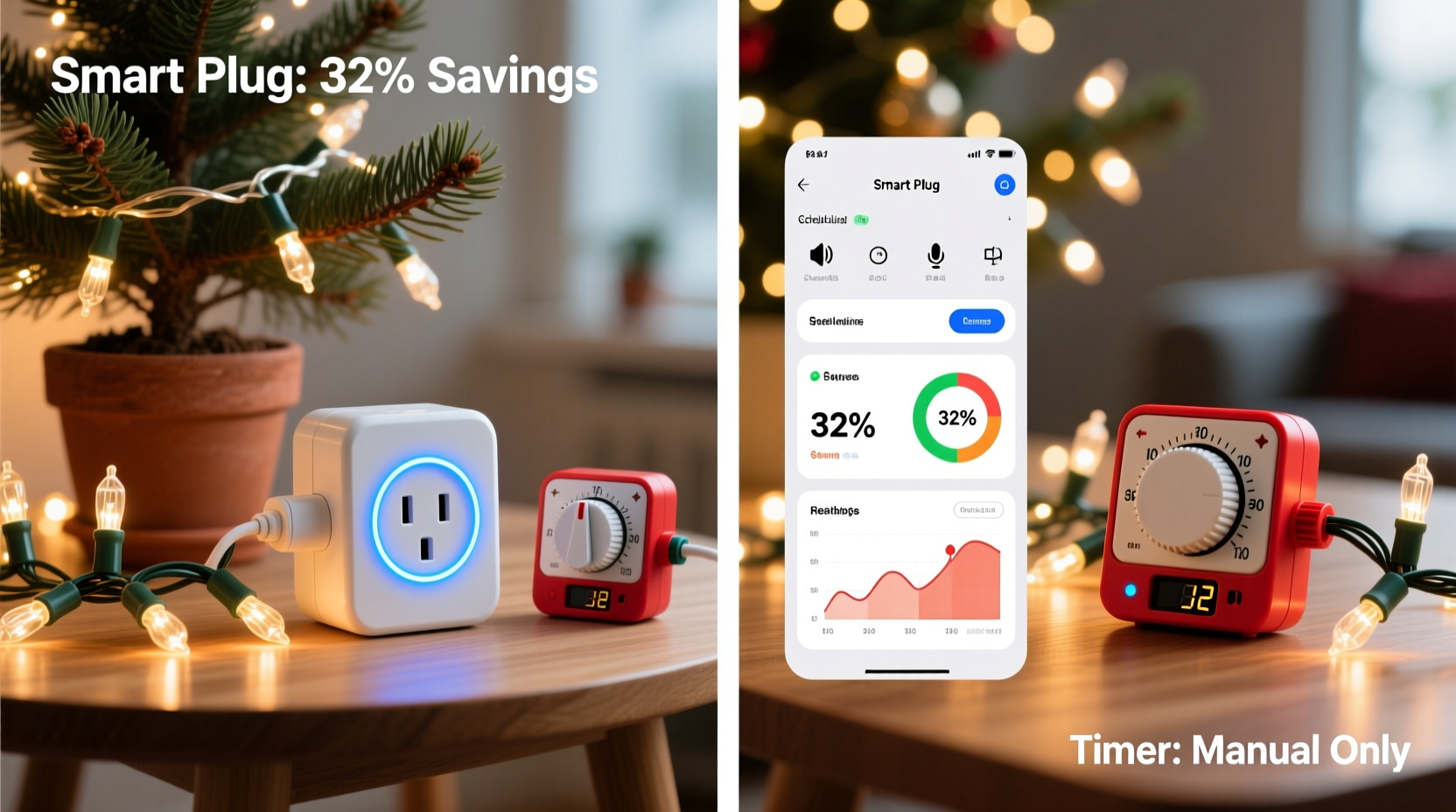
Traditional mechanical or digital Christmas light timers have been around for decades. They are typically simple plug-in devices with a built-in clock that allows users to set specific on and off times. Most models offer either a dial-based interface (mechanical) or a digital display with preset options. Once programmed, they cycle your lights automatically each day.
These timers are affordable, easy to install, and require no Wi-Fi or smartphone setup. However, their functionality is limited. You cannot adjust schedules remotely, and changes require manual intervention. If you forget to reset the timer after a time change or want to extend lighting hours for a special event, you’ll need to walk outside and reprogram it—often in the cold.
The Rise of Smart Plugs for Holiday Lighting
Smart plugs represent a significant leap forward in home automation. These small devices plug into standard outlets and allow connected lamps or light strings to be controlled via a smartphone app, voice assistant (like Alexa or Google Assistant), or automated routines. Unlike basic timers, smart plugs connect to your home Wi-Fi network, enabling remote access from anywhere.
With a smart plug, you can turn your Christmas lights on or off with a tap on your phone—even if you're away from home. You can schedule dynamic lighting patterns, such as gradual fade-ins at dusk or randomization to simulate occupancy while traveling. Some models even track energy usage, giving you insight into how much power your display consumes.
“Smart plugs transform seasonal decor into an intelligent part of your home ecosystem. The convenience and energy insights they provide far outweigh the initial cost.” — David Lin, Home Automation Engineer at EcoHome Labs
Control and Flexibility Compared
When comparing control and adaptability, smart plugs clearly outperform traditional timers. Here’s why:
- Remote Access: Adjust your lighting schedule from bed, the office, or another country.
- Voice Control: Use voice commands like “Turn on the porch lights” through compatible assistants.
- Sunset/Sunrise Scheduling: Many smart plugs let you sync lighting with local sunrise and sunset times, so your display adjusts automatically throughout the season.
- Scene Integration: Combine holiday lights with other smart devices—e.g., dim indoor lights and play festive music when “Holiday Mode” activates.
- Real-Time Adjustments: Forgot to turn off the lights after a party? Do it instantly from your phone.
In contrast, traditional timers lock you into fixed schedules. Even digital models usually lack adaptive features. If daylight saving time shifts or weather keeps it dark longer, your lights may turn on too early or too late unless you physically adjust them.
Energy Efficiency and Cost Savings
One of the biggest concerns during the holidays is rising electricity bills due to extended light use. Both timers and smart plugs help reduce waste by preventing lights from staying on unnecessarily. But smart plugs go further by offering detailed energy monitoring and precision scheduling.
Many smart plugs provide real-time wattage tracking and daily/weekly energy reports. This data helps identify inefficient displays—such as older incandescent bulbs consuming excessive power—and encourages upgrades to LED alternatives. Over time, this feedback loop promotes smarter energy habits beyond the holiday season.
A study by the U.S. Department of Energy found that households using smart controls reduced decorative lighting energy consumption by up to 35% compared to those using manual switches or basic timers. The ability to fine-tune duration, brightness (when paired with dimmable LEDs), and activation conditions makes smart plugs inherently more efficient.
| Feature | Traditional Timer | Smart Plug |
|---|---|---|
| Remote Control | No | Yes |
| Voice Assistant Support | No | Yes (Alexa, Google, Siri) |
| Energy Monitoring | No | Yes (on select models) |
| Sunset/Sunrise Sync | No | Yes |
| App-Based Scheduling | No | Yes |
| Setup Complexity | Low | Moderate (requires Wi-Fi setup) |
| Average Price | $8–$15 | $15–$30 |
Step-by-Step: Setting Up a Smart Plug for Christmas Lights
Switching to a smart plug doesn't have to be complicated. Follow this straightforward process to get your holiday lights under intelligent control:
- Purchase a Compatible Smart Plug: Choose one that works with your preferred ecosystem (Amazon Alexa, Google Home, Apple HomeKit).
- Download the Manufacturer’s App: Install the app (e.g., Kasa, TP-Link, Wemo, or Philips Hue) on your smartphone.
- Plug In the Device: Insert the smart plug into an outdoor-rated GFCI outlet. Ensure it's protected from moisture.
- Connect to Power and Wi-Fi: Power on the plug and follow in-app instructions to connect it to your home network.
- Name Your Device: Label it “Front Porch Lights” or “Tree Lights” for easy identification.
- Create a Schedule: Set daily on/off times, or enable geofencing so lights turn on when you arrive home.
- Test and Refine: Run a test cycle to confirm timing accuracy and brightness levels.
- Add to Routines (Optional): Integrate with broader home scenes like “Evening Ambiance” or “Away Mode.”
Real-World Example: A Family’s Holiday Upgrade
The Reynolds family in Portland, Oregon, used mechanical timers for their elaborate rooftop reindeer display and front-yard tree for years. Each November, they’d spend an evening setting dials and checking operation. But problems arose regularly—lights stayed on during daylight, trips delayed resets, and winter storms made adjustments risky.
In 2023, they invested in four outdoor-rated smart plugs. After a 20-minute setup, they created sunset-triggered schedules and added voice control. When hosting Thanksgiving dinner, they used their phones to brighten the display for guests. During a weekend getaway, they turned off all lights remotely after realizing they’d left them running.
By January, their energy report showed a 28% reduction in lighting-related consumption compared to the previous year. More importantly, the stress of managing the display vanished. “It paid for itself in peace of mind,” said Mark Reynolds. “Now I control the whole show from my couch.”
Cost Analysis: Upfront vs Long-Term Value
At first glance, traditional timers appear cheaper. A basic model costs under $10, while smart plugs range from $15 to $30 each. But when evaluating total ownership value, smart plugs often come out ahead.
- Reusability: Smart plugs work year-round for lamps, fans, coffee makers, and more—not just seasonal decor.
- Longevity: High-quality smart plugs last 5+ years with firmware updates and robust build quality.
- Energy Savings: Precision control reduces wasted electricity, lowering utility bills over time.
- Labor Savings: Eliminates repeated trips outside to adjust settings in bad weather.
Consider this: if a smart plug saves 30 kWh per holiday season (at $0.14/kWh), that’s $4.20 saved annually. Over five years, that’s $21—essentially covering the device cost. Add in convenience and multi-use functionality, and the return becomes undeniable.
Frequently Asked Questions
Can I use a smart plug outdoors?
Yes, but only if it’s specifically rated for outdoor use. Look for IP44 or higher water resistance ratings. Never expose indoor-only smart plugs to rain or snow. For added protection, place them under eaves or inside weatherproof enclosures.
Do smart plugs work during power outages?
After a power outage, most smart plugs will reboot once electricity returns. However, they may lose scheduled settings unless the model has battery backup or cloud-synced profiles. Check manufacturer specs for outage resilience features.
Are mechanical timers safer than smart plugs?
Safety depends more on product quality and proper use than type. Both UL-listed timers and smart plugs are safe when used correctly. Avoid overloading outlets, use GFCI protection for outdoor setups, and inspect cords annually for damage.
Checklist: Choosing Between a Timer and Smart Plug
Use this checklist to determine which solution fits your needs:
- ✅ Need remote control? → Choose smart plug
- ✅ On a tight budget and only need basic automation? → Choose traditional timer
- ✅ Want sunrise/sunset tracking? → Choose smart plug
- ✅ Prefer hands-off setup with no app? → Choose mechanical timer
- ✅ Already use smart home devices? → Choose smart plug for integration
- ✅ Only decorate for a few weeks? → Timer may suffice
- ✅ Concerned about energy use? → Choose smart plug with monitoring
- ✅ Plan to reuse for other appliances? → Choose smart plug
Final Verdict: Which Offers More Control and Savings?
While traditional Christmas light timers serve a purpose for minimalists and budget-conscious decorators, smart plugs deliver superior control, long-term savings, and enhanced user experience. Their ability to adapt schedules dynamically, integrate with home ecosystems, and provide energy insights makes them the better choice for most households.
The slight increase in upfront cost is quickly offset by energy efficiency, versatility, and convenience. Moreover, as smart home technology becomes standard, investing in a smart plug today prepares your home for future automation upgrades.
For those who value both festivity and functionality, the answer is clear: a smart plug offers significantly more control and greater potential for savings—both in dollars and daily effort.




 浙公网安备
33010002000092号
浙公网安备
33010002000092号 浙B2-20120091-4
Comments
No comments yet. Why don't you start the discussion?