
After the holiday festivities wind down, one of the most common household chores is removing the Christmas tree. Whether it's a real evergreen covered in flocking or a long-serving artificial model, proper disposal isn’t always straightforward. Many cities exclude flocked and artificial trees from standard curbside pickup programs, leaving homeowners confused about their best options. This guide cuts through the confusion by comparing professional disposal services with municipal curbside collection, detailing what each accepts, and helping you find the right solution based on your zip code and tree type.
Understanding the Disposal Challenge
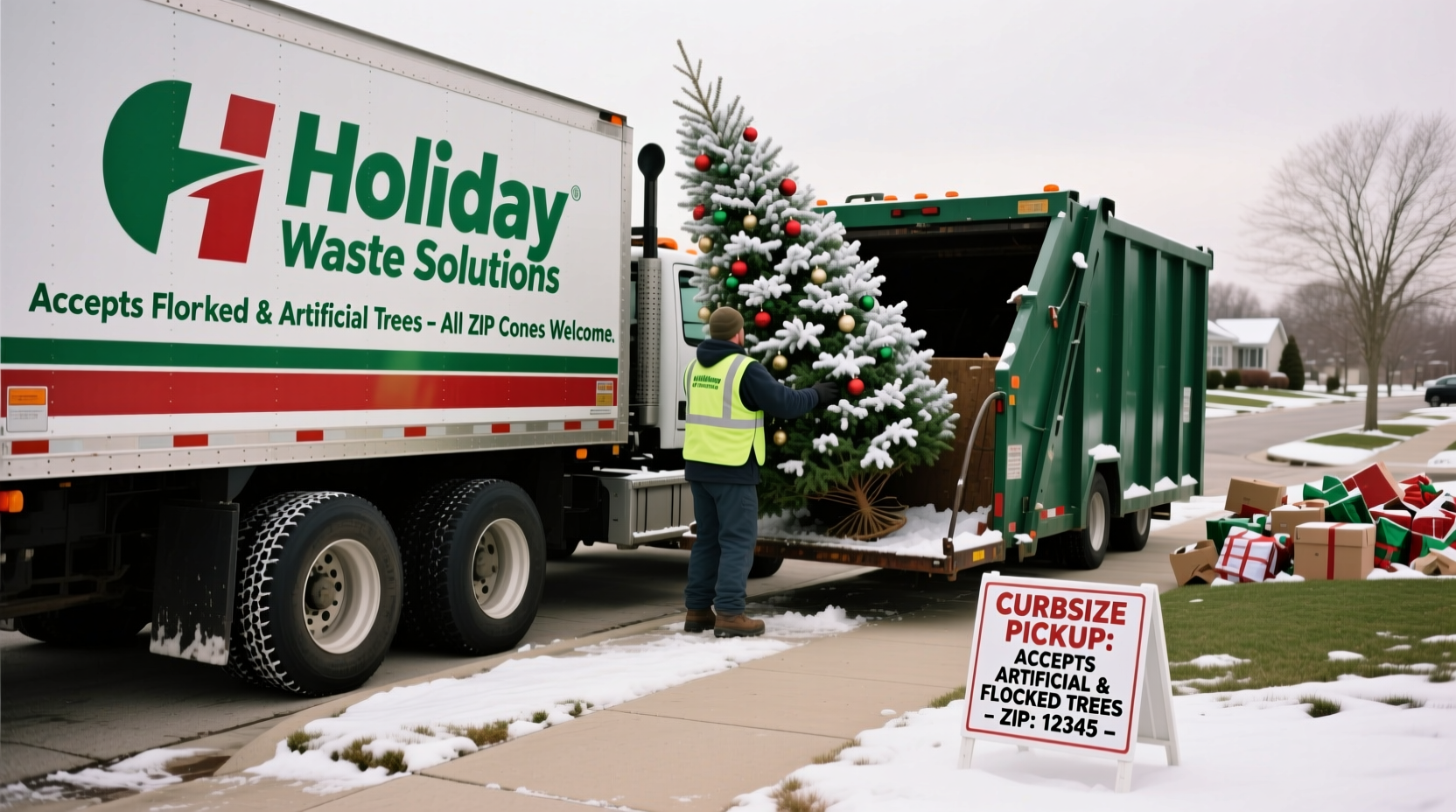
Not all Christmas trees are created equal when it comes to disposal. Real trees made of pine, fir, or spruce are biodegradable and often recycled into mulch. However, when those trees are coated in synthetic snow (flocking), they become problematic. The chemical-laden spray resists decomposition and can contaminate compost streams. Artificial trees, typically made from PVC plastic and metal frames, aren’t biodegradable at all and can take centuries to break down in landfills.
Municipal waste departments have strict guidelines to protect recycling systems and worker safety. As a result, many curbside pickup programs explicitly prohibit flocked and artificial trees. Yet, public awareness lags behind these policies, leading to rejected bins, fines, or environmental harm.
Curbside Pickup: Rules, Restrictions, and Regional Variations
Curbside pickup is the most convenient option—if your tree qualifies. Most cities offer seasonal collection windows between December 26 and January 15. But eligibility depends heavily on where you live and what kind of tree you have.
In general:
- Natural, unflocked trees without stands, lights, or tinsel are widely accepted.
- Flocked trees are banned in over 70% of U.S. municipalities due to chemical runoff risks.
- Artificial trees are almost never accepted in organic waste streams and must be disposed of separately.
For example, New York City’s Department of Sanitation allows natural trees at curbside but requires residents to remove all decorations and prohibits flocked models. In contrast, Austin, Texas, runs a “Chip Drop” program that collects only natural trees for free mulching—flocked or artificial trees must be taken to a special drop-off center.
Your zip code determines everything. A quick search like “Christmas tree disposal [your city] [your zip]” usually leads to official sanitation pages with exact dates and rules.
“Municipal composting facilities aren’t equipped to handle synthetic materials. One flocked tree can compromise an entire batch of mulch.” — Carlos Mendez, Urban Waste Management Specialist, Seattle Public Utilities
Professional Disposal Services: Flexibility and Convenience
When curbside pickup won’t work, private disposal services fill the gap. Companies like 1-800-GOT-JUNK?, Pull-A-Trash, and local green waste haulers offer scheduled pickups for all types of trees—including flocked and artificial ones.
These services charge fees ranging from $30 to $75, depending on location and volume, but provide significant advantages:
- No need to disassemble large artificial trees.
- Flexible scheduling beyond the rigid post-holiday window.
- Responsible handling—many partner with recycling centers or donation programs.
- Ability to bundle tree removal with other post-holiday cleanouts (e.g., wrapping paper, boxes).
Some eco-focused startups even specialize in repurposing artificial trees. For instance, EverGreen Cycle in Denver accepts old artificial models, refurbishes reusable parts, and recycles the rest through industrial shredding.
Booking is simple: enter your zip code on the provider’s website, select a date, and get a quote. Most offer online tracking and confirmation emails.
How to Choose the Right Service
Not all disposal companies are equally sustainable. When selecting a provider, ask:
- Do you accept flocked or artificial trees?
- Where do you send the material after collection?
- Do you recycle components or divert waste from landfills?
- Can I get a receipt for tax-deductible donations (if applicable)?
Comparison Table: Curbside vs. Professional Disposal
| Feature | Curbside Pickup | Professional Disposal Service |
|---|---|---|
| Cost | Free (included in taxes) | $30–$75 per pickup |
| Flocked Trees Accepted? | Rarely (90% reject them) | Yes, most accept |
| Artificial Trees Accepted? | No | Yes, with proper sorting |
| Scheduling Flexibility | Limited to 2–3 weeks post-holiday | Anytime, including weekends |
| Environmental Impact | High (if natural); contamination risk if flocked | Moderate to high (depends on recycling practices) |
| Effort Required | Low (just trim and place outside) | Low to moderate (schedule and prepare) |
| Zip Code Dependency | Very high (rules vary block by block) | Moderate (services cover broader regions) |
Step-by-Step Guide: How to Dispose of Your Tree Based on Type and Location
Follow this timeline to ensure responsible, stress-free disposal:
- Step 1: Identify your tree type – Is it real, flocked, or artificial? Check for white residue (flocking) or plastic needles.
- Step 2: Search using your zip code – Use keywords like “Christmas tree disposal [zip code]” to find local rules.
- Step 3: Call or visit your city’s sanitation website – Confirm whether flocked or artificial trees are accepted curbside.
- Step 4: Prepare your tree – Remove all lights, ornaments, stands, and tinsel. For flocked trees, avoid shaking outdoors to prevent chemical dust spread.
- Step 5: Decide on method:
- If natural and unflocked → schedule curbside pickup.
- If flocked or artificial → book a private service or locate a drop-off center.
- Step 6: Follow up – If using a service, request proof of recycling. If dropping off, ask how materials are processed.
Mini Case Study: The Thompson Family in Charlotte, NC (Zip: 28205)
The Thompsons used a pre-lit artificial tree for eight seasons. After deciding to switch to a real tree, they needed to dispose of the old one. Assuming it could go to the curb, they placed it outside during the holiday pickup week. It wasn’t collected. A follow-up call to Charlotte’s sanitation department revealed artificial trees weren’t accepted curbside.
They then searched “artificial Christmas tree disposal 28205” and found Carolina Junk Haulers, a local company offering $45 pickup with recycling verification. They booked online, received a same-week pickup, and got an email confirming the tree was deconstructed—metal frame sent to scrap, plastic branches to a specialized recycler.
Lesson: Even well-intentioned households can misstep without localized knowledge. Proactive research saves time and reduces landfill waste.
Checklist: Post-Holiday Tree Disposal Done Right
- Identified tree type (real, flocked, artificial)
- Entered zip code into search engine to find local rules
- Verified curbside eligibility via official city website
- Removed all decorations, lights, and stands
- Determined disposal method (curbside, drop-off, or service)
- Scheduled pickup or delivery date
- Confirmed environmentally sound processing
- Recycled tree stand or storage bag if possible
Frequently Asked Questions
Can I burn my flocked Christmas tree in a backyard fire pit?
No. Burning flocked trees releases toxic fumes from the adhesive and chemical spray, posing serious health and environmental risks. Never burn synthetic-coated vegetation. Check local fire codes—many municipalities ban such practices outright.
What should I do with an artificial tree that still works fine?
Consider donating it. Organizations like Operation Homefront, Veterans Affairs support groups, and local shelters often welcome gently used holiday décor. Some resale platforms (Facebook Marketplace, Craigslist) also allow free listings for “free to good home” giveaways.
Are there any cities that accept flocked trees curbside?
A few cities with advanced processing facilities do, but they’re rare. For example, Portland, OR (97201) accepts flocked trees at designated drop-off sites—not curbside—and charges a small fee. Always verify with your local authority; never assume inclusion.
Eco-Friendly Alternatives for Next Year
While disposal is inevitable this season, planning ahead can reduce future hassle:
- Choose potted living trees that can be replanted after holidays.
- Opt for minimal flocking or water-based, biodegradable sprays if desired.
- Invest in modular artificial trees designed for easy disassembly and recycling.
- Support tree rental programs available in cities like San Francisco and Chicago, where companies deliver and reclaim live trees for replanting.
These choices not only simplify end-of-life disposal but also lower your carbon footprint over time.
Conclusion: Make the Right Choice for Your Home and Community
Disposing of a Christmas tree shouldn’t come down to guesswork or guilt. Whether you rely on curbside pickup or hire a professional service, the key is knowing what’s allowed in your area—especially when dealing with flocked or artificial models. A quick zip code search, combined with a few proactive steps, ensures your tree is handled safely and sustainably.
Don’t let convenience override responsibility. Millions of improperly discarded trees end up in landfills each year, contributing to pollution and wasted resources. By choosing the right disposal method today, you set a precedent for smarter, greener holiday habits tomorrow.




 浙公网安备
33010002000092号
浙公网安备
33010002000092号 浙B2-20120091-4
Comments
No comments yet. Why don't you start the discussion?