
Selecting the right Christmas tree isn’t just about picking the tallest or fullest one available. A well-chosen tree enhances your space, fits comfortably within your home’s architecture, and creates a sense of harmony during the holiday season. Too often, people bring home a tree that towers too close to the ceiling or overwhelms a modest living area, only to realize it doesn’t feel quite right. The solution lies in understanding how to calculate the ideal tree height based on your ceiling height and room dimensions.
This guide breaks down the practical math, design principles, and real-world considerations that go into choosing a proportionally correct Christmas tree. Whether you live in a cozy apartment with 8-foot ceilings or a spacious home with vaulted rooms, you’ll learn how to make a confident, informed decision—before you cut the first tie from the lot.
The Proportion Principle: Why Tree Height Matters
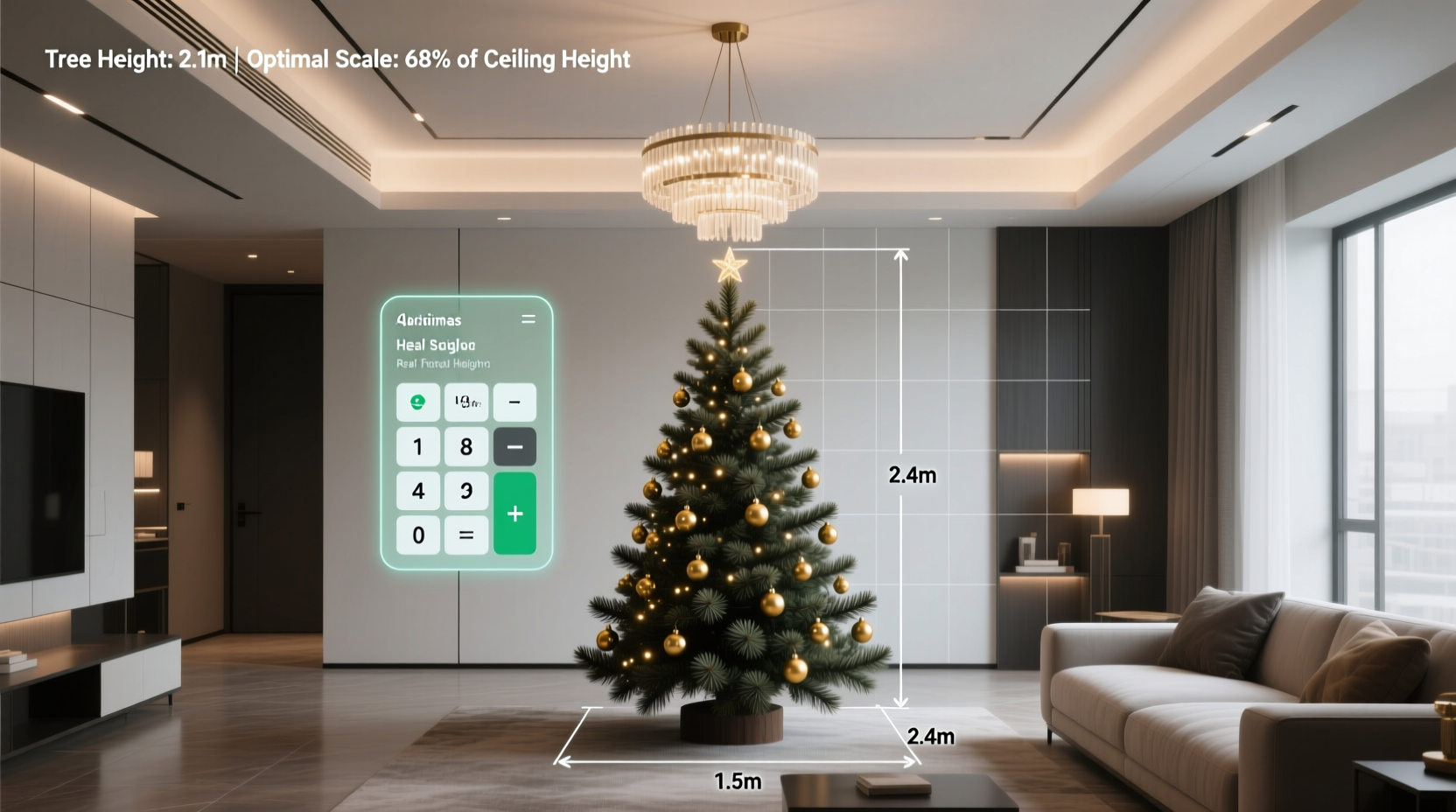
A Christmas tree is more than a decoration; it’s a focal point. When properly scaled, it anchors the room without dominating it. An oversized tree can make a room feel cramped or unfinished if the top brushes the ceiling, while an undersized tree may appear lost or underwhelming, especially in larger spaces.
Interior designers and holiday stylists emphasize balance. The tree should occupy visual space without monopolizing it. This means leaving breathing room above, around, and even in front of the tree. A general rule of thumb is to allow at least 6 to 12 inches between the top of the tree and the ceiling. This gap prevents a “cramped” look and leaves space for a tree topper—whether a star, angel, or whimsical ornament—that won’t be squeezed or crooked.
Beyond vertical clearance, consider the tree’s relationship to surrounding furniture. If placed near a sofa or entertainment center, the tree shouldn’t block sightlines to the TV or obstruct walkways. Ideally, the base of the tree should sit at least 12 inches from walls or large furniture pieces, allowing for even ornament distribution and ease of access when decorating.
How to Calculate Ideal Tree Height: A Step-by-Step Guide
Determining the perfect tree height doesn’t require advanced mathematics—just a few key measurements and simple subtraction. Follow this sequence to find your ideal range.
- Measure your ceiling height using a tape measure. Standard ceilings are 8 feet (96 inches), but many homes range from 9 to 12 feet, especially in newer constructions or open-concept areas.
- Determine desired clearance. Subtract 6 to 12 inches from your ceiling height to allow space above the tree. For example:
- Ceiling: 96 inches (8 ft)
- Clearance: 12 inches
- Max tree height: 84 inches (7 ft)
- Account for the tree stand. Most stands add 4 to 6 inches in height. If you’re aiming for a 7-foot tree including the stand, subtract the stand height from your total to determine the actual tree length needed.
- Factor in the topper. If you plan to use a large topper (e.g., a 10-inch star), reduce your max tree height by that amount so the final display still fits under the ceiling.
For rooms with non-standard dimensions—such as two-story foyers or sunrooms with sloped ceilings—consider measuring at the highest point where the tree will be placed. In vaulted rooms, you might opt for a taller tree if the peak is high enough, but ensure it doesn’t visually overpower lower adjacent areas.
Room Proportions and Visual Balance
Height isn’t the only factor. The size of your room influences how a tree feels once decorated. A 7-foot tree in a 10x12-foot room may feel grand, while the same tree in a 20x30-foot great room could seem small. Use the following guideline to assess visual proportion:
- In small rooms (under 150 sq ft), trees between 6 and 7 feet work best.
- In medium rooms (150–300 sq ft), 7 to 8 feet is ideal.
- In large rooms (over 300 sq ft), 8 to 9 feet—or even taller, if ceiling height allows—can create a dramatic centerpiece.
The shape of the tree also affects perception. A full, bushy tree occupies more visual volume than a slim-profile one. If space is tight, consider a pencil or narrow-profile tree, which can reach 7.5 feet tall while taking up significantly less floor space.
Christmas Tree Height Calculator: Quick Reference Table
| Ceiling Height | Max Tree Height (No Topper) | With 8\" Topper | Suggested Room Size | Stand Height Included? |
|---|---|---|---|---|
| 8 ft (96\") | 84\" | 76\" | Small to medium | No |
| 9 ft (108\") | 96\" | 88\" | Medium | No |
| 10 ft (120\") | 108\" | 100\" | Large | No |
| 12 ft (144\") | 132\" | 124\" | Great room, entryway | No |
| 14 ft (168\") | 156\" | 148\" | Vaulted foyer | No |
Note: All values assume 12 inches of clearance above the tree. Adjust downward if you prefer tighter spacing (e.g., 6 inches) or have ceiling fans, lights, or artwork nearby.
Real-Life Example: Matching Scale in a Cozy Living Room
Sarah lives in a historic townhouse with 8-foot ceilings and a 14x16-foot living room. Last year, she chose a 9-foot tree, thinking bigger would mean more festive. She removed the finial from her chandelier to make room, but the tree still loomed uncomfortably. Ornaments near the top were hard to reach, and the overall effect felt unbalanced—like the room was serving the tree instead of the other way around.
This year, Sarah measured carefully. With 96 inches of ceiling height and a 10-inch star topper planned, she calculated a maximum tree height of 74 inches—not accounting for the 5-inch stand. That meant she needed a tree no taller than 69 inches (5'9\") before mounting. She opted for a 6.5-foot Fraser fir with a sturdy stand and added fullness with layered garlands and coordinated lighting. The result? A tree that felt intentional, festive, and perfectly framed within the space.
Her experience underscores a common mistake: prioritizing ambition over proportion. A slightly shorter tree, thoughtfully decorated, often has greater impact than an overstuffed giant.
Expert Insight: Designers Weigh In on Holiday Proportions
“Scale is everything in interior design—even during the holidays. A tree that fits its environment feels celebratory, not intrusive. I always advise clients to measure twice and choose a tree that complements, not competes with, their room.” — Lena Torres, Interior Stylist & Holiday Decor Consultant
“The most memorable trees aren’t the tallest—they’re the ones that feel ‘right’ in the space. That comes from respecting ceiling height, furniture layout, and traffic flow.” — Marcus Bell, Residential Designer
Professional decorators often use mockups—measuring tapes, extendable poles, or even cardboard cutouts—to visualize tree height before purchase. Some even recommend placing a folded step ladder upright in the intended spot to simulate height and observe how it interacts with light fixtures and doorways.
Checklist: Choosing Your Perfectly Proportioned Tree
Pre-Shopping Checklist:
- ✅ Measure ceiling height at the display location
- ✅ Decide on topper height (if any)
- ✅ Measure floor space width and depth
- ✅ Note nearby obstacles (lights, shelves, vents)
- ✅ Determine preferred tree profile (full, slim, pencil)
- ✅ Calculate max tree height: Ceiling – Clearance – Topper – Stand
- ✅ Bring tape measure and notes to the tree lot
Avoid These Common Tree Sizing Mistakes
Even experienced decorators can misjudge. Watch out for these frequent errors:
- Ignoring the stand height: Many forget that the stand adds several inches, pushing the tree closer to the ceiling than expected.
- Overestimating corner space: Trees in corners still need side clearance for ornamenting and fire safety (especially with real trees and heat sources).
- Choosing height over girth: A tall, sparse tree can look awkward. Sometimes a shorter, fuller tree provides better visual weight.
- Not considering décor weight: Heavy ornaments or thick garlands add downward pressure and can compress the upper tiers, reducing effective height.
- Forgetting future additions: Plan for the star, ribbon cascade, or tree skirt that extends outward—these elements contribute to the overall footprint.
If you're buying online or through delivery services, request exact tree dimensions including base diameter and taper ratio. Reputable sellers provide this data, helping you avoid surprises.
Frequently Asked Questions
Can I fit a 9-foot tree in an 8-foot room?
Technically, yes—if you remove the stand or compress the trunk—but it’s not recommended. A tree that touches the ceiling appears cramped and limits decoration options. You’d also risk damaging the ceiling or toppling the tree during adjustment. Opt for a 7.5-foot tree instead, which allows proper clearance and stand use.
What if my ceiling is 10 feet or higher?
Taller ceilings offer flexibility. You can go up to 9 feet safely, maintaining 12 inches of clearance. In homes with 10–12 foot ceilings, many homeowners choose 8.5 to 9.5-foot trees. Just ensure the tree’s base diameter matches the room’s scale—too narrow, and it may look spindly.
Do artificial trees fit differently than real ones?
Artificial trees often have uniform shapes and consistent heights, making sizing easier. However, they can be bulkier due to dense branch tips. Measure the assembled width as well as height. Also, note that some artificial trees come in sections—the total height includes all segments stacked, so verify assembly instructions before assuming fit.
Final Thoughts: Celebrate Smart, Not Just Big
The magic of a Christmas tree comes from warmth, memory, and intention—not sheer size. A well-proportioned tree enhances your home rather than challenging it. By applying a simple height calculation—factoring in ceiling height, topper, stand, and clearance—you set the stage for a stress-free setup and a display that feels naturally harmonious.
Take the time to measure, plan, and visualize. Bring sketches or numbers to the lot. And remember: a tree that fits your space perfectly will feel more joyful than one that merely impresses. This holiday season, let thoughtful design elevate your tradition.




 浙公网安备
33010002000092号
浙公网安备
33010002000092号 浙B2-20120091-4
Comments
No comments yet. Why don't you start the discussion?