
Every holiday season, millions of homes across the world light up with festive cheer—none more prominently than the glowing star or angel perched proudly atop the Christmas tree. These LED-lit toppers are meant to symbolize hope, joy, and tradition. Yet, for a growing number of families, that brilliance fades too soon—sometimes within just 48 hours of setup. Why do so many LED Christmas tree toppers fail almost immediately after being plugged in? The answer lies not in magic or bad luck, but in design, manufacturing quality, electrical compatibility, and consumer habits.
This issue affects both LED stars and angels equally, despite their differing shapes and symbolism. Whether you're drawn to the celestial geometry of a star or the serene presence of an angel, the frustration is the same: excitement turns to disappointment when the lights flicker out before the first carol has even finished playing.
The Hidden Flaws Behind Early Burnout
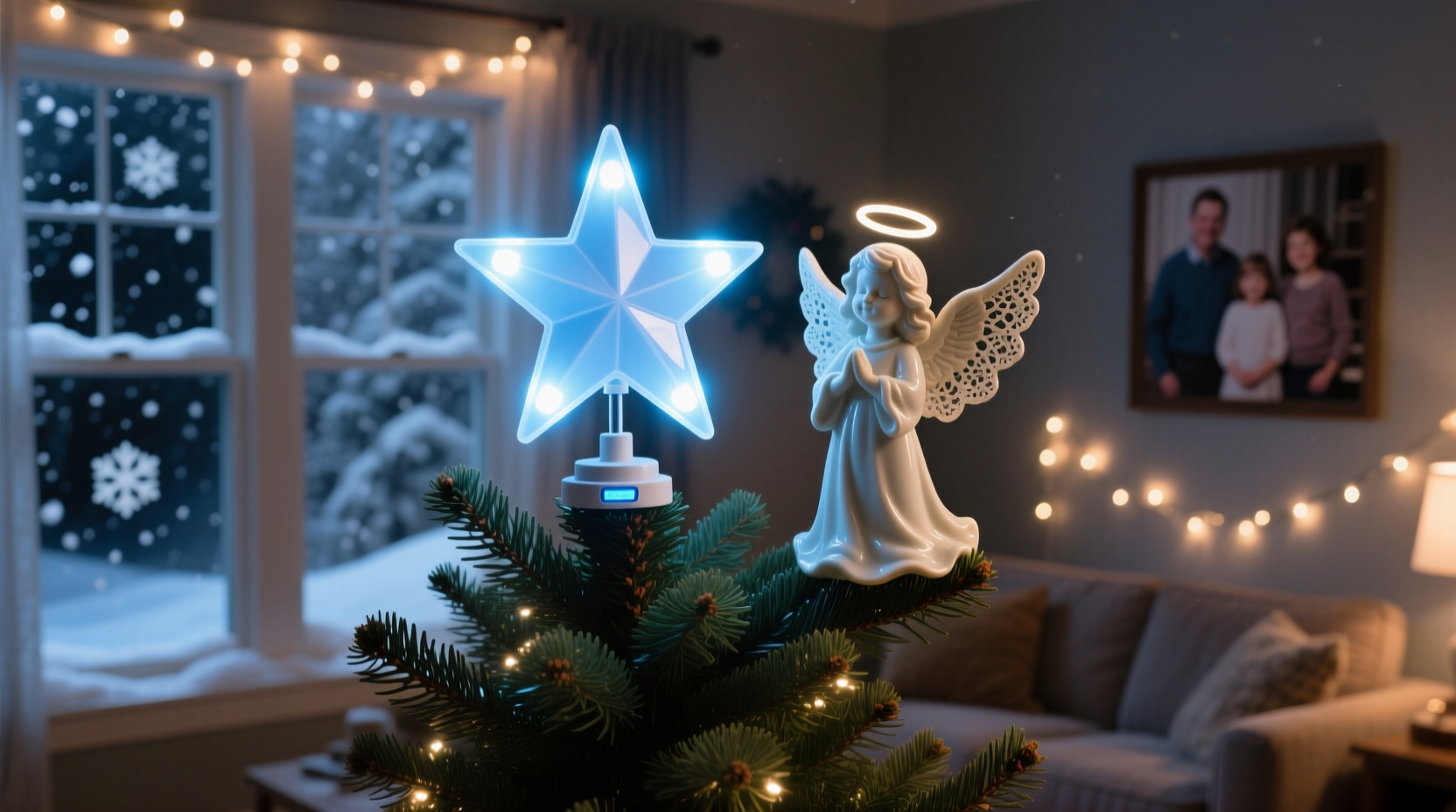
At first glance, most LED tree toppers appear nearly identical—delicate wire frames, shimmering plastic or fabric finishes, and dozens of tiny LEDs arranged in intricate patterns. But beneath the surface, critical differences in component quality determine longevity.
Many budget-friendly models use low-grade LEDs and resistors that can't handle sustained current. Worse, some units lack basic circuit protection such as fuses or surge suppressors. When connected to a power source—even one rated correctly—the initial power surge during startup can exceed what these fragile circuits were designed to endure.
Manufacturers often prioritize aesthetics over durability. To keep costs down, they may:
- Use thinner gauge wiring that overheats under load
- Skip thermal insulation on solder joints
- Install non-replaceable LEDs sealed into plastic housings
- Fail to test units under real-world conditions
As a result, once the topper is powered, heat builds rapidly at connection points. Within minutes or hours, microscopic fractures develop in solder bonds, causing open circuits. One failed node can take down an entire string if the LEDs are wired in series—a common configuration in decorative lighting.
“Most failures happen not because of user error, but due to inadequate engineering margins. These products are built to pass initial inspection, not long-term reliability.” — Dr. Lena Patel, Electrical Engineer & Holiday Lighting Consultant
Star vs Angel: Is One More Reliable Than the Other?
While both styles suffer from similar technical shortcomings, structural differences between stars and angels influence failure rates.
A star typically has symmetrical arms extending outward, allowing for balanced weight distribution and simpler internal wiring. In contrast, an angel often features wings, a flowing robe, and sometimes moving parts like rotating heads or fluttering hands—all requiring more complex circuitry and additional stress points.
Angels also tend to have more LEDs simply due to larger surface area, increasing power draw and heat generation. If cooling isn’t considered in the design (and it rarely is), hotspots form around clustered LEDs, accelerating degradation.
| Feature | LED Star | LED Angel |
|---|---|---|
| Average Number of LEDs | 30–50 | 60–100+ |
| Wiring Complexity | Low (radial pattern) | High (multi-zone routing) |
| Heat Dissipation | Moderate (open structure) | Poor (fabric-covered, enclosed zones) |
| Mechanical Stress Points | Few (rigid frame) | Multiple (joints, hinges, movement mechanisms) |
| Failure Rate (Industry Estimate) | ~18% within first season | ~27% within first season |
Despite these disadvantages, many consumers still prefer angels for their symbolic meaning. However, unless purchasing from premium brands known for robust construction, the odds of early failure increase significantly with angel-shaped toppers.
The Role of Power Sources and Voltage Spikes
One of the most overlooked contributors to premature failure is the power supply itself. Many people plug their tree into standard household outlets without considering line noise, voltage fluctuations, or shared loads.
Homes built before the 1990s may have outdated wiring that doesn’t regulate current well. Modern homes aren’t immune either—holiday circuits often run multiple high-draw devices simultaneously: refrigerators cycling, space heaters turning on, ovens heating. Each creates minor surges that travel through the electrical system.
An LED topper might be rated for 12V DC, but if the transformer or adapter delivers inconsistent output—even slightly above spec—the excess voltage stresses the semiconductor junctions inside each diode. Over time, this leads to lumen depreciation and eventual failure. But in poorly made units, this process happens rapidly, sometimes within minutes.
Additionally, daisy-chaining lights or using incompatible controllers can introduce ripple current or reverse polarity issues, especially if third-party adapters are used.
How to Test Your Outlet’s Stability
You don’t need expensive tools to check whether your outlet is safe for sensitive decorations. Here’s a simple method:
- Unplug everything from the circuit except a single lamp with an incandescent bulb (not LED).
- Turn on other appliances in the house: microwave, vacuum, hairdryer.
- Watch the bulb closely. If it visibly dims or brightens, your voltage fluctuates too much for delicate electronics.
- Consider using a surge-protected power strip with voltage regulation for your tree.
Real-World Example: The Johnson Family’s Repeating Problem
The Johnsons in suburban Chicago have decorated the same six-foot tree every year since 2015. Each December, they excitedly unpack their heirloom-inspired LED angel topper—only to find it dead by New Year’s Eve. Three replacements later, they began suspecting a pattern.
In 2023, they contacted a local electrician who measured their living room outlet. He discovered a neutral wire fault causing intermittent overvoltage spikes reaching 135V instead of the standard 120V. Their inexpensive LED topper, rated for only 120V ±5%, couldn’t survive repeated exposure.
After repairing the wiring and investing in a regulated power conditioner, they purchased a commercial-grade LED star with independent shunt resistors for each LED. Now in its second season, the new topper remains fully functional—and brighter than ever.
Their story highlights a key truth: while product quality matters, environmental factors play an equal role in longevity.
How to Prevent Early Failure: A Practical Checklist
Don’t resign yourself to replacing your tree topper every year. Follow this checklist to dramatically improve reliability:
- Check Voltage Rating: Ensure your topper matches your region’s standard voltage (e.g., 120V in North America).
- Use Surge Protection: Plug into a high-quality surge protector with joule rating above 1,000.
- Avoid Daisy-Chaining: Never connect multiple light strings directly to the topper’s cord.
- Inspect Before Use: Look for frayed wires, cracked casings, or discolored connectors.
- Power On Gradually: Let the topper warm up for 30 seconds before leaving the room.
- Store Properly: Keep in a rigid container away from temperature extremes and moisture.
- Choose Quality Brands: Opt for reputable manufacturers with warranties and replaceable components.
FAQ: Common Questions About LED Tree Topper Failures
Why does my LED topper work for a few hours and then go dark?
This is often due to thermal cutoff or failing solder joints. As the unit heats up during operation, weak connections expand and break contact. Once cooled, they may reconnect temporarily—but the cycle accelerates permanent failure.
Can I repair a broken LED topper myself?
Sometimes. If you’re comfortable with a multimeter and soldering iron, you can trace open circuits and replace individual LEDs or fuses. However, many modern units are potted (sealed with epoxy), making repairs impossible without damaging the housing.
Are battery-powered toppers more reliable?
They avoid line-voltage issues but introduce others: alkaline batteries leak, lithium packs degrade, and inconsistent voltage output still stresses LEDs. For best results, use rechargeable NiMH batteries with regulated discharge curves.
Final Thoughts: Building a Tradition That Lasts
The fleeting lifespan of today’s LED Christmas tree toppers reflects broader trends in consumer electronics—rapid production cycles, cost-cutting measures, and planned obsolescence disguised as seasonal novelty. But traditions shouldn’t depend on disposable technology.
By understanding the root causes of early failure—poor build quality, unstable power, and improper handling—you gain control over the outcome. Invest in better-designed products, protect them with proper electrical management, and treat them as the meaningful centerpieces they are meant to be.
Next time you place that glowing star or angel atop your tree, let it shine not just with holiday spirit, but with confidence in its craftsmanship and care.




 浙公网安备
33010002000092号
浙公网安备
33010002000092号 浙B2-20120091-4
Comments
No comments yet. Why don't you start the discussion?