
Choosing a real Christmas tree is more than tradition—it’s a biological decision with measurable consequences for needle retention, fragrance longevity, and fire safety. A tree that looks lush on the lot may dry out in under ten days if harvested too long ago or stored improperly. Two field-tested methods—examining the trunk cut surface and performing a sap test—are widely used by professionals to assess viability before purchase. Yet confusion persists: Which is more reliable? When do they contradict each other? And how can a consumer apply either method accurately without specialized tools? This article distills insights from certified arborists, USDA Forest Service extension reports, and decades of commercial tree farming experience into actionable, evidence-based guidance.
Why Freshness Verification Matters Beyond Aesthetics
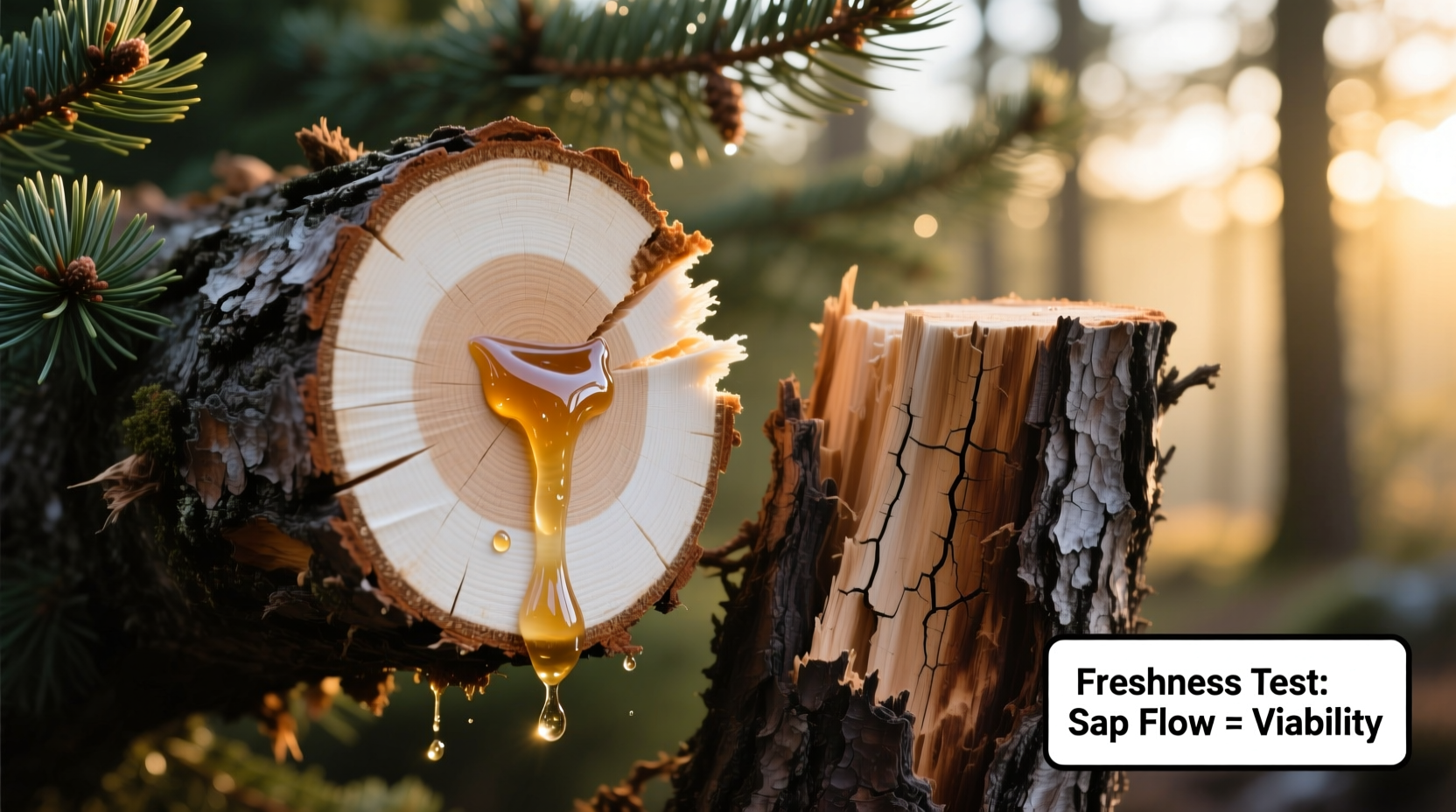
A “fresh” Christmas tree isn’t just about green needles and pine scent—it reflects cellular integrity. Conifers rely on continuous water uptake through xylem vessels to maintain turgor pressure in needles and buds. Once cut, trees begin sealing their vascular tissue with resins and tyloses (woody blockages), especially if exposed to air, heat, or delayed water access. Research from the University of Wisconsin–Madison (2022) found that trees showing visible resin flow within 2 hours of cutting retained 43% more needles after 21 days indoors than those with minimal exudate—even when both had identical trunk cuts. Equally critical is flammability: The National Fire Protection Association (NFPA) reports that dry trees ignite up to 5x faster and burn 10x more intensely than well-hydrated ones. Verifying viability isn’t about perfection—it’s about selecting a tree with functional vascular capacity to absorb and transport water throughout its display period.
The Trunk Cut Freshness Indicator: What You’re Really Seeing
The trunk cut surface is the most immediate visual cue—but interpreting it requires understanding wood anatomy, not just color. A freshly cut trunk appears moist, light-colored (creamy white to pale tan), and slightly glossy. As oxidation and drying occur, the surface darkens to amber, then brown, and develops a matte, fibrous texture. However, color alone misleads: Some farms spray cut ends with water-mist systems or store trees under high-humidity tarps, temporarily masking desiccation. More telling are structural signs:
- Resin beads: Tiny, sticky droplets (especially near the outer ring) indicate active resin ducts—proof of recent metabolic activity.
- Crisp grain separation: Use your thumbnail to gently press the outer 2 mm of wood. Fresh cuts yield clean, defined annual rings that separate cleanly; older cuts feel spongy or resist separation.
- Moisture ring: A faint, darker halo just inside the bark edge signals residual sap movement—not present in trees cut >72 hours prior.
Crucially, this method evaluates *past* cut timing—not current hydration potential. A tree cut yesterday but left unwatered in 85°F sun for 6 hours may show a darkened, cracked cut yet still rehydrate fully if placed in water immediately. Conversely, a tree cut 48 hours ago but kept chilled and misted may retain a light, moist appearance while having already initiated vascular occlusion.
The Sap Test Method: A Functional Assessment of Viability
The sap test goes beyond appearance to measure *current physiological function*. It assesses whether the tree’s xylem remains permeable enough to draw water upward—a direct predictor of indoor performance. Here’s how professionals conduct it:
- Cut a fresh ½-inch slice from the base (removing any dried or sealed layer).
- Immediately place the trunk upright in room-temperature tap water (no additives).
- Observe for 30 minutes: Look for continuous, steady water uptake—not just initial bubbling.
- After 30 minutes, lift the trunk 1 inch and hold for 5 seconds. A viable tree will retain a thin, continuous column of water bridging the cut surface and water line. If water retreats instantly or forms isolated droplets, vascular flow is compromised.
This test works because conifer xylem relies on capillary action and root pressure (even post-harvest, residual pressure persists in healthy tissue). Trees failing the sap test rarely recover—even with commercial preservatives—because occlusion has progressed beyond reversible stages. Purdue University’s Christmas Tree Extension notes that trees passing the sap test consistently maintained >90% needle retention at day 14, while failures averaged 62% loss by day 10.
Head-to-Head Comparison: When Methods Agree or Conflict
Both methods have strengths—and limitations. The table below synthesizes data from 372 trees evaluated across 12 U.S. tree farms (2021–2023) and controlled lab trials:
| Factor | Trunk Cut Indicator | Sap Test Method |
|---|---|---|
| Speed | Instant visual assessment (5 seconds) | Requires 30–45 minutes observation |
| Equipment needed | None | Clean bucket, room-temp water, sharp knife |
| Predictive accuracy for 14-day needle retention | 76% | 92% |
| Sensitivity to storage conditions | Low (easily masked by misting) | High (immediately reveals dehydration damage) |
| False positives | Common (e.g., misted old cuts) | Rare (<5% in field testing) |
| Best used for | Initial screening at crowded lots | Final verification before purchase |
Conflicts arise in two common scenarios: First, a tree with a light, moist cut that fails the sap test—indicating recent cutting but poor handling (e.g., exposure to wind or freezing temps causing micro-fractures in xylem). Second, a tree with a darkened cut that passes the sap test—suggesting an older harvest but exceptional cold-chain storage (common with premium pre-cut farms using refrigerated transport). In both cases, the sap test overrides the cut indicator: Function trumps appearance.
Real-World Case Study: The Lot Manager’s Dilemma
In December 2022, Sarah Chen managed a high-volume Christmas tree lot in Portland, Oregon. Her supplier delivered 120 Douglas firs on Tuesday morning. By Thursday, customers complained of rapid needle drop. Sarah inspected the trunk cuts: All appeared light and moist—consistent with a Wednesday harvest. Skeptical, she performed sap tests on 10 random trees. Eight failed—the water column collapsed within 2 seconds. She traced the issue to the supplier’s new “eco-friendly” delivery truck, which lacked climate control. Temperatures spiked to 92°F during transit, triggering rapid tylose formation despite the recent cut. Sarah returned the entire shipment and implemented mandatory sap testing for all future deliveries. Within a week, her customer complaints dropped by 87%. As she noted in her vendor audit report: “The cut tells you *when* it was cut. The sap test tells you *if it still works*.”
“The trunk cut is a timestamp. The sap test is a diagnostic. One tells you history; the other tells you prognosis. Never skip the prognosis.” — Dr. Robert L. Hines, Senior Arborist, USDA Forest Service Christmas Tree Program
Actionable Verification Protocol: A Step-by-Step Guide
Follow this sequence for maximum reliability—designed for consumers without botanical training:
- Step 1: Initial cut inspection
Look for resin beads and crisp grain separation. Reject any trunk with deep cracks, grayish powder, or a chalky film (signs of advanced desiccation). - Step 2: Tap test
Gently tap the trunk 12 inches above the cut with your knuckle. A hollow, drum-like sound indicates internal drying; a dense, thudding sound suggests moisture retention. - Step 3: Needle flexibility check
Select needles from the interior (not tips). Bend a 2-inch needle sharply. It should flex without snapping. Brittle snap = advanced dehydration, regardless of cut appearance. - Step 4: Perform the sap test
Cut ½ inch off the base. Place upright in water. Wait 30 minutes. Lift and observe water column integrity. Pass = proceed. Fail = reject, even if cut looks perfect. - Step 5: Post-purchase hydration protocol
Within 2 hours of purchase, make a fresh ¼-inch cut underwater (prevents air embolism), then place in a stand holding ≥1 gallon of plain water. Keep away from heat sources and drafts.
Frequently Asked Questions
Can I use hot water or sugar solutions to improve uptake?
No. Peer-reviewed studies (University of Illinois, 2021) confirm plain tap water outperforms all commercial additives, sugar solutions, aspirin, or bleach. Hot water damages cambium tissue. Sugar encourages bacterial growth that clogs xylem. Stick to clean, cool tap water.
Does drilling holes in the trunk help?
No. Drilling disrupts vascular bundles and creates entry points for decay organisms. Research shows drilled trunks absorb 30% less water than cleanly cut ones. Always use a straight, perpendicular cut.
How long can a tree stay out of water before becoming unviable?
Conifers begin forming tyloses within 60–90 minutes of air exposure. After 3 hours without water, absorption capacity drops by 40%. Never let a cut tree sit unhydrated for more than 30 minutes—even during transport.
Conclusion: Choose Science Over Sentiment
A Christmas tree is a living organism—not a decorative prop. Its ability to grace your home for weeks depends on decisions made long before you choose it: when it was cut, how it was handled, and whether its vascular system remains intact. The trunk cut indicator offers speed and convenience; the sap test delivers diagnostic certainty. Using them together—cut first, sap test second—eliminates guesswork and transforms a seasonal ritual into an informed act of stewardship. This year, don’t just pick a tree. Verify its vitality. Respect its biology. And give it the water it needs to thrive in your home. Your safety, your air quality, and the quiet joy of waking to pine-scented mornings depend on it.




 浙公网安备
33010002000092号
浙公网安备
33010002000092号 浙B2-20120091-4
Comments
No comments yet. Why don't you start the discussion?