
As holiday traditions go, few are as beloved—and potentially hazardous—as bringing a live Christmas tree into the home. A dry tree isn’t just a fire risk; it’s also a sign of poor care. Keeping your tree hydrated is essential, and while modern technology offers digital sensors to monitor water levels, many households still rely on simple float indicators. But when the power goes out, which system truly delivers peace of mind? The answer may lie not in sophistication, but in resilience.
In an era where smart home devices promise convenience, the humble analog float continues to hold its ground—especially in unpredictable winter conditions. This article examines the strengths and weaknesses of both systems, explores real-world performance during blackouts, and helps you decide which method aligns best with your holiday setup.
Analog Float Indicators: Simplicity That Works Without Power
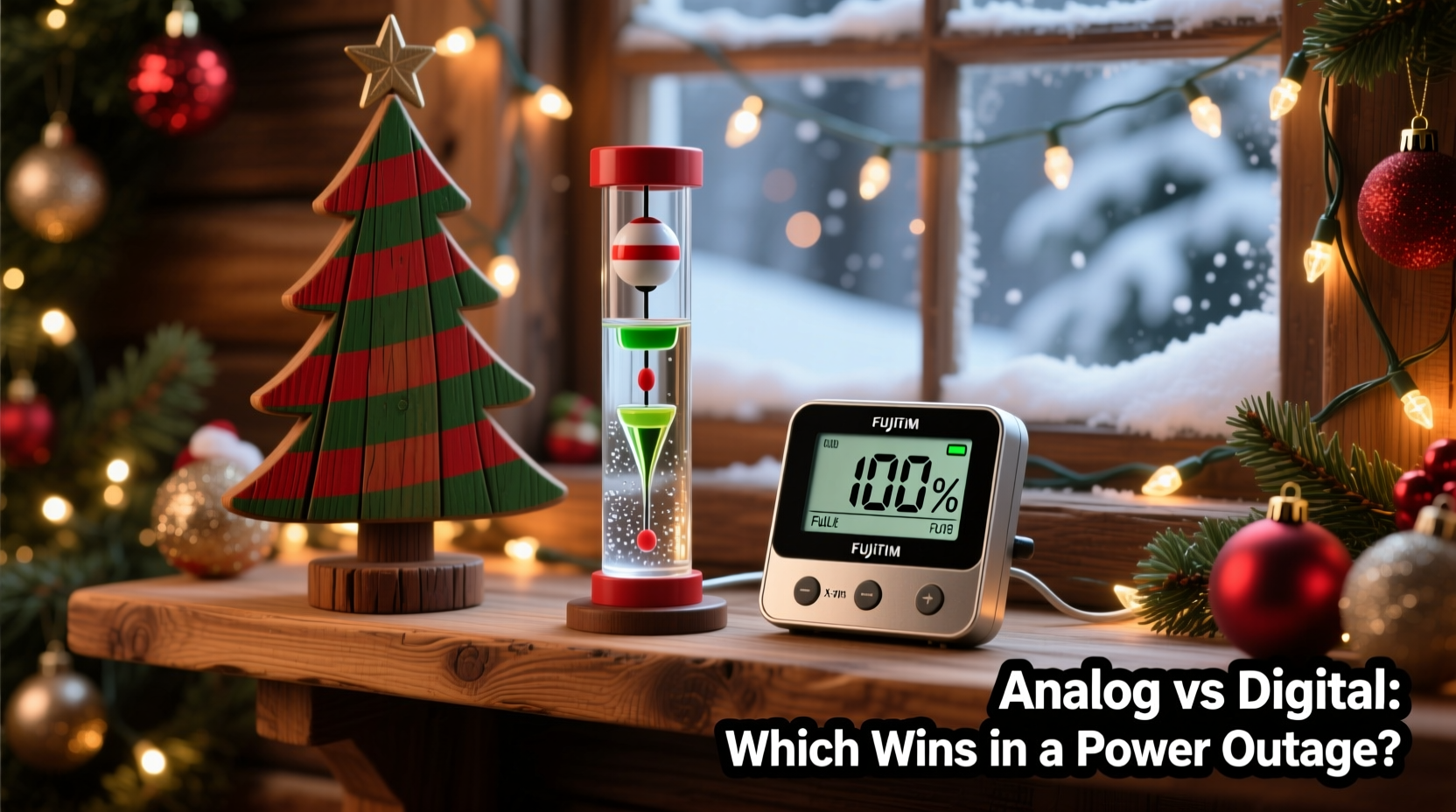
The float indicator is a mechanical device, typically made of plastic or metal, that sits inside the tree stand’s water reservoir. As water levels drop, the float descends, providing a visual cue that it's time to refill. It operates entirely without electricity, relying only on buoyancy and gravity.
This simplicity is its greatest strength. Unlike digital systems, float indicators don’t depend on batteries, Wi-Fi, or electrical outlets. They function identically in a cabin in the woods or a suburban living room. When storms knock out power—a common occurrence during December in many regions—the float keeps working silently and reliably.
Float indicators are also inexpensive and widely compatible. Most standard tree stands come with one pre-installed, and replacements cost under $5. There’s no learning curve, no app to download, and no firmware updates. You look, you see, you act.
Digital Sensors: Smart Alerts with Hidden Dependencies
Digital water level sensors represent the modern alternative. These devices use probes, conductivity sensors, or ultrasonic detection to monitor water levels. Many connect to smartphone apps via Bluetooth or Wi-Fi, sending push notifications when the reservoir runs low. Some even include LED indicators or audible alarms.
On paper, this sounds like a major upgrade. No need to crouch by the tree stand—you’ll get an alert on your phone if levels dip below safe thresholds. For busy families or those who travel during the holidays, remote monitoring can be a game-changer.
But digital systems have critical limitations. First, they require consistent power. While some run on batteries, others plug directly into wall outlets. During extended power outages, battery-powered models may last only 24–72 hours before failing. Wi-Fi-dependent units become useless the moment the router goes down—even if the sensor itself still has power.
Additionally, false alerts plague many digital sensors. Mineral buildup from tap water can interfere with conductivity probes, triggering premature warnings. Conversely, sensors can fail to detect dangerously low levels due to calibration errors or placement issues.
“Technology should enhance tradition, not complicate it. A tree stand that works when the grid fails is worth more than one that pings your phone once.” — Dr. Alan Reeves, Home Safety Researcher at the National Fire Protection Institute (NFPA)
Comparing Performance During Power Outages
Winter storms frequently disrupt electricity, especially in rural or mountainous areas. In such scenarios, reliability becomes paramount. Let’s compare how each system performs when the lights go out.
| Feature | Analog Float Indicator | Digital Sensor |
|---|---|---|
| Power Requirement | None | Battery or AC power |
| Function During Outage | Full operation | Limited or none (depends on battery life) |
| Alert Method | Visual (manual check required) | App notification, sound, or light |
| Maintenance Needs | Low (occasional cleaning) | Moderate (battery replacement, calibration) |
| Cost | $0–$5 | $20–$60+ |
| Lifespan | Years (if not damaged) | 1–3 years (electronics degrade) |
The data shows a clear trade-off: digital sensors offer convenience under ideal conditions, but their performance degrades sharply when infrastructure fails. Analog floats, while requiring manual inspection, remain functional regardless of external factors.
Real-World Example: The Storm-Stranded Family
Consider the Thompson family in upstate New York. In December 2022, a nor’easter knocked out power for five days. Temperatures dropped below freezing, and cell service was spotty. Their Christmas tree, a 7-foot Fraser fir, had been equipped with a high-end digital sensor linked to their home automation system.
Initially, the sensor worked well—sending reminders every 12 hours. But after the second day, the backup battery drained, and the app stopped receiving data. Unaware of the issue, the family assumed all was well. By day four, the tree had lost significant moisture, needles were brittle, and the base of the trunk was visibly dry.
In contrast, their neighbors, the Garcias, used a basic stand with a red float indicator. Despite the blackout, they checked the water daily using a flashlight. Each evening, someone refilled the reservoir. Their tree remained fresh throughout the outage.
This scenario isn’t isolated. Emergency responders and fire departments in cold climates routinely warn against over-reliance on electronic monitoring during holiday seasons. “A blinking light won’t save your house,” says Fire Chief Linda Moore of Plattsburgh. “A full water basin will.”
Choosing the Right System: A Step-by-Step Guide
Selecting between analog and digital isn’t about which is better overall—it’s about matching the tool to your environment and habits. Follow this decision path to find your best fit.
- Assess your power reliability. If you live in an area prone to winter outages, prioritize systems that don’t depend on electricity.
- Evaluate your routine. Do you walk past the tree multiple times a day? If so, a float is sufficient. If you’re often away or forgetful, a digital alert might help—but only if powered.
- Check your tree stand compatibility. Most digital sensors require specific reservoir designs or mounting points. Analog floats fit nearly any standard stand.
- Consider redundancy. Use a float as a primary indicator and a digital sensor as a secondary reminder—if you own one.
- Test before the holidays. Set up your tree early and observe how well your chosen system performs over a week.
Expert Recommendations and Industry Insights
The National Fire Protection Association (NFPA) reports that between 2016 and 2020, U.S. fire departments responded to an average of 160 home fires per year that began with a Christmas tree. Dry trees ignite quickly and burn intensely. Maintaining adequate water is the single most effective preventive measure.
Yet, NFPA guidelines make no mention of digital sensors. Instead, they emphasize daily visual inspections and keeping stands filled. “There is no substitute for human attention when it comes to tree safety,” states NFPA spokesperson Mariah Smith. “Technology can assist, but it cannot replace vigilance.”
Tree care specialists echo this sentiment. “I’ve seen customers return with digital sensors that failed after two weeks,” says Greg Holloway, owner of Evergreen Supply Co. “But I’ve never heard of a float breaking because it got wet.”
Practical Checklist for Tree Water Management
Regardless of which indicator you use, follow these steps to keep your tree hydrated and safe:
- ✅ Choose a stand with a large reservoir (at least 1 gallon for a 6–7 foot tree)
- ✅ Make a fresh cut at the base before placing in the stand
- ✅ Fill the stand immediately and check water levels daily
- ✅ Use room-temperature water to improve uptake
- ✅ Keep the tree away from heat sources like vents, fireplaces, and lights
- ✅ Clean the float or sensor weekly to prevent debris buildup
- ✅ Discard the tree after four weeks or when needle loss accelerates
Frequently Asked Questions
Can digital sensors prevent Christmas tree fires?
No single device can prevent fires. Digital sensors may prompt refills, but they are not fire protection equipment. The best prevention is consistent watering, proper placement, and timely disposal. Never rely solely on a sensor for safety.
Do float indicators work with all tree stands?
Most standard screw-type or lever-action stands include a built-in float. Aftermarket floats are available for universal fit. However, some designer or ultra-low-profile stands may not accommodate them. Always verify compatibility before purchase.
Is there a hybrid solution that combines analog and digital features?
A few products claim to offer both, such as stands with visible floats and Bluetooth connectivity. However, these often suffer from the same power dependencies as fully digital models. True reliability comes from minimizing electronic components, not adding more.
Final Thoughts: Reliability Over Features
The charm of the holidays lies in ritual, presence, and shared moments—not in how many notifications your tree sends. While digital sensors reflect our desire for automation, they often introduce fragility where none existed before.
Analog float indicators endure because they solve the core problem simply and effectively: showing you when water is low. They ask for a small investment of attention—a glance, a refill—and in return, they help preserve one of the season’s most cherished symbols.
In the end, the most reliable system isn’t the one with the most features. It’s the one that works when everything else fails. And when the power’s out, the snow is falling, and the house is quiet, that’s exactly what you need.




 浙公网安备
33010002000092号
浙公网安备
33010002000092号 浙B2-20120091-4
Comments
No comments yet. Why don't you start the discussion?