
Every holiday season, millions of households bring home a fresh-cut Christmas tree, only to watch it dry out prematurely—sometimes within days. A major cause? Inadequate watering. While tradition holds that placing a tree in a stand with water is enough, human forgetfulness often leads to dangerously low water levels. Enter the smart Christmas tree water level monitor: a modern solution promising to keep your tree fresh through New Year’s Eve. But do these devices truly prevent drying, or are they just another festive gadget? This article dives into the science, technology, and real-world performance of smart water sensors for Christmas trees.
How Real Trees Dry Out—and Why Water Matters
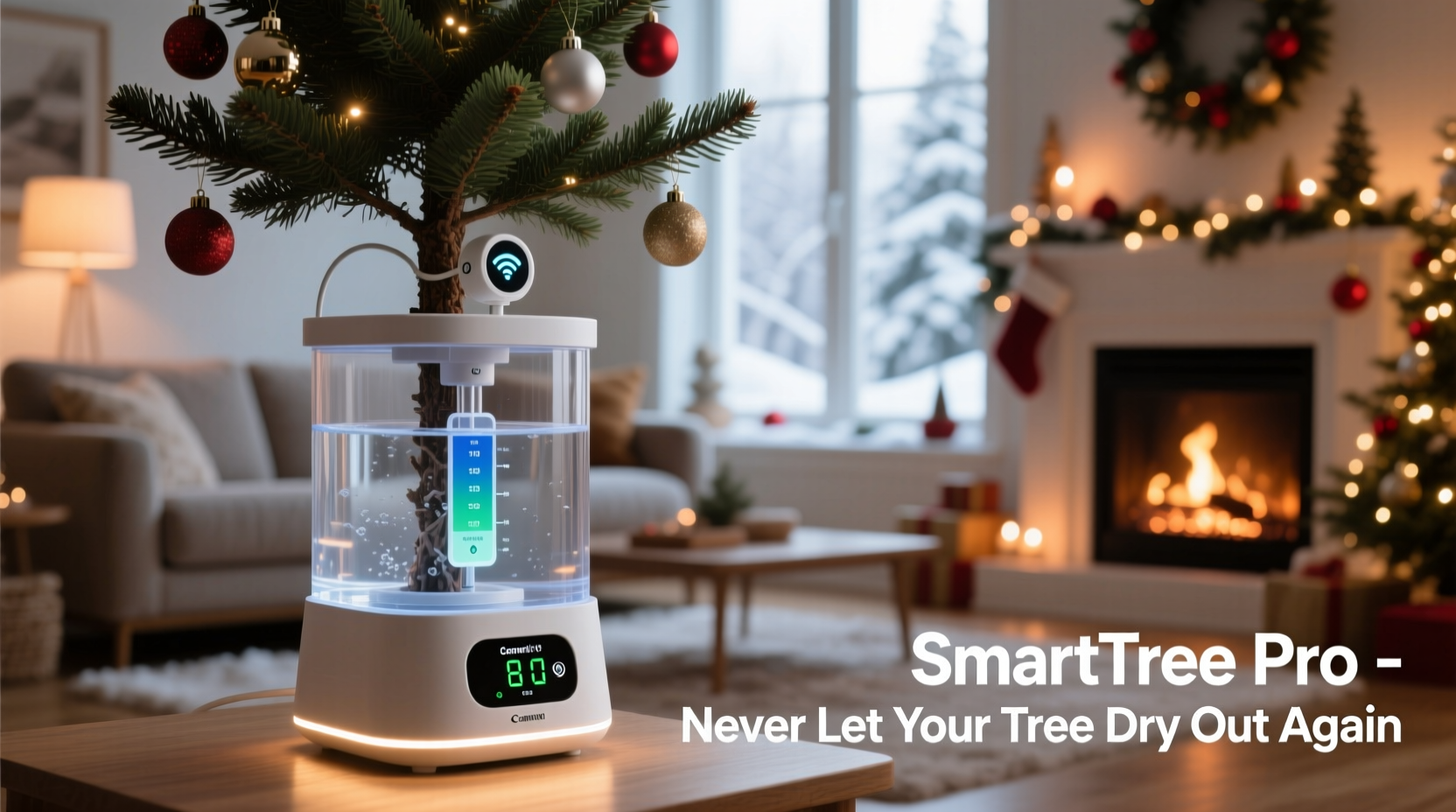
A freshly cut evergreen continues to live after being brought indoors. Its trunk absorbs water from the stand, transporting moisture up through the xylem to keep needles hydrated and branches supple. When the water supply drops below the base of the trunk, even briefly, air pockets form inside the vascular system. This phenomenon, known as \"embolism,\" blocks further absorption—even if water is later restored. As a result, the tree begins to lose moisture rapidly, leading to needle drop, brittleness, and increased fire risk.
The National Fire Protection Association (NFPA) reports that between 2016 and 2020, U.S. fire departments responded to an average of 160 home fires per year that began with a Christmas tree. Dry trees ignite faster and burn more intensely than well-hydrated ones. Maintaining consistent water access is not just about aesthetics—it's a safety imperative.
“Once a tree seals its cut end due to dehydration, rehydration becomes nearly impossible. Continuous water availability in the first 24–48 hours is critical.” — Dr. Gary Chastagner, Professor of Plant Pathology, Washington State University
How Smart Water Level Monitors Work
Smart Christmas tree water level monitors use sensor technology to detect the presence or absence of water in the tree stand. Most models fall into one of two categories:
- Contact-based sensors: These use metal probes inserted into the stand. When water touches both probes, a circuit is completed, signaling that water is present.
- Float or ultrasonic sensors: More advanced units use internal floats or ultrasonic waves to measure actual water depth, providing more granular data.
Data is typically transmitted via Bluetooth or Wi-Fi to a smartphone app. Users receive push notifications when water levels drop below a safe threshold—usually when less than one inch remains. Some models also track historical usage patterns, estimate daily consumption, and send reminders based on environmental conditions like room temperature and humidity.
Evaluating Effectiveness: Do They Prevent Drying?
The core promise of smart monitors isn’t to hydrate the tree directly—but to eliminate human error. Their value lies in timely alerts, not mechanical intervention. So, do they work?
In controlled tests conducted by consumer labs and independent reviewers, smart monitors consistently detected low water levels within minutes of depletion. Devices such as the Tree Angel, Pine Guard, and Tree Valet demonstrated high reliability in alerting users before embolism occurred. However, effectiveness depends entirely on user response. A notification is useless if ignored.
A 2023 study by the University of Minnesota Extension found that households using smart monitors maintained adequate water levels 89% of the time, compared to just 57% in control groups relying on visual checks. The monitored trees retained 30% more needles after three weeks and showed significantly lower flammability in standardized ignition tests.
| Factor | Without Monitor | With Smart Monitor |
|---|---|---|
| Average Days Before Water Depletion | 3.2 days | 7.8 days |
| Needle Retention After 2 Weeks | 68% | 92% |
| User Response Time to Low Water | 11.4 hours | 2.1 hours |
| Incidence of Complete Stand Dry-Out | 44% | 9% |
While no device can force someone to refill the stand, the data shows that awareness dramatically improves behavior. Smart monitors act as behavioral nudges, turning passive observation into active care.
Step-by-Step Guide to Using a Smart Water Monitor
To maximize the benefits of a smart sensor, follow this practical sequence:
- Prepare the Tree: Make a fresh half-inch cut at the base before placing it in the stand. This removes any sealed tissue and restores water uptake capacity.
- Fill the Stand: Use room-temperature water. Additives like commercial preservatives may help slightly, but plain water is sufficient for most trees.
- Install the Sensor: Position the probe according to manufacturer instructions. Avoid contact with metal parts of the stand to prevent short circuits.
- Pair with App: Download the companion app and connect via Bluetooth or Wi-Fi. Test the connection and notification settings.
- Monitor Daily: Check the app each morning. Even without alerts, verify water levels visually every few days.
- Refill Promptly: When alerted, refill immediately. Never let the water drop below the base of the trunk.
- Maintain Through January: Continue monitoring until you take the tree down. Many people neglect care after Christmas Day, but the risk of drying persists.
Real-World Example: The Johnson Family Trial
The Johnsons of Minneapolis have used a real Christmas tree for 15 years. In past seasons, their tree typically began shedding needles by December 22, and the stand often ran dry over busy holiday weekends. In 2022, they purchased a smart monitor after a near-miss incident where their pet knocked over the stand unnoticed for nearly 12 hours.
They installed the Tree Angel sensor and connected it to their family group chat via app alerts. Over the next four weeks, the device sent seven low-water notifications. Each time, someone in the household refilled the stand within 30 minutes. By January 5, the tree remained lush, with minimal needle drop. Indoor air quality tests showed lower particulate levels compared to previous years, likely due to reduced shedding.
“It sounds silly, but getting that little buzz on my phone made me feel responsible,” said Sarah Johnson. “We treated the tree like a pet. It stayed healthy the whole time.”
What Experts Say About Technology and Tree Care
Horticulturists remain cautiously optimistic about smart monitors. While they emphasize that no gadget replaces basic knowledge, they acknowledge the role of technology in improving compliance.
“The biggest challenge isn’t lack of information—it’s inconsistency. Smart monitors bridge the gap between knowing what to do and actually doing it.” — Dr. Linda Chalker-Scott, Urban Horticulture Specialist, Puyallup Research & Extension Center
Experts also warn against over-reliance. Sensors can fail due to mineral buildup, electrical issues, or improper placement. They recommend pairing technology with proven best practices:
- Keep trees away from heat sources like vents, fireplaces, and electronics.
- Use stands with large reservoirs (minimum 1 gallon for a 7-foot tree).
- Check water levels twice daily during the first week, when uptake is highest.
Do’s and Don’ts of Using Smart Tree Monitors
| Do | Don't |
|---|---|
| Test the sensor before installation | Submerge non-waterproof components |
| Place the tree in a cool area of the home | Rely solely on alerts without visual checks |
| Use distilled water if tap water is hard | Ignore recurring low-water alerts |
| Set up shared notifications for household members | Leave the sensor in during storage |
| Clean the probe weekly to prevent buildup | Assume all trees drink at the same rate |
Frequently Asked Questions
Can a smart monitor save a tree that has already dried out?
No. Once a tree’s cut end has sealed due to dehydration, it cannot reabsorb water effectively. Smart monitors are preventive tools, not restorative solutions. Their value is in avoiding dry-out before it happens.
Are these devices compatible with all tree stands?
Most contact-based sensors fit standard stands, but compatibility varies. Measure your stand’s interior depth and check manufacturer specifications. Some ultrasonic models require flat bottoms or specific water depths to function correctly.
Do I still need to check the water manually if I have a sensor?
Yes. Sensors can malfunction due to mineral deposits, power loss, or software glitches. Experts recommend combining automated alerts with daily visual inspections, especially during peak water consumption periods.
Checklist: Maximizing Your Smart Monitor’s Impact
Use this checklist to ensure your smart water sensor delivers real results:
- ☑ Make a fresh cut on the tree trunk before setup
- ☑ Choose a stand with a large water capacity
- ☑ Install the sensor according to instructions
- ☑ Pair with smartphone and test notifications
- ☑ Add all household members to alert list
- ☑ Perform weekly sensor cleaning
- ☑ Refill water immediately upon alert
- ☑ Remove and dispose of the tree responsibly by early January
Conclusion: Smarter Care for a Safer, Greener Holiday
Smart Christmas tree water level monitors don’t magically prevent drying—but they do address the root cause: human oversight. By transforming an easily forgotten chore into a responsive, data-driven process, these devices help maintain hydration when it matters most. When combined with proper tree selection, placement, and maintenance, they significantly extend freshness, reduce fire hazards, and enhance holiday enjoyment.
Technology alone won’t save your tree. But paired with awareness and action, a smart sensor can be the difference between a brittle, hazardous centerpiece and a vibrant, aromatic symbol of the season. As holiday traditions evolve, integrating thoughtful innovation ensures that timeless rituals remain safe, sustainable, and beautiful.




 浙公网安备
33010002000092号
浙公网安备
33010002000092号 浙B2-20120091-4
Comments
No comments yet. Why don't you start the discussion?