
A Christmas village is more than a festive decoration—it’s a centerpiece of holiday joy, storytelling, and family tradition. As miniature trains chug along snowy tracks and tiny streetlamps glow in the dusk, these displays evoke nostalgia and warmth. But behind the charm lies a practical challenge: managing cords, power sources, and foot traffic in a way that doesn’t compromise safety. Every year, thousands of households deal with tripped circuit breakers, frayed wires, or worse—tripping accidents caused by poorly routed cables across high-traffic areas.
The good news? With thoughtful planning and smart organization, you can enjoy a dazzling Christmas village without creating a hazard. From cord management strategies to layout design and electrical load balancing, this guide delivers actionable solutions used by professional decorators and safety experts. Whether your village spans a coffee table or an entire room, these tips ensure your holiday display remains as safe as it is magical.
Plan Your Layout for Safety First
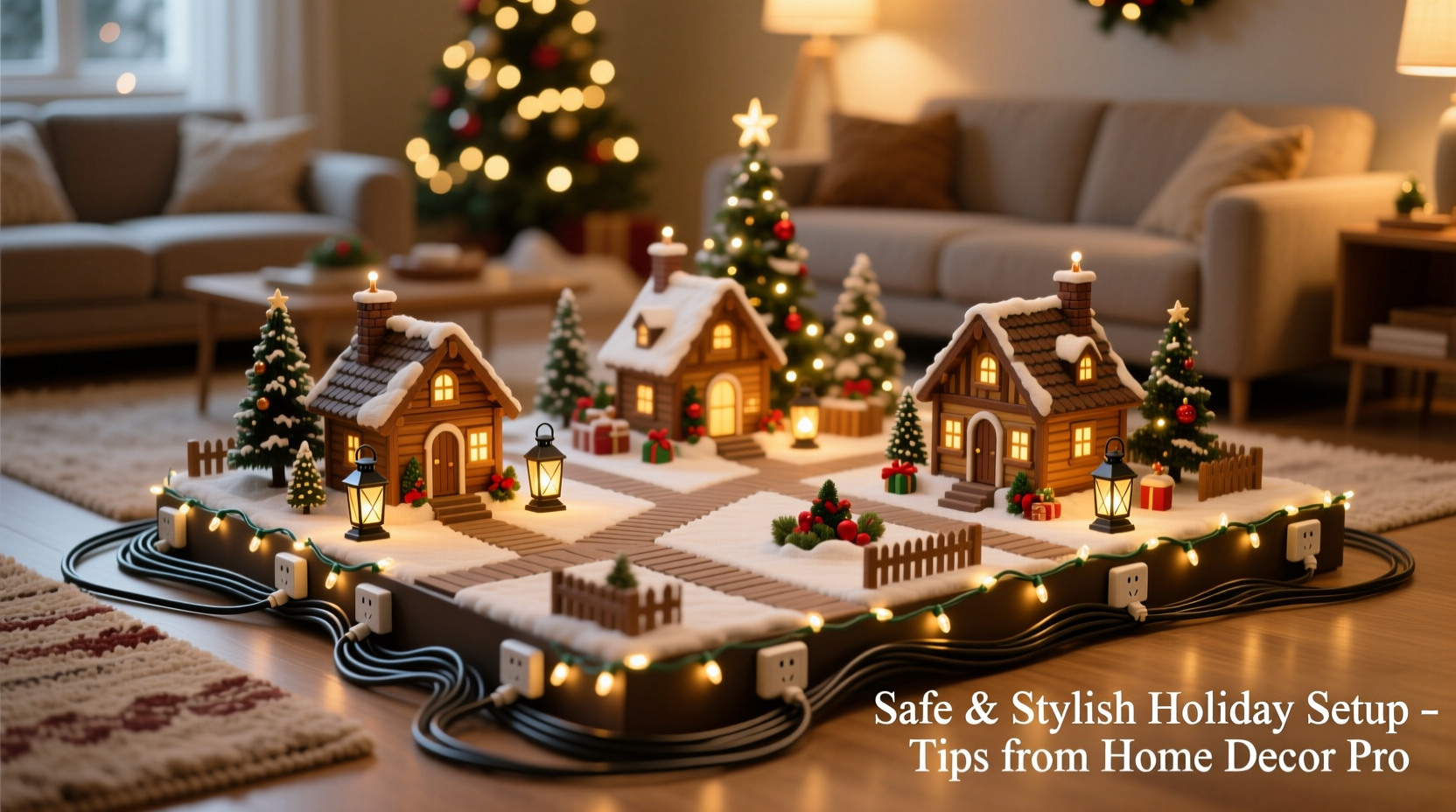
Before plugging in a single light or placing a candy cane cottage, map out your village on paper or using digital tools. The physical arrangement of buildings, trees, and pathways directly impacts wire routing and pedestrian flow. Start by identifying where people naturally walk—doorways, hallways, and common seating areas should remain clear of obstructions.
Use furniture edges or baseboards as natural boundaries. Position the village against a wall rather than in the middle of a room whenever possible. This reduces exposure from multiple directions and allows all wiring to be tucked neatly behind the display. If space forces a central placement, elevate the village onto a sturdy platform at least 6 inches high so wires can pass underneath safely.
Consider traffic patterns during gatherings. Will guests carrying drinks need to detour around the display? Can children play nearby without stepping on cords? Anticipating movement helps you position power strips and extension cords out of harm’s way. Avoid running wires across rugs or under loose floor coverings—these create hidden snags and can overheat if compressed.
Master Cord Management Like a Pro
Untangled, concealed wiring isn’t just about aesthetics—it’s critical for preventing damage and reducing fire risk. Most Christmas villages require multiple power sources for lighting, motion features, and sound modules. Managing these efficiently starts with selecting the right tools and techniques.
Begin by auditing every piece in your collection. Note which items are battery-powered versus plug-in. Whenever possible, replace battery-operated components with low-voltage AC adapters—batteries degrade, leak, and add clutter. For plug-in pieces, group them by proximity and assign shared power strips. Use outlet multipliers with surge protection to minimize wall outlet usage.
“More than 30% of holiday electrical fires stem from overloaded circuits or damaged extension cords.” — National Fire Protection Association (NFPA)
Route cords along baseboards using adhesive cable clips or raceways painted to match your walls. These keep wires flush and invisible while protecting insulation from foot traffic and pet teeth. Never staple or nail cords to walls or floors—that damages internal wiring and voids safety certifications.
For long runs across open spaces, use flat, braided extension cords designed for floor use. Their low profile reduces tripping risk, and many come with non-slip backing. Always choose cords rated for indoor use only unless specifically marked otherwise. Keep connections elevated off the ground using small risers or cord bridges covered with festive fabric runners.
Step-by-Step: Wire Routing Process
- Inventory all electric components – List each building, train, or accessory needing power.
- Group by zone – Cluster items within 2–3 feet of each other to share one power strip.
- Select appropriate cords – Use UL-listed, properly gauged extension cords (16 AWG minimum).
- Map cord paths – Plan routes along walls, under platforms, or through furniture gaps.
- Secure with clips or raceways – Attach every 12–18 inches to prevent sagging or snagging.
- Test before finalizing – Plug in everything to confirm no strain on connections or overheating.
Electrical Load & Power Distribution
One of the most overlooked dangers in elaborate Christmas displays is circuit overload. Plugging too many village elements into a single outlet can trip breakers—or worse, overheat wires and ignite nearby materials. Understanding your home’s electrical capacity is essential.
Standard household circuits in the U.S. are typically 15 or 20 amps at 120 volts, meaning they support up to 1,800 watts (15A × 120V) continuously. Most miniature village lights draw between 2–10 watts each, but motors, sound boxes, and LED arrays add up quickly when multiplied across dozens of pieces.
| Component Type | Average Wattage | Max Units per 15A Circuit |
|---|---|---|
| Miniature Building Light | 3W | 600 |
| Train Motor (small) | 15W | 120 |
| LED Tree Set | 6W | 300 |
| Sound Module | 5W | 360 |
| Total Recommended Limit | 1,440W (80% of max) | — |
Always stay below 80% of a circuit’s maximum load for safety. Distribute power across multiple outlets on different circuits. Test this by turning off one breaker and checking which lights go out. If your entire village shuts down together, you’re likely overloading a single line.
Label each power strip with its circuit location and total wattage. This makes troubleshooting faster and ensures future setups don’t repeat mistakes. Consider installing dedicated holiday outlets near display areas—a small investment that pays off in convenience and safety.
Real Example: The Overloaded Living Room Village
Sarah Thompson, a longtime collector from Minneapolis, once assembled a sprawling 7-foot-long Christmas village beneath her bay window. She connected nearly 40 lit buildings, two operating trains, and synchronized music—all powered through two daisy-chained power strips plugged into one outlet. By mid-December, the circuit breaker began tripping nightly.
After consulting an electrician, she discovered her setup was drawing over 2,100 watts—well above the 1,800-watt limit. Worse, one extension cord showed signs of melting at the plug. She restructured the display: splitting components across three circuits, adding a new outlet behind the entertainment center, and switching to energy-efficient LEDs. Not only did the trips stop, but her electricity bill dropped by $18 that month.
Today, Sarah uses color-coded labels for each power zone and conducts a load check every time she adds a new piece. “I love my village,” she says, “but not enough to risk my family’s safety.”
Essential Setup Checklist
- ✅ Measure available space and sketch a layout avoiding walkways
- ✅ Identify nearby electrical outlets and test circuit capacity
- ✅ Group village pieces by proximity for efficient power zoning
- ✅ Replace old or frayed extension cords with UL-listed versions
- ✅ Install adhesive cable clips or raceways along planned cord paths
- ✅ Use surge-protected power strips (not simple outlet splitters)
- ✅ Elevate cords crossing walkways with low-profile cord covers
- ✅ Calculate total wattage and stay under 80% of circuit max
- ✅ Test all connections for heat buildup after 30 minutes of operation
- ✅ Label each strip with contents and circuit number
FAQ: Common Questions About Safe Christmas Village Wiring
Can I run Christmas village wires under a rug?
No. Covering cords with rugs or carpets traps heat and increases fire risk. It also hides wear and tear, making it harder to spot damage. Instead, route wires along baseboards or use surface-mounted raceways.
Is it safe to daisy-chain multiple power strips?
No. Daisy-chaining creates excessive load on a single outlet and is a leading cause of residential fires. Connect each power strip directly to a wall outlet or a dedicated circuit. Use a single high-capacity strip with multiple ports instead.
How do I hide wires without creating a hazard?
Use paintable plastic raceways adhered to baseboards, or run cords inside hollow furniture legs. You can also place decorative boxes or faux gift piles over secured cords—but never compress or pinch them. Ensure airflow around all connections.
Final Thoughts: Beauty Meets Responsibility
A breathtaking Christmas village reflects care, creativity, and tradition. But true craftsmanship includes responsibility—not just artistic vision. Every glowing window and spinning windmill should coexist with peace of mind, knowing your display meets safety standards and respects the well-being of everyone in your home.
Modern tools make it easier than ever to balance beauty and safety. From slim cord covers to smart plugs that monitor energy use, technology supports safer decorating. And remember: simplicity often wins. Sometimes fewer, better-placed pieces create a stronger visual impact than a crowded layout with exposed wiring.
“The best holiday displays aren’t judged by size, but by how warmly and safely they welcome people in.” — Michael Reyes, Certified Lighting Designer & Holiday Safety Consultant
This season, take pride not only in how your village looks—but how thoughtfully it’s built. A few hours of planning now can prevent emergencies later. Let your Christmas village tell a story of joy, yes—but also of wisdom, foresight, and care.




 浙公网安备
33010002000092号
浙公网安备
33010002000092号 浙B2-20120091-4
Comments
No comments yet. Why don't you start the discussion?