
When the temperature drops, few comforts rival the warmth of a soft throw draped over your shoulders. But not all blankets deliver equal performance. Two popular choices—chunky knit blankets and fleece throws—offer distinct textures, insulation levels, and maintenance needs. The key question isn’t just about warmth; it’s whether that warmth comes at the cost of constant lint, pilling, or shedding. For consumers who value both comfort and cleanliness, understanding the differences between these two types is essential.
This comparison dives into the materials, thermal efficiency, shedding behavior, care requirements, and long-term durability of chunky knit and fleece throws. Whether you're curling up on the couch, decorating a guest room, or shopping for a gift, this guide equips you with evidence-based insights to choose wisely.
Material Composition: What Are These Blankets Made Of?
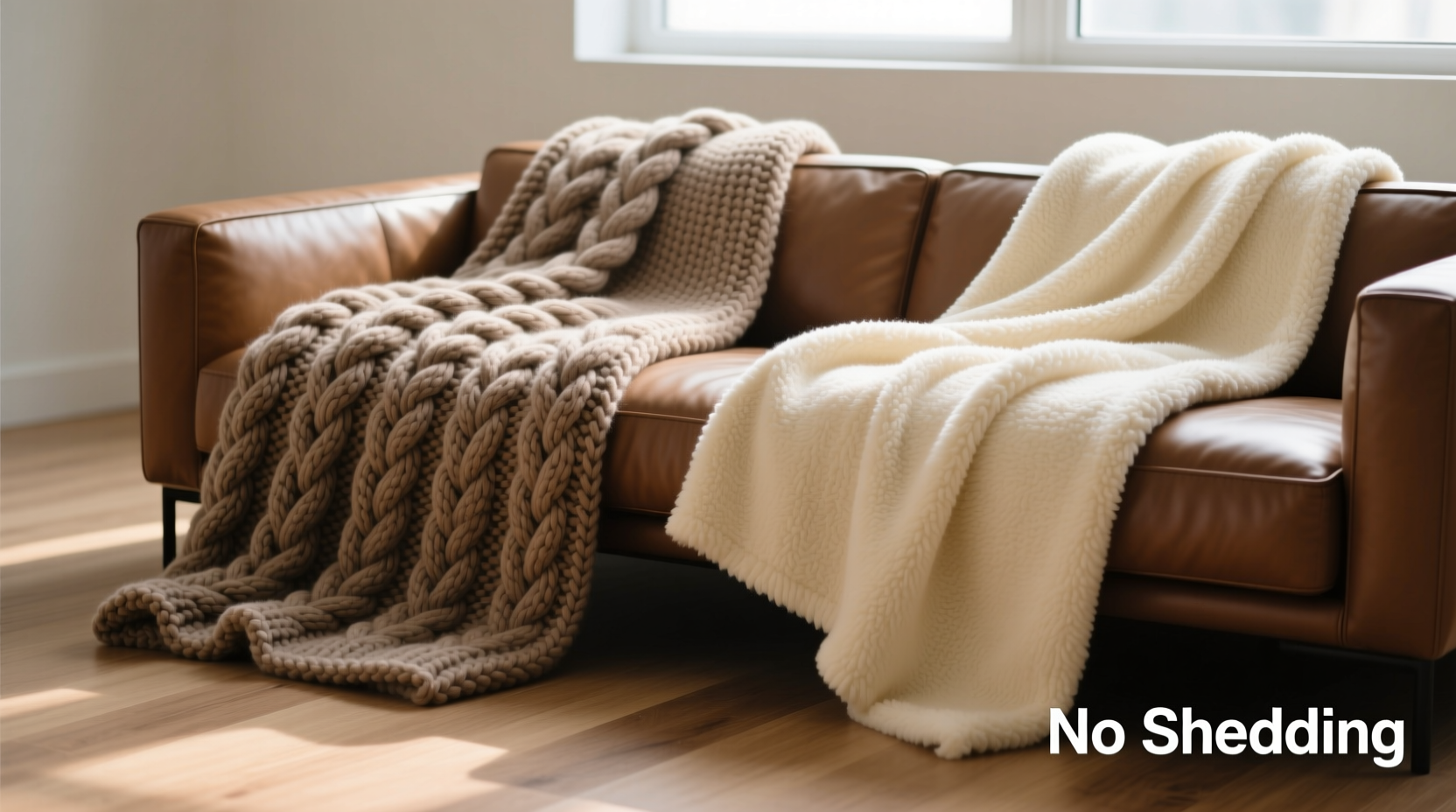
The foundation of any blanket’s performance lies in its fiber content. Understanding what each type is made from explains why they behave differently under use and washing.
Chunky knit blankets are typically crafted from natural or semi-synthetic yarns such as merino wool, alpaca, cotton, acrylic, or blends. Their defining feature is the thick, hand-knit or machine-knit construction using oversized needles, resulting in large loops and a textured, three-dimensional surface. The bulkiness traps air, enhancing insulation. Wool-based knits, especially, have natural crimp and lanolin that contribute to moisture-wicking and heat retention.
Fleece throws, by contrast, are almost always synthetic—most commonly 100% polyester. Fleece is a napped fabric created through a process involving extrusion, weaving, and brushing to produce a soft, plush pile. It mimics the insulating properties of wool but at a lower cost and weight. Because it's derived from plastic, fleece doesn't absorb moisture well but dries quickly and resists mildew.
Warmth Comparison: Which Insulates Better?
Warmth depends on how effectively a material traps body heat and resists cold air penetration. This is influenced by loft (thickness), fiber structure, and breathability.
Chunky knit blankets, due to their open weave and high volume of trapped air, provide excellent passive insulation. Natural fibers like wool actively regulate temperature—they warm when it’s cold and release heat when you’re too warm. A tightly knitted wool throw can retain heat even when damp, making it ideal for colder climates or drafty rooms.
Fleece excels in lightweight warmth. Its dense nap creates a microclimate next to the skin, reflecting body heat back efficiently. However, because it lacks breathability, it can cause overheating during prolonged use. In dry, indoor environments, fleece performs reliably. But in humid conditions, static buildup and condensation between the fabric and skin may reduce comfort.
“Wool’s cellular structure allows it to absorb up to 30% of its weight in moisture without feeling wet—this gives it superior thermal stability in variable conditions.” — Dr. Lena Torres, Textile Scientist, MIT Materials Lab
In head-to-head testing conducted by consumer labs, wool-based chunky knits outperformed standard polyester fleece in maintaining core temperature over two-hour indoor sessions, particularly in spaces below 65°F (18°C).
Shedding Behavior: Which One Leaves Lint Everywhere?
Shedding—the release of fibers during use or washing—is a major concern for allergy sufferers, pet owners, and those who dislike constant lint rollers.
Fleece has a notorious reputation for shedding. Over time, especially after repeated washing, the brushed fibers break loose and become airborne microplastics. Studies show that a single fleece garment can shed over 1,000 microfibers per wash cycle. These particles not only coat furniture and clothing but also pollute water systems. Even high-quality fleece will pill and fuzz with friction, particularly around elbows or pet beds.
Chunky knit blankets vary widely depending on fiber type. High-quality wool or cotton knits shed minimally when properly constructed. However, acrylic versions—especially those marketed as “ultra-soft” or “buttery”—are prone to pilling and fiber loss. Poorly spun yarns unravel easily, and loose stitches exacerbate shedding. That said, a well-made chunky knit from reputable brands tends to maintain integrity longer than most fleece throws.
| Blanket Type | Initial Shedding | Long-Term Shedding | Pilling Risk | Eco Impact (Microfiber Release) |
|---|---|---|---|---|
| Natural Fiber Chunky Knit (e.g., wool) | Low | Very Low | Low | Negligible |
| Acrylic Chunky Knit | Moderate | Moderate to High | High | Low (but non-biodegradable) |
| Polyester Fleece Throw | High | High (increases over time) | Very High | Very High |
Care and Longevity: How to Keep Them Looking New
Proper maintenance dramatically affects how long a blanket stays warm, soft, and free of debris. Both types require different approaches.
Fleece throws are easy to wash—machine-safe in cold water with mild detergent, tumble dry low. But frequent laundering accelerates fiber degradation. Avoid fabric softeners, which coat fibers and reduce wicking ability. Air drying preserves the nap longer. Despite ease of cleaning, most fleece blankets begin to look worn within 6–12 months of regular use.
Chunky knit blankets demand more caution. Hand-washing is ideal for wool or delicate blends. If machine washing, use a mesh laundry bag, cold water, and a wool-safe cycle. Never wring or twist—press out water gently. Lay flat to dry to prevent stretching. Acrylic knits tolerate more abuse but still benefit from gentle handling. Proper care can extend the life of a quality knit blanket to 5+ years.
Step-by-Step Guide: Washing a Chunky Knit Without Damage
- Check the care label—identify fiber content and recommended method.
- Fill a basin with cool water and a small amount of wool-specific detergent (e.g., Eucalan).
- Submerge the blanket gently; avoid agitation or scrubbing.
- Soak for 10–15 minutes, then drain water without lifting the saturated blanket.
- Rinse with cool water until soap runs clear.
- Press out excess water—never twist.
- Lay flat on a clean towel, reshaping to original dimensions.
- Allow 24–48 hours to air dry away from direct heat or sunlight.
Real-World Use Case: A Family’s Experience After One Winter
The Reynolds family in Vermont purchased both a chunky merino wool knit throw and a budget-priced polyester fleece throw for their living room sofa. They used both nightly during the winter months, with pets and children regularly on the couch.
By February, the fleece throw had developed visible pilling on the arms and seat areas. It left lint on dark clothing and required weekly washing due to odor retention. Microscopic fibers were found on nearby electronics and in vacuum filters.
The wool knit showed no signs of shedding. It retained its shape and texture despite monthly hand-washing. Family members reported it felt warmer during power outages when central heating failed. After airing outside for an hour, it refreshed naturally—no washing needed for minor spills thanks to wool’s stain resistance.
Despite costing nearly twice as much upfront ($120 vs. $45), the wool knit proved more economical and comfortable over time.
Choosing Based on Lifestyle Needs
Your ideal blanket depends on usage context:
- For allergy-sensitive homes: Choose natural-fiber chunky knits. Wool is naturally antimicrobial and hypoallergenic.
- For kids or pets: Fleece is easier to launder frequently, but consider a high-pile anti-pill version to reduce shedding.
- For outdoor use (picnics, camping): Fleece wins for being lightweight and quick-drying.
- For luxury decor and daily comfort: A well-crafted chunky knit adds texture and lasting warmth without mess.
- For eco-conscious buyers: Opt for wool, organic cotton, or recycled-content knits. Avoid virgin polyester fleece.
Checklist: Choosing a Low-Shedding, Warm Blanket
- ✅ Identify fiber type—prioritize wool, cotton, or high-quality blends.
- ✅ Avoid 100% polyester if shedding is a concern.
- ✅ Feel the fabric—tight stitching and smooth yarn indicate durability.
- ✅ Read reviews specifically mentioning “shedding,” “pilling,” or “lint.”
- ✅ Consider care requirements—can you commit to hand-washing if needed?
- ✅ Look for certifications like Oeko-Tex or GOTS for safer materials.
Frequently Asked Questions
Do chunky knit blankets shed less than fleece?
Yes—when made from natural fibers like wool or tightly spun cotton. Acrylic knits may shed moderately, but still less than most fleece throws, which continuously release microfibers during use and washing.
Can I stop my fleece throw from shedding?
You can reduce shedding temporarily by washing it in a mesh bag, using cold water, and avoiding dryer sheets. However, shedding is inherent to the material’s structure and will increase over time. Freezing the throw in a plastic bag overnight before first wash may set fibers slightly, but results are limited.
Are there fleece alternatives that don’t shed?
Some newer fabrics like sherpa (a denser fleece variant) or recycled PET fleece with tighter weaves shed less. However, truly low-shed options include brushed cotton, bamboo fleece, or wool-blend knits, which offer similar softness without plastic fibers.
Final Verdict: Warmth Without the Mess
If your priority is sustained warmth without constant shedding, a **natural-fiber chunky knit blanket**—particularly one made from wool or alpaca—is the superior choice. It provides deeper, more adaptive insulation, ages gracefully, and avoids contributing to microplastic pollution. While higher in initial cost, its longevity and performance justify the investment.
Fleece throws remain practical for casual, short-term use—especially in active households where frequent machine washing is necessary. But their tendency to pill, generate lint, and degrade thermally over time makes them less ideal for those seeking a clean, enduring solution.
The best decision aligns with your environment, values, and usage patterns. By selecting thoughtfully and caring properly, you can enjoy cozy warmth without sacrificing comfort or cleanliness.




 浙公网安备
33010002000092号
浙公网安备
33010002000092号 浙B2-20120091-4
Comments
No comments yet. Why don't you start the discussion?