
In early 2024, a widespread recall of ground cinnamon sent shockwaves through kitchens and grocery stores across North America. Triggered by the discovery of high levels of lead and other contaminants in certain imported batches, this recall has raised serious concerns about spice safety, supply chain transparency, and consumer awareness. For home cooks, bakers, and families who rely on cinnamon as a pantry staple, understanding which brands are affected, how to identify risky products, and what steps to take is no longer optional—it’s a matter of health and prevention. This guide delivers precise, up-to-date information on the cinnamon recall, identifies specific brands and retailers involved, explains the science behind the contamination, and provides actionable steps to protect your household.
Definition & Overview
Cinnamon is a widely used aromatic spice derived from the inner bark of trees belonging to the Cinnamomum genus. Native to Sri Lanka, India, and Southeast Asia, it has been traded globally for thousands of years and remains one of the most popular spices in both sweet and savory cuisines. Two primary types dominate the market: Ceylon cinnamon (Cinnamomum verum), often labeled “true cinnamon,” and cassia cinnamon (Cinnamomum cassia), which is more common, stronger in flavor, and less expensive.
The current recall does not involve all cinnamon—only specific lots of ground cinnamon, primarily sourced from Indonesia and distributed under private-label or store-brand labels in the United States and Canada. The U.S. Food and Drug Administration (FDA) and Health Canada launched coordinated investigations after routine testing revealed elevated levels of lead, a toxic heavy metal that can cause neurological damage, especially in children and pregnant individuals. While trace amounts of lead may occur naturally in soil, the levels detected in these products far exceed safety thresholds, indicating possible contamination during harvesting, processing, or packaging.
Key Characteristics of Affected Cinnamon Products
- Form: Ground (powdered), not whole stick (quill)
- Origin: Primarily sourced from Indonesia
- Contaminant: Elevated lead levels (some samples exceeded 2 ppm, well above FDA guidance)
- Affected Packaging: Small glass jars, plastic shaker bottles, and resealable pouches, typically under 1 lb (454 g)
- Labeling Clues: Often sold as \"organic,\" \"pure ground cinnamon,\" with vague sourcing claims
- Risk Group: Children, pregnant people, and frequent users at highest risk due to cumulative exposure
Tip: If your ground cinnamon lacks a country of origin on the label—or lists Indonesia, China, or unspecified regions—exercise caution. Reputable brands clearly disclose sourcing.
Brands and Retailers Under Recall
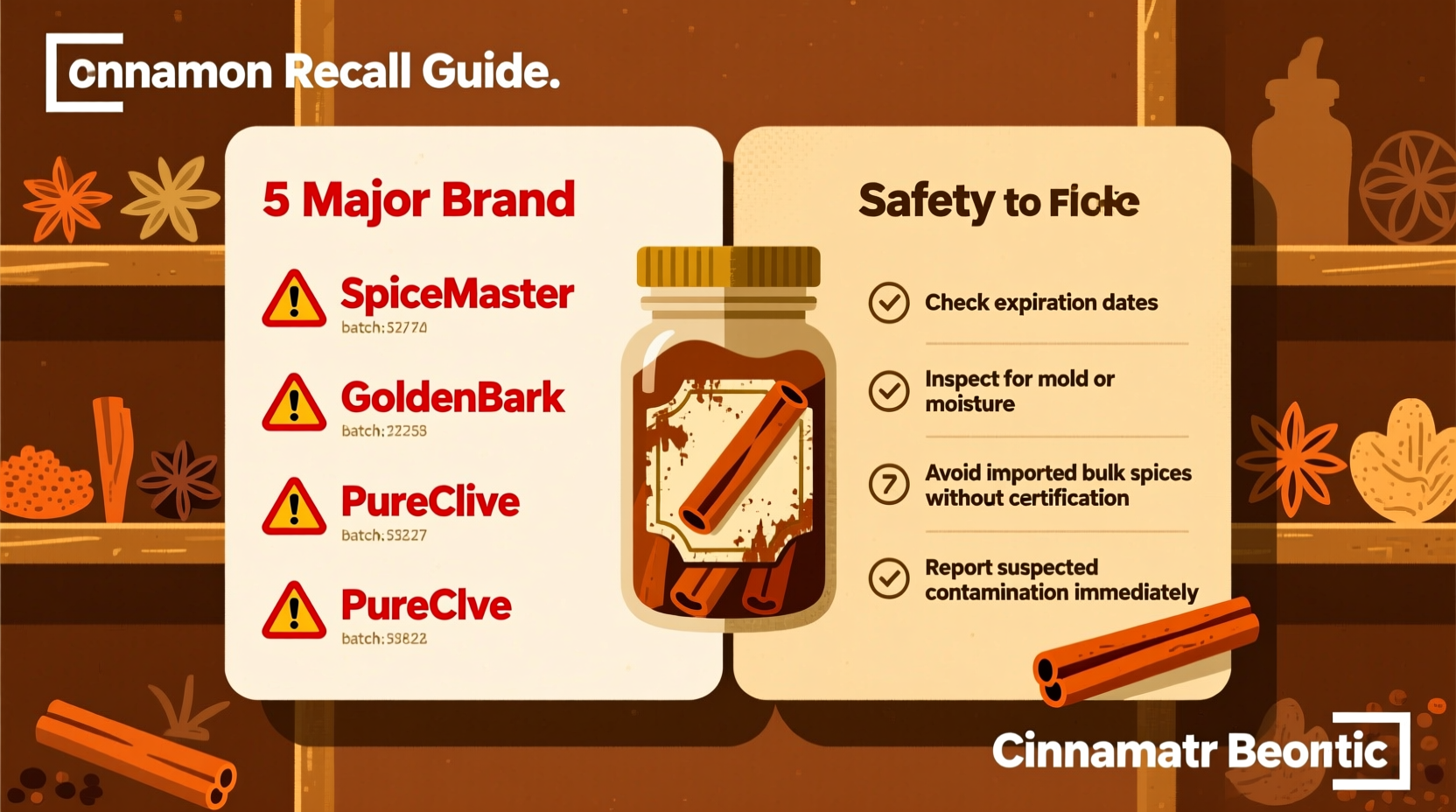
The FDA and Health Canada have issued multiple alerts identifying specific brands and distributors. As of March 2024, the following companies have initiated voluntary recalls due to potential lead contamination:
| Brand Name | Retailer / Distributor | Product Description | Recall Status |
|---|---|---|---|
| Frontier Co-op Organic Ground Cinnamon | Frontier Co-op (distributed nationally) | Organic, 2.08 oz glass jar; lot # L30706 | Recalled – Level I (serious health risk) |
| Great Value Ground Cinnamon | Walmart | 2.12 oz shaker bottle; various lot codes | Recalled – nationwide withdrawal |
| Swad Premium Quality Cinnamon Powder | Swad (imported from India/Indonesia) | 100g pouch; UPC 711439002205 | Recalled – imported batch contamination |
| Marketside Ground Cinnamon | Kroger, Fred Meyer, Ralphs | 2.5 oz container; sold in Southern California | Voluntary recall initiated |
| El Guapo Ground Cinnamon | Imported via New Jersey distributor | 1 lb bulk bags; distributed to restaurants | Recall in progress – food service alert |
Additional smaller brands and ethnic market products have also been flagged, particularly those marketed as “imported” or “traditional” without third-party testing certifications. Consumers should check the FDA website and Health Canada’s product recall database regularly for updated lists.
“Lead has no safe level of exposure, especially for developing children. When we find it in commonly consumed spices like cinnamon, it demands immediate action.” — Dr. Susan Mayne, Former Director of the FDA’s Center for Food Safety and Applied Nutrition
How to Check Your Cinnamon
Not all cinnamon is contaminated, but vigilance is essential. Follow this step-by-step verification process:
- Locate the packaging: Retrieve the container of ground cinnamon from your pantry.
- Check the brand and label: Identify the manufacturer, brand name, and net weight.
- Find the lot number and UPC: Look for a printed lot code, expiration date, or barcode (UPC).
- Verify country of origin: If the label states “Product of Indonesia” or lacks origin information, treat it as suspect.
- Search official databases: Enter the details into the FDA Recalls and Withdrawals portal or Health Canada’s Recalls Database.
- Contact the manufacturer: Use the customer service number on the package to confirm if your lot is included in any recall.
- Dispose safely: If confirmed as recalled, seal the product in a plastic bag and discard it in an outdoor trash bin to prevent accidental ingestion.
Action Step: Take photos of your spice labels now and store them digitally. This creates a quick reference if future recalls occur.
Variants & Types: Understanding the Differences
Not all cinnamon is created equal. The type you use affects both flavor and safety profile. Here are the main variants available in the U.S. market:
- Cassia Cinnamon: Most common in supermarkets. Strong, spicy-sweet flavor with higher coumarin content. Typically sourced from China, Indonesia, or Vietnam. More likely to be involved in recalls due to lax regulatory oversight in some exporting countries.
- Ceylon Cinnamon: Known as “true cinnamon.” Milder, citrusy, and layered in flavor. Lower in coumarin and traditionally considered safer for daily consumption. Usually more expensive and labeled explicitly as “Ceylon.”
- Saigon (Vietnamese) Cinnamon: A subtype of cassia with intense heat and sweetness. High in essential oils and coumarin—use sparingly.
- Organic vs. Conventional: Organic certification does not guarantee freedom from heavy metals. Contamination can occur in soil or during transport. Third-party lab testing (e.g., NSF, ConsumerLab) offers greater assurance.
While the current recall focuses on cassia-type cinnamon from Indonesia, experts warn that inconsistent global regulation means any low-cost imported spice could pose risks. Sourcing transparency—not organic labeling—is the best indicator of safety.
Comparison with Similar Ingredients
Cinnamon is sometimes confused with other spices, particularly in blended forms. Knowing the differences helps avoid misidentification and ensures proper usage:
| Spice | Flavor Profile | Common Confusion With | Safety Note |
|---|---|---|---|
| Cinnamon (cassia) | Warm, sweet, slightly woody | Nutmeg, allspice | High lead risk in contaminated batches |
| Cinnamon (Ceylon) | Delicate, floral, citrus-tinged | Cassia (often mislabeled) | Lower contaminant risk; preferred for daily use |
| Ground Nutmeg | Sharp, pungent, mildly hallucinogenic in excess | Cinnamon in apple pie blends | Toxic in large doses; not under recall |
| Pumpkin Pie Spice | Blend: cinnamon, ginger, nutmeg, cloves | Mistaken for pure cinnamon | Check ingredients—if it contains recalled cinnamon, the blend is also unsafe |
Consumers using pre-mixed spice blends should verify whether cinnamon is listed—and if so, cross-reference the brand of the blend with recall notices. Major brands like McCormick have not issued recalls as of April 2024, but private-label blends using third-party suppliers remain vulnerable.
Practical Usage & Safe Substitutions
Cinnamon plays a critical role in baking, breakfast dishes, beverages, and even savory applications like Moroccan tagines or Mexican mole. Removing it entirely isn’t practical—but smart substitutions and sourcing changes can maintain flavor while reducing risk.
Safe Culinary Applications
When using non-recalled or verified-safe cinnamon:
- Baking: Use 1/2 to 1 teaspoon per batch of muffins, breads, or cookies. Ceylon cinnamon works best in delicate pastries.
- Oatmeal & Yogurt: Sprinkle lightly—1/4 tsp—to add warmth without overexposure.
- Beef & Lamb Dishes: Cassia cinnamon pairs well with cumin and coriander in Middle Eastern and Indian recipes.
- Drinks: Simmer a small piece of Ceylon quill in mulled wine or chai for controlled infusion.
Substitutions for High-Risk Cinnamon
If you’re avoiding cinnamon temporarily or cannot verify its source:
- Allspice (ground): Offers clove-like warmth. Use 3/4 the amount of cinnamon called for.
- Nutmeg: Warm and sweet, but potent. Use 1/4 tsp to replace 1 tsp cinnamon.
- Ginger (dried): Adds zesty heat. Best in baked goods; pair with a pinch of cardamom for complexity.
- Apple Pie Spice: A commercial blend without cinnamon (check label). Use 1:1 in desserts.
Pro Tip: Buy whole cinnamon quills instead of ground powder. They’re less prone to adulteration, last longer, and can be grated fresh or simmered in liquids then removed—reducing particulate exposure.
Storage, Shelf Life & Long-Term Safety
Ground cinnamon retains potency for 1–2 years when stored properly, but contamination does not degrade over time. Lead remains stable indefinitely. Therefore, expired or old cinnamon from a recalled batch is just as dangerous as a newly purchased container.
Best storage practices:
- Keep in an airtight container away from light, heat, and moisture.
- Store in a cool, dark cupboard—never above the stove.
- Label containers with purchase date to track freshness.
- Inspect for clumping, off-odors, or discoloration—signs of moisture or spoilage.
Shelf life varies by type:
- Ground Cassia: 1 year peak quality
- Ground Ceylon: 1.5 years (more volatile oils)
- Whole Quills: Up to 3–4 years
“Spices are agricultural products, not industrial chemicals. They grow in soil, absorb minerals, and pass through multiple handlers. Every link in the chain must be accountable.” — Chef Daniel Gorman, Culinary Institute of America Faculty
FAQs: Common Concerns Answered
Is organic cinnamon safe?
Not necessarily. Organic certification regulates pesticide use and farming methods but does not test for heavy metals like lead. Contamination can originate from polluted soil or improper drying practices. Always verify third-party lab results if safety is a concern.
Can cooking destroy lead in cinnamon?
No. Lead is a heavy metal and is not broken down by heat, freezing, or cooking. Once present, it remains in the final dish.
What are the symptoms of lead exposure from cinnamon?
In adults: fatigue, joint pain, memory issues. In children: developmental delays, learning difficulties, irritability, abdominal pain. Chronic low-level exposure may go unnoticed for years.
Are cinnamon supplements affected?
Yes. Some dietary supplements containing cinnamon extract have been pulled from shelves. Check the National Institutes of Health (NIH) Office of Dietary Supplements database for alerts.
Can I return recalled cinnamon without a receipt?
Most major retailers, including Walmart, Kroger, and Amazon, are accepting recalled products for refund without proof of purchase during this public health event.
Is homemade cinnamon roll icing safe if I used recalled cinnamon?
No. Any food prepared with contaminated cinnamon should be discarded. Lead does not evaporate or neutralize during baking.
Summary & Key Takeaways
The 2024 cinnamon recall is a wake-up call for consumers, retailers, and regulators alike. While cinnamon remains a beloved and versatile spice, its journey from tropical tree bark to kitchen shelf involves complex global supply chains where contamination can occur at multiple points. The presence of lead in certain ground cinnamon products—particularly budget-friendly, imported brands—poses a real and preventable health risk.
Key actions every household should take:
- Check existing cinnamon against FDA and Health Canada recall lists.
- Discard any product with Indonesian origin or unverified sourcing.
- Switch to Ceylon cinnamon or whole quills from reputable suppliers.
- Support brands that publish third-party contaminant testing results.
- Advocate for stricter import screening of spices and mandatory origin labeling.
Spices should enhance food, not endanger it. By staying informed, reading labels carefully, and choosing quality over convenience, you can continue enjoying the warmth and depth of cinnamon—safely and confidently.
Call to Action: Visit fda.gov today and search “cinnamon recall” to verify your pantry. Share this guide with family, especially caregivers of young children.




 浙公网安备
33010002000092号
浙公网安备
33010002000092号 浙B2-20120091-4
Comments
No comments yet. Why don't you start the discussion?