
Selecting the perfect pair of earrings often comes down to more than just material or color. Shape plays a surprisingly powerful role in how jewelry complements your features, enhances your outfit, and expresses your personality. Among the most common choices are circular and square earrings—two shapes that represent vastly different aesthetics. While one evokes softness and continuity, the other suggests structure and boldness. But does this difference actually matter when making a decision? The answer is both nuanced and practical.
The Psychology Behind Earring Shapes
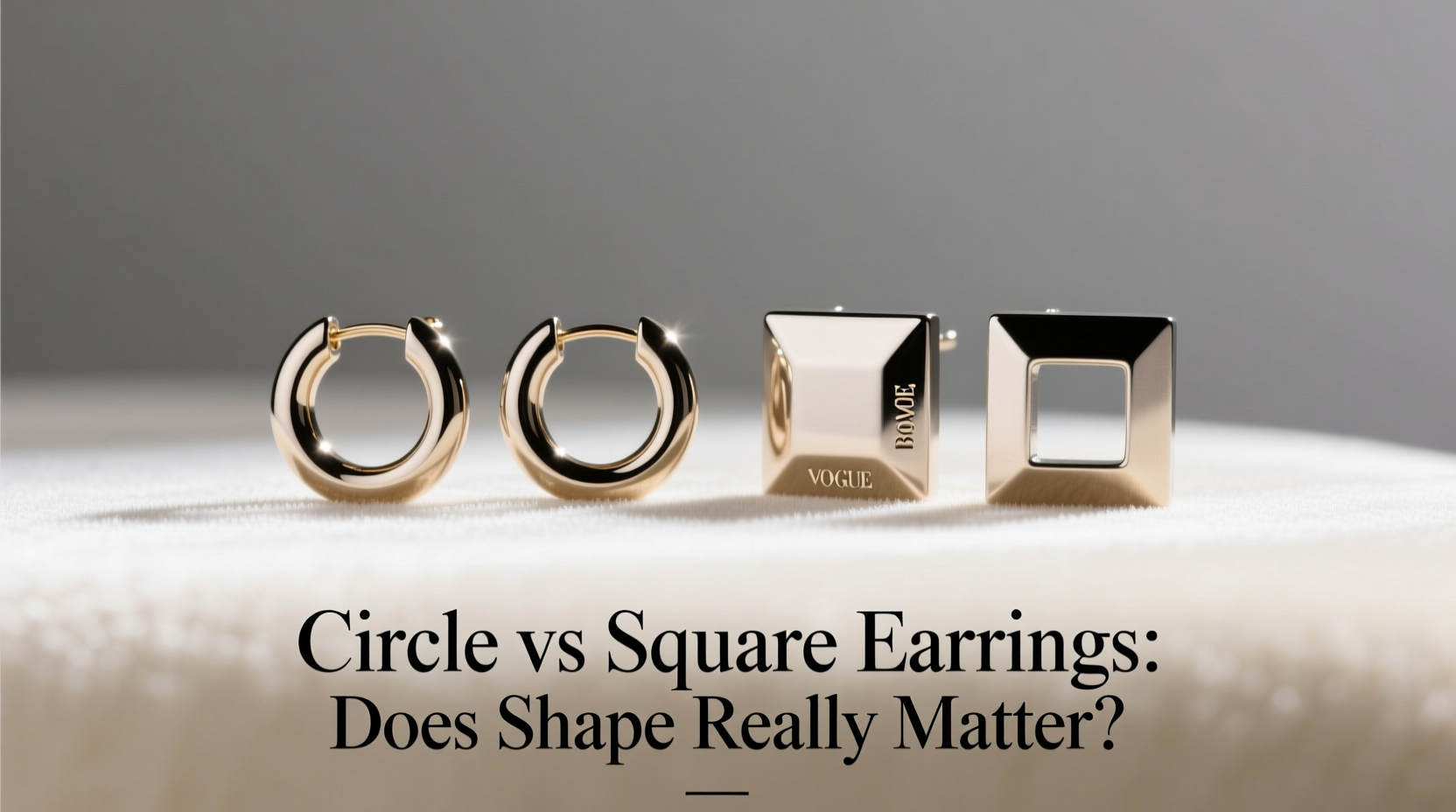
Shapes carry subconscious meaning. Circles are universally associated with unity, infinity, and harmony. They have no beginning or end, which makes them feel gentle and balanced. When worn as earrings, circles can soften facial lines and create a sense of fluidity. On the other hand, squares symbolize order, stability, and modernity. Their clean lines and defined edges project confidence and intentionality. Wearing square earrings may subtly signal precision and a structured mindset.
This isn’t merely symbolic. Studies in design psychology suggest that people respond differently to curved versus angular forms. A 2013 study published in *Perception* found that participants consistently rated curved objects as more pleasant and approachable than angular ones. In fashion, this translates to circle earrings often being perceived as friendly and timeless, while square designs may be seen as edgy or contemporary.
“Shape is silent communication. It tells people something about you before you say a word.” — Lila Nguyen, Fashion Psychologist and Author of *Worn Identity*
Face Shape Compatibility: What Works Best?
One of the most practical reasons shape matters is its interaction with facial structure. Jewelry should enhance, not clash with, your natural contours. Here’s how circle and square earrings align with different face types:
| Face Shape | Best With Circle Earrings? | Best With Square Earrings? | Why |
|---|---|---|---|
| Oval | Yes | Yes | Balanced proportions allow versatility; both shapes complement without overpowering. |
| Round | Limited | Yes | Squares add angular contrast to soften roundness; circles may emphasize fullness. |
| Square | Yes | Limited | Circles soften strong jawlines; squares may overemphasize angles. |
| Heart | Yes | Yes (if bottom-heavy) | Circles balance wide foreheads; lower-set squares add proportion to chins. |
| Diamond | Yes | With caution | Circles highlight cheekbones gently; sharp squares may accentuate narrowness. |
Style Expression: Personality Over Rules
While face shape offers guidance, personal style ultimately determines what feels right. Circle earrings—hoops, rounds, or domes—are classics for a reason. They work across eras and trends, from minimalist studs to statement chandeliers. Their versatility makes them ideal for daily wear, professional settings, or elegant evenings.
Square earrings, by contrast, lean into architectural fashion. They’re favored in modern, avant-garde, or gender-neutral aesthetics. A well-designed square earring can become a focal point, especially when paired with simple clothing. Think of them as wearable art—bold, deliberate, and expressive.
The key is alignment with your self-image. Someone who values tradition and ease might gravitate toward circles. Another who embraces innovation and stands out in a crowd may find empowerment in angular designs. There’s no “better” shape—only what resonates with you.
Real-Life Example: Choosing Confidence Over Convention
Take Maya, a 34-year-old graphic designer with a heart-shaped face. She’d always worn small silver hoops, believing they were “safe” and universally flattering. But during a branding photoshoot for her freelance business, she tried on a pair of matte black square drop earrings. The stylist insisted they’d highlight her strong brows and add sophistication.
Maya hesitated—she worried the sharp lines would look harsh. Yet in the final images, the earrings created visual balance, drawing attention to her eyes rather than her forehead. More importantly, she felt bolder. Clients began commenting on her “distinctive style,” and she started incorporating more geometric jewelry into her wardrobe. For her, the shift wasn’t just aesthetic—it was psychological. The square earrings didn’t just change her look; they changed how she carried herself.
How to Choose: A Step-by-Step Decision Framework
Picking between circle and square earrings doesn’t need to be overwhelming. Follow this five-step process to make a confident choice:
- Assess your face shape. Stand in natural light, pull your hair back, and trace your outline in a mirror. Compare it to standard categories (oval, round, square, etc.).
- Identify your style goals. Are you aiming for soft elegance, modern minimalism, or bold individuality?
- Test proportions. Larger circles suit taller frames; smaller squares work well for petite builds. Avoid oversized shapes that overwhelm your features.
- Try before committing. Borrow or rent pairs to see how they feel in real life—not just in reflection, but in movement and social settings.
- Consider context. Do you need everyday wear, office-appropriate pieces, or statement accessories for events? Circles often offer broader adaptability.
Common Misconceptions About Earring Shape
- Misconception: Angular jewelry looks aggressive. Reality: Design details like rounded corners or polished finishes make square earrings approachable.
- Misconception: Round earrings are boring. Reality: Texture, size variation, and asymmetry can make circles dynamic and fashion-forward.
- Misconception: You must match your earring shape to your face. Reality: Contrast creates interest. Sometimes opposing shapes are more flattering than matching ones.
Frequently Asked Questions
Can I wear both circle and square earrings at the same time?
Absolutely. Mixing shapes is a growing trend in asymmetric styling. Try a hoop on one ear and a square stud on the other for balanced contrast. Just keep metals and sizes cohesive to avoid visual clutter.
Do square earrings suit women over 50?
Yes—they can be especially empowering. As facial volume changes with age, structured shapes can provide definition and lift. Opt for mid-sized squares with smooth finishes to maintain elegance.
Are circle earrings more timeless than square ones?
Circles have broader historical presence across cultures, making them classically timeless. However, square and geometric designs have recurred in fashion cycles—from Art Deco to 1990s minimalism—so they possess their own enduring appeal when well-executed.
Final Thoughts: Shape Matters—But So Does Intention
The debate between circle and square earrings isn’t about superiority. It’s about understanding how form influences perception—and using that knowledge intentionally. Circles offer grace and continuity, ideal for creating softness and connection. Squares deliver clarity and strength, perfect for making a statement or reinforcing confidence.
Ultimately, the best earring shape is the one that makes you feel seen. Whether you reach for a delicate gold circle or a bold cubic zirconia square, your choice reflects more than taste—it reflects identity. Don’t just wear jewelry that fits your face. Wear pieces that fit your spirit.




 浙公网安备
33010002000092号
浙公网安备
33010002000092号 浙B2-20120091-4
Comments
No comments yet. Why don't you start the discussion?