
For fitness enthusiasts navigating modern wellness culture, the choice between a traditional gym membership and a flexible platform like ClassPass isn’t just about cost—it’s about lifestyle alignment. ClassPass promises access to thousands of studios and gyms with one subscription, offering variety that fixed memberships can't match. But behind that appeal lies a complex credit system, fluctuating pricing, and unpredictable availability. Meanwhile, traditional gym memberships offer consistency, lower long-term costs, and fewer logistical headaches—yet often lack excitement or diversity in programming. So, is the freedom of variety truly worth the administrative friction? The answer depends on your routine, priorities, and how you define value.
The Core Differences: Flexibility vs. Predictability
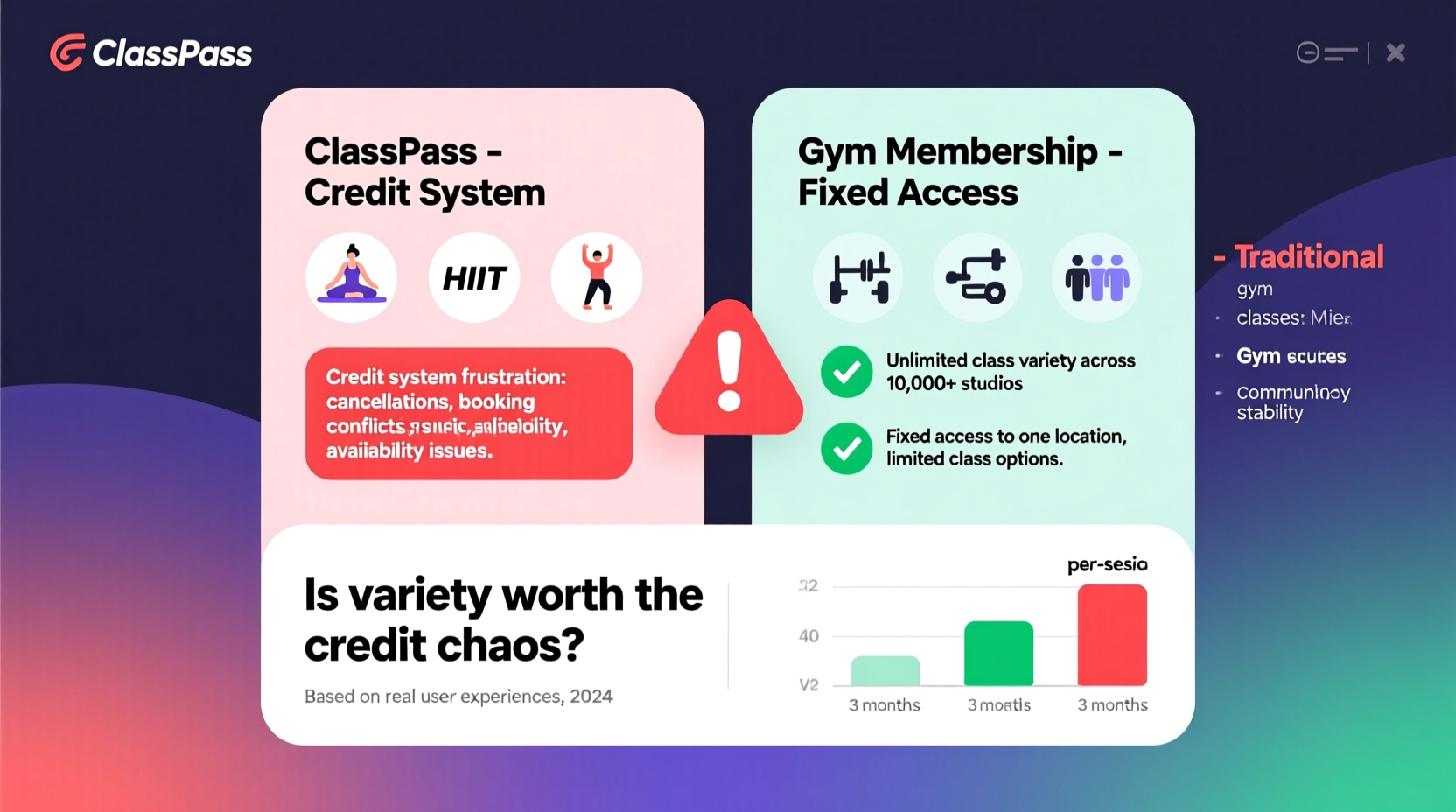
At its heart, the decision comes down to two opposing philosophies: exploration versus stability. ClassPass operates on a credits-based model where users purchase a monthly package (e.g., 4, 8, or unlimited) and spend credits to book classes across different providers—yoga studios, spin boutiques, HIIT gyms, martial arts dojos, and even meditation sessions. This model appeals to those who thrive on novelty and want to avoid the monotony of treadmill routines or rigid class schedules.
In contrast, a standard gym membership—whether at a Planet Fitness, Equinox, or YMCA—offers predictable access to a single facility. You pay a flat monthly rate for 24/7 entry, equipment use, group classes (if included), and amenities like showers or towel service. There’s no need to budget credits or check availability; if the gym is open, you’re in.
The trade-off? While ClassPass opens doors to premium studios that might otherwise be out of budget, it introduces layers of complexity. Users must track credit balances, anticipate price changes per class type, and compete for popular time slots. A hot spin class at a boutique studio may cost 2–3 credits, while a beginner yoga session uses just one. Over time, this gamification of fitness can become more stressful than motivating.
“Flexibility without structure often leads to inconsistency. Many ClassPass users overestimate their ability to plan ahead and end up wasting credits.” — Dr. Lena Torres, Behavioral Health & Exercise Psychologist
Cost Comparison: What You Actually Pay Per Workout
On paper, ClassPass seems competitive. A typical plan starts around $99/month for four classes (roughly $25 per session). Upgrade to eight classes, and the average drops to about $18 per class. But these numbers are misleading. Credits don’t always translate directly into usable workouts. High-demand classes cost more credits, meaning your “four-class” plan might only cover two premium sessions. Additionally, last-minute cancellations or rescheduling fees can eat into your balance.
Traditional gyms, meanwhile, often charge between $30–$60/month for full access. Premium chains like Equinox or Life Time may exceed $150, but even mid-tier options like Crunch or Anytime Fitness deliver substantial value for frequent users. If you work out five times a week, a $45/month membership equates to less than $2 per visit—an unbeatable rate compared to any ClassPass tier.
| Option | Monthly Cost | Avg. Cost Per Session | Best For |
|---|---|---|---|
| ClassPass (4-class plan) | $99 | $25–$50* | Casual exercisers, explorers |
| ClassPass (Unlimited) | $199+ | $15–$25 | Frequent boutique-goers |
| Basic Gym Membership | $30–$60 | $1.50–$4 | Daily users, budget-conscious |
| Premium Gym (e.g., Equinox) | $150–$250 | $5–$8 | Luxury seekers, all-in-one access |
*Varies widely based on studio type and location. One spin class = 2 credits ($49 effective cost on 4-class plan).
Real-World Example: Sarah’s Fitness Journey
Sarah, a 32-year-old marketing manager in Chicago, switched from a $55/month Lifetime Fitness membership to a $129 ClassPass plan after growing bored with her routine. She loved trying new things—barre, Pilates reformer, kickboxing—and appreciated the curated experience of boutique studios. At first, she felt invigorated. But within three months, frustration set in.
Her favorite 6:30 AM spin class required two credits and filled up 48 hours in advance. When she forgot to book early, she either took a less appealing option or skipped altogether. One month, she used only three of her six allocated credits because scheduling conflicts made booking impossible. Another time, she was charged an extra credit when rescheduling due to work travel.
After six months, Sarah recalculated: she’d spent $774 on ClassPass versus $330 for her old gym. She averaged 2.8 workouts per month—less than half what she previously did. She eventually returned to a hybrid approach: a $45 basic gym membership for daily access and occasional ClassPass bookings for special classes, totaling $75/month but giving her both stability and variety.
When ClassPass Wins: Scenarios Where Variety Justifies the Hassle
Despite its drawbacks, ClassPass shines in specific contexts. It’s not a one-size-fits-all solution, but for certain lifestyles, the credit system is a small price to pay for diversity.
- Travelers and remote workers: With access to studios in hundreds of cities, digital nomads can maintain fitness routines across locations without committing to local gyms.
- New city residents: Trying out multiple gyms and instructors before settling into a long-term membership reduces the risk of buyer’s remorse.
- Niche fitness seekers: Those interested in aerial yoga, sound bath meditation, or Muay Thai may find only one provider in their area—often accessible only through ClassPass.
- Seasonal exercisers: People who cycle through motivation peaks (e.g., New Year’s resolutions, pre-wedding training) benefit from pausing or canceling subscriptions easily.
Moreover, ClassPass occasionally runs promotions—like double credits or bonus offers—that can temporarily tilt the value equation in favor of the user. Savvy planners who monitor deals and lock in discounted annual packages can stretch their dollar further.
Step-by-Step Guide: Choosing the Right Option for Your Lifestyle
Making the right choice requires self-awareness and honest assessment of your habits. Follow this timeline to determine which path suits you best:
- Week 1: Track Your Current Routine
Record how many days per week you exercise, preferred times, types of workouts, and whether you go alone or with others. - Week 2: Audit Local Options
List nearby gyms and studios. Note prices, class offerings, peak hours, and commute times. Check which accept ClassPass. - Week 3: Test Both Models
Sign up for a free trial (many gyms offer 3–7 days) and a low-tier ClassPass plan. Book at least three different class types and one open gym session. - Week 4: Evaluate Experience
Ask: Was booking easy? Did I enjoy the environment? Did I feel pressured by credit limits? Could I realistically sustain this weekly? - Decision Point: Choose Based on Usage
If you worked out 3+ times per week and valued convenience, go traditional. If you explored widely and disliked repetition, consider ClassPass—but opt for a higher credit tier to avoid scarcity stress.
Tips for Maximizing Value—No Matter Your Choice
- Stack your schedule weekly: Dedicate Sunday evenings to booking all workouts for the upcoming week. Treat them like appointments.
- Use off-peak hours: Studios often lower credit costs for midday or Tuesday/Wednesday classes. Shift your schedule slightly to save.
- Combine models: Keep a cheap gym membership as a backup and use ClassPass selectively for specialty classes—best of both worlds.
- Cancel unused auto-renews: Both gyms and ClassPass make cancellation harder than sign-up. Review billing dates monthly.
Frequently Asked Questions
Can I use ClassPass every day?
Technically yes, but practically difficult. Even unlimited plans may restrict same-studio usage or require advance notice. Daily attendance at high-credit classes becomes prohibitively expensive. For true daily fitness, a traditional gym remains more feasible.
Do gyms blacklist ClassPass users?
Some boutique studios limit ClassPass capacity or prioritize members during peak times. In rare cases, staff may subtly discourage pass holders from attending frequently. However, outright blacklisting is uncommon and violates ClassPass partner agreements.
Is ClassPass worth it if I only work out twice a week?
Possibly. If those two workouts are diverse—say, a Saturday morning vinyasa and a Thursday night boxing class—and you value experience over efficiency, then yes. But compare the per-session cost to dropping in à la carte at studios. Sometimes paying per class beats subscribing.
Final Verdict: Variety Has Its Price—Know What You're Paying
The allure of ClassPass lies in its promise: fitness as an adventure, not a chore. Being able to switch from trapeze yoga to indoor cycling to breathwork workshops keeps motivation high and burnout low. But that freedom comes wrapped in a flawed credit economy that rewards meticulous planners and punishes spontaneity.
Traditional gym memberships, though often dismissed as dull, deliver unmatched reliability and cost-efficiency. They reward consistency and remove friction from the workout process. For most people—especially those aiming for long-term health—predictability wins over novelty.
The smartest approach may not be choosing one over the other, but integrating both. Use a base gym membership for foundational workouts and supplement with occasional ClassPass bookings to keep things fresh. This hybrid strategy balances cost, convenience, and variety without falling victim to credit anxiety or underuse penalties.
“The most effective fitness plan is the one you stick to. Whether that’s the same treadmill every morning or a rotating cast of studios, sustainability matters more than spectacle.” — Marcus Reed, Certified Personal Trainer & Wellness Coach
Take Action Today: Align Your Fitness Plan With Your Real Life
Stop letting marketing hype dictate your fitness spending. Take a hard look at how you actually move—not how you wish you would. Track your behavior for two weeks. Then choose the model that supports, rather than complicates, your goals. Whether you commit to a no-frills gym or embrace the curated chaos of ClassPass, make it intentional. Your body—and your wallet—will thank you.




 浙公网安备
33010002000092号
浙公网安备
33010002000092号 浙B2-20120091-4
Comments
No comments yet. Why don't you start the discussion?