
When it comes to filling your home with natural fragrance, essential oil diffusers offer a chemical-free alternative to synthetic air fresheners. Among the many types available, clay diffusers and electric oil diffusers stand out for their popularity and distinct approaches to scent dispersion. But if your primary concern is how long the aroma lingers—especially in its most natural form—one question rises above the rest: which option provides longer-lasting scent without artificial enhancement? The answer depends on more than just runtime; it involves understanding material science, evaporation dynamics, and the preservation of essential oil integrity.
How Scent Diffusion Works Naturally
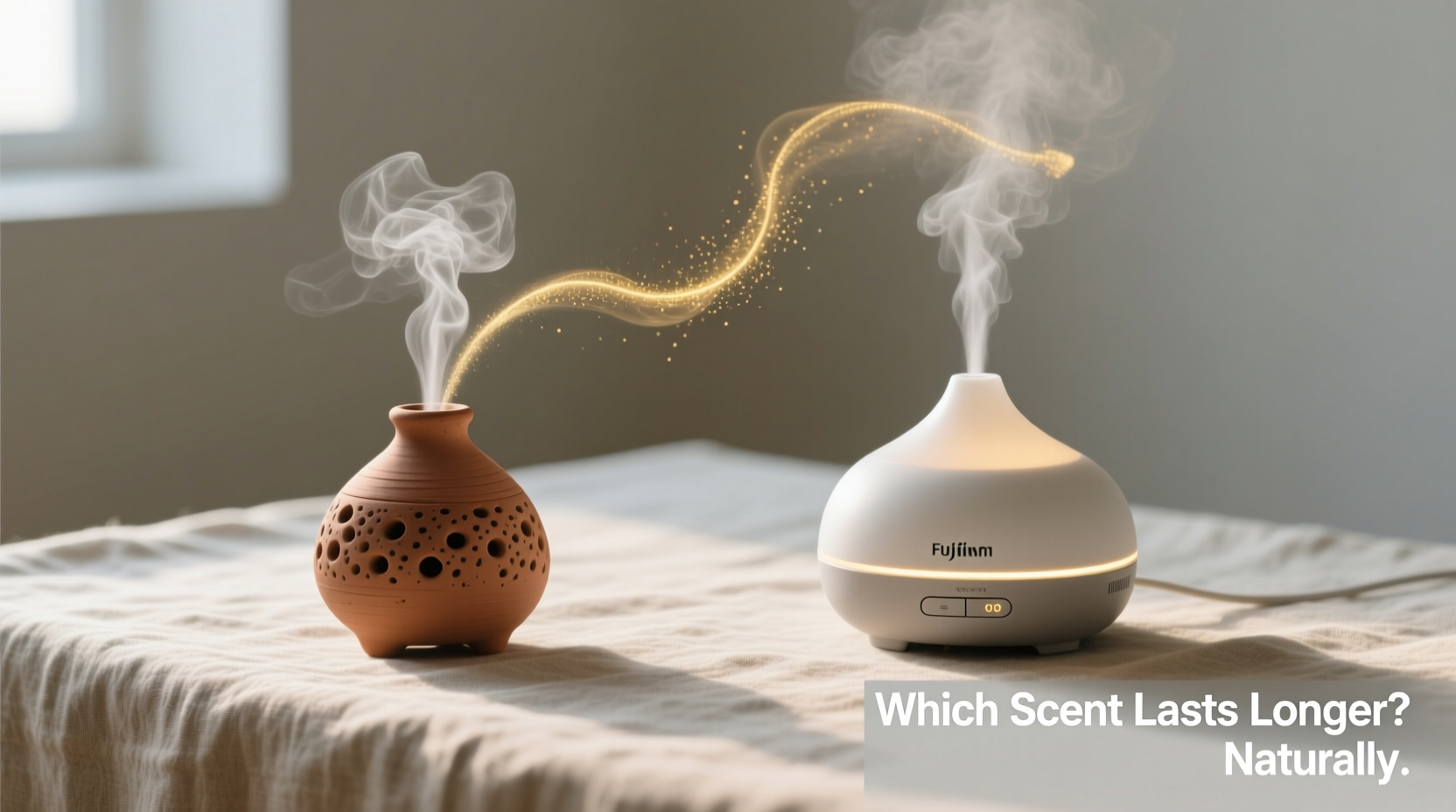
Natural scent diffusion relies on the principle of passive or active evaporation. In passive systems like clay diffusers, essential oils are absorbed into porous materials and slowly released through ambient air contact. Active systems, such as electric diffusers, use mechanisms like ultrasonic vibration or heat to break oils into fine particles that disperse into the air.
The longevity of a scent isn’t only about duration—it’s also about consistency and purity. A scent that fades quickly but remains true to the original oil profile may be preferable to one that lingers artificially but alters the aroma. This distinction is crucial when evaluating \"natural\" longevity.
Essential oils contain volatile organic compounds (VOCs) that evaporate at different rates. Top notes like citrus and mint dissipate fastest, while base notes like sandalwood or patchouli linger. How a diffuser handles this spectrum affects both perceived strength and actual endurance.
Clay Diffusers: The Art of Passive Aroma Release
Clay diffusers, often made from unglazed terracotta or ceramic, operate entirely without power. These handcrafted vessels absorb essential oils into their micro-porous structure. As air passes over the surface, the oil molecules gradually evaporate, releasing fragrance in a slow, steady stream.
Because there’s no heat or water involved, the chemical composition of the oil remains unchanged. This means the scent you smell is as close to the plant source as possible—an important factor for purists and aromatherapy enthusiasts.
While clay diffusers don’t project scent across large rooms like powered units, they excel in small, enclosed spaces such as bathrooms, closets, or bedside tables. Their subtle presence creates an intimate olfactory experience rather than overwhelming the senses.
Scent longevity in a clay diffuser typically ranges from 5 to 14 days per application, depending on oil viscosity, room humidity, and airflow. Thicker oils like vetiver or frankincense last longer because they penetrate deeper into the clay matrix and release more slowly.
“Passive diffusion preserves the therapeutic properties of essential oils better than heated methods.” — Dr. Lena Patel, Integrative Aromatherapist
Maintenance Tips for Clay Diffusers
- Use high-quality, pure essential oils—avoid fragrance oils, which can clog pores.
- Apply 8–12 drops directly onto the clay body or inner chamber.
- Reapply when scent weakens; do not oversaturate, as this can cause oil pooling.
- Clean monthly with mild soap and warm water; allow full drying before reuse.
- Store in low-humidity areas to prevent premature evaporation.
Electric Oil Diffusers: Power, Coverage, and Control
Electric diffusers come in several varieties—ultrasonic, nebulizing, and heat-based—each affecting scent duration differently. Ultrasonic models are the most common, using water and high-frequency vibrations to create a cool mist infused with essential oils. Nebulizers atomize oil without water, producing a stronger, more concentrated aroma. Heat diffusers use warmth to vaporize oil, though this method risks altering delicate compounds.
In terms of coverage, electric diffusers win hands down. They can scent entire living rooms or open-plan spaces within minutes. However, their operation is cyclical—most run in intervals (e.g., 30 seconds on, 30 seconds off) to conserve oil and prevent overexposure. This pulsing delivery means the scent feels strong during active cycles but disappears quickly once turned off.
Runtime varies by model and tank size. Small units last 4–6 hours continuously; larger ones can operate up to 12 hours with intermittent settings. After shutdown, residual scent rarely persists beyond 1–2 hours due to rapid dispersion and lack of ongoing release.
Moreover, adding water in ultrasonic models dilutes the oil concentration, reducing both intensity and longevity. While convenient, this method sacrifices some aromatic fidelity, especially for resinous or dense oils that don’t mix well with water.
Comparing Scent Longevity: Real-World Performance
To assess which system truly offers longer-lasting natural scent, consider two key metrics:
- Duration of detectable aroma – How long after application or shutdown can you still perceive the fragrance?
- Consistency of aroma quality – Does the scent remain balanced, or does it degrade unnaturally?
In controlled environments, clay diffusers consistently outperform electric models in total aromatic lifespan. For example, a single application of lavender oil in a clay vessel may remain perceptible for nearly two weeks, albeit faintly toward the end. An electric diffuser running for six hours might fill the room intensely but leave no trace by the next morning.
However, electric diffusers provide superior short-term impact. If immediate, robust fragrance is desired—such as upon entering a home or hosting guests—they are unmatched. But for sustained background ambiance, clay wins in endurance.
Detailed Comparison: Clay vs Electric Diffusers
| Feature | Clay Diffuser | Electric Oil Diffuser |
|---|---|---|
| Scent Duration (Natural Persistence) | 7–14 days per oil application | Up to 12 hours runtime; scent fades within 1–2 hrs after shutdown |
| Aroma Purity | High – no heat/water, retains oil integrity | Medium – water dilution or heat may alter compounds |
| Coverage Area | Small to medium (personal space) | Medium to large (entire rooms) |
| Energy Use | None (passive) | Requires electricity |
| Maintenance Frequency | Monthly cleaning recommended | Weekly cleaning to prevent mold/mineral buildup |
| Oil Efficiency | Very efficient – minimal waste | Less efficient – some oil lost in water residue |
| Best For | Continuous, subtle background scent | Immediate, strong fragrance bursts |
Mini Case Study: Office Environment Scent Strategy
Sarah, a wellness coach operating a small home office, wanted to maintain a calming atmosphere without overpowering clients. She initially used an ultrasonic diffuser with a citrus blend each morning. While refreshing at first, the scent vanished by midday, requiring reapplication. She also noticed a slight musty odor from stagnant water in the reservoir.
She switched to a handmade clay diffuser placed on her desk, loaded with a blend of bergamot and cedarwood. After applying 10 drops, she found the room remained gently fragranced throughout the week. Even after ten days, a soft trace of woodsy aroma lingered. Clients commented on the “peaceful, grounded” feeling of the space, and Sarah appreciated not having to refill daily.
For consultations where energy needed a boost, she occasionally paired the clay diffuser with a 15-minute burst from her electric unit. This hybrid approach gave her the best of both worlds: enduring baseline scent and on-demand enhancement.
Step-by-Step Guide to Maximizing Natural Scent Longevity
Whether you choose clay or electric, these steps will help extend how long your essential oil fragrance lasts in its most authentic form:
- Select oils with high molecular weight: Base notes like vanilla, myrrh, and clove naturally last longer than top notes like lemon or eucalyptus.
- Pre-treat your diffuser: For new clay diffusers, soak in carrier oil (like jojoba) for 24 hours before first use to prime absorption.
- Apply oil correctly: On clay models, focus on internal surfaces or designated wells—not decorative exteriors where evaporation is too rapid.
- Control environmental factors: Keep diffusers away from direct sunlight, vents, and open windows to reduce accelerated evaporation.
- Blend strategically: Mix fast-evaporating oils with slower ones (e.g., orange + sandalwood) to balance volatility and prolong overall impression.
- Limit electric diffuser runtime: Use intermittent modes instead of continuous to stretch oil supply and avoid olfactory fatigue.
- Clean regularly: Residue buildup blocks pores in clay and clogs electric mechanisms, reducing efficiency.
Frequently Asked Questions
Do clay diffusers need to be recharged with oil frequently?
No. One application typically lasts 7–14 days, depending on oil type and environment. Reapply only when the scent becomes barely noticeable. Over-oiling can lead to saturation and reduced diffusion efficiency.
Can I use any essential oil in a clay diffuser?
Yes, but thicker, resinous oils (like frankincense or vetiver) perform best due to slower evaporation. Lighter oils (such as tea tree or grapefruit) work but fade faster. Avoid fragrance oils, as they may contain additives that clog the clay’s pores.
Which electric diffuser type preserves scent longest?
Nebulizing diffusers preserve scent quality and deliver stronger, longer-feeling aromas compared to ultrasonic models because they don’t use water. However, they consume oil faster and require more frequent refills. For extended runtime, ultrasonic models with large tanks are more economical.
Conclusion: Choosing for True Aromatic Longevity
If your goal is a naturally persistent scent that unfolds quietly over time, the clay diffuser is unmatched. Its passive design honors the slow rhythm of essential oil evaporation, delivering a whisper of fragrance that endures for days without mechanical intervention. It appeals to those who value subtlety, sustainability, and sensory authenticity.
Electric diffusers, while powerful and convenient, serve a different purpose: immediate, room-filling aroma. They’re ideal for targeted moments but fall short in providing continuous, all-day scent without constant refilling and electricity.
Ultimately, the choice depends on your lifestyle and olfactory priorities. For lasting natural presence, clay wins. For dynamic control and broad coverage, electric excels. Many find the wisest path lies in combining both—using clay for foundational ambiance and electric for intentional uplift.




 浙公网安备
33010002000092号
浙公网安备
33010002000092号 浙B2-20120091-4
Comments
No comments yet. Why don't you start the discussion?