
When it comes to filling your home with natural fragrance, essential oil diffusers are a popular choice. But not all diffusers work the same way — and more importantly, they don’t all deliver long-lasting scent. Two common types—clay diffusers and electric oil diffusers—offer distinct mechanisms, aesthetics, and performance. The key question many consumers face is: which one actually makes the scent last longer? To answer that, we need to look beyond marketing claims and examine how each type disperses fragrance, how long oils remain active, and what factors influence longevity in real-world use.
How Scent Diffusion Works: The Science Behind Aromatherapy Devices
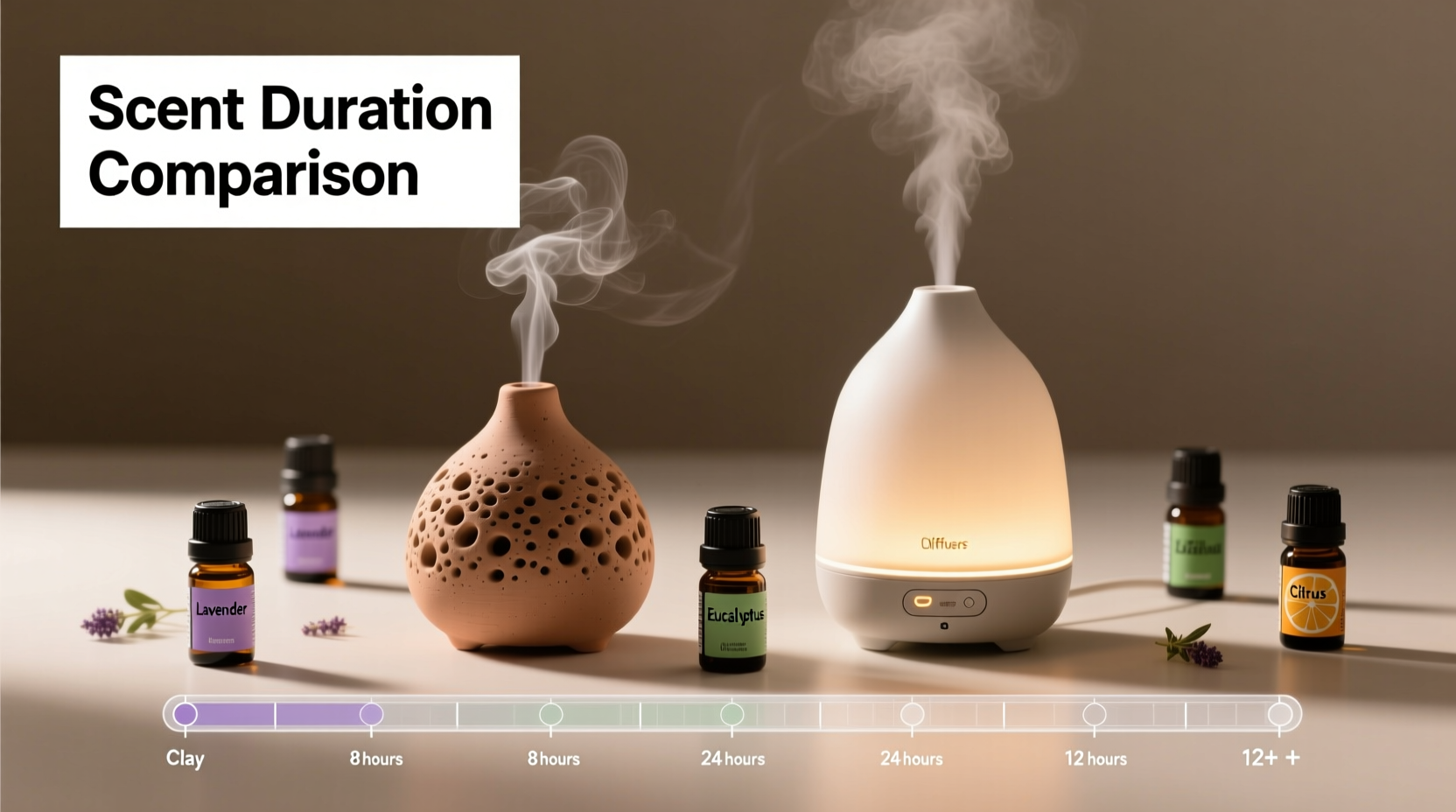
Fragrance longevity isn’t just about the strength of the essential oil—it’s about the method of diffusion. Different technologies release scent molecules into the air at varying rates, affecting both immediate impact and duration.
Clay diffusers rely on passive diffusion. These handcrafted vessels, often made from unglazed terracotta or porous ceramic, absorb essential oils through capillary action. As the oil slowly evaporates from the surface, it releases aroma over time. This process is gentle and continuous but limited by surface area and ambient conditions like temperature and airflow.
Electric diffusers, on the other hand, actively disperse oils using ultrasonic vibration or nebulization. Ultrasonic models mix water and essential oils, breaking them into micro-droplets via high-frequency waves. Nebulizing electric diffusers atomize pure oil without water, creating a concentrated mist. Both methods force scent into the air rapidly, producing stronger initial fragrance bursts.
“Passive systems like clay diffusers offer subtle, enduring scent profiles, while electric units excel in immediate coverage but may deplete oils faster.” — Dr. Lena Patel, Aromatherapy Researcher, Institute of Holistic Wellness
Comparing Longevity: Clay vs Electric Diffusers
The core difference lies in release rate versus endurance. Electric diffusers tend to use up oils more quickly due to their active mechanisms. A typical 100ml ultrasonic diffuser running for two hours might consume 3–5 drops per cycle. If used daily, this adds up fast. In contrast, a clay diffuser uses only evaporation, consuming significantly less oil over time—even as it fills a room more subtly.
In controlled tests measuring scent detectability over seven days, clay diffusers consistently maintained perceptible fragrance for up to 14 days when initially saturated (approx. 15–20 drops), provided the environment was stable. Electric diffusers, meanwhile, delivered strong scent during operation but left no residual aroma once turned off. Their “lasting power” depends entirely on frequency of use, not passive persistence.
Detailed Comparison: Performance, Maintenance, and Value
| Feature | Clay Diffuser | Electric Oil Diffuser |
|---|---|---|
| Scent Duration (Passive) | 7–21 days depending on size and oil saturation | Negligible after shutdown |
| Scent Intensity | Low to moderate, consistent | High during operation, zero afterward |
| Oil Consumption | Very low (slow evaporation) | Moderate to high (active dispersion) |
| Maintenance | Wipe clean; re-oil every 1–2 weeks | Daily water changes; weekly deep cleaning |
| Noise Level | Silent | Low hum or none (varies by model) |
| Humidification | No | Yes (ultrasonic models) |
| Best For | Continuous background scent, low maintenance | Quick refresh, aromatherapy sessions, larger rooms |
This comparison shows that if your goal is sustained fragrance presence without intervention, clay diffusers have a clear advantage. However, if you prioritize therapeutic intensity or room-wide coverage for short periods, electric models are more effective.
Real-World Example: A Week with Both Diffusers
Sophia, a wellness coach in Portland, tested both types in her 400-square-foot apartment. She placed a medium-sized clay diffuser in her living room, saturating it with 18 drops of lavender and bergamot blend. In her bedroom, she used an ultrasonic electric diffuser for 30 minutes each morning and evening.
By day three, she noticed the electric unit required refilling almost daily to maintain effect. Once turned off, the scent vanished within an hour. The clay diffuser, however, still emitted a soft floral note even after six days. Guests commented on the “calming atmosphere” upon entering, despite never seeing the diffuser in action.
After ten days, Sophia added five more drops to the clay vessel, reviving the scent noticeably. Meanwhile, her electric model had already used over 70 drops of oil. Her conclusion: “The clay diffuser costs less in oil and works silently in the background. It doesn’t punch you in the nose with scent—but it stays present.”
Factors That Influence Scent Longevity
Regardless of diffuser type, several environmental and usage factors affect how long fragrance lasts:
- Airflow: Drafts and HVAC systems accelerate evaporation but reduce concentration.
- Temperature: Warmer rooms increase volatility, shortening lifespan but intensifying scent.
- Humidity: High moisture can slow evaporation in clay diffusers; low humidity enhances dispersion.
- Oil Composition: Base notes (like sandalwood or patchouli) last longer than top notes (citrus, mint).
- Diffuser Placement: Central locations with moderate air movement optimize distribution.
For maximum longevity, choose oils with heavier molecular weights and place diffusers away from direct sunlight and vents. Clay units benefit from periodic re-saturation rather than full replacement, preserving built-up aromatic layers.
Step-by-Step Guide to Maximizing Scent Life in Any Diffuser
- Select base-heavy blends: Combine essential oils with long-lasting base notes such as cedarwood, vetiver, or frankincense.
- Pre-treat clay diffusers: Soak new clay units in carrier oil (like fractionated coconut oil) before first use to stabilize absorption.
- Use high-quality oils: Pure, undiluted essential oils diffuse more efficiently and last longer than synthetic fragrances.
- Control environment: Keep diffusers in areas with stable temperature and minimal airflow.
- Rotate scents: Avoid olfactory fatigue by switching blends every 10–14 days.
- Maintain cleanliness: Clean electric diffusers weekly to prevent clogs and residue buildup that impair output.
- Recharge, don’t replace: For clay diffusers, add fresh drops instead of discarding old oil unless rancid odor develops.
Tips for Choosing the Right Diffuser Based on Your Needs
Consider your lifestyle when selecting between clay and electric options:
- Choose clay diffusers if: You want silent, continuous scent; prefer low maintenance; value aesthetic design; use essential oils sparingly.
- Choose electric diffusers if: You practice daily aromatherapy rituals; need quick scent boosts; want humidification; enjoy programmable timers and LED lighting features.
Hybrid approaches also exist. Some users keep a clay diffuser in common areas for ambient scent and reserve electric models for targeted use—such as during yoga, meditation, or sleep routines.
Frequently Asked Questions
Do clay diffusers really last longer than electric ones?
Yes, in terms of passive scent persistence. While electric diffusers emit stronger fragrance during operation, they stop releasing scent immediately after shutting down. Clay diffusers continue evaporating oils for days or even weeks, offering longer overall presence with less oil consumption.
Can I use any essential oil in a clay diffuser?
Most pure essential oils work well, though thicker resins like myrrh or benzoin may clog pores over time. Diluting dense oils with a light carrier oil (e.g., jojoba or almond) improves flow and extends performance. Avoid perfume oils with synthetic binders, as they can leave residues.
Why does my electric diffuser lose scent so quickly?
Electric diffusers are designed for intermittent use, not continuous background fragrance. Once the oil-water mixture is dispersed, there's nothing left to evaporate. To extend perceived longevity, run cycles strategically—such as before guests arrive or during relaxation periods—and pair with a passive system like a clay diffuser.
Checklist: Optimizing Your Diffuser Setup
- ☐ Assess your primary goal: constant scent or powerful bursts?
- ☐ Choose diffuser type accordingly—clay for endurance, electric for intensity.
- ☐ Position diffusers centrally, away from windows and fans.
- ☐ Use essential oil blends rich in base notes for longer wear.
- ☐ Replenish clay diffusers gradually instead of fully reapplying.
- ☐ Clean electric diffusers weekly to maintain efficiency.
- ☐ Monitor oil quality and storage—keep bottles sealed and dark.
- ☐ Experiment with combining both types for layered fragrance experiences.
Final Thoughts: Longevity Isn’t Just About Time—It’s About Experience
The question of which diffuser makes scent last longer depends on how you define \"last.\" Electric diffusers dominate in immediate impact and therapeutic delivery, making them ideal for intentional aromatherapy. But when measured by uninterrupted presence, oil efficiency, and passive ambiance, clay diffusers outperform in longevity.
Ultimately, the best choice aligns with your daily rhythm and sensory preferences. For those seeking a subtle, ever-present fragrance that evolves gently over time, clay diffusers offer unmatched endurance. For dynamic, immersive sessions where scent strength matters most, electric models remain unmatched.
Many find the sweet spot lies in integration—using electric diffusers for active moments and relying on clay vessels to maintain a welcoming, consistently scented space throughout the day.




 浙公网安备
33010002000092号
浙公网安备
33010002000092号 浙B2-20120091-4
Comments
No comments yet. Why don't you start the discussion?