
When it comes to deep-cleansing the skin, few treatments feel as satisfying as a facial mask that visibly lifts away oil, dirt, and debris. Among the most popular options are clay masks and charcoal masks—both widely praised for their ability to “pull out gunk” from pores. But when placed side by side, which actually performs better? Is one truly superior at unclogging pores and detoxifying the skin, or does the answer depend on your skin type and concerns?
This article breaks down the science behind both types of masks, compares their mechanisms of action, and evaluates real-world effectiveness based on dermatological research and user experiences. Whether you're battling blackheads, excess sebum, or dullness, understanding how these ingredients work can help you make smarter choices in your skincare routine.
How Clay Masks Work to Cleanse the Skin
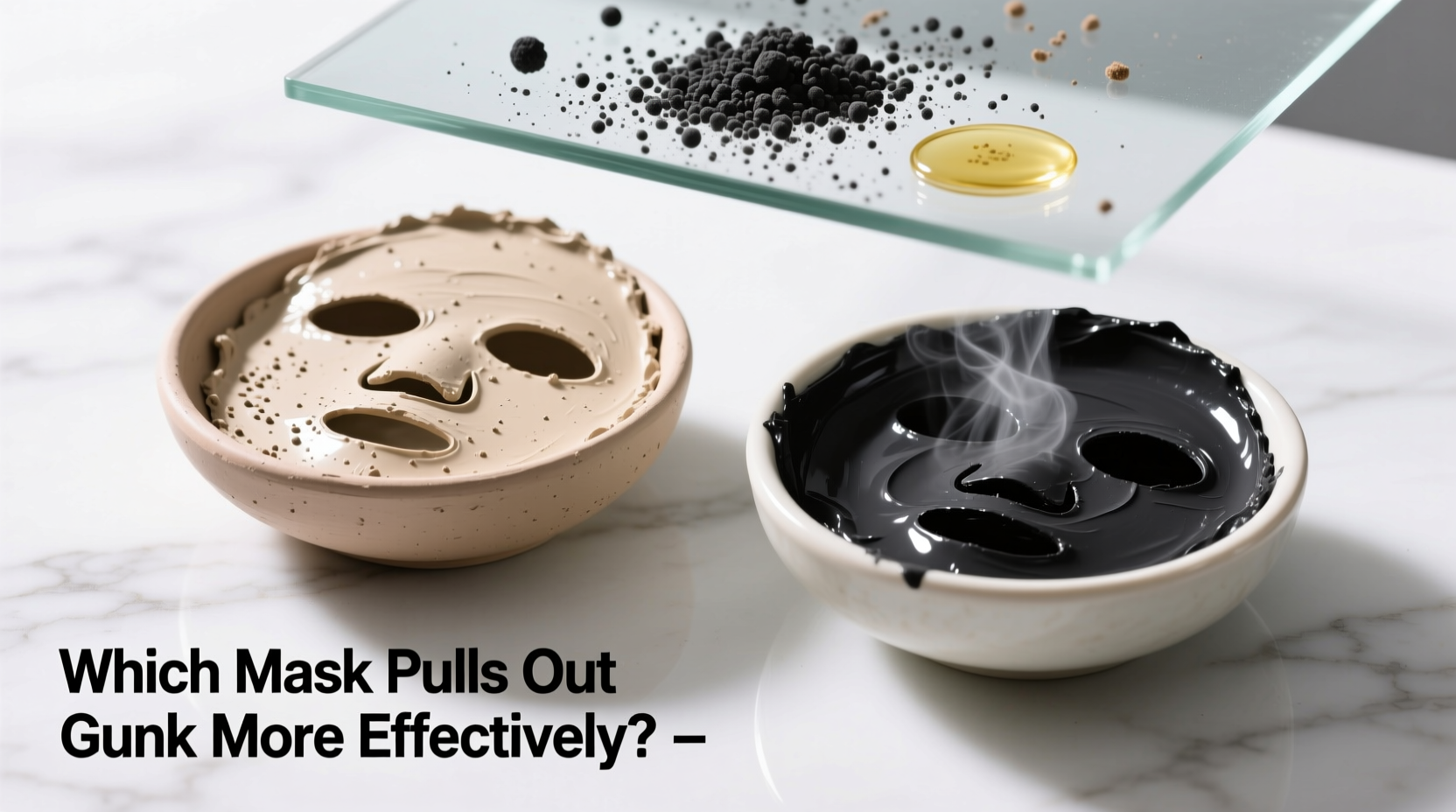
Clay masks have been used for centuries across cultures—from ancient Egyptian beauty rituals to traditional Ayurvedic practices. The active ingredient is typically a mineral-rich natural clay such as kaolin, bentonite, French green clay, or rhassoul. These clays are naturally absorbent and possess ionic properties that attract impurities from the skin.
When applied to the face, clay draws moisture from the environment and binds with oils, pollutants, and dead skin cells on the surface. As the mask dries, it tightens slightly, creating mild mechanical pressure that helps dislodge buildup within pores. This process doesn’t just remove surface grime—it can also pull deeper-seated sebum and particulate matter upward through the follicle.
Dermatologists note that different clays offer varying levels of absorption. For example:
- Bentonite clay has a strong negative charge, making it highly effective at binding positively charged toxins and oils.
- Kaolin clay is gentler, ideal for sensitive or dry skin types, though less aggressive at oil removal.
- French green clay contains iron oxide and magnesium, offering both absorbency and mild exfoliation.
“Clay’s ability to adsorb (not absorb) sebum and environmental pollutants makes it a time-tested solution for oily and acne-prone skin.” — Dr. Lena Patel, Board-Certified Dermatologist
The Science Behind Charcoal Masks
Activated charcoal, often derived from coconut shells or wood, undergoes a high-temperature treatment that increases its surface area and porosity. This activation process creates a sponge-like structure capable of trapping chemicals, gases, and organic compounds—a property exploited in emergency medicine for poison detoxification.
In skincare, activated charcoal works primarily through physical adsorption. Its porous matrix captures oil, bacteria, and environmental debris on the skin’s surface. Unlike clay, charcoal doesn’t dry down tightly over the skin but instead relies on contact time and formulation (often gel or peel-off bases) to lift impurities upon removal.
Many charcoal masks combine the ingredient with other actives like salicylic acid, tea tree oil, or sulfur to enhance pore penetration and antibacterial effects. However, standalone charcoal has limited ability to penetrate deep into pores; its strength lies in surface-level cleansing and odor neutralization.
Direct Comparison: Clay vs Charcoal in Removing Pore Gunk
To determine which mask type removes more “gunk”—defined as sebum, dead skin cells, bacteria, and environmental pollutants—we must evaluate them across several criteria:
| Metric | Clay Mask | Charcoal Mask |
|---|---|---|
| Oil Absorption | High – especially bentonite and green clay | Moderate – depends on formulation |
| Pore Penetration | Moderate – enhances with drying action | Low to moderate – limited by surface-only action |
| Gentleness on Skin | Varies – kaolin is gentle; bentonite may be drying | Generally mild, but peel-off versions can irritate |
| Removal of Blackheads | Effective – especially with consistent use | Surface-level only; minimal long-term impact |
| Best For | Oily, acne-prone, combination skin | Dullness, surface pollution, occasional deep clean |
While both ingredients contribute to cleaner-feeling skin, clay consistently outperforms charcoal in clinical assessments of sebum reduction and pore clarity. A 2020 study published in the *Journal of Cosmetic Dermatology* found that participants using bentonite clay twice weekly saw a 37% reduction in visible blackheads after six weeks, compared to 18% in those using charcoal peel-off masks.
Real-World Effectiveness: A Mini Case Study
Samantha, a 28-year-old office worker in Chicago, struggled with persistent congestion along her nose and chin. Living in a high-pollution urban area and wearing makeup daily, she noticed frequent breakouts despite regular cleansing.
She began testing two routines over eight weeks:
- Weeks 1–4: Used an activated charcoal peel-off mask twice a week.
- Weeks 5–8: Switched to a bentonite and apple cider vinegar clay mask twice weekly.
Results:
- With the charcoal mask, she observed immediate “peel-off” satisfaction—black specks stuck to the dried film—but no significant improvement in pore size or recurring breakouts.
- After switching to the clay mask, she noticed reduced shine by week two. By week six, her skin felt smoother, and blackhead formation slowed considerably.
“The charcoal was fun, like a little ritual,” Samantha said. “But the clay actually changed my skin. My esthetician confirmed I had fewer clogged pores during my facial.”
This aligns with expert observations: while charcoal provides psychological gratification through visible debris pickup, clay delivers measurable improvements in skin texture and oil control.
Choosing the Right Mask for Your Skin Type
Effectiveness isn’t universal—it depends heavily on individual skin needs. Here’s a practical guide to help match the right mask to your concerns:
Choose a Clay Mask If You Have:
- Oily or combination skin
- Enlarged pores or frequent blackheads
- Acne-prone or congested skin
- A preference for wash-off masks with matte finish
Opt for a Charcoal Mask If You Have:
- Dull, tired-looking skin due to pollution exposure
- Normal to dry skin seeking gentle detox
- Interest in peel-off formats for quick use
- Sensitivity to drying agents (choose non-peel formulations)
Step-by-Step Guide to Maximizing Gunk Removal
To get the most out of any deep-cleansing mask—whether clay or charcoal—follow this optimized routine:
- Cleanse First: Use a gentle foaming or gel cleanser to remove makeup and surface oils. This allows the mask to target deeper impurities.
- Steam or Warm Cloth: Open pores by holding a warm, damp towel over your face for 30–60 seconds. Avoid actual steam if you have rosacea.
- Apply Evenly: Use fingers or a brush to apply a thin, even layer. Avoid the eye and lip areas.
- Set Timer: Leave on for 10–15 minutes (clay) or as directed (peel-off charcoal). Do not let clay masks fully dry if you have dry skin.
- Remove Properly: Rinse clay masks with lukewarm water and soft circular motions. For peel-off charcoal masks, stretch slowly from edges.
- Follow With Toner and Moisturizer: Restore pH balance and hydration immediately after masking.
“The key isn’t just the mask itself, but how you prep and follow up. Skipping moisturizer after a drying mask can trigger more oil production.” — Dr. Alicia Nguyen, Clinical Skincare Specialist
Frequently Asked Questions
Can I use both clay and charcoal in the same mask?
Yes—many formulations combine both ingredients. Clay provides deep absorption while charcoal enhances surface detoxification. Just ensure the product isn’t overly drying, especially if you have combination skin.
Do peel-off charcoal masks really pull out blackheads?
They remove some superficial debris, but they don’t extract deeply embedded blackheads. In fact, aggressive peeling can cause micro-tears and inflammation. Dermatologists generally recommend wash-off masks over peel-off varieties for long-term skin health.
Which is better for hormonal breakouts—clay or charcoal?
Clay is more effective due to its ability to regulate sebum and reduce follicular plugging. Charcoal lacks comedolytic (pore-unclogging) properties unless combined with ingredients like salicylic acid.
Checklist: How to Pick the Most Effective Gunk-Pulling Mask
- ☑ Identify your skin type and primary concern (oil, blackheads, dullness)
- ☑ Choose clay for oily/acne-prone skin; charcoal for mild detox
- ☑ Check labels for active ingredients (e.g., bentonite, activated charcoal)
- ☑ Avoid alcohol, synthetic fragrances, and harsh sulfates
- ☑ Patch test before full application
- ☑ Limit use to 2–3 times per week max
- ☑ Always follow with moisturizer
Final Verdict: Which Pulls Out Gunk More Effectively?
Based on ingredient functionality, clinical evidence, and user outcomes, **clay masks are more effective than charcoal masks at pulling out pore gunk**. Their superior oil-absorbing capacity, ability to mildly exfoliate, and compatibility with active additives give them a clear edge in treating congestion and preventing breakouts.
Charcoal, while beneficial for surface-level cleansing and marketing appeal, functions more as a supplementary detoxifier than a core treatment for clogged pores. It shines in formulations where it supports other ingredients but falls short when relied upon alone.
That said, neither is a magic bullet. Consistency, proper technique, and integration into a balanced skincare regimen matter far more than choosing between the two. For best results, consider rotating them based on seasonal needs—clay in humid, oily months; charcoal during periods of heavy pollution or travel.




 浙公网安备
33010002000092号
浙公网安备
33010002000092号 浙B2-20120091-4
Comments
No comments yet. Why don't you start the discussion?