
For many people, finding a mascara that stays put through emotional moments, intense workouts, or humid days feels like chasing a myth. Traditional formulas often flake, smear, or dissolve when exposed to moisture—whether from crying, sweating, or high humidity. As clean beauty gains momentum, consumers are increasingly drawn to “clean” mascaras free from parabens, sulfates, and synthetic fragrances. But does clean mean less durable? And how do these compare to tubing mascaras, known for their resilience? Understanding the real differences between clean mascara and tubing formulas—and how they perform under pressure—is essential for anyone who wants both safety and staying power.
What Defines Clean Mascara?
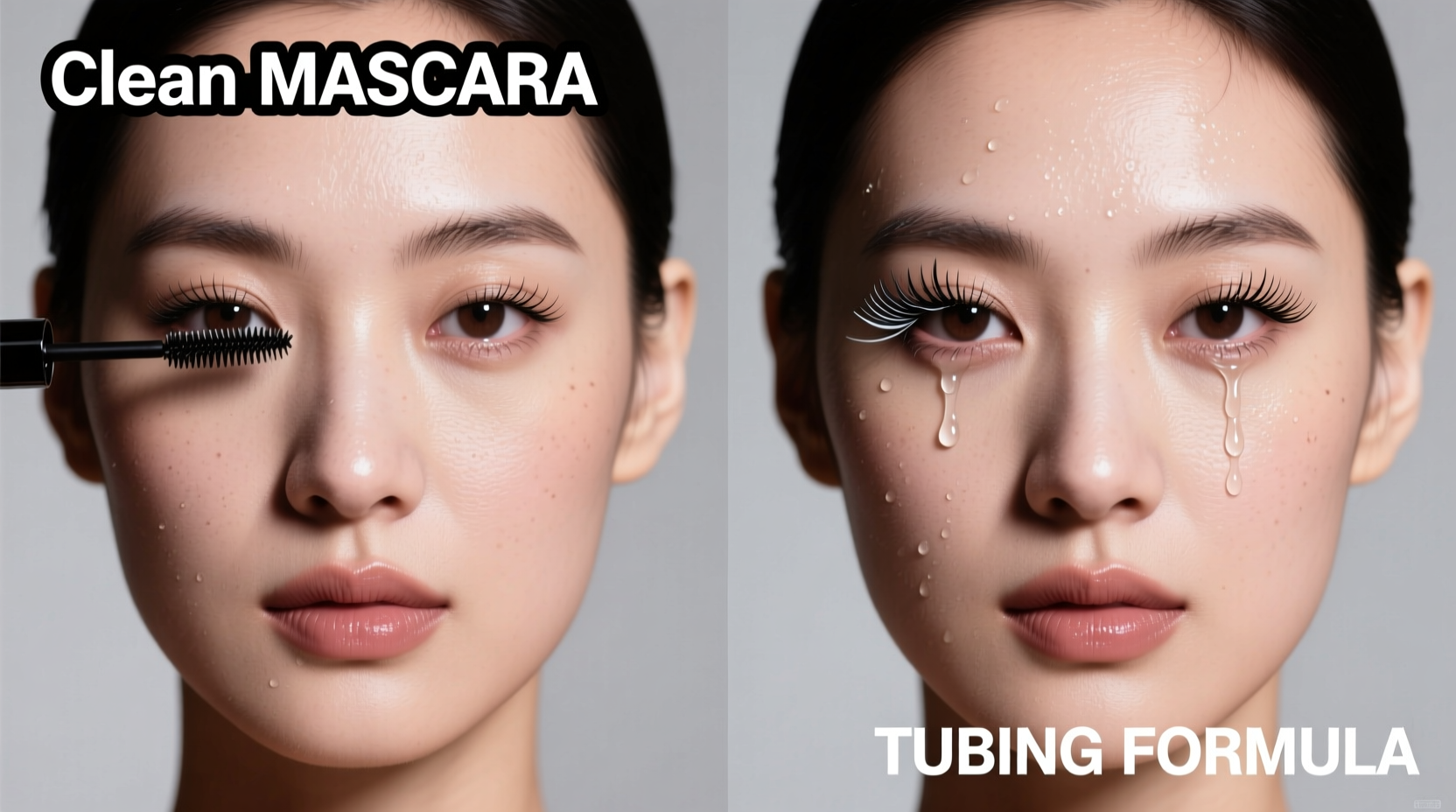
Clean mascara refers to products formulated without ingredients commonly flagged as potentially harmful or irritating. While there’s no universal standard for \"clean,\" most brands avoid substances like parabens, phthalates, formaldehyde-releasing agents, coal tar dyes, and synthetic fragrances. Instead, they use plant-based waxes, natural pigments, and safer preservatives.
These formulations prioritize health and environmental impact, appealing to those with sensitive eyes, contact lens wearers, or individuals pursuing a minimalist skincare and makeup routine. However, removing traditional polymers and synthetic binders can affect texture and longevity. Many clean mascaras rely on softer waxes such as carnauba or candelilla, which may not adhere as aggressively to lashes but also wash off more easily—sometimes too easily when faced with moisture.
How Tubing Mascara Works
Tubing mascara operates on a different technological principle than traditional or even most clean formulas. Instead of coating lashes with pigment suspended in wax or oil, it uses water-soluble polymers that wrap each lash in a flexible, tube-like sheath. These tubes lock color in place, resisting smudging, flaking, and running—even when wet.
The result is exceptional durability. Whether you're crying at a wedding, finishing a spin class, or walking through summer humidity, tubing mascaras stay intact. Removal requires warm water and gentle rubbing; they don’t dissolve in oil-free micellar water like regular mascaras but come off cleanly in one piece when properly cleansed.
This technology was originally developed for performers and models who needed flawless eye makeup under extreme conditions. Today, it's widely available in drugstores and luxury lines alike. The trade-off? Some users report difficulty building volume or achieving dramatic curl, since the polymer coating can stiffen lashes over time.
“Tubing technology represents a breakthrough in long-wear cosmetics—it’s not just about waterproofing, but structural integrity on the lash.” — Dr. Lena Park, Cosmetic Chemist & Formulation Consultant
Clean Mascara vs Tubing Formula: Performance Under Pressure
When evaluating which type performs better through tears and sweat, it’s important to separate marketing claims from actual behavior. Not all clean mascaras are created equal, and not every tubing formula qualifies as “clean.” Here’s a detailed comparison based on key performance factors:
| Feature | Clean Mascara | Tubing Mascara |
|---|---|---|
| Water Resistance | Varies; most resist light moisture but may smudge with heavy tears or sweat | High; designed to withstand prolonged exposure to water and oil |
| Sweat Tolerance | Moderate; heat can soften natural waxes, leading to transfer | Excellent; polymer tubes remain stable even during intense perspiration |
| Tearproof | Limited; pigments may migrate down cheeks when wet | Superior; tubes stay bonded to lashes unless manually removed |
| Ingredient Safety | Generally high; avoids controversial chemicals | Depends on brand; some contain PVP or acrylates, which aren't always considered “clean” |
| Removal Ease | Easy; typically removes with mild cleanser or micellar water | Requires warm water and gentle friction; doesn’t dissolve in oil |
| Lash Health Over Time | Often nourishing; may include conditioning oils | Can cause breakage if rubbed aggressively during removal |
From this breakdown, it’s clear that while clean mascaras excel in ingredient transparency and gentleness, they generally fall short in extreme conditions. Tubing mascaras dominate in endurance but may compromise on formulation purity depending on the brand.
Finding the Sweet Spot: Clean *and* Long-Wearing
The ideal solution lies in the growing category of clean tubing mascaras—products that combine non-toxic ingredients with advanced polymer technology. Brands like Ilia, Thrive Causemetics, and Kjaer Weis now offer hybrid options that meet rigorous clean standards while delivering reliable performance.
These formulas use bio-based polymers derived from corn or sugar cane instead of petroleum-based synthetics. Pigments are mineral-derived, and conditioning agents like panthenol or jojoba oil help maintain lash health. They still require warm water for removal but won’t run during emotional moments or outdoor activities.
However, availability and cost can be limiting. Clean tubing mascaras tend to be pricier due to sustainable sourcing and smaller production runs. Additionally, shade range and intensity may not match conventional tubing versions, particularly for those seeking ultra-black drama.
Step-by-Step Guide: Choosing the Right Mascara for Your Lifestyle
- Assess your daily challenges: Do you cry frequently? Exercise midday? Live in a humid climate? High-moisture environments demand superior resistance.
- Review your priorities: Is ingredient safety your top concern, or are you willing to accept certain synthetics for longer wear?
- Check labels carefully: Look for certifications like EWG Verified, Leaping Bunny, or MADE SAFE to confirm clean claims.
- Test before committing: Apply a sample before an event where tears or sweat are likely. Wait 30 minutes, then splash water on your face or simulate light perspiration.
- Evaluate removal: Try removing the mascara at night. Does it come off fully without tugging? Residue or lash loss indicates poor compatibility.
- Monitor lash condition: Over weeks, observe whether lashes feel brittle or stronger. Healthy formulas should support, not weaken, natural growth.
Real-Life Scenario: A Wedding Planner’s Dilemma
Maria, a professional wedding planner in Miami, spends her weekends outdoors managing ceremonies where emotions run high—and so does the sweat. She used to switch between a clean volumizing mascara for daytime and a waterproof tubing version for events, but hated reapplying after work.
After repeatedly smudging during tearful vows and tropical downpours, she decided to test clean tubing mascaras. She tried Ilia Limitless Lash Mascara and found it held up remarkably well through humidity and happy tears. While not quite as bold as her old favorite, it offered enough definition and survived full 12-hour shifts without touch-ups. Most importantly, she could remove it gently with warm water and facial oil, avoiding irritation from harsh removers.
Maria now recommends this hybrid approach to clients who want both ethics and endurance. “It’s not perfect,” she admits, “but it’s the closest I’ve come to having my cake and eating it too.”
Checklist: How to Pick a Mascara That Lasts Through Tears and Sweat
- ☐ Prioritize tubing technology if endurance is critical
- ☐ Confirm the formula avoids ingredients you’re sensitive to (e.g., fragrance, lanolin)
- ☐ Look for “tear-resistant” or “long-wear” claims backed by reviews
- ☐ Choose a clean-certified tubing mascara if possible
- ☐ Test removal method to ensure it doesn’t damage lashes
- ☐ Replace every 3 months to prevent infection, especially with frequent sweating
FAQ
Can clean mascara be waterproof?
Some clean mascaras are labeled waterproof, but true waterproofing usually requires synthetic films or silicones that may not align with strict clean standards. Many are water-resistant rather than fully waterproof. Always check the ingredient list and performance claims critically.
Do tubing mascaras damage lashes?
Not inherently—but improper removal can. Rubbing or pulling instead of using warm water and gentle pressure may lead to lash breakage. When removed correctly, tubing mascaras should come off cleanly without stripping natural oils.
Is there a clean mascara that truly survives sweat and tears?
Yes, but options are limited. Brands like Tower 28 Beauty (SOS Daily Rescue Anti-Redness Cream is not mascara, but their upcoming launch hints at innovation), Ilia, and Saie have begun bridging the gap. Research specific product testing and user feedback for real-world results.
Final Thoughts: Balancing Ethics, Efficacy, and Endurance
The choice between clean mascara and tubing formula isn’t binary anymore. Advances in green chemistry are making it possible to enjoy the best of both worlds: safe ingredients and unwavering performance. While traditional clean mascaras may struggle under stress, newer hybrids prove that sustainability doesn’t have to come at the cost of reliability.
Your ideal product depends on your lifestyle, values, and tolerance for trade-offs. If you value purity above all, a well-formulated clean mascara with moderate hold might suffice—especially with touch-up tools on hand. But if you need guaranteed staying power, investing in a certified clean tubing mascara is worth the extra effort and expense.
No matter your preference, understanding how these formulas behave under moisture stress empowers smarter decisions. Don’t let marketing buzzwords dictate your choice. Read labels, test rigorously, and listen to your lashes—they’ll tell you what works.




 浙公网安备
33010002000092号
浙公网安备
33010002000092号 浙B2-20120091-4
Comments
No comments yet. Why don't you start the discussion?