
On-page SEO remains one of the most influential factors in determining how well your content ranks in search engines. Unlike algorithm updates that shift unpredictably, on-page optimization is within your control. But with countless resources available, it's easy to get lost in conflicting advice or outdated tactics. The key is knowing which guides offer accurate, comprehensive, and actionable strategies grounded in real-world performance.
This article identifies the three most authoritative and practical on-page SEO guides available today. Each has been evaluated based on clarity, depth, up-to-date practices, and measurable impact. Whether you're optimizing a blog post, product page, or landing page, these resources will give you a structured, reliable framework for success.
The Importance of Trusted On-Page SEO Guidance
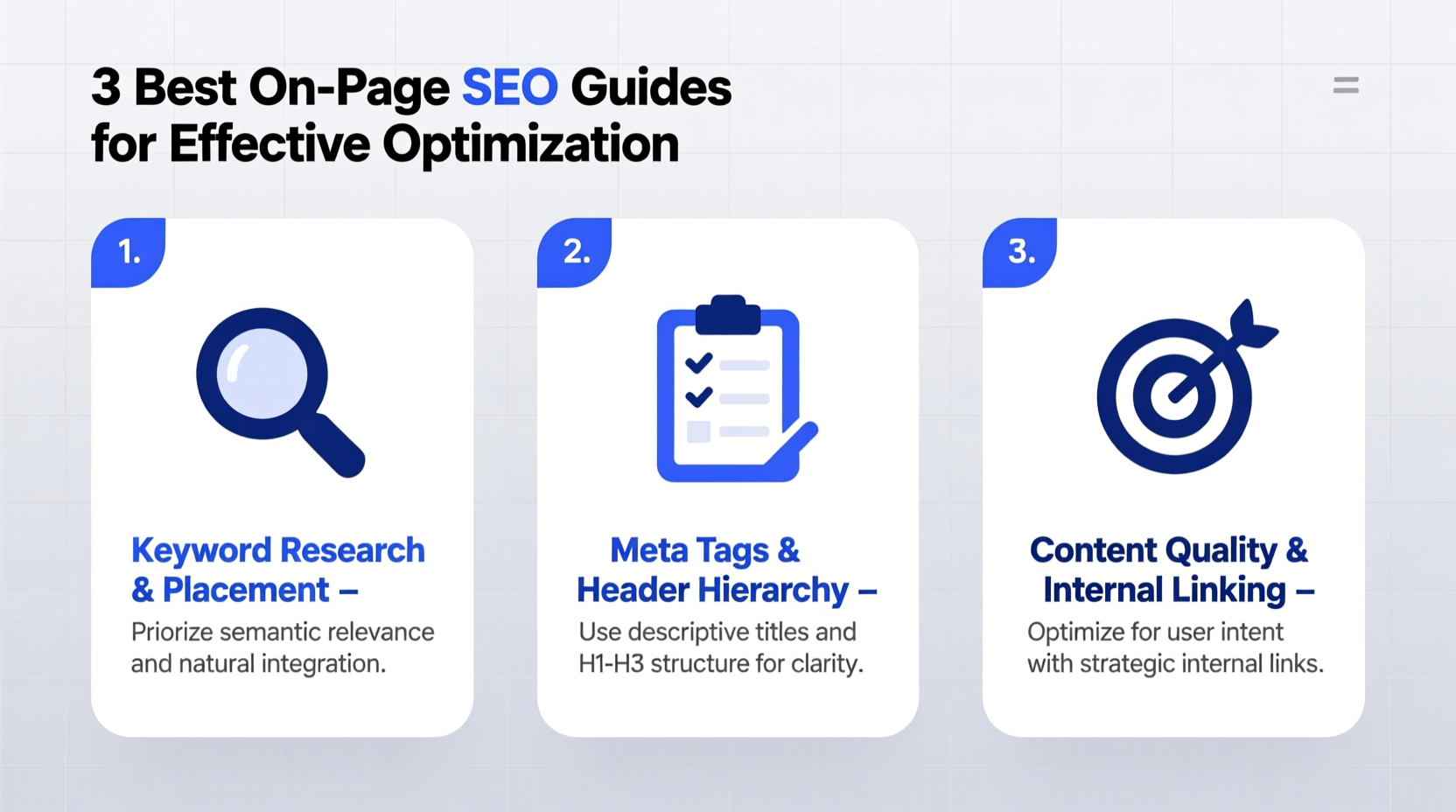
On-page SEO isn't just about keywords and meta tags. It encompasses content quality, technical structure, user experience, and semantic relevance. A strong guide doesn’t just list best practices—it explains the \"why\" behind them and shows how they work together to improve visibility and engagement.
With Google’s algorithms prioritizing E-E-A-T (Experience, Expertise, Authoritativeness, Trustworthiness), the need for high-quality, well-structured content has never been greater. That’s why relying on reputable sources matters. Poorly advised optimizations can lead to keyword stuffing, poor readability, or even penalties.
“SEO isn’t about tricking Google anymore. It’s about helping users find what they need—and doing it better than anyone else.” — Barry Schwartz, Editor-in-Chief at Search Engine Land
1. Backlinko’s On-Page SEO Guide by Brian Dean
Widely regarded as one of the most influential pieces in modern SEO, Brian Dean’s On-Page SEO: The Definitive Guide delivers deep insight into ranking factors with real case studies and data-backed strategies. First published in 2016 and regularly updated, this guide continues to be a benchmark for SEO professionals.
Dean introduces concepts like keyword cannibalization, content silos, and the Skyscraper Technique, all while emphasizing user intent and topical authority. His use of visual examples (though not included here) makes complex ideas accessible, even for beginners.
Key Takeaways from Backlinko’s Guide
- Optimize for “search intent” first—match your content type (informational, commercial, navigational) to what users are seeking.
- Use power words in your title—words like “proven,” “guide,” or “2024” increase click-through rates.
- Structure headings hierarchically—H1 for title, H2 for main sections, H3 for subsections.
- Internal linking boosts relevance—link to related content using descriptive anchor text.
2. Moz’s Beginner’s Guide to SEO
Moz has long been a cornerstone of SEO education. Their Beginner’s Guide to SEO is a free, comprehensive resource that dedicates an entire section to on-page optimization. While designed for newcomers, its depth appeals to intermediate marketers too.
What sets Moz apart is its balance between theory and practice. They explain core principles such as crawlability, indexation, and canonicalization before diving into on-page elements. Their chapter on “Content Optimization” breaks down each component—from title tags to image alt attributes—with precision.
| On-Page Element | Best Practice (Moz) | Avoid |
|---|---|---|
| Title Tag | Under 60 characters, includes primary keyword near front | Duplicate titles across pages |
| Meta Description | Compelling summary under 155 characters | Keyword stuffing or leaving blank |
| Header Tags | Use H1 once; structure content logically with H2-H6 | Skipping heading levels or overusing H1s |
| Image Optimization | Compress files, use descriptive filenames and alt text | Using generic names like “IMG_123.jpg” |
“The biggest mistake people make with on-page SEO is treating it like a checklist. It should be part of a holistic content strategy.” — Dr. Pete Meyers, former Moz Scientist
3. Ahrefs’ Full Guide to On-Page SEO
Ahrefs combines cutting-edge data analysis with practical advice in their Full Guide to On-Page SEO. Leveraging their massive index of live search data, they validate every recommendation with real-world observations.
This guide stands out for its focus on metrics: word count correlation, backlink profiles of top-ranking pages, and SERP feature analysis. It teaches readers not just what to do, but how to measure whether it’s working.
One standout section analyzes over 1 million Google search results to show how content length correlates with rankings. Spoiler: longer content tends to rank higher—but only when it adds value.
Actionable Steps from Ahrefs’ Methodology
- Analyze the top 10 competitors for your target keyword using Site Explorer.
- Note average content length, use of visuals, and subtopics covered.
- Create content that matches or exceeds competitor depth.
- Include at least 2–3 internal links to relevant pillar pages.
- Optimize for featured snippets by answering questions concisely in paragraph, list, or table format.
Mini Case Study: How One Blog Increased Organic Traffic by 187%
A mid-sized marketing blog struggled with stagnant traffic despite publishing weekly. After auditing their top-performing pages using Ahrefs’ framework, they discovered gaps in content depth and weak internal linking.
They selected a high-potential post titled “How to Build an Email List” and rewrote it following Backlinko’s advice on search intent and Moz’s guidelines for meta elements. They expanded the article from 900 to 2,100 words, added step-by-step instructions, optimized headers, and linked to related guides on lead magnets and email deliverability.
Within six weeks, the updated post climbed from position #14 to #3 for its primary keyword. Organic traffic to the page increased by 187%, and it began ranking for 27 new related keywords.
Essential On-Page SEO Checklist
To apply insights from these top guides effectively, follow this unified checklist before publishing any page:
- ✅ Choose one primary keyword with clear search intent
- ✅ Include keyword in H1, first 100 words, and URL slug
- ✅ Write a compelling meta description under 155 characters
- ✅ Structure content with proper heading hierarchy (H1 → H2 → H3)
- ✅ Use synonyms and semantically related terms naturally
- ✅ Add internal links to 2–3 relevant supporting pages
- ✅ Optimize images: compress size, use descriptive alt text
- ✅ Ensure mobile responsiveness and fast load speed
- ✅ Include at least one FAQ or direct answer box opportunity
- ✅ Proofread for clarity, grammar, and readability (aim for Grade 8–10 level)
Frequently Asked Questions
Do I need to use my exact keyword in the H1 tag?
While including your primary keyword in the H1 helps clarify topic relevance, it doesn’t have to be an exact match. Google understands synonyms and context. Focus on creating a natural, engaging headline that reflects user intent.
How many times should I use my target keyword?
There’s no magic number. Overuse harms readability and may trigger spam filters. Instead, mention the keyword where it fits naturally—typically in the title, introduction, and conclusion—and rely on related terms (LSI keywords) throughout.
Can good on-page SEO compensate for low backlinks?
In competitive niches, backlinks remain critical. However, excellent on-page SEO can help you rank with fewer links, especially for low-difficulty keywords. Think of on-page optimization as lowering the bar for entry; off-page signals push you over it.
Final Thoughts and Next Steps
The three guides highlighted here—Backlinko, Moz, and Ahrefs—represent the gold standard in on-page SEO education. Each brings something unique: Backlinko’s persuasive frameworks, Moz’s foundational clarity, and Ahrefs’ data-driven validation.
True optimization isn’t about copying tactics blindly. It’s about understanding principles, testing methods, and refining your approach based on results. Start by reviewing one of these guides in full. Then pick a single piece of content and optimize it using their combined wisdom. Measure the impact over time.




 浙公网安备
33010002000092号
浙公网安备
33010002000092号 浙B2-20120091-4
Comments
No comments yet. Why don't you start the discussion?