
In an era where personal tech doubles as fashion accessory, the humble AirPods case has quietly become a canvas for self-expression. From translucent silicone sleeves to matte black shells, the choice between clear and opaque cases isn’t just about protection—it’s about identity, visibility, and subtle social signaling. But does it really matter whether your AirPods are on display or tucked away? The answer lies at the intersection of design, durability, and human behavior.
The Rise of the Visible Tech Accessory
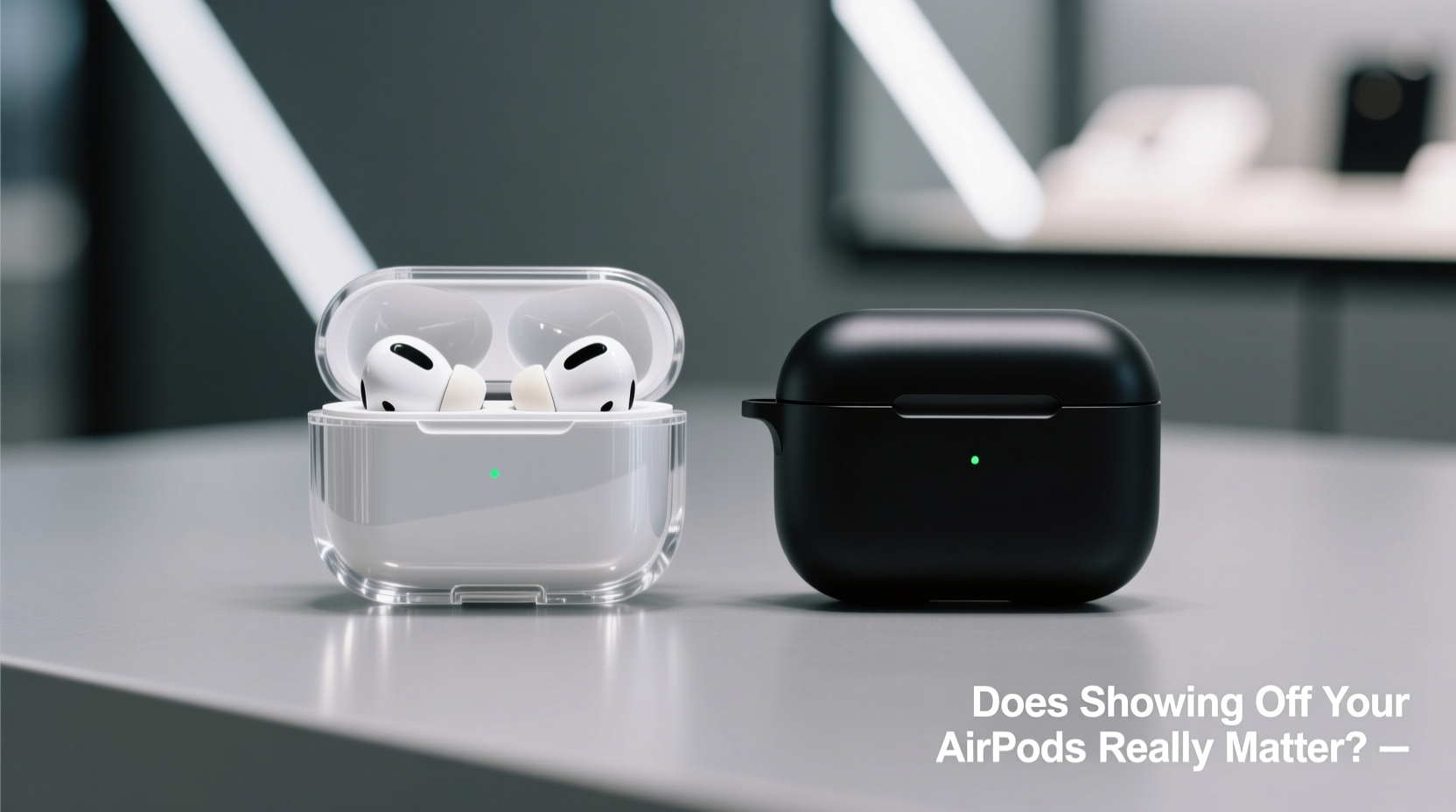
Gone are the days when earbuds were meant to be discreet. Apple’s AirPods, with their minimalist white stems and sleek charging case, were among the first mainstream audio devices designed to be seen. Their aesthetic became part of their appeal—so much so that third-party manufacturers rushed to create cases that either highlight or conceal them.
Clear cases amplify visibility, turning the AirPods into a statement piece. Opaque cases, by contrast, offer privacy and often better protection. Yet both serve users who care—not just about function, but about how they’re perceived while using their tech.
“Design is not just what it looks like. Design is how it feels—and how it makes others feel when they see you using it.” — Jonathan Ive, former Chief Design Officer at Apple
Clear Cases: Transparency as a Statement
A clear AirPods case does more than protect—it showcases. It signals pride in ownership, confidence in aesthetics, and sometimes, a desire for recognition. For some, displaying pristine white earbuds is akin to wearing a luxury watch: a quiet flex of taste and means.
But clarity comes with trade-offs:
- Scratch susceptibility: Even minor abrasions become visible over time.
- Yellowing: UV exposure and skin oils can degrade transparent plastics, especially cheaper ones.
- Maintenance: Fingerprints, dust, and smudges require frequent cleaning to maintain the “showroom” look.
Still, many users embrace these flaws. Some even personalize their clear cases with stickers, glitter, or resin art—transforming utility into wearable art.
Opaque Cases: Function Meets Discretion
Opaque cases prioritize protection and subtlety. Available in matte finishes, rubberized textures, and bold colors, they shield the AirPods from drops, scratches, and sunlight—all while minimizing visual attention.
These cases appeal to users who value longevity over visibility. They’re common among travelers, athletes, and professionals who use AirPods as tools rather than trophies.
Key advantages include:
- Better grip: Textured surfaces reduce slip risk.
- UV resistance: No yellowing from sun exposure.
- Less maintenance: Smudges and wear are less noticeable.
Yet choosing an opaque case isn’t neutral—it still communicates something. A rugged black shell suggests practicality; a pastel pink one might reflect personality. Even hiding can be a form of expression.
Comparing Clear vs Opaque: A Practical Breakdown
| Feature | Clear Case | Opaque Case |
|---|---|---|
| Visibility of AirPods | High – shows color and condition | Low – hides internal details |
| Durability (Scratch Resistance) | Low to moderate | High – especially rubberized types |
| Yellowing Over Time | Common (especially with UV exposure) | Rare |
| Style Customization | High – popular for decals and inserts | Moderate – limited to external designs |
| Maintenance Effort | High – requires regular cleaning | Low – wipes clean easily |
| Tactile Grip | Low – smooth surfaces can be slippery | High – textured options widely available |
The Psychology Behind the Choice
The decision to show or hide your AirPods taps into deeper behavioral patterns. Social psychologist Dr. Lena Torres notes:
“We don’t just consume products—we perform them. When people choose a clear case, they’re not only protecting their device; they’re inviting others to witness their lifestyle choices.” — Dr. Lena Torres, Consumer Behavior Researcher
This phenomenon, known as “conspicuous consumption,” dates back to economist Thorstein Veblen’s observations in the late 1800s. Today, it manifests in subtle ways: a glimpse of AirPods in a café, a flash of white during a commute. For some, it’s validation. For others, it’s simply belonging to a cultural norm.
Conversely, opting for an opaque case may reflect a preference for minimalism, anti-consumerism, or functionalism. It says: *I use this because it works, not because I want you to know I have it.*
Mini Case Study: Two Commuters, Two Choices
Consider two daily subway riders in New York City:
Alex uses a clear case adorned with a tiny anime sticker. Their AirPods are always visible when pulled out. Colleagues have commented on the customization, leading to conversations about shared interests. For Alex, the case is a conversation starter and a mood booster.
Jamal, meanwhile, uses a matte navy-blue opaque case. He values efficiency and durability. After dropping his old clear case down stairs—shattering it—he switched permanently. “I don’t need people seeing my earbuds,” he says. “I just need them working.”
Both achieve the same goal—wireless audio on the go—but their experiences diverge based on a single accessory choice.
How to Choose What’s Right for You
There’s no universal answer. Instead, consider your priorities. Ask yourself:
- Do I want my AirPods to be noticed?
- Am I in environments where drops or dirt are likely?
- How important is long-term appearance versus initial look?
- Do I personalize my belongings as a form of creativity?
- Is ease of maintenance a priority?
Checklist: Choosing Your Ideal AirPods Case
- ✅ Assess your daily routine (active, office-based, travel-heavy)
- ✅ Determine if aesthetics or protection matters more
- ✅ Consider material quality (TPU vs silicone vs hard plastic)
- ✅ Think about long-term upkeep (cleaning frequency, yellowing risk)
- ✅ Decide whether personalization plays a role in your tech use
Frequently Asked Questions
Do clear AirPods cases really yellow over time?
Yes, most clear cases made from polycarbonate or low-grade TPU will gradually yellow due to UV exposure, heat, and contact with oils from skin. High-quality UV-resistant materials can delay this, but not prevent it entirely.
Are opaque cases better for protecting AirPods?
Generally, yes. Opaque cases are often thicker, more shock-absorbent, and made from rubberized or silicone blends that cushion impacts better than rigid clear plastics. They also block light, which can help preserve battery health over time.
Can I switch between clear and opaque cases depending on the occasion?
Absolutely. Many users keep multiple cases for different contexts—e.g., a stylish clear one for social events and a durable opaque one for workouts or travel. Just ensure compatibility with your AirPods model (Gen 3, Pro, etc.).
Conclusion: Visibility Is a Choice, Not a Requirement
Whether you choose a clear or opaque AirPods case, the decision reflects more than preference—it reveals your relationship with technology, identity, and social perception. Showing off your AirPods isn’t inherently shallow, nor is hiding them automatically practical. Each serves a purpose, shaped by context, lifestyle, and personal values.
The real question isn’t whether showing off matters—it’s whether it matters to you. If a clear case brings joy, sparks connection, or fuels creativity, it’s worth every fingerprint. If an opaque case offers peace of mind, reliability, and simplicity, that’s equally valid.




 浙公网安备
33010002000092号
浙公网安备
33010002000092号 浙B2-20120091-4
Comments
No comments yet. Why don't you start the discussion?