
Clematis are prized for their lush, showy blooms that climb fences, trellises, and walls with dramatic flair. Yet many gardeners invest time and care into these vines only to be disappointed by a lack of flowers. A clematis that refuses to bloom is often not a lost cause—more likely, it’s sending a signal that something in its environment or care routine needs adjustment. Understanding the root causes behind poor flowering allows you to restore your plant’s vigor and enjoy a vibrant display once more.
Why Your Clematis Isn’t Blooming
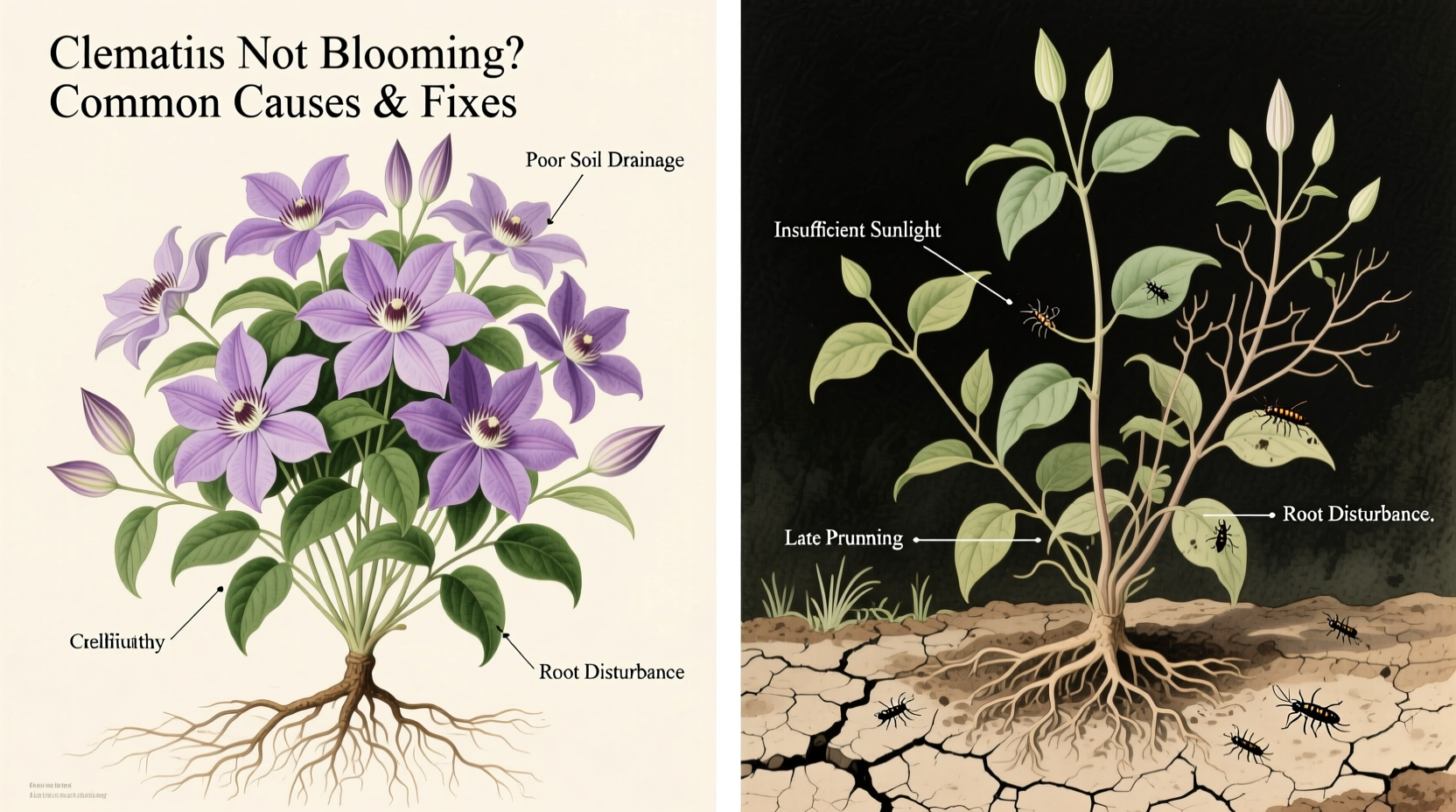
Clematis are sensitive to several cultural factors, from pruning practices to sunlight exposure. While they can thrive for decades under ideal conditions, even small missteps can delay or eliminate flowering. The good news is that most issues are correctable with targeted adjustments. Below are the most frequent reasons why clematis fail to bloom and how to address them effectively.
1. Incorrect Pruning Timing or Technique
One of the leading causes of non-blooming clematis is improper pruning. Clematis fall into three main pruning groups based on when they flower:
- Group 1 (Early-flowering): Bloom on old wood in spring (e.g., *Clematis alpina*, *C. macropetala*).
- Group 2 (Large-flowered hybrids): Flower on old wood in early summer, sometimes rebloom on new growth (e.g., *C. jackmanii*, *Nelly Moser*).
- Group 3 (Late-flowering): Bloom on new wood in late summer (e.g., *C. viticella*, *Etoile Violette*).
Pruning Group 1 or 2 at the wrong time removes the buds formed the previous season. For example, cutting back a Group 1 clematis in late winter eliminates the spring blossoms. Conversely, failing to prune Group 3 types hard in late winter can lead to weak growth and sparse flowering.
2. Insufficient Sunlight
Clematis need at least 6 hours of direct sunlight daily to produce flowers. While the vines prefer “their heads in the sun and feet in the shade,” meaning sunny tops and shaded roots, too much shade overall drastically reduces bloom production.
If your clematis is planted near dense shrubs, under tree canopies, or on the north side of a structure, it may not receive enough light. Consider relocating the plant or trimming surrounding foliage to improve light penetration.
“Sunlight is non-negotiable for clematis flowering. Even the most perfectly pruned vine will disappoint if it's stuck in deep shade.” — Dr. Linda Hartwell, Horticulturist & Vine Specialist
3. Poor Soil Conditions and Nutrition
Clematis thrive in fertile, well-drained soil rich in organic matter. Heavy clay or sandy soils can hinder root development and nutrient uptake. Additionally, an imbalance in nutrients—especially excess nitrogen—can promote leafy growth at the expense of flowers.
A soil test can reveal deficiencies. Most clematis benefit from a balanced fertilizer (such as 5-5-5) applied in early spring and again in midsummer. Avoid high-nitrogen lawn fertilizers drifting into the planting area, as these encourage foliage over blooms.
| Nutrient | Role in Flowering | Deficiency Sign |
|---|---|---|
| Potassium (K) | Promotes flower development and root strength | Few or no blooms, weak stems |
| Phosphorus (P) | Supports energy transfer and bloom formation | Purple leaves, stunted growth |
| Nitrogen (N) | Encourages leaf growth | Excess = lush leaves, no flowers |
4. Immaturity or Establishment Period
Young clematis plants often take one to two years to establish strong root systems before producing abundant blooms. It’s common for first-year plants to show vigorous vine growth but few or no flowers. Patience during this establishment phase is key.
To support healthy development, keep young plants well-watered and mulched, and avoid heavy pruning until they are mature. Light tip-pruning in early spring can encourage branching, which leads to more flowering sites in future seasons.
5. Environmental Stressors
Drought, extreme temperatures, or waterlogged soil can all stress clematis and reduce flowering. These vines require consistent moisture—dry spells during bud formation (late summer to fall for next year’s blooms) can result in bud drop or failure to set buds.
Additionally, late spring frosts can kill emerging flower buds on early-blooming varieties. If frost damage is suspected, wait until new growth appears before deciding whether the plant is viable.
Step-by-Step Guide to Revive a Non-Blooming Clematis
Follow this practical sequence to diagnose and correct the issue:
- Identify the variety: Determine which pruning group your clematis belongs to by researching its name or observing bloom time.
- Assess sunlight: Monitor the site throughout the day. If receiving less than 6 hours of direct sun, consider relocation in autumn.
- Check pruning history: If pruned heavily in spring or late winter, and it’s an early-flowering type, you likely cut off flower buds.
- Test the soil: Use a home kit or send a sample to a lab. Adjust pH to slightly alkaline (6.5–7.5) if needed, and amend with compost or aged manure.
- Adjust feeding: Switch to a low-nitrogen, high-phosphorus fertilizer (like 5-10-5) in spring to promote blooming.
- Improve root zone: Mulch generously and ensure the base is shaded—plant low-growing perennials like hostas or heucheras nearby.
- Wait and observe: Give the plant one full growing season after corrections. Clematis often respond slowly but dramatically.
Mini Case Study: Reviving a Jackmanii Hybrid
Sarah in Portland had a beloved *Clematis jackmanii* that grew vigorously each year but produced only two flowers annually. After three seasons of disappointment, she investigated further. She discovered she had been pruning it in March—removing the previous year’s growth where flower buds had formed. Upon learning her plant was a Group 2 hybrid, she changed her approach: only light shaping in early spring, followed by deadheading spent blooms in summer. She also added bone meal to the soil and planted lavender at the base to shade the roots. The following year, the vine exploded with deep purple blooms from June through September.
Troubleshooting Checklist
Use this checklist to quickly evaluate your clematis situation:
- ✅ Is the plant getting at least 6 hours of sun daily?
- ✅ Did I prune at the right time for my clematis group?
- ✅ Is the soil well-drained and rich in organic matter?
- ✅ Am I using a high-nitrogen fertilizer by mistake?
- ✅ Are the roots shaded and kept cool with mulch or companion plants?
- ✅ Has the plant had enough time to mature (at least 2 years)?
- ✅ Was it exposed to drought or frost during bud development?
FAQ
Can I move a clematis that’s not blooming due to shade?
Yes, but transplant in late autumn or early spring when the plant is dormant. Prepare the new site with enriched soil and provide immediate support. Expect reduced flowering the first year after transplant as it re-establishes.
How do I know if my clematis is dead or just slow to bloom?
Scrape a small section of stem with your fingernail. Green tissue beneath indicates life. Brown, brittle stems may be dead. Wait until late spring—if no new growth emerges from the base, the plant may not survive.
Should I deadhead my clematis?
Deadheading isn’t required for blooming, but it improves appearance and may encourage reblooming in some Group 2 varieties. Cut just above a set of leaves below the spent flower.
Conclusion: Take Action and Enjoy the Blooms
A clematis that isn’t blooming isn’t necessarily doomed—it’s often communicating a simple need that, once met, results in spectacular floral rewards. By aligning your care with the plant’s natural cycle, providing optimal sunlight and nutrition, and pruning with precision, you can transform a struggling vine into a garden centerpiece. Don’t give up too soon; many clematis rebound strongly after just one season of corrected care.




 浙公网安备
33010002000092号
浙公网安备
33010002000092号 浙B2-20120091-4
Comments
No comments yet. Why don't you start the discussion?