
Walk into most bedrooms today, and you’ll likely see the same scene: clothes spilling off hangers, folded stacks teetering on shelves, and a growing pile of “I’ll deal with this later” draped over chairs or tossed into corners. The open closet—once a symbol of curated style and accessibility—has become a magnet for clutter. For many, it’s no longer a functional wardrobe system but a visual reminder of disorganization. So, when clothes are everywhere, is it time to let go of the traditional open closet and embrace the structured simplicity of organizer bins?
The answer, increasingly, is yes. As minimalist living gains traction and home organization evolves beyond aesthetics into behavioral science, storage solutions like labeled bins, stackable containers, and categorized compartments are proving more effective than exposed racks and open shelving. They offer control, visibility, and sustainability in ways that open closets simply can’t match.
The Hidden Cost of Open Closets
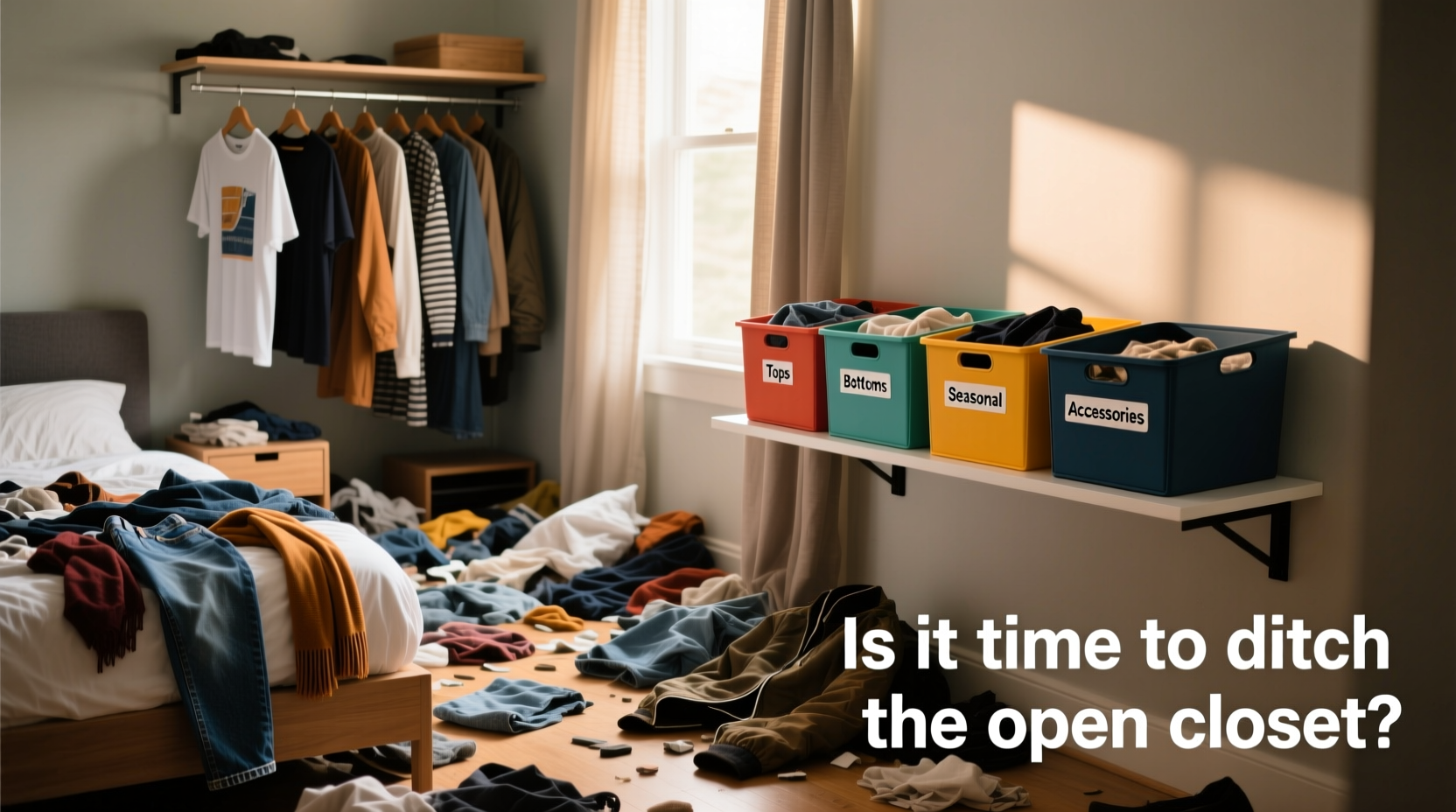
Open closets may look inviting in lifestyle magazines, but they come with real-world trade-offs. Without physical boundaries, clothing accumulates without intention. Items get buried, forgotten, or worn out of convenience rather than choice. Seasonal rotation becomes a chore, and laundry piles grow faster than they shrink.
Psychologically, an open closet can contribute to decision fatigue. When everything is visible at once—last winter’s sweaters next to summer dresses—it creates visual noise. Studies in environmental psychology suggest that cluttered spaces increase stress and reduce focus. A 2020 study from UCLA’s Center on Everyday Lives of Families found that women who described their homes as cluttered had higher cortisol levels, a key stress hormone.
Moreover, open exposure leads to wear. Dust settles on fabrics, sunlight fades colors, and delicate materials lose shape when constantly handled. Without protection, even high-quality garments degrade faster.
Why Organizer Bins Work Where Open Closets Fail
Organizer bins introduce structure where chaos thrives. Unlike open shelving, they compartmentalize by category, season, or frequency of use. This encourages mindful consumption and clearer inventory management. You’re less likely to buy duplicates when you can see exactly what you own.
Bins also support the principles of the KonMari method and other evidence-based organizing systems: contain, categorize, and curate. By assigning each type of clothing its own bin—socks, workout gear, pajamas—you create a system that’s both intuitive and sustainable.
Material matters. Clear plastic bins allow visual access without exposure. Fabric bins offer breathability and blend into décor. Sturdy cardboard or recycled paper options provide eco-friendly alternatives. Stackable designs maximize vertical space, making them ideal for small apartments or shared rooms.
Benefits of Bin-Based Storage
- Reduced visual clutter: Only one item is seen at a time when bins are stacked or labeled.
- Easier seasonal rotation: Swap entire bins instead of reorganizing shelves.
- Improved protection: Fabrics stay clean, dust-free, and shielded from light.
- Portability: Move bins between rooms or during cleaning without scattering contents.
- Customization: Label, color-code, or resize bins based on personal habits.
“People don’t need more space—they need better systems. Bins create accountability for every item.” — Lena Torres, Professional Organizer & Author of *Structured Living*
Step-by-Step: Transitioning from Open Closet to Bin System
Moving away from an open closet doesn’t mean abandoning style or accessibility. With a thoughtful transition, you gain efficiency and peace of mind. Follow this five-step process:
- Empty and assess: Remove everything from your closet. Sort items into categories: tops, bottoms, undergarments, outerwear, accessories, seasonal.
- Edit ruthlessly: Use the “one-year rule”—if you haven’t worn it in 12 months, consider donating or storing elsewhere.
- Choose the right bins: Measure available space. Opt for uniform sizes to maximize stacking. Include shallow bins for scarves and deep ones for jeans or hoodies.
- Label and organize: Use waterproof labels or tags. Group by function (e.g., “Work Tops,” “Gym Clothes”) rather than just type.
- Store strategically: Place daily-use bins at eye level. Seasonal or occasional items go higher or lower. Keep a spare bin for overflow or laundry sorting.
Real-Life Example: From Chaos to Calm in Two Weeks
Sarah, a graphic designer and mother of two in Portland, struggled with a walk-in closet that doubled as a dumping ground. Her kids’ clothes, her work wardrobe, and household linens all competed for shelf space. Mornings were stressful—missing socks, wrinkled blouses, last-minute searches.
After reading about modular storage, she invested in 12 clear plastic bins: four for herself, six for her children, and two for household items like travel towels and off-season blankets. She labeled each with a removable tag and arranged them on low shelves accessible to her kids.
Within two weeks, her family adapted. Her children learned to put clothes back in the correct bin. Sarah regained 30 minutes each morning. “It sounds simple,” she said, “but seeing only one bin at a time instead of a mountain of clothes changed how I dress and how I feel.”
Bin vs. Open Closet: A Practical Comparison
| Feature | Open Closet | Organizer Bins |
|---|---|---|
| Visibility | Full view of all items | Limited to one bin at a time |
| Dust Protection | Poor – fabrics exposed | High – contained environment |
| Space Efficiency | Moderate – limited stacking | High – vertical stacking possible |
| Child Accessibility | Low – hangers too high | High – bins at reachable height |
| Seasonal Rotation | Time-consuming | Quick swap of full bins |
| Aesthetic Appeal | Stylish when neat | Minimalist, tidy by design |
Essential Checklist for Switching to Organizer Bins
- ☐ Declutter first—donate or discard unused clothing
- ☐ Measure your storage area to determine bin size and quantity
- ☐ Choose durable, breathable, or clear materials based on needs
- ☐ Categorize clothing before placing in bins
- ☐ Label every bin clearly (use washable tags if needed)
- ☐ Store frequently used items at eye or waist level
- ☐ Review and refresh the system every 3–6 months
Frequently Asked Questions
Won’t bins make my clothes harder to access?
Not if organized thoughtfully. While you can’t see everything at once, bins reduce decision fatigue by limiting choices. Most users report faster dressing because they know exactly where each category is stored.
How do I prevent clothes from getting wrinkled in bins?
Fold items uniformly using the file-fold method (like files in a drawer). Avoid overpacking. For wrinkle-prone fabrics, place tissue paper between layers or reserve hanging for those pieces.
Can I still have a few favorite outfits on display?
Absolutely. Many people keep a small open section or valet rack for go-to outfits. The key is balance—use open space intentionally, not by default.
Conclusion: Out with the Old, In with the Organized
The era of the overstuffed open closet is fading—not because it lacks charm, but because it lacks function. When clothes are everywhere, the problem isn’t volume alone; it’s the absence of a system that supports real life. Organizer bins aren’t just containers; they’re tools for clarity, consistency, and calm.
Switching to bins isn’t about sacrificing style for order. It’s about aligning your space with how you actually live. Whether you’re in a studio apartment or a family home, the shift from open chaos to contained organization can transform not just your bedroom, but your mornings, your mindset, and your relationship with what you own.




 浙公网安备
33010002000092号
浙公网安备
33010002000092号 浙B2-20120091-4
Comments
No comments yet. Why don't you start the discussion?