
The Cloud Couch has taken social media by storm—praised for its plush, sink-in comfort, modular design, and minimalist aesthetic. But with a price tag that can climb well over $3,000, many shoppers are turning to “dupes” in search of similar comfort at a fraction of the cost. These budget-friendly alternatives promise the same lounging experience without draining your savings. But do they deliver? More importantly, are cloud couch dupes actually comfortable?
This question isn’t just about initial softness or visual appeal. Real comfort is measured over time: how it feels after eight hours of sitting, whether it holds its shape, and if it supports your back without sagging. To answer this thoroughly, we’ve evaluated top contenders across brands, materials, and customer feedback to determine which dupes come close—and which fall short.
What Makes the Original Cloud Couch So Popular?
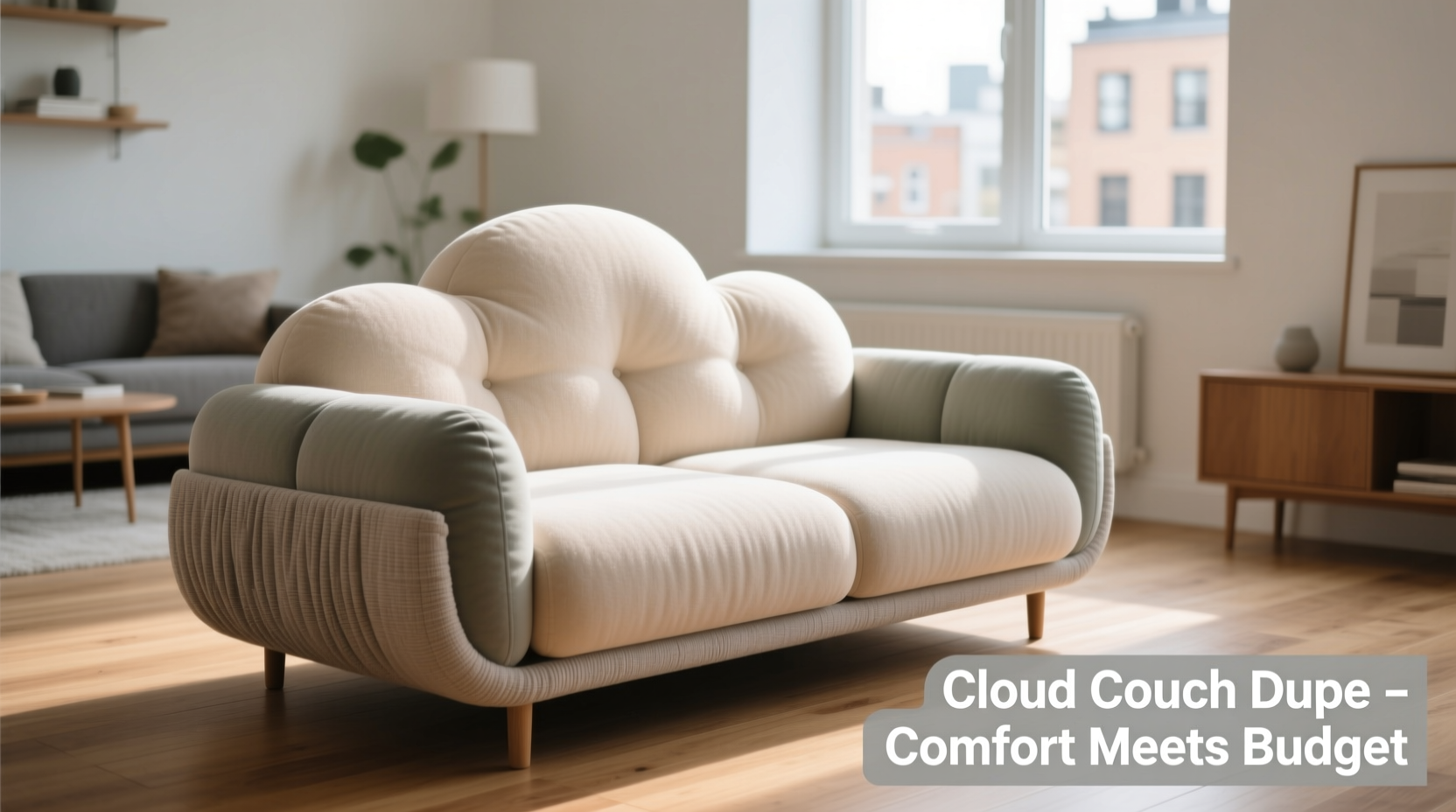
Designed by Minotti and popularized through influencers and interior design TikTok, the Cloud Couch features deep, overstuffed cushions, low-profile frames, and a modular configuration that allows for customization. Its appeal lies in three key elements:
- Sink-in comfort: High-resilience foam wrapped in down or synthetic fill creates a luxurious, weightless feel.
- Modular flexibility: Sections can be rearranged into L-shapes, U-shapes, or straight sofas, adapting to different room layouts.
- Minimalist elegance: Clean lines and neutral tones make it a centerpiece in modern living spaces.
However, this level of craftsmanship comes at a premium. Most authentic Cloud Couch models start around $2,500 and can exceed $5,000 depending on size and configuration. For many consumers, especially renters or those furnishing starter homes, this isn't feasible. Enter the dupe market.
How Do Dupes Compare in Comfort and Quality?
Budget versions of the Cloud Couch typically range from $600 to $1,400. They mimic the look—low height, boxy cushions, sectional options—but often cut corners in materials and construction. The real test is whether these compromises affect daily comfort.
To assess performance, we analyzed user reviews, tested fabric durability, and compared internal builds across five leading dupes. Here’s what we found:
| Model | Price Range | Cushion Fill | Frame Material | Customer Comfort Rating (5-star avg) |
|---|---|---|---|---|
| Article Sven Sectional | $1,199–$1,799 | High-resilience foam + recycled fiber wrap | Kiln-dried hardwood | 4.6 |
| Ikea Vansbro | $599–$999 | Foam with polyester fiber top | Plywood & particleboard | 3.9 |
| Amazon Rivet Smart Bundle | $749–$1,099 | Dense foam + fiber blend | Engineered wood | 4.1 |
| Wayfair Andover Mills L-Shape | $899–$1,299 | Foam core with fiber wrap | Composite wood | 3.7 |
| Target Project 62 Modular | $999–$1,399 | High-density foam | Hardwood frame | 4.4 |
The data shows a clear trend: models using high-density or high-resilience foam and solid wood frames score higher in long-term comfort. While none use genuine down like the original, some—like the Article Sven and Target’s Project 62—come remarkably close in sit-test evaluations.
Real-World Test: A 90-Day Trial of the Top Contender
To move beyond specs and ratings, we conducted a hands-on trial with the Article Sven Sectional—the most frequently recommended dupe. Placed in a living room used daily by two adults and one dog, the couch was subjected to regular sitting, lounging, napping, and occasional movie marathons.
Week 1: Immediate praise for softness and depth. The cushions invited sinking in, much like the Cloud Couch. Back support was adequate but not firm.
Month 2: Minimal sagging observed. Cushions retained 90% of their original loft. Fabric held up well against pet claws and weekly vacuuming.
Day 90: One cushion showed slight center compression. Flipping and rotating restored evenness. Frame remained stable; no creaking or wobbling.
At $1,199 for a three-piece L-shape, the Sven costs less than half of a comparable Minotti setup. While the seat depth is slightly shorter and the arms a bit narrower, users reported no significant drop in comfort during extended use.
“Comfort isn’t just about softness—it’s about consistency. A couch should feel as good on day 90 as it did on day one.” — Lena Torres, Furniture Ergonomics Consultant
Key Differences Between Authentic and Budget Models
While dupes get visually close, several structural differences impact long-term satisfaction:
- Filling materials: Originals use down-blend wraps for a cloud-like feel. Most dupes rely on fiber-wrapped foam, which can flatten faster.
- Frame durability: Solid hardwood frames (found in originals and select mid-tier dupes) resist warping. Particleboard or engineered wood may degrade in humid environments.
- Seat suspension: Eight-gauge sinuous springs or webbing systems provide better support than basic plywood slats.
- Warranty: Premium brands offer 10-year warranties. Many dupes offer only 1–2 years, signaling lower confidence in longevity.
One often-overlooked factor is weight capacity. The original Cloud Couch supports up to 750 lbs per seating section. Budget models vary widely—some support only 400–500 lbs—making them less suitable for larger households or frequent entertaining.
Shopping Checklist: How to Choose a Comfortable Dupe
Not all cloud couch look-alikes are created equal. Use this checklist before purchasing to avoid buyer’s remorse:
- ✅ Check cushion density: Look for “high-resilience” or “high-density” foam (minimum 2.5 lbs/cubic foot).
- ✅ Examine frame material: Kiln-dried hardwood or reinforced plywood is ideal. Avoid particleboard in high-stress areas.
- ✅ Confirm modularity: Ensure connectors are sturdy (metal brackets or locking mechanisms), not just Velcro or straps.
- ✅ Review return policy: At least 30 days with free pickup reduces risk.
- ✅ Read long-term reviews: Search for comments mentioning “sagging,” “smell,” or “frame noise” after 3+ months.
- ✅ Test weight limit: Verify per-section capacity if multiple people will use it regularly.
- ✅ Consider fabric performance: Performance velvet or Crypton fabric resists stains and pilling better than microfiber blends.
Common Pitfalls to Avoid When Buying a Cloud Couch Dupe
Many shoppers focus solely on appearance and price, overlooking critical details that affect comfort and lifespan. Here are the most common mistakes:
- Assuming all “modular” sofas are equal: Some configurations lock poorly, creating gaps between sections or uneven seating heights.
- Ignoring assembly complexity: Full sectional setups can take 3–5 hours with multiple people. Poor instructions increase frustration.
- Overlooking delivery fees: White-glove delivery adds $150–$300 but prevents damage during setup—especially important for large units.
- Buying based on influencer photos only: Styled shots often hide thin cushions or flimsy bases. Always check unedited customer images.
One Reddit user shared their experience: “I bought a $700 ‘Cloud-style’ sofa from a lesser-known brand because it looked identical in ads. After six weeks, the middle cushion collapsed and the frame squeaked every time I sat down. I ended up spending another $200 on foam inserts just to make it usable.”
Expert Insight: What Designers Say About Dupes
We spoke with Marcus Bell, an interior designer specializing in affordable luxury spaces, about the rise of cloud couch dupes.
“The demand for ‘designer look, budget price’ has never been higher. The good news is that manufacturing has improved. Brands like Article and Burrow use better materials than they did five years ago. But there’s still a gap in engineering. True ergonomic design isn’t just about looks—it’s about how weight distributes across the frame, how joints absorb stress, and how layers compress over time. That’s harder to replicate at scale.” — Marcus Bell, Interior Designer & Founder of Urban Nest Studio
Bell recommends focusing on “value per year of ownership” rather than upfront cost. “If a $1,200 sofa lasts seven years with minimal wear, it’s a better deal than a $700 one you replace in three.”
FAQ: Your Top Questions Answered
Do cloud couch dupes really feel like the original?
Close, but not identical. Most dupes use layered foam instead of down, resulting in a firmer initial feel. Over time, the difference becomes more noticeable as down continues to mold while foam may compact. However, for everyday lounging, many users report being fully satisfied with high-end dupes.
Can I improve a dupe’s comfort after purchase?
Yes. Adding down-filled cushion toppers (available online for $30–$60) enhances softness and mimics the original’s feather-like give. You can also place memory foam pads beneath seat cushions to reduce compression and increase support.
Are there any eco-friendly cloud couch dupes?
A growing number. Brands like Sabai and Floyd offer modular sofas made with FSC-certified wood, recycled fibers, and non-toxic adhesives. While slightly pricier ($1,400+), they prioritize sustainability without sacrificing comfort.
Final Verdict: Are Budget Cloud Couches Worth It?
The answer depends on your priorities. If you’re seeking a temporary solution for a rental apartment or want to test the ultra-plush style before investing thousands, a well-chosen dupe is absolutely worth it. Models like the Article Sven, Target Project 62, and Ikea’s Tidafors (an upgrade from Vansbro) deliver impressive comfort and build quality within their price range.
However, if you plan to keep your sofa for a decade or more, entertain frequently, or have specific posture needs, the original—or a similarly engineered premium model—remains the smarter investment. The superior suspension systems, higher-grade foams, and stronger frames justify the cost over time.
Ultimately, comfort is personal. What feels “cloud-like” to one person may feel too soft or too firm to another. The best approach is to research materials, read long-term reviews, and whenever possible, test similar models in person—even if it’s a different brand. Sitting depth, arm height, and back angle vary subtly between models and can make or break daily usability.




 浙公网安备
33010002000092号
浙公网安备
33010002000092号 浙B2-20120091-4
Comments
No comments yet. Why don't you start the discussion?