
At first glance, a clutch and a wallet might seem interchangeable—both carry essentials like cards, cash, and IDs. But dig deeper, and you’ll find that their purposes, designs, and social roles diverge significantly. While some clutches do resemble oversized wallets, reducing them to that category overlooks their unique function in fashion and daily life. Understanding the distinction isn’t just about semantics; it’s about making smarter choices when accessorizing for different occasions.
Defining the Basics: What Is a Wallet?
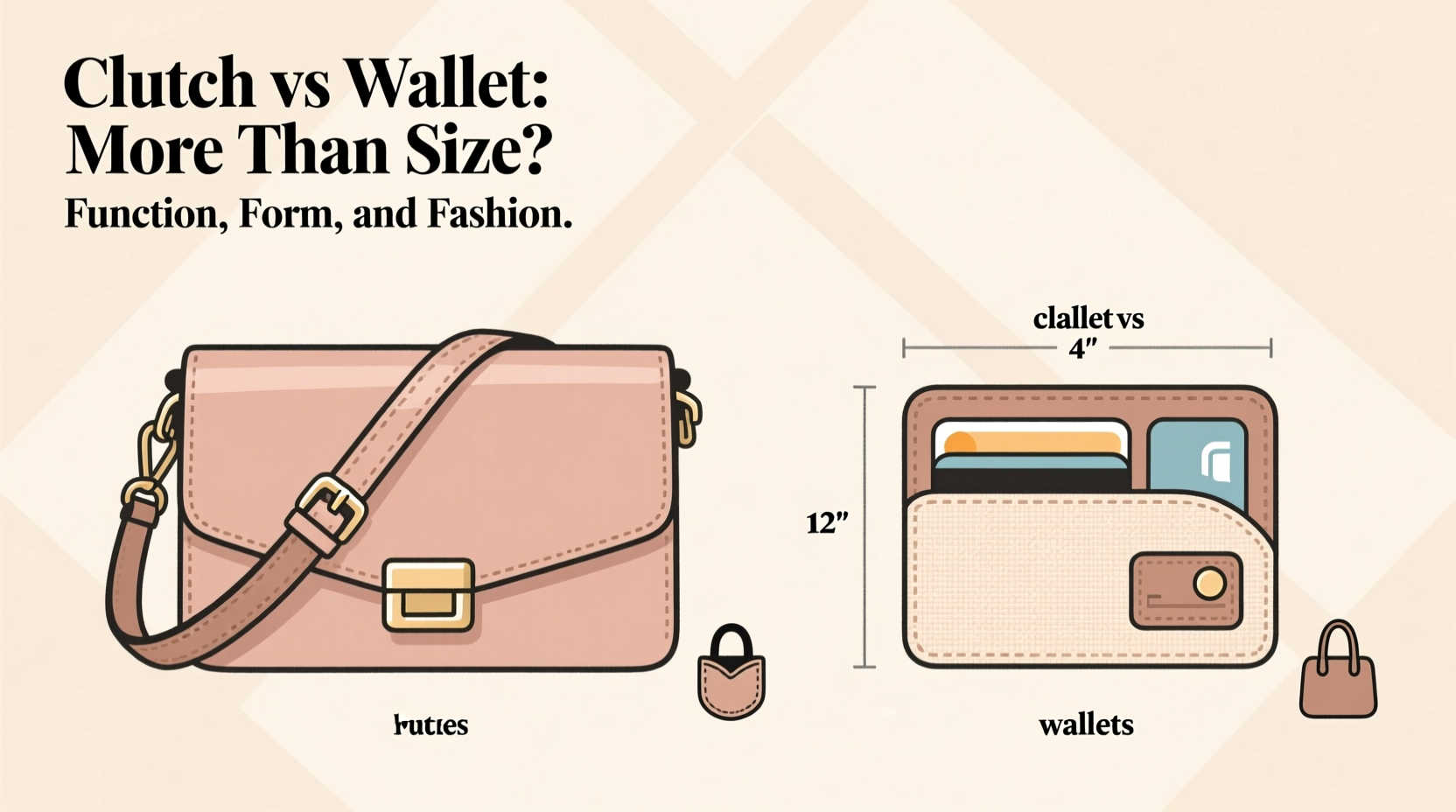
A wallet is a compact, functional accessory designed primarily for carrying money, credit cards, identification, and sometimes coins. Most wallets are built for utility and fit comfortably in a pocket or small handbag. They come in several standard forms:
- Bifold: Folds in half, fits in back or front pockets.
- Trifold: Three-panel design offering more storage.
- Cardholder: Minimalist option with slots for 4–6 cards.
- Front-pocket wallet: Slim profile to reduce bulk and prevent back strain.
Materials range from durable leather to synthetic fabrics, but the focus remains on durability, security, and ease of access. A wallet’s size rarely exceeds 5 x 3.5 inches, ensuring it stays unobtrusive.
What Exactly Is a Clutch?
A clutch is a hand-held bag with no straps or handles, designed to be carried in the hand or tucked under the arm. Unlike wallets, clutches serve as both functional carriers and fashion statements. They’re commonly used during evening events, weddings, or nights out when minimalism meets elegance.
Clutches vary widely in size and structure:
- Evening clutches: Often embellished with beads, sequins, or metallic finishes.
- Day clutches: Made from canvas or leather, suitable for casual outings.
- Convertible clutches: Include detachable straps to transform into crossbody bags.
- Organizer clutches: Feature multiple compartments, including space for phones, lipstick, and keys.
While many clutches can hold a wallet, they go beyond mere card storage. Their design emphasizes aesthetics, occasion-specific styling, and broader utility.
“Clutches aren’t just containers—they’re extensions of personal style. A well-chosen clutch completes an outfit the way a signature finishes a letter.” — Lena Torres, Fashion Stylist & Consultant
Key Differences Between Clutches and Wallets
The confusion arises because some minimalist clutches look like enlarged wallets. However, core differences set them apart across four dimensions:
| Feature | Wallet | Clutch |
|---|---|---|
| Primary Purpose | Secure storage of cash, cards, ID | Carry essentials while enhancing an outfit |
| Size | Small (fits in pocket) | Medium to large (hand-held) |
| Capacity | Limited to cards, bills, ID | Can hold phone, keys, makeup, wallet |
| Design Focus | Functionality, slimness | Fashion, texture, color coordination |
| Occasion | Daily use, all-day carry | Formal events, date nights, travel |
This comparison shows that while overlap exists, the intent behind each item shapes its form and use. A wallet supports convenience; a clutch supports expression.
When Does a Clutch Function Like a Wallet?
In certain cases, the line blurs. For instance, “wallet clutches” or “clutch wallets” combine features of both. These hybrid designs typically include:
- RFID-blocking card slots
- Zippered coin compartments
- Billfold sections
- External pockets for quick access
These are especially popular among travelers or minimalist urbanites who want one sleek piece instead of layering accessories. Brands like Bellroy and Dagne Dover offer models that double as both clutch and wallet, often with removable wrist straps for versatility.
However, even in these hybrids, the larger footprint and open interior distinguish them from traditional wallets. They’re designed not just to store—but to be seen.
Real-World Example: Choosing the Right Accessory for the Occasion
Sophia, a marketing executive in Chicago, recently attended a black-tie gala. She wore a sleek navy gown with delicate spaghetti straps—no pockets, no room for a bulky handbag. Her solution? A satin envelope clutch in silver, just large enough to hold her phone, lip gloss, hotel key, and folded $20 bill.
She left her everyday bifold wallet at home. Instead, she slipped three cards into the clutch’s internal slot. The clutch wasn’t merely holding items—it elevated her look. A regular wallet wouldn’t have matched the dress, nor would it have provided space for her phone.
In contrast, the next morning, Sophia grabbed her slim leather wallet for her commute. It slid easily into her blazer pocket, kept her contactless cards accessible, and avoided the awkward bulk of carrying a clutch to work.
This illustrates how context defines function. One solves a fashion challenge; the other addresses a practical need.
How to Choose: A Step-by-Step Decision Guide
Selecting between a clutch and a wallet—or deciding whether you need both—depends on lifestyle and situation. Follow this sequence to make the right choice:
- Assess the occasion: Is it formal, casual, or professional?
- List essential items: Do you need only cards and cash, or also phone, keys, and cosmetics?
- Check outfit compatibility: Does your clothing have pockets? Is there space to carry a hand-held bag?
- Evaluate security needs: Will you be in crowded places where pickpocketing is a risk?
- Decide on visibility: Do you want your accessory to blend in or stand out?
If the answer leans toward visibility, elegance, and carrying more than just payment tools, a clutch wins. If discretion, portability, and daily reliability matter most, stick with a wallet.
FAQ: Common Questions About Clutches and Wallets
Can I use a clutch as my everyday bag instead of a wallet?
Yes, if it has sufficient organization and you don’t mind carrying it by hand. Many modern clutches include dedicated card slots and secure zippers, making them viable replacements—especially for those embracing minimalist lifestyles.
Are clutches outdated now that smartphones have digital wallets?
No. While digital payments reduce the need for physical cards, people still carry IDs, cash, lip balm, pain relievers, and other small essentials. Clutches remain relevant as curated carriers of necessity and style.
Should I match my clutch color to my wallet?
Not necessarily. In fact, contrasting textures or colors can add depth to an outfit. However, if both are visible (e.g., pulling a leather wallet from a bright clutch), aim for tonal harmony rather than exact matches.
Final Thoughts: More Than Just Size
The question isn’t whether clutches are “just big wallets,” but rather what role each plays in your daily narrative. A wallet operates behind the scenes—reliable, discreet, and efficient. A clutch steps into the spotlight—stylish, intentional, and expressive.
Recognizing this distinction empowers better decisions. You wouldn’t wear sneakers to a wedding just because they’re comfortable. Similarly, don’t default to a wallet when a clutch could elevate your presence. Nor should you force a clutch into a role it wasn’t designed for—like enduring daily subway commutes.
The best approach? Build a rotation. Keep a durable wallet for daily grind, a sleek clutch for evenings, and perhaps one hybrid piece for transitional days. That way, you’re never under-equipped—or over-accessorized.




 浙公网安备
33010002000092号
浙公网安备
33010002000092号 浙B2-20120091-4
Comments
No comments yet. Why don't you start the discussion?