
Over time, mineral deposits from hard water accumulate inside your coffee maker’s internal components. These deposits—primarily calcium and magnesium—form limescale, which can clog water lines, reduce heating efficiency, and ultimately shorten the lifespan of your machine. While many users know they should descale their coffee maker, few understand exactly how often it's needed or what factors influence the schedule. The truth is, there’s no one-size-fits-all answer. The ideal descaling frequency depends on several variables, including your water source, brewing frequency, and the type of coffee maker you own.
Ignoring descaling leads to slower brew times, weaker coffee, and even complete machine failure. On the other hand, over-descaling with harsh chemicals can damage seals and gaskets. Striking the right balance is essential for performance, flavor, and longevity. This guide breaks down the real-world factors that determine when to descale, offers a clear maintenance timeline, and provides actionable steps to keep your machine in peak condition.
Understanding Limescale and Its Impact
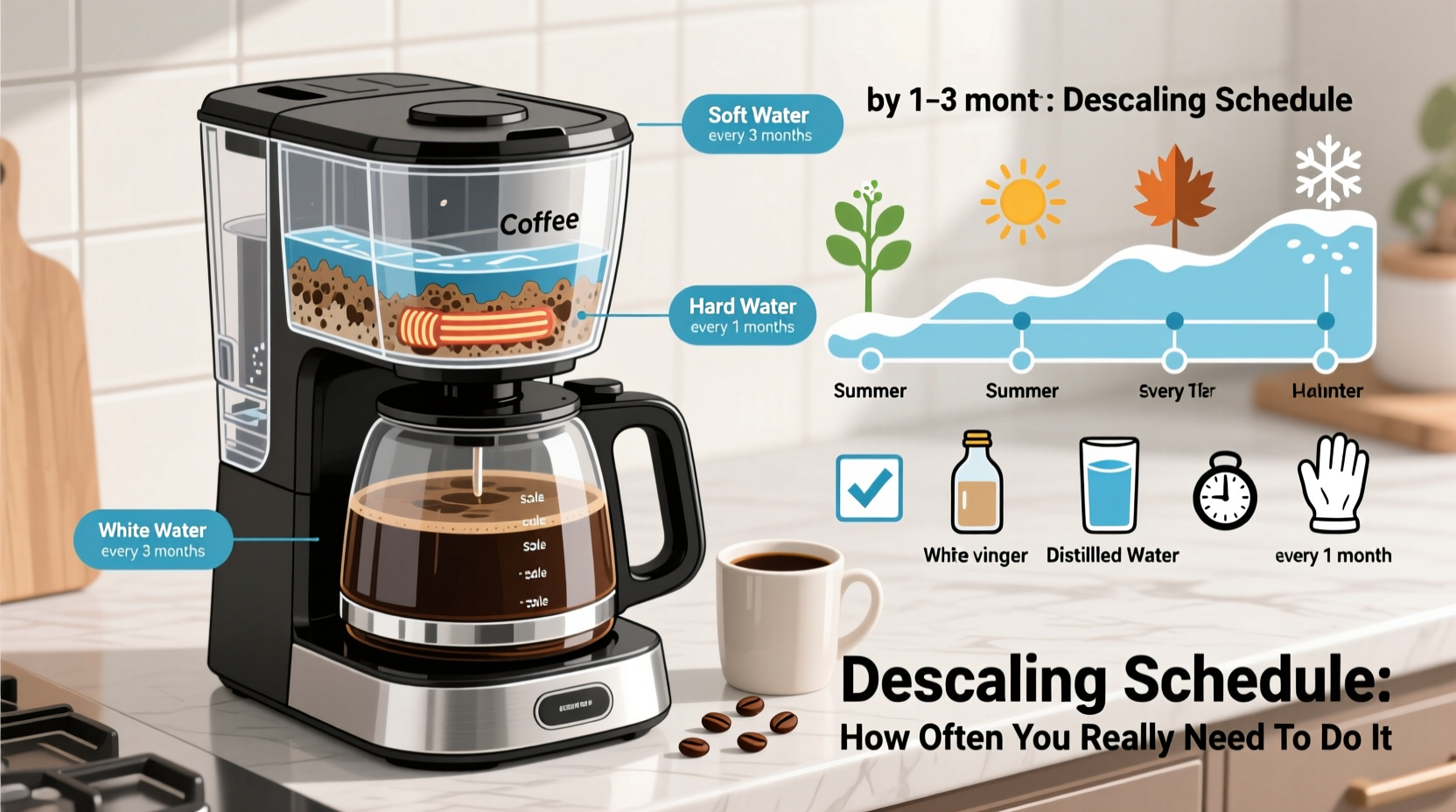
Limescale forms when dissolved minerals in tap water precipitate out during the heating process. Every time your coffee maker heats water, a small amount of scale builds up inside the boiler, tubing, and shower head. While invisible at first, this buildup accumulates rapidly in areas with hard water.
The consequences of unchecked scale include:
- Reduced water flow: Narrowed tubes slow down brewing and may cause incomplete cycles.
- Inconsistent temperatures: Scale acts as an insulator, preventing efficient heat transfer and leading to under-extracted, sour-tasting coffee.
- Increased energy consumption: The heating element works harder to overcome insulation from scale, raising electricity use.
- Premature breakdown: Many manufacturers cite limescale as a leading cause of warranty voids and early failures.
“Scale buildup is the silent killer of coffee machines. It doesn’t happen overnight, but by the time users notice performance drops, significant internal damage has already occurred.” — Daniel Reyes, Appliance Engineer and Home Brewing Consultant
How Often Should You Descale? Key Factors That Matter
The standard advice—“descaling every three months”—is a rough generalization. In reality, your actual schedule should be tailored to three main factors: water hardness, brewing frequency, and machine type.
1. Water Hardness
This is the most critical variable. Water hardness is measured in grains per gallon (gpg) or parts per million (ppm) of calcium carbonate. The higher the number, the faster scale accumulates.
| Water Hardness Level | Grains Per Gallon (gpg) | Recommended Descaling Frequency |
|---|---|---|
| Soft | 0–3 gpg | Every 6–12 months |
| Moderate | 4–7 gpg | Every 4–6 months |
| Hard | 8–10 gpg | Every 3 months |
| Very Hard | 10+ gpg | Every 1.5–2 months |
To find your water hardness, check your municipal water quality report (often available online), use a home test kit, or contact your local utility provider. Well water users should test annually, as mineral content can fluctuate.
2. Brewing Frequency
A household that brews one pot per day will accumulate scale much faster than someone who uses the machine twice a week. High-frequency use increases exposure to heated water, accelerating deposit formation.
- Light use (1–3 times/week): Extend intervals by 1–2 months beyond standard recommendations.
- Regular use (daily): Stick to manufacturer guidelines or adjust based on water hardness.
- Heavy use (multiple pots/day): Consider descaling every 6–8 weeks, especially with hard water.
3. Coffee Maker Type
Different machines have varying vulnerabilities to scale due to design and materials.
- Drip coffee makers: Most common household type; prone to scale in reservoir, pump, and spray head. Follow 3-month baseline unless water is soft.
- Single-serve pod machines (e.g., Keurig): Small internal pathways clog easily. Descaling every 2–3 months is strongly advised in hard water areas.
- Espresso machines: High-pressure boilers are extremely sensitive. Home models need descaling every 2–4 months; commercial units may require monthly service.
- French press or pour-over: No internal heating elements—no descaling needed. Only regular cleaning required.
Step-by-Step Descaling Process
Following a consistent descaling routine ensures thorough cleaning without damaging your appliance. Always consult your user manual first, as some brands have specific protocols. However, the general method below applies to most electric drip and single-serve machines.
- Unplug the machine and remove any filters, carafes, or pods. Discard used grounds.
- Prepare the descaling solution. Use either a commercial descaler (like Dezcal or Urnex) or a 1:2 mixture of white vinegar and water. Avoid lemon juice or citric acid unless specified by the manufacturer, as they can corrode certain metals.
- Fill the reservoir with the solution according to the machine’s capacity. For example, if your tank holds 10 cups, use 10 cups of solution.
- Run a partial brew cycle. Turn the machine on and let it run through about half the cycle, then turn it off and let it sit for 30 minutes. This allows the solution to dissolve stubborn deposits.
- Complete the cycle. Restart the machine and finish the brew. Do not add coffee grounds.
- Repeat if necessary. For heavily scaled machines, run a second cycle with fresh solution.
- Rinse thoroughly. Fill the reservoir with clean water and run 2–3 full cycles to flush out any remaining descaler taste or odor.
- Clean removable parts. Wash the carafe, filter basket, and lid with warm soapy water. Soak in vinegar if stained.
- Wipe exterior surfaces with a damp cloth to remove splatters or residue.
Real-World Example: A Case Study in Neglect vs. Maintenance
Sarah, a remote worker in Phoenix, Arizona—one of the hardest water regions in the U.S.—owned a high-end drip coffee maker. She brewed coffee daily but never descaled, assuming the “clean” light was just a suggestion. By month nine, her machine took nearly 15 minutes to brew a full pot, and the coffee tasted flat and lukewarm.
After consulting a technician, she learned the heating element was coated in thick limescale, reducing its efficiency by over 40%. The repair cost nearly matched the price of a new unit. Sarah switched to a strict descaling schedule every 8 weeks using a citric-acid-based cleaner. She also installed a simple inline water filter. Within a year, her next machine showed no performance decline, and her coffee regained its rich flavor.
This case highlights how regional water conditions drastically affect maintenance needs—and why proactive care pays off.
Do’s and Don’ts of Coffee Maker Descaling
| Do’s | Don’ts |
|---|---|
| Use manufacturer-approved descaling solutions | Use undiluted vinegar regularly—it can degrade rubber seals over time |
| Follow the soak-and-rinse method for best results | Ignore error lights or delayed brewing—they’re early warnings |
| Track descaling dates on a calendar or app | Mix different types of descalers (e.g., vinegar and commercial powder)—this can create harmful fumes |
| Use filtered water to reduce future scaling | Run descaling solution through the machine only once without proper rinsing |
Frequently Asked Questions
Can I use apple cider vinegar instead of white vinegar?
No. Apple cider vinegar contains additional organic compounds and pigments that can leave behind residues or odors. Stick to clear, distilled white vinegar (5% acetic acid) for reliable results.
My machine says “Clean Me” but I just descaled—why?
Some machines have preset timers rather than mineral sensors. If the alert appears too soon, you may be able to reset the cycle manually via a button combination (check your manual). Alternatively, the system may still detect residual scale, indicating a second round is needed.
Is descaling necessary if I use bottled water?
If you use distilled or reverse osmosis water, descaling is rarely needed—perhaps once a year for precaution. However, most bottled spring water still contains minerals. Only truly demineralized water eliminates scaling risk.
Essential Descaling Checklist
Keep this checklist handy for your next maintenance session:
- ☐ Unplug the coffee maker
- ☐ Remove and clean all detachable parts
- ☐ Prepare descaling solution (commercial or vinegar/water mix)
- ☐ Fill reservoir to recommended level
- ☐ Run half-cycle, pause, and let sit for 30 minutes
- ☐ Complete the brew cycle
- ☐ Repeat if scale is severe
- ☐ Rinse with 2–3 full cycles of clean water
- ☐ Reassemble and wipe down exterior
- ☐ Record the date for next scheduled descaling
Final Thoughts: Make Descaling a Habit, Not a Chore
Descaling isn’t glamorous, but it’s one of the most impactful things you can do for your coffee experience. Think of it like changing the oil in your car—routine, preventive, and essential for long-term performance. By aligning your schedule with your water quality and usage habits, you protect your investment and ensure every cup tastes as intended.
Start by testing your water hardness and setting a recurring reminder on your phone or calendar. Choose a descaling agent that matches your machine’s requirements, and stick to the process. Over time, you’ll notice faster brews, hotter output, and richer flavor—all signs your machine is functioning as designed.




 浙公网安备
33010002000092号
浙公网安备
33010002000092号 浙B2-20120091-4
Comments
No comments yet. Why don't you start the discussion?