
On a hot afternoon, few things are as satisfying as a tall glass of chilled coffee. But when it comes to choosing between cold brew and iced coffee, many people assume they’re the same—just served cold. The truth is more nuanced. While both deliver that essential caffeine kick in a refreshing form, their brewing processes, flavor profiles, and yes, even caffeine content, differ significantly. Understanding these differences isn’t just for coffee snobs; it matters if you're tracking your caffeine intake, sensitive to acidity, or simply want the best-tasting cup.
This article dives deep into the science and practice behind cold brew and iced coffee, comparing their caffeine levels, preparation methods, and sensory experiences. Whether you're a daily drinker or an occasional sipper, knowing what sets them apart empowers you to make smarter, more enjoyable choices.
The Brewing Process: Where It All Begins
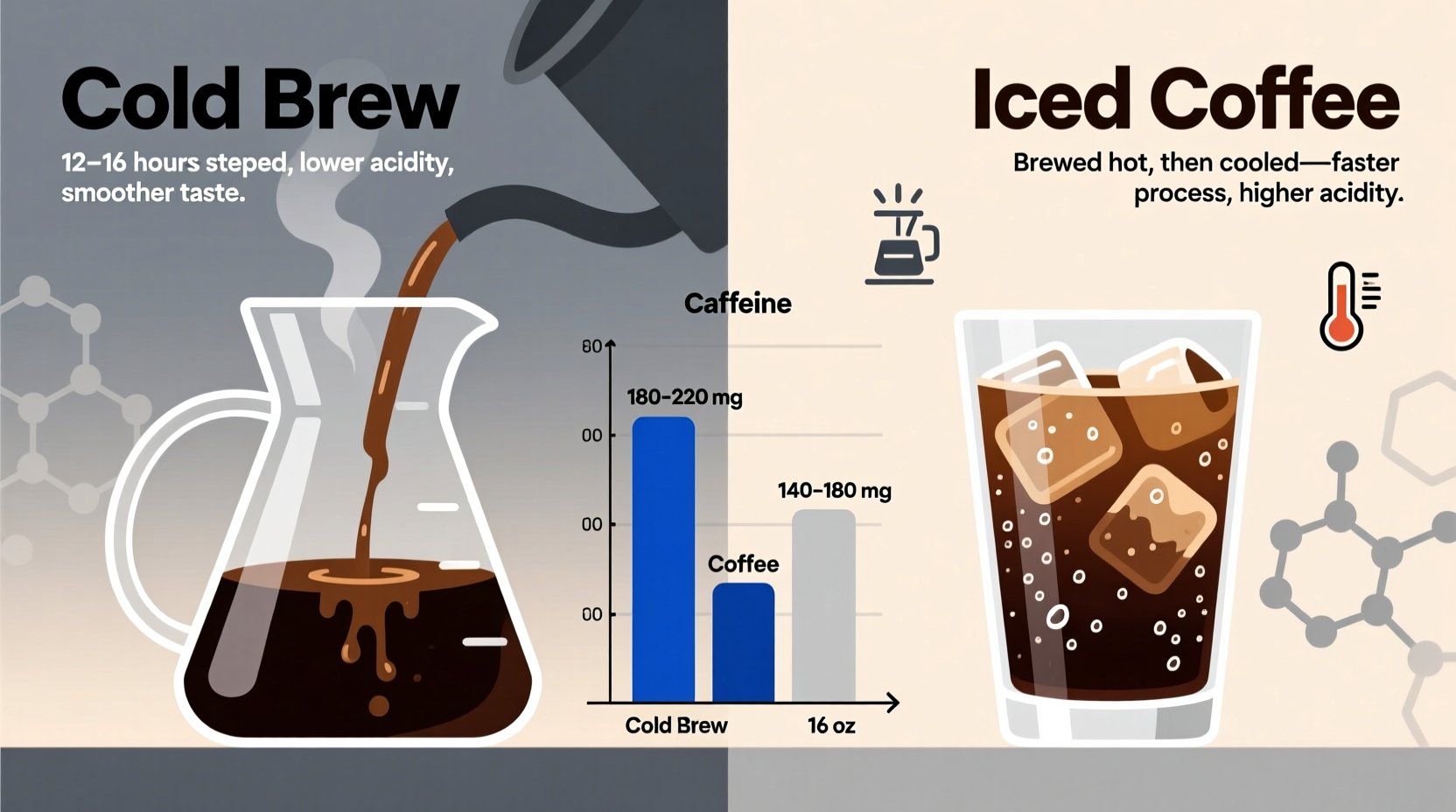
The most fundamental difference between cold brew and iced coffee lies in how they’re made. This distinction shapes everything from flavor to caffeine concentration.
Iced coffee is typically brewed using hot water—just like regular drip coffee—but poured over ice immediately after brewing. Some baristas use a \"Japanese-style\" method with flash-chilled coffee to preserve aroma, but the core process remains heat-driven. Because hot water extracts compounds more efficiently, this method pulls out more acids, oils, and caffeine in a short time (usually 3–5 minutes).
Cold brew, on the other hand, relies on time rather than heat. Coarsely ground coffee steeps in room temperature or cold water for 12 to 24 hours. This slow extraction produces a concentrate that’s later diluted with water or milk. Without heat, fewer acidic compounds are released, resulting in a smoother, less bitter beverage.
Because of these differing methods, the final product varies not just in taste, but in strength—and yes, in caffeine.
Caffeine Content: Breaking Down the Numbers
One of the most common questions is whether cold brew has more caffeine than iced coffee. The answer? It depends—but generally, **yes**, cold brew tends to be more caffeinated—when measured by volume before dilution.
Let’s clarify: Cold brew is usually made as a concentrate. A standard serving might be 1 part concentrate to 1 part water or milk. That means the undiluted concentrate can contain nearly double the caffeine of a same-sized serving of hot-brewed coffee. However, once diluted, the total caffeine per 8-ounce serving often evens out—or may even fall below that of strong iced coffee.
Here’s a realistic comparison based on typical commercial and home preparations:
| Beverage Type | Brew Method | Avg. Caffeine (per 8 oz) | Acidity Level |
|---|---|---|---|
| Drip Coffee (hot) | Hot water, 5 min | 95 mg | High |
| Iced Coffee (diluted) | Hot brew over ice | 85–95 mg | High |
| Cold Brew Concentrate (undiluted) | 16-hour steep | 150–200 mg | Low |
| Cold Brew (ready-to-drink, diluted) | 1:1 with water/milk | 75–100 mg | Low |
As shown, the concentrate is potent. But most people don’t drink it straight. When properly diluted, cold brew lands in a similar caffeine range as iced coffee—though some brands intentionally make their bottled cold brews stronger.
“Cold brew isn’t inherently higher in caffeine, but because it’s sold as a concentrate or in larger servings, consumers often end up with more per cup.” — Dr. Lydia Chen, Food Scientist & Beverage Analyst
Taste and Palatability: Smoothness vs Brightness
Beyond caffeine, flavor plays a huge role in preference. The absence of heat in cold brew reduces the extraction of chlorogenic acids and other bitter compounds, yielding a naturally sweeter, mellow profile. Many describe it as chocolaty, nutty, or even woody, depending on the bean origin.
In contrast, iced coffee retains the brighter, more complex notes of traditional coffee—floral, citrusy, or fruity—because heat unlocks a wider range of volatile compounds. However, when poured over ice, it can become slightly diluted and sour if not brewed stronger initially (a technique known as “double-strength” iced coffee).
Another consideration is mouthfeel. Cold brew often feels heavier or silkier due to higher oil retention during long steeping, while iced coffee tends to be lighter and crisper.
Practical Guide: How to Make Both at Home
Whether you're curious about caffeine control or just want better-tasting coffee, making both versions at home gives you full control over strength and flavor.
Making Iced Coffee Step-by-Step
- Use a ratio of 1:15 coffee to water (e.g., 60g coffee per liter).
- Brew using your preferred method (pour-over, French press, or automatic drip).
- Immediately pour the hot coffee over a full glass of ice to lock in aroma and chill quickly.
- Adjust sweetness or milk to taste.
Making Cold Brew Concentrate
- Grind 1 cup of coffee beans coarsely (like sea salt).
- Add to a large jar or pitcher with 4 cups of cold, filtered water.
- Stir gently, cover, and steep at room temperature for 16–18 hours (or refrigerate for up to 24).
- Strain through a fine-mesh sieve lined with a coffee filter or cheesecloth.
- Store the concentrate in a sealed container in the fridge for up to 2 weeks.
- Dilute 1:1 with water, milk, or ice before serving.
Pro tip: For a ready-to-drink cold brew, reduce the coffee-to-water ratio to 1:8 during steeping, eliminating the need for post-brew dilution.
Real-World Example: Sarah’s Morning Switch
Sarah, a 34-year-old marketing consultant, used to start her day with a grande iced coffee from a popular chain. She loved the jolt but often experienced mid-morning jitters and acid reflux. After reading about cold brew’s lower acidity, she switched to a store-bought cold brew alternative.
What she didn’t realize was that the bottle she chose contained 200mg of caffeine—nearly double her usual intake. Within days, her sleep suffered, despite feeling less stomach discomfort. Only after checking the label did she understand the trade-off.
She adjusted by switching to a smaller serving size and diluting it further with almond milk. Now, she gets a smoother taste, manageable caffeine, and no digestive issues. Her experience underscores a key point: convenience can mask potency. Reading labels and understanding prep methods matter.
Do’s and Don’ts: Cold Brew vs Iced Coffee
| Action | Cold Brew | Iced Coffee |
|---|---|---|
| Use finely ground beans | ❌ Avoid – leads to over-extraction | ✅ OK for espresso-based versions |
| Brew with hot water | ❌ Defeats the purpose | ✅ Required |
| Steep longer than 24 hours | ❌ Risk of bitterness | N/A |
| Drink straight from concentrate | ⚠️ Possible caffeine overload | N/A |
| Brew ahead for batch use | ✅ Ideal for meal prep | ❌ Best fresh-brewed |
Frequently Asked Questions
Does cold brew have more caffeine than espresso?
Not necessarily. A single shot of espresso (1 oz) contains about 63mg of caffeine. An 8-oz serving of diluted cold brew typically ranges from 75–100mg, so yes, it can have more—but ounce for ounce, espresso is far more concentrated. Cold brew concentrate (undiluted) may approach espresso-level strength but is rarely consumed in equal volumes.
Can I heat up cold brew coffee?
Yes. Heating diluted cold brew won’t ruin it, though it won’t taste the same as hot-brewed coffee. Since cold brew lacks the aromatic complexity extracted by heat, warmed-up cold brew tends to be flat but smooth. It’s a good option if you want a low-acid hot drink.
Why does cold brew cost more at cafes?
Despite requiring less equipment, cold brew takes significant time and space to produce (12+ hour steeping). It also uses more coffee grounds per ounce than hot brew. These factors increase labor and material costs, justifying the higher price—even if the process seems simple.
Final Thoughts: Choosing Based on Your Needs
The choice between cold brew and iced coffee shouldn’t come down to trendiness or branding. It should align with your lifestyle, taste preferences, and caffeine sensitivity.
If you crave a bright, aromatic cup with moderate caffeine and don’t mind a sharper edge, iced coffee—especially when freshly brewed—is an excellent choice. It’s faster to make and offers more variety in bean expression.
If you prefer a smoother, naturally sweet profile and enjoy preparing in batches, cold brew wins for convenience and palatability. Just be mindful of serving size and dilution—what starts as a gentle sip can turn into a caffeine bomb if you’re not careful.
And remember: “cold brew” isn’t a guarantee of lower caffeine. Always check labels on bottled versions, and when in doubt, ask your barista how the drink is prepared.




 浙公网安备
33010002000092号
浙公网安备
33010002000092号 浙B2-20120091-4
Comments
No comments yet. Why don't you start the discussion?