
In an era where digital storefronts dominate game distribution, a quiet but profound shift has occurred in how we acquire, access, and think about video games. The days of walking into a store, buying a boxed copy, and placing it on a shelf are increasingly being replaced by one-click downloads from platforms like Steam, PlayStation Store, or Xbox Live. But this convenience comes with a question few consumers initially considered: Do you actually own your digital games? And if not, what does that mean for the future of gaming collections, preservation, and personal rights?
The debate between collecting physical games and building a digital library isn’t just nostalgic—it’s deeply tied to control, access, legacy, and legal ownership. As digital licenses replace tangible products, understanding the real implications is essential for every serious gamer.
The Illusion of Ownership in Digital Libraries
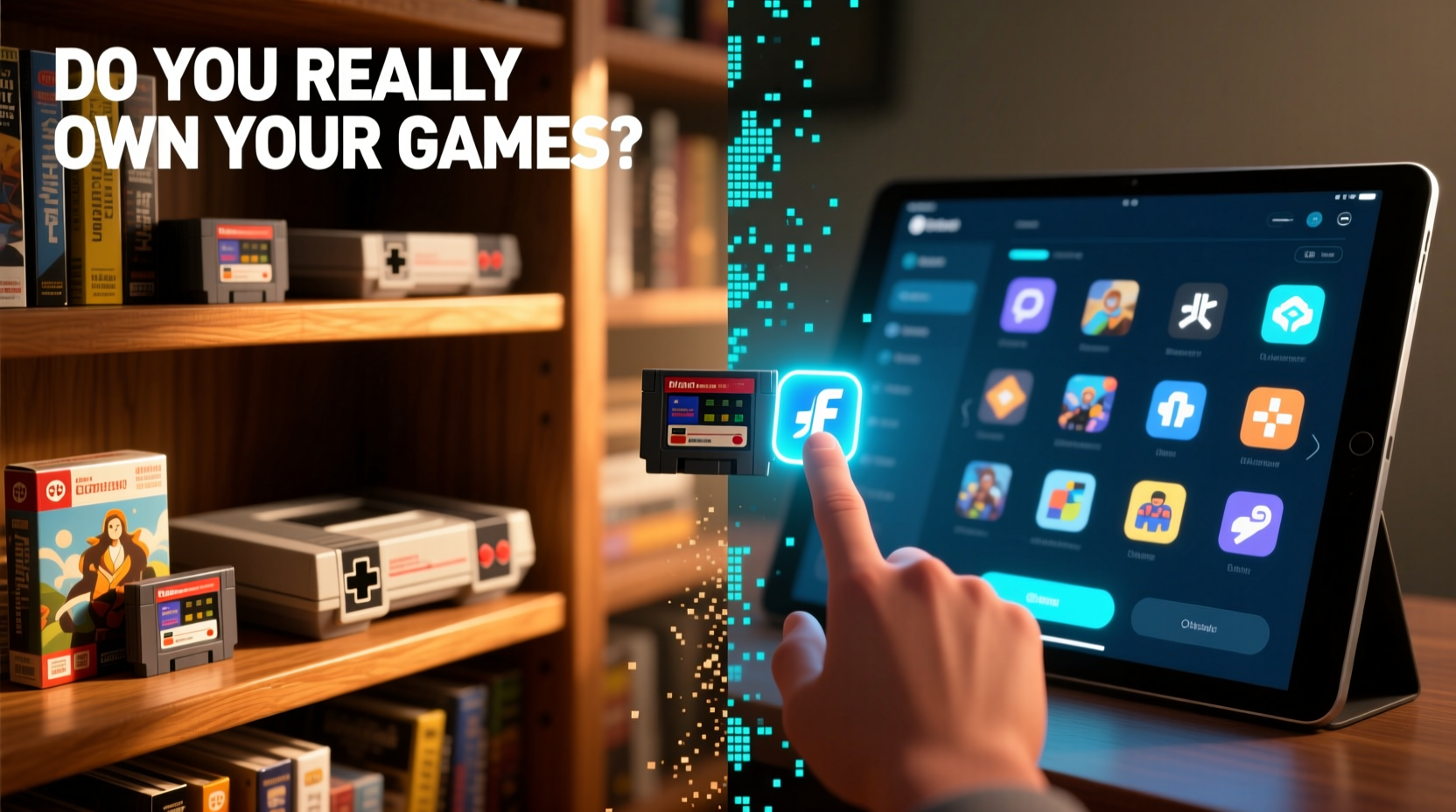
When you purchase a digital game from a major platform, you’re not buying a product in the traditional sense. Instead, you’re purchasing a license to use that software under specific terms set by the publisher and platform holder. These terms are outlined in lengthy End User License Agreements (EULAs), which most users accept without reading.
Valve, for example, states in the Steam Subscriber Agreement: “You do not buy the software; you are granted a limited, non-transferable license to use the software.” This means you can’t resell, lend, or give away your digital games as you would a physical disc. You’re essentially renting access—permanently, perhaps, but access nonetheless.
“Digital ownership is a misnomer. What consumers have is conditional access governed by corporate policy, not property rights.” — Dr. Rebecca Moore, Digital Media Law Scholar, University of Toronto
This lack of true ownership becomes especially problematic when services shut down. Games delisted due to expiring licenses—such as *Alan Wake* before its remaster or numerous titles removed from the Wii U eShop—disappear from user libraries unless already downloaded. Even then, re-downloading may become impossible if servers go dark.
Physical Games: Tangible Ownership and Long-Term Control
With a physical game, ownership is clear. You hold a disc, cartridge, or box that belongs to you. Legally, you can resell it, trade it, lend it to a friend, or pass it down. There’s no dependency on a server remaining online or a company staying in business. If you keep the disc and have a working console, you can play that game decades later—assuming hardware compatibility.
Collectors value physical media not only for its permanence but also for the experience: artwork, manuals, special editions, and the tactile satisfaction of curating a shelf. Limited runs of retro games now sell for thousands, underscoring their cultural and financial value over time.
However, physical media isn’t immune to degradation. Discs can scratch, cartridges lose battery-backed memory, and packaging can deteriorate. Proper storage is crucial. But even with these risks, physical ownership grants a level of autonomy digital simply cannot match.
Preservation Challenges in the Digital Age
Game preservation is becoming a crisis. Unlike films or books, which are relatively easy to archive, digital games rely on complex ecosystems: servers, authentication protocols, operating systems, and proprietary hardware. When a company discontinues support, entire titles vanish from public access—even if fans want to preserve them.
The Video Game History Foundation has documented hundreds of games lost due to digital-only distribution and lack of archival rights. “We’re losing cultural artifacts at an alarming rate,” says Frank Cifaldi, founder of the foundation. “Without legal avenues to archive digital games, we risk a dark age in gaming history.”
Physical copies, while vulnerable to physical decay, can be copied, backed up, and shared more freely under fair use principles—especially for personal archival purposes. This makes them critical tools in the fight against digital obsolescence.
Digital Advantages: Convenience, Space, and Instant Access
No discussion of digital libraries is complete without acknowledging their undeniable benefits. Digital games eliminate the need for physical storage, reduce clutter, and allow instant access across multiple devices. Platforms offer cloud saves, automatic updates, and seamless integration with social features.
For many modern gamers, especially those with limited space or frequent travelers, digital is the practical choice. Sales are deeper and more frequent—Steam’s seasonal discounts can drop prices by 80% or more. And there’s no waiting for shipping or hunting rare stock.
Yet these conveniences come at the cost of control. You can’t loan your friend *Elden Ring* on PSN the way you could hand over a disc. You can’t sell your collection to recoup costs. And if Sony decides to remove a title from the store—or discontinue PS Plus streaming—you lose access entirely.
| Aspect | Physical Games | Digital Library |
|---|---|---|
| Ownership Rights | Yes – full property rights | No – usage license only |
| Resale/Trade | Allowed | Not allowed |
| Longevity | Decades (with care) | Dependent on company policies |
| Storage Space | Requires shelf space | Minimal (digital) |
| Instant Access | No (requires insertion) | Yes |
| Backward Compatibility | Varies by system | Platform-dependent |
| Preservation Potential | High (archivable) | Low (server-dependent) |
A Balanced Approach: Hybrid Libraries and Smart Practices
Many serious collectors and players now adopt a hybrid model—keeping digital for convenience and physical for valuable or meaningful titles. This strategy maximizes both accessibility and ownership.
For example, a player might buy new releases digitally for immediate play but seek out limited physical editions for favorites. Others maintain physical backups of digital purchases when available through programs like Nintendo’s My Nintendo Store or Limited Run Games.
“I treat my digital library like a streaming subscription—great for access, but I only consider something truly ‘mine’ if I own the physical version.” — Marcus Tran, Retro Game Collector & YouTube Archivist
Step-by-Step Guide to Building a Sustainable Game Collection
- Assess Your Priorities: Decide whether convenience, ownership, or collectibility matters most to you.
- Categorize Your Games: Label titles as “casual play” (digital) or “keeper” (physical).
- Invest in Physical for Key Titles: Focus on games you love, limited editions, or those with resale potential.
- Use Digital for Trial or Temporary Play: Buy digitally first, then upgrade to physical if you enjoy it long-term.
- Archive Receipts and Backups: Save purchase confirmations and, where possible, local install files.
- Store Physical Media Properly: Use UV-protected cases, avoid humidity, and keep discs upright.
- Monitor Delistings: Follow sites like delistedgames.com to stay ahead of disappearing titles.
Checklist: Protecting Your Gaming Investment
- ✅ Own physical copies of favorite or culturally significant games
- ✅ Keep original boxes and manuals for collectible value
- ✅ Back up digital purchase records outside the platform
- ✅ Avoid relying solely on subscription services for long-term access
- ✅ Join collector communities to track rare releases
- ✅ Support publishers who offer physical versions of digital-first titles
- ✅ Advocate for digital ownership reform and preservation rights
Real Example: The Case of the Disappearing Classic
In 2023, Square Enix delisted several classic *Final Fantasy* titles from digital storefronts due to expiring music licensing agreements. Fans who had purchased *Final Fantasy XII: The Zodiac Age* digitally found they could no longer buy it—and worse, some reported issues re-downloading it after a console reset.
Meanwhile, owners of the physical PS4 edition continued playing without interruption. While Square Enix eventually restored availability after fan outcry, the incident highlighted how fragile digital access can be. One collector, Lena Park, shared her experience: “I bought it day one on PSN. When it vanished, I panicked. I ended up paying $80 for a used disc—more than double the original price. Never again. If I love a game, I want a copy I can hold.”
This scenario is becoming common. Licensing issues, corporate mergers, and shifting strategies routinely erase digital content. Physical media, while not perfect, provides a buffer against such volatility.
FAQ: Common Questions About Game Ownership
Can I legally make a backup of a digital game I purchased?
It depends on jurisdiction and EULA terms. In the U.S., the Copyright Act allows archival backups for personal use, but most EULAs prohibit copying. Enforcement is rare for individual users, but redistribution violates copyright.
What happens to my digital games if a platform shuts down?
You may lose access to uninstalled games or be unable to re-download them. Installed games might still work offline, but patches, updates, and online features will likely disappear. Historical examples include the shutdown of the PlayStation Store for PS3, PSP, and Vita in 2021, which restricted new purchases and redownloads.
Are digital games worth collecting?
As collectibles, digital games have little intrinsic value. They can’t be traded or displayed. However, curated digital libraries have sentimental and functional worth. For true collecting, physical remains the standard.
Conclusion: Reclaiming Control Over Your Gaming Life
The rise of digital libraries has transformed gaming into a service-oriented experience—one defined by access rather than ownership. While convenient, this model shifts power away from consumers and into the hands of corporations who can alter, restrict, or remove content at will.
Physical games, by contrast, represent autonomy. They are artifacts of culture, personal milestones, and investments that can appreciate over time. They remind us that ownership isn’t just about possession—it’s about freedom.
Whether you lean toward digital ease or physical permanence, awareness is the first step. Make informed choices. Preserve what matters. Demand better from platforms. And remember: if you can’t lend it, sell it, or pass it on, you don’t truly own it.




 浙公网安备
33010002000092号
浙公网安备
33010002000092号 浙B2-20120091-4
Comments
No comments yet. Why don't you start the discussion?