
In the ever-evolving world of fashion jewelry, few debates spark as much interest as the clash between bold innovation and timeless simplicity. Nowhere is this more evident than in the growing popularity of color block earrings versus the enduring appeal of solid earrings. With vibrant hues layered in geometric harmony, color block designs have taken social media and runway shows by storm. But are they here to stay—or just another fleeting trend? To answer that, it's essential to understand not only how these two styles differ but also what they represent in terms of personal expression, versatility, and longevity.
The Rise of Color Block Earrings
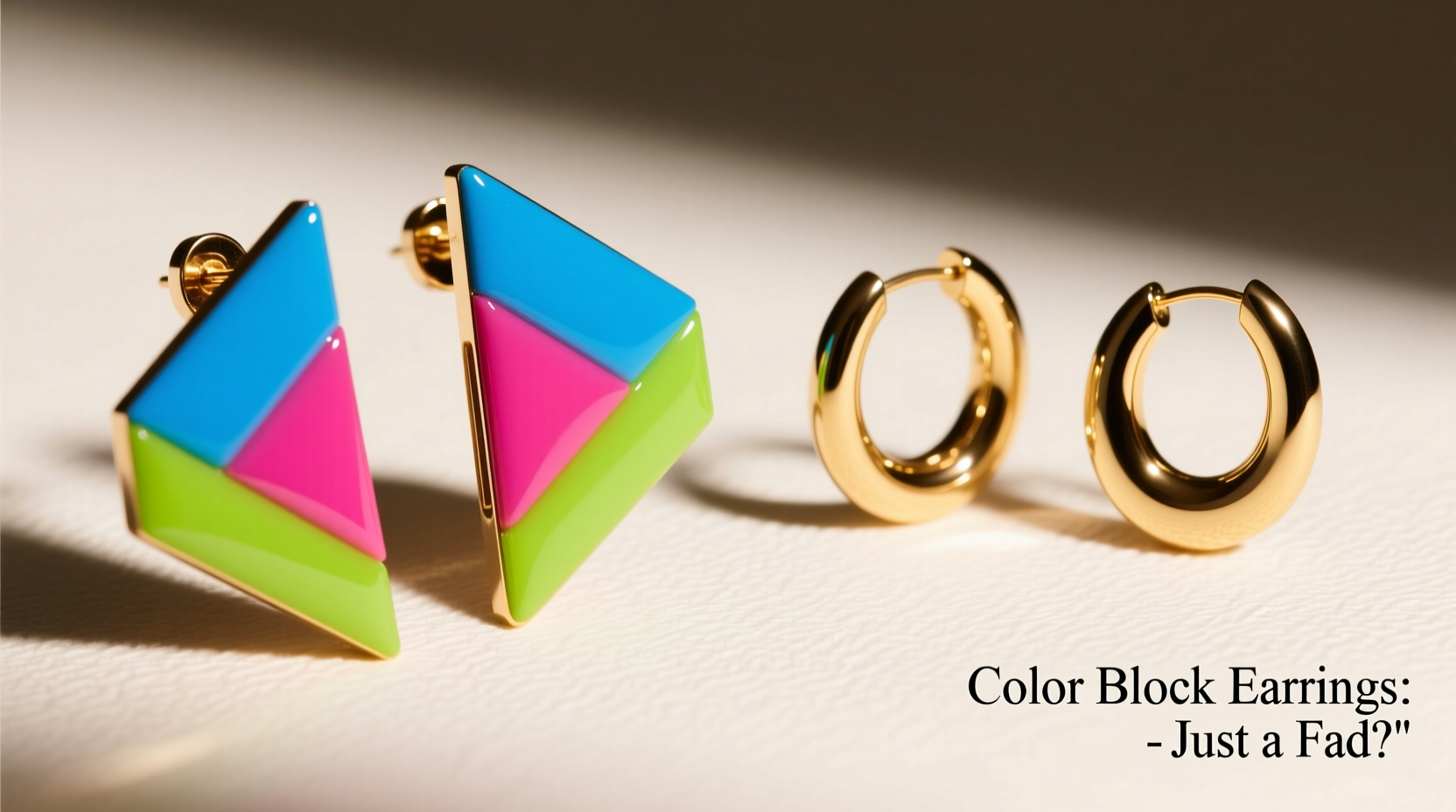
Color block earrings emerged from the broader color blocking trend in fashion—popularized in the 1960s by designers like Yves Saint Laurent—but gained renewed momentum in the 2020s with the rise of maximalist aesthetics. These earrings feature two or more contrasting colors arranged in clean, deliberate sections, often using materials like enamel, resin, acrylic, or even dyed metals. The result is a statement piece that commands attention.
Unlike subtle accessories, color block earrings are designed to be seen. They thrive in environments where self-expression takes center stage: art galleries, music festivals, creative workplaces, and fashion-forward gatherings. Their visual impact lies not just in their size but in their deliberate use of color theory—complementary tones, triadic schemes, or monochromatic contrasts—all working together to create dynamic balance.
Solid Earrings: The Timeless Foundation
On the other side of the spectrum are solid earrings—minimalist, consistent in tone, and often crafted from single materials such as gold, silver, stainless steel, or ceramic. These include studs, hoops, drops, and huggies in uniform shades. Their strength lies in adaptability. A pair of gold studs can transition seamlessly from morning meetings to evening cocktails, while silver hoops complement both casual denim and formal gowns.
Fashion experts consistently rank solid earrings among the most essential accessories. According to stylist Lena Torres, “A well-chosen solid earring acts like punctuation in an outfit—it completes the sentence without changing the subject.” This reliability makes them staples in curated wardrobes, especially for those who value longevity over novelty.
“Trends come and go, but simplicity endures. Solid earrings are the foundation upon which bolder choices can safely rest.” — Lena Torres, Fashion Stylist & Wardrobe Consultant
Comparing Key Attributes: A Side-by-Side Analysis
| Feature | Color Block Earrings | Solid Earrings |
|---|---|---|
| Versatility | Limited—best with neutral or matching-toned clothing | High—works with nearly any outfit |
| Style Impact | High—immediately draws attention | Moderate to low—adds polish rather than drama |
| Lifespan (Trend Relevance) | Moderate—trend-dependent; may feel dated in 3–5 years | Long—rarely goes out of style |
| Care Requirements | Moderate—prone to chipping if made with painted layers | Low—durable with basic cleaning |
| Occasion Suitability | Casual, artistic, themed events | Professional, formal, everyday wear |
Are Color Block Earrings Just a Fad?
The term \"fad\" implies a short-lived surge in popularity driven by novelty rather than function. By this definition, some iterations of color block earrings—particularly those tied to hyper-specific trends like neon Y2K revivals or cartoonish shapes—may indeed fade. However, dismissing the entire category as temporary overlooks its deeper cultural and design significance.
Color blocking as a design principle has cycled through fashion for decades. What changes are the forms it takes. Today’s color block earrings reflect a post-pandemic desire for joy, individuality, and sensory richness. In this context, they’re less a fad and more a response to emotional needs. Designers like Anita Cho of Studio Lume note, “After years of muted tones and居家 dressing, people want to *feel* color again. Earrings are an accessible way to do that.”
Moreover, high-end brands including Bottega Veneta and Jacquemus have incorporated sophisticated color block elements into their collections—not as gimmicks, but as refined statements. When luxury houses invest in a trend, it often signals staying power, at least in evolved forms.
Real Example: Maya’s Jewelry Evolution
Maya, a graphic designer in Austin, once owned only small silver studs. During a trip to Mexico City, she bought a pair of handcrafted color block resin hoops featuring cobalt blue and terracotta segments. Initially hesitant to wear them outside creative circles, she soon found clients complimenting her confidence during presentations. Over time, she built a capsule collection: one pair for summer festivals, another in emerald and mustard for autumn layers. While she still wears her classic studs daily, the color block pieces have become signature accents—proving that when aligned with personal identity, bold styles transcend trend cycles.
How to Decide Which Style Fits Your Lifestyle
Choosing between color block and solid earrings isn’t about following rules—it’s about aligning with your lifestyle, values, and aesthetic goals. Consider the following checklist before investing in either style:
- Do you work in a conservative environment where subtlety is valued?
- Do you enjoy rotating accessories seasonally, or do you prefer “buy once, wear forever” pieces?
- Are you drawn to expressive fashion, or do you lean toward minimalist elegance?
- How often do you attend events where bold accessories are celebrated?
- Do you mix metals and colors easily, or do you stick to coordinated palettes?
Building a Balanced Earring Collection
The smartest approach isn’t choosing one style over the other—it’s curating a balanced mix. Think of solid earrings as your core inventory and color block designs as seasonal highlights. Here’s a step-by-step guide to building a functional, stylish collection:
- Start with three pairs of solids: One in gold, one in silver, and one in a rose gold or platinum finish. Choose classic shapes (studs, small hoops).
- Add one statement solid: A larger hoop or geometric drop in a single metal tone for elevated occasions.
- Select 1–2 color block pairs: Focus on combinations that match dominant colors in your wardrobe (e.g., burgundy and tan if you wear earth tones).
- Seasonal rotation: Introduce new color block styles each year, but retire ones that no longer resonate.
- Assess annually: Every 12 months, review what you actually wear. Donate or repurpose underused pieces.
Frequently Asked Questions
Can I wear color block earrings to the office?
Yes—if your workplace culture allows for creative expression. Opt for smaller sizes and professional color combinations like navy and white, or black and gray. Avoid overly large or cartoonish designs in corporate settings.
Do solid earrings get boring over time?
Not if chosen thoughtfully. Texture, shape, and craftsmanship keep solid earrings interesting. Try matte finishes, hammered surfaces, or asymmetrical designs to add variety without relying on color.
Are color block earrings suitable for all skin tones?
Absolutely. The key is selecting hues that harmonize with your undertones. Warm skin tones glow with amber, rust, and olive greens; cool tones shine with sapphire, rose quartz, and icy gray-blue combinations.
Final Thoughts: Beyond the Trend Debate
The question isn’t whether color block earrings are a fad, but whether they serve you. Fashion evolves not because everything old becomes irrelevant, but because new expressions emerge alongside enduring classics. Color block earrings offer vibrancy, personality, and a canvas for storytelling through color. Solid earrings provide stability, elegance, and effortless coordination.
Rather than pitting one against the other, embrace both as tools of intentionality. Let solid earrings anchor your daily routine, and let color block designs punctuate moments of celebration, creativity, and confidence. The most stylish wardrobes aren’t defined by what’s trending—they’re shaped by what feels authentic.




 浙公网安备
33010002000092号
浙公网安备
33010002000092号 浙B2-20120091-4
Comments
No comments yet. Why don't you start the discussion?