
The 4 Leaf Flower Link Bracelet has become a favorite among jewelry lovers for its delicate design, symbolic meaning, and versatile style. Crafted with interlocking floral links, it’s more than an accessory—it’s a personal statement. But no matter how beautiful the piece, discomfort from an improper fit can diminish the experience. A bracelet that's too tight may restrict circulation, while one that slips off defeats its purpose. Achieving a snug yet comfortable fit isn’t guesswork—it’s a simple process of understanding your wrist size, the bracelet’s construction, and making precise adjustments. This guide walks you through everything you need to know to customize your 4 Leaf Flower Link Bracelet for all-day comfort and elegance.
Understanding the Design and Functionality
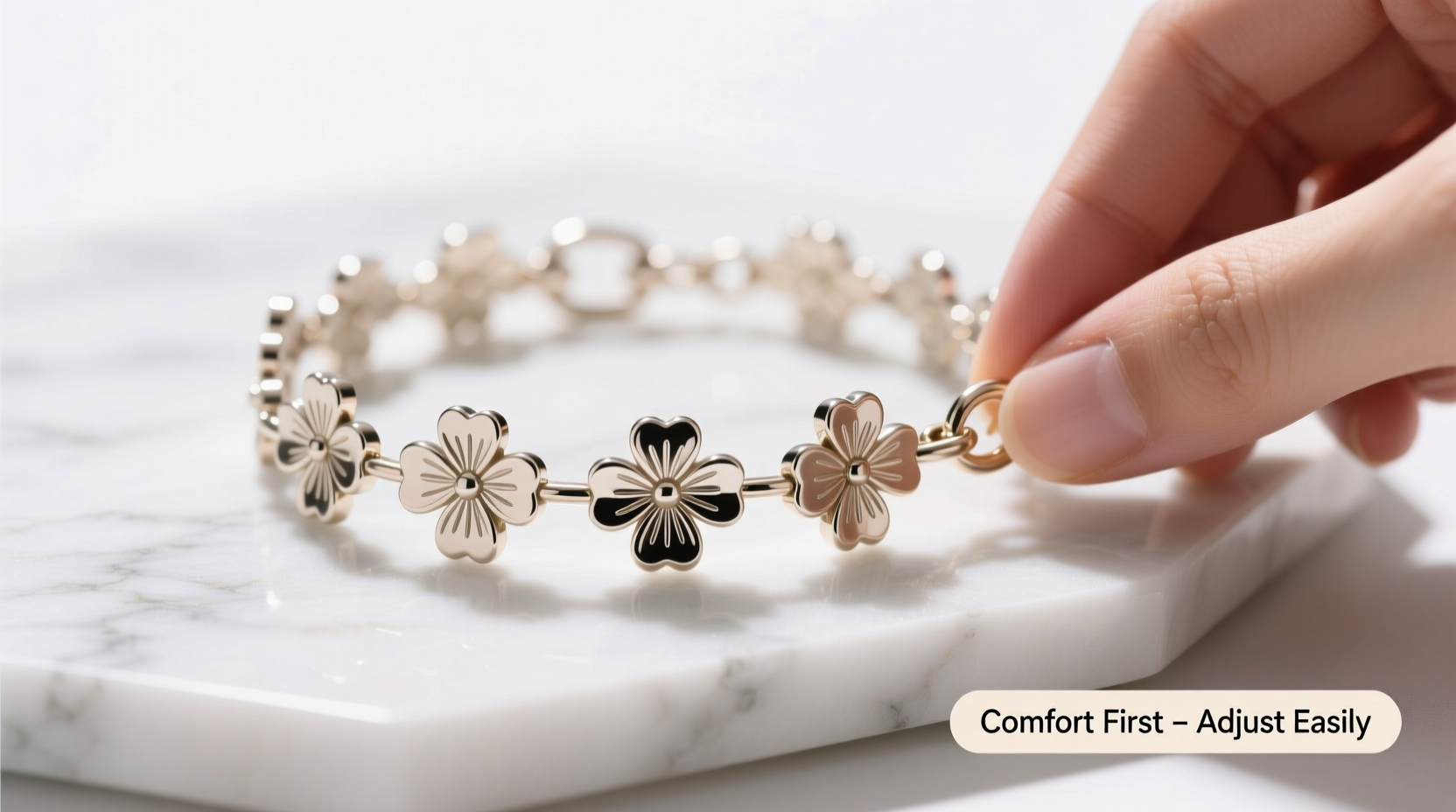
The 4 Leaf Flower Link Bracelet typically features a series of interconnected oval or floral-shaped metal links, often crafted from sterling silver, gold-plated alloy, or stainless steel. Unlike rigid bangles or stretchy beaded bracelets, link-style bracelets are semi-rigid and adjustable by removing or adding links. The clasp is usually a secure lobster or spring ring type, ensuring safety during wear.
Each link contributes to both aesthetics and flexibility. Because the bracelet is made of individual units, adjusting its length doesn’t compromise structural integrity—provided it’s done correctly. Most models come with extra links included in the packaging, allowing users to tailor the fit without needing additional parts.
Step-by-Step Guide to Adjusting Your Bracelet
Adjusting a link bracelet requires precision but not advanced tools. Follow this timeline to achieve a custom fit safely and efficiently.
- Measure your wrist: Use a flexible tape measure or a strip of paper to wrap around the widest part of your wrist (just below the wrist bone). Mark where the ends meet, then measure the length with a ruler. Add 0.5 inches for a comfortable fit—this allows room for movement without slipping.
- Count the current links: Lay the bracelet flat and count how many links it currently has. Note the number for reference.
- Open the clasp: Gently pull apart the lobster clasp to separate the two ends of the bracelet.
- Use a link removal tool or small pliers: Most link bracelets have pins connecting each unit. Insert a fine-tipped tool or pin pusher into the open end of the pin on the outermost link you wish to remove. Push steadily until the pin slides out. Avoid forcing it to prevent bending.
- Remove excess links: Once the pin is partially out, slide the link free. Repeat if removing multiple links. Keep removed links and pins in a small container—they may be needed later.
- Reconnect the remaining chain: Align the open ends of the last two links and reinsert the pin. Ensure it goes through both holes completely. If using a split pin, use pliers to gently close the ends.
- Test the fit: Fasten the clasp and wear the bracelet. It should sit snugly without digging in or sliding over the hand.
When to Add Links Instead of Removing
If your bracelet is too loose, consider reattaching previously removed links. Many brands include spare links in the original box. Reversing the removal process—aligning the link and securing it with the pin—restores length without requiring new materials.
“Proper fit is as important as design in fine jewelry. A well-fitted bracelet enhances both comfort and confidence.” — Lila Chen, Jewelry Designer & Fit Specialist
Do’s and Don’ts of Bracelet Adjustment
| Do’s | Don’ts |
|---|---|
| Measure your wrist at the end of the day when slight swelling is normal | Don’t cut or file links—you risk weakening the structure |
| Use proper tools like a pin pusher or jeweler’s pliers | Don’t force pins; they can bend or snap |
| Store extra links and pins in the original pouch | Don’t attempt adjustment on antique or heirloom pieces without professional help |
| Check clasp security after every adjustment | Don’t wear the bracelet during heavy activity until fit is confirmed |
Real-Life Example: Sarah’s Perfect Fit Journey
Sarah purchased her 4 Leaf Flower Link Bracelet as a self-gift for her birthday. While she loved the look, the default size was too large and slipped toward her knuckles when typing. Frustrated, she almost returned it—until she discovered the adjustment kit tucked inside the box.
Using the included pin tool and two spare links, she followed the steps above. She measured her wrist at night, subtracted 0.5 inches for a snug fit, and removed three links. After reconnecting the chain, she tested it throughout the evening—while cooking, writing, and even during a yoga session. The bracelet stayed securely in place without pressure marks. “It feels like it was made just for me,” she said. “I didn’t realize such a small change could make such a big difference.”
Essential Checklist for a Successful Adjustment
- ✅ Measure your wrist accurately
- ✅ Gather tools: pin pusher, small pliers, soft cloth
- ✅ Lay out workspace on a clean, well-lit surface
- ✅ Count current links before removal
- ✅ Remove only one link at a time to avoid over-shortening
- ✅ Test fit frequently during adjustment
- ✅ Secure the clasp and ensure smooth closure
- ✅ Store unused links and hardware safely
Frequently Asked Questions
Can I resize the bracelet myself if I don’t have the right tools?
While basic adjustments are possible with household items like a straightened paperclip and needle-nose pliers, using proper jewelry tools reduces the risk of damage. If unsure, visit a local jeweler—they often perform minor adjustments for free or low cost.
How do I know if my bracelet is too tight?
A properly fitted bracelet should allow one finger to slide comfortably between the metal and your skin. Signs of being too tight include red marks, numbness, or difficulty moving your hand. If any of these occur, consider adding a link or loosening the fit slightly.
Will adjusting the bracelet void the warranty?
It depends on the brand. Some manufacturers honor warranties only if adjustments are performed by authorized professionals. Check the product documentation or contact customer service before proceeding. In many cases, self-adjustment using provided tools does not void coverage.
Maintaining Comfort and Longevity
Once adjusted, maintaining your bracelet ensures lasting comfort and shine. Avoid wearing it during swimming, showering, or workouts, as moisture and chemicals can tarnish metal and weaken connections. Clean it weekly with a soft polishing cloth, and store it separately from other jewelry to prevent scratches.
Over time, regular wear may loosen pins or stretch the chain slightly. Inspect the bracelet monthly for signs of wear—wobbly links or a sluggish clasp indicate it’s time for a tune-up. A quick visit to a jeweler can restore stability and safety.
Final Thoughts: Wear It Right, Wear It Well
Your 4 Leaf Flower Link Bracelet is designed to bring joy, luck, and beauty to your everyday life. But true elegance lies not just in appearance, but in how it feels on your wrist. Taking the time to adjust it properly transforms it from a generic accessory into a personalized fit—one that moves with you, supports your lifestyle, and stays secure through every moment.




 浙公网安备
33010002000092号
浙公网安备
33010002000092号 浙B2-20120091-4
Comments
No comments yet. Why don't you start the discussion?