
For renters, decorating a space often feels like walking a tightrope. You want to personalize your walls with meaningful artwork, but you also need to preserve the integrity of the property to avoid deposit deductions. When it comes to hanging heavy art—such as large canvas prints, framed mirrors, or vintage oil paintings—the choice between command strips and nails becomes critical. Both methods have their advocates, but only one truly balances security, ease of use, and wall preservation. This article breaks down the real-world performance of each option, backed by material science, landlord policies, and tenant experiences.
The Renter’s Dilemma: Beauty vs. Liability
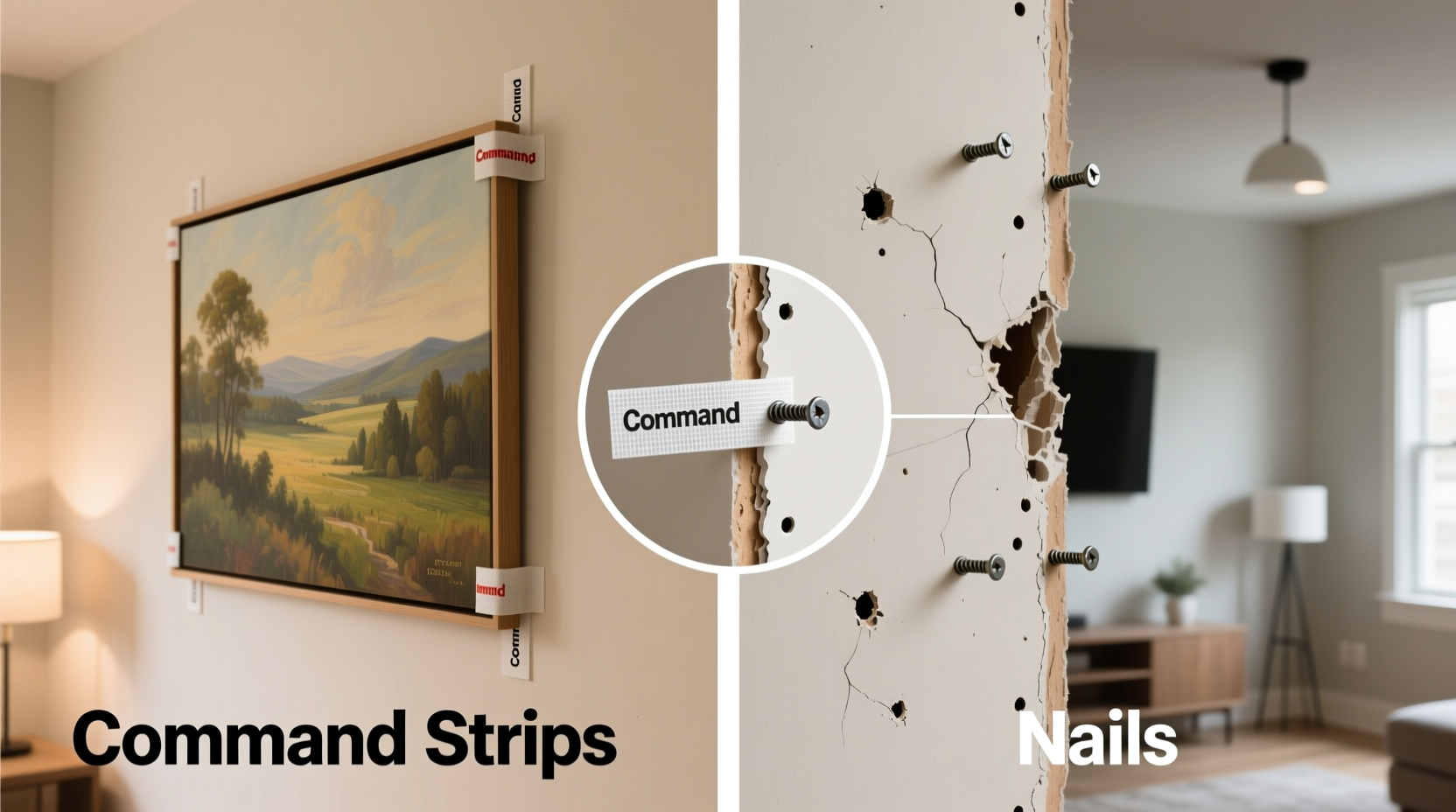
Renting doesn’t mean sacrificing style, but it does require strategic thinking. Most lease agreements prohibit permanent alterations, including drilling holes in walls. While some landlords allow discreet nail use, others consider any puncture a violation. The appeal of adhesive solutions like Command strips lies in their promise of “damage-free removal.” But does that hold up when supporting a 15-pound landscape painting?
The weight threshold is where many renters get tripped up. Standard adhesive strips are often rated for 4–8 pounds per set. Exceeding this—even slightly—can lead to slow detachment, sudden drops, or residue buildup. Nails, meanwhile, can support dozens of pounds with minimal surface disruption. Yet, even a small hole may be deemed unacceptable at move-out, depending on local regulations and landlord standards.
How Command Strips Work—and Where They Fall Short
Command strips use a pressure-sensitive adhesive bonded to a foam backing. When pressed firmly onto a clean surface, they create a strong bond that resists shear forces (lateral pulling). However, their effectiveness depends heavily on three factors: surface type, environmental conditions, and load distribution.
Smooth, non-porous surfaces like painted drywall, glass, or tile work best. Textured walls, freshly painted surfaces (under 30 days), or humid environments like bathrooms reduce adhesion. Even under ideal conditions, the rated weight assumes static, evenly distributed loads—not dynamic stress from vibrations or accidental bumps.
For heavy art, manufacturers recommend using multiple strip sets. A 10-pound frame might require four paired strips (two top, two bottom). But stacking strips doesn’t linearly increase strength. Overloading a small wall area can cause the paint layer to peel off entirely—a phenomenon known as \"paint bridging,\" where the adhesive holds, but the wall coating fails.
“Adhesives are only as strong as the surface they’re applied to. In older rentals, paint layers are often weak, making even high-rated strips risky for heavy objects.” — Dr. Lena Patel, Building Materials Engineer, University of Colorado Boulder
Nails: The Misunderstood Renter Tool
Nails have an unfair reputation among tenants. Many assume any hole automatically means lost deposit money. In reality, most U.S. states allow landlords to charge only for damages beyond normal wear and tear. A single 1/8-inch nail hole in drywall typically falls under acceptable wear—especially if spackled before move-out.
Modern finishing nails (like 1-inch brad nails) create minimal surface disruption. When driven at a slight upward angle into a stud, they can support over 20 pounds safely. Even in drywall alone, a properly installed nail with a small washer can hold 10–15 pounds without issue. Unlike adhesives, nails aren’t affected by temperature swings or humidity.
The key is precision. A well-placed nail avoids structural damage, maintains wall integrity, and leaves behind a fixable mark. By contrast, a failed Command strip can drop a valuable piece of art, crack the frame, or strip paint across a wide area—resulting in far more costly repairs than a pinhole.
Real Example: Sarah’s Gallery Wall Failure
Sarah, a graphic designer renting in Seattle, used extra-strength Command strips to hang a gallery wall of five framed prints, each weighing 6–8 pounds. She followed instructions meticulously: cleaned the walls with alcohol, pressed firmly, waited an hour before hanging. Three weeks later, after a minor door slam caused vibrations, two frames detached and fell. One shattered on the hardwood floor. The wall showed peeled paint along a 6-inch stretch where the adhesive had lifted the primer layer.
Her landlord charged $180 for wall repair and replacement glass. Had she used small nails and filled the holes upon departure, she likely would have faced no fees. The incident cost her more than a simple hammer and nail would have.
Comparative Analysis: Command Strips vs. Nails
| Factor | Command Strips | Nails |
|---|---|---|
| Max Weight Capacity | Up to 16 lbs (heavy-duty sets) | 10–20+ lbs (depending on placement) |
| Wall Damage Risk | Paint peeling, residue, surface tearing | Small punctures (often repairable) |
| Installation Ease | Simple, tool-free | Requires hammer, nail, level |
| Removal Cleanliness | Varies; sometimes leaves residue or pulls paint | Hole must be patched |
| Cost | $5–$15 per pack | $1–$2 for basic nails |
| Reliability Over Time | Declines with humidity, heat, vibration | Consistent if not overloaded |
| Lease Compliance | Generally accepted | Depends on landlord policy |
Best Practices for Renter-Friendly Heavy Art Hanging
Whether you choose adhesive strips or nails, proper technique makes all the difference. Follow these steps to minimize risk and maximize stability.
Step-by-Step Guide: Safe Installation for Heavy Frames
- Assess the Frame Weight: Use a kitchen scale or check manufacturer specs. Include glass and frame in total weight.
- Check Wall Type: Tap the wall—hollow sounds indicate drywall; solid resistance suggests a stud. Avoid tile or plaster unless experienced.
- Choose the Right Method:
- Under 5 lbs: Use medium Command strips.
- 5–10 lbs: Use heavy-duty Command strips OR small nail in drywall.
- Over 10 lbs: Use a nail anchored into a stud.
- Prepare the Surface: For adhesives, clean with rubbing alcohol and let dry. For nails, mark the spot lightly with pencil.
- Install Securely:
- Press strips for 30 seconds; wait 1 hour before hanging.
- Drive nails at a 45-degree upward angle for better grip.
- Test Stability: Gently tug downward after installation. If movement occurs, reinforce or switch methods.
- Document Before Moving Out: Take photos of original wall condition and post-repair results to protect your deposit.
Expert Checklist: Hang Heavy Art Without Risk
- ✅ Weigh your artwork—including frame and hardware
- ✅ Read your lease for wall modification rules
- ✅ Use a stud finder if going over 10 lbs
- ✅ Clean walls thoroughly before applying adhesives
- ✅ Install at eye level (57–60 inches from floor to center)
- ✅ Patch all holes before returning keys
- ✅ Keep leftover wall paint for touch-ups
Frequently Asked Questions
Can I use Command strips on textured walls?
Not reliably. Textured or porous surfaces reduce adhesive contact. The bond may fail prematurely, especially under weight. If you must, use molding putty to create a flat base first—but nails are safer.
Will one nail really cost me my deposit?
Unlikely. Courts and housing boards consistently rule that small nail holes constitute normal wear and tear. Landlords cannot charge for cosmetic fixes unless negligence is proven. Document your move-in and move-out conditions with dated photos.
What if I can’t find a stud?
For heavier pieces, use toggle bolts or drywall anchors rated for the weight. These expand behind the drywall for support. While more invasive, they’re still considered standard rental practice when repaired properly.
The Verdict: What’s Truly Renter-Friendly?
The term “renter-friendly” should mean both safe for the tenant and sustainable for the property. When judged by those standards, nails—used responsibly—are more renter-friendly than Command strips for heavy art.
Adhesive strips offer convenience but introduce unpredictable failure risks. Their “damage-free” claim often doesn’t survive real-world conditions, especially with loads over 8 pounds. Nails, while requiring slightly more effort, provide reliable support and leave behind easily repairable marks. The cost and time to patch a nail hole are negligible compared to replacing damaged artwork or paying for大面积 wall repairs after adhesive failure.
Moreover, responsible renters don’t avoid all wall contact—they respect the space by using the right tools and repairing any minor changes. That mindset aligns better with long-term tenancy and positive landlord relationships than attempting to hide installations altogether.
Final Recommendation
For art under 5 pounds, Command strips are a practical, low-risk option. Between 5 and 10 pounds, either method works—if the wall surface is sound. Above 10 pounds, always opt for a nail, preferably into a stud. Combine this with careful patching at move-out, and you’ll enjoy beautifully displayed art without compromising your deposit.
“The safest rental decor isn’t invisible—it’s thoughtful. Use the right tool for the job, and repair what you alter. That’s true responsibility.” — Mark Tran, Property Manager with 18 years in multifamily housing




 浙公网安备
33010002000092号
浙公网安备
33010002000092号 浙B2-20120091-4
Comments
No comments yet. Why don't you start the discussion?